Some of Thomas Sankara’s Famous Quotes

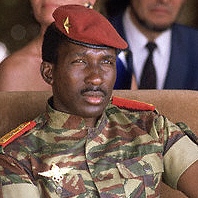
Thomas Sankara
Thomas Sankara a Ouagadougou

15 October 1987 was the day Africa lost one of his greatest sons: Thomas Sankara.  Words cannot express the loss we’ve felt, and the loss Africa and the world suffered on that day.  I would like to share with you some of Thomas Sankara’s famous declarations.

=====================

« Une jeunesse mobilisée est dangereuse, une jeunesse mobilisée est une puissance qui effraye même les bombes atomiques. Il y en a qui possède les bombes atomiques et qui ont des problèmes avec d’autres peuples qui, eux, ne possèdent pas la bombe atomique, mais pourquoi ils n’osent pas l’utiliser ? Parce qu’ils savent très bien, parce qu’ils savent très bien, que dans ces peuples que osent les attaquer, ils trouvent une jeunesse mobilisée, une jeunesse à mourir [A youth mobilized is dangerous, a youth mobilized is a power which scares even atomic bombs. There are those who own atomic bombs, and who have problems with other nations who do not own the atomic bomb, but why don’t they dare using it? Because they know very well, that in these people who they want to attack, they find a mobilized youth, a youth ready to die.] 14 mai 1983 s’adressant aux jeunes de Bobo Dioulasso

« Nos ancêtres en Afrique avaient engagé une certaine forme de développement. Nous ne voulons pas qu’on assassine ces grands savants africains. » [Our ancestors in Africa were actively committed to a certain form of development. We do not want these great African wisemen to be assassinated.] 2 octobre 1984 à Harlem

Burkina Faso
Burkina Faso

« Il faut que l’école nouvelle et l’enseignement nouveau concourent à la naissance de patriotes et non d’apatrides. Mettre un enfant à l’école doit cesser d’être perçu comme un simple placement comptable, si tant est vrai que la transformation continue des sociétés qui incombe aux générations successives comporte des éléments quantifiables et non quantifiables. »  [We need the new school and the new teaching concur with the birth of patriots and not stateless people. Putting a child in school should stop being conceived as a simple accounting investment, if indeed the ongoing transformation of societies which fall on successive generations has quantifiable elements and non-quantifiable.] 17 octobre 1986 Appel de Gaoua sur la qualité de l’enseignement.

« Il n’y a pas de révolution sociale véritable que lorsque la femme est libérée. Que jamais mes yeux ne voient une société où la moitié du peuple est maintenue dans le silence. J’entends le vacarme de ce silence des femmes, je pressens le grondement de leur bourrasque, je sens la furie de leur révolte. J’attends et espère l’irruption féconde de la révolution dont elles traduiront la force et la rigoureuse justesse sorties de leurs entrailles d’opprimées. » [There are no true social revolution until the woman is liberated. May my eyes never see a society where half of the people is maintained under silence. I hear the racket of this silence of women, I suspect the roar of their storm, I feel the fury of their revolt. I wait and hope for the fertile irruption of the revolution for which they will translate the force and rigorous righteousness coming from their oppressed bowels.] 8 mars 1987, Ouagadougou

« La Révolution démocratique et populaire a besoin d’un peuple de convaincus et non d’un peuple de vaincus, d’un peuple de convaincus et non d’un peuple de soumis qui subissent leur destin. »  [The people’s democratic revolution needs a people that is confident and not defeated, a people of conviction and not a subjected people who suffer their fate.] 4 août 1987

African Venus, a sculpture by Charles-Henri Joseph Cordier 1851 (Source: Walters Art Museum)

«Je parle au nom des femmes du monde entier, qui souffrent d’un système d’exploitation imposé par les mâles. Pour ce qui nous concerne, nous sommes prêts à accueillir toutes les suggestions du monde entier, nous permettant de parvenir à l’épanouissement total de la femme burkinabè. En retour, nous donnons en partage à tous les pays, l’expérience positive que nous entreprenons avec des femmes désormais présentes à tous les échelons de l’appareil de l’État et de la vie sociale au Burkina Faso. Des femmes qui luttent et proclament avec nous, que l’esclave qui n’est pas capable d’assumer sa révolte ne mérite pas que l’on s’apitoie sur son sort. Cet esclave répondra seul de son malheur s’il se fait des illusions sur la condescendance suspecte d’un maître qui prétend l’affranchir. Seule la lutte libère et nous en appelons à toutes nos sœurs de toutes les races pour qu’elles montent à l’assaut pour la conquête de leurs droits. » [I speak on behalf of women from around the world, who suffer from an exploitation system imposed by the males. As far as we are concerned, we are ready to welcome all the suggestions from around the world, which will enable us to achieve the full development of the Burkinabe woman. In return, we will share with all the countries, the positive experience that we start with women now present at all levels of the state and the social life of Burkina Faso. Women who fight and proclaim with us, that the slave who is not capable of assuming his rebellion does not deserve that we feel sorry for himself. This slave will respond only to his misfortune if he is deluding himself about the suspect condescension of a master who claims to free him. Only fighting liberates and we call on all our sisters of all races so that they rise up to conquer their rights.] Discours de Sankara à l’ONU le 4 octobre 1984 (texte intégral)

Nigeria’s Many Monarchs

I saw this very good photojournal article on BBC about Nigeria’s many monarchs.  I just loved it, because of its depiction of African culture, and the beauty of their heritage.  I had to share.  From the Ovie of Umiaghwa Abraka kingdom in the Delta State, to the Pere of Isaba kingdom (a kingdom which exists since the 14th century), to the Emir of Zauzau in Kaduna State, this photojournal is rich and depicts the multiple kingdoms and cultures of Nigeria.  The author of these, i.e. the photographer is George Osodi, took many years to capture these monarchs in their attire in never before seen images.  Enjoy! (Don’t forget to click on the BBC link.)

The Ovie of Umiaghwa Abraka kingdom (Source: George Osodi - BBC)
The Ovie of Umiaghwa Abraka kingdom, Delta State, Nigeria (Source: George Osodi – BBC)

Y’en a Marre and The New Type of Senegalese: Be the Change You Want to See

The group "Y'en a Marre" with their shirts "Faux pas Force"
The group “Y’en a Marre” with their shirts “Faux pas Force”

Today, I would like to talk about the “Y’en a Marre” (“Fed Up“), a Senegalese group which influenced change in the presidential election of 2012 in Senegal, by forcing President  Abdoulaye Wade (and his son, Karim Wade) out of office. Y’en a Marre decided to stop complaining and to start acting, to make the changes they wanted implemented. It is a group of Senegalese rappers and journalists, created in January 2011, to protest ineffective government and register youth to vote. They are credited with helping to mobilize Senegal’s youth vote and oust incumbent President Abdoulaye Wade, though the group claims no affiliation with Macky Sall, Senegal’s current president, or with any political party.

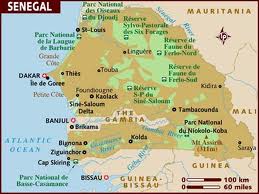
Map of Senegal
Map of Senegal

The group was founded by rappers Fou Malade (“Crazy Sick Guy“, real name: Malal Talla), Thiat (“Junior“, real name: Cheikh Oumar Cyrille Touré), Kilifeu (both from celebrated rap crew “Keur Gui of Kaolack“) and journalists Sheikh Fadel Barro, Aliou Sane and Denise Sow. The movement was originally started in reaction to Dakar‘s frequent power cuts, but the group quickly concluded that they were “fed up” with an array of problems in Senegalese society.  “One day, there was 20 hours of cuts,” said Fadel Barro, whose dimly lit apartment served as the place where the movement took shape. “I said: ‘Guys, everyone knows you. But you’re not doing anything to change the country.’ ”[from NYT interview – see link below]. Those words energized the musicians.

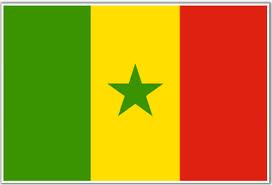
Flag of Senegal
Flag of Senegal

Their goal was to incite Senegalese to vote, to renew the political personnel, to fight against corruption and to promote a sense of civic responsibility.  Their most famous quote is: « L’heure n’est plus aux lamentations de salon et aux complaintes fatalistes face aux coupures d’électricité. Nous refusons le rationnement systématique imposé à nos foyers dans l’alimentation en électricité. La coupe est pleine. » [The hour is no longer to ballroom lamentations and fatalistic complaints in the face of power cuts. We refuse the systematic rationing imposed on our homes in the power supply. Our cup is full to the rim.]

Through recordings, rallies and a network of regional affiliates, called “the spirit of Y’en a Marre“, the group advocates for youth to embrace a new type of thinking and living termed “The New Type of Senegalese” or NTS. In late 2011, the collective released a compilation titled “Y’en A Marre“, from which the single “Faux! Pas Forcé” (“Don’t force it”) emerged as a rallying cry for youth frustrated with President Wade and his son and presumed successor. They followed with a single, “Doggali” (“Let’s finish”), which advocated for cleansing the country of Wade and son.

"Y'en a Marre" at a public demonstration in 2012
“Y’en a Marre” at a public demonstration in 2012

From April to August 2011, the group and their members campaigned door to door to register young Senegalese to vote at the Presidential election of 2012, and they claimed more than 300,000 voters registered.   During 2011, they organized manifestations, called “foires aux problèmes” (“problem fairs”), and sit-ins in Dakar’s Obelisk Square.  On 15 February 2012, these manifestations were prohibited by Wade’s government, leading to 3 members of Y’en a Marre’s arrest on the 16th. This did not stop the group which continued manifesting until the election of Macky Sall as President. Today, even though Macky Sall has been elected president, Y’en a Marre remains active, hosting meetings, and shows, urging the new government to implement all the promised reforms.

So we can all choose to be the change we want to see, stop complaining, and start acting like Y’en a Marre. If there is anything wrong bothering you in your community, it is possible to work at it, to act upon it, and change it the way you want it to be. Our countries all need it, our continent needs it. Read the article the New York Times did on Y’en a Marre, as well as the UNRIC, and the article on NPR. So let’s us be “fed up” like the Y’en a Marre, and let us act and be the change we want to see.

Tink-Tinkje

The king's crown
The king’s crown

THE birds wanted a king. Men have a king, so have animals, and why shouldn’t they? All had assembled.

The Ostrich, because he is the largest,” one called out.

No, he can’t fly.”

Eagle, on account of his strength.”

Not he, he is too ugly.”

Vulture, because he can fly the highest.”

No, Vulture is too dirty, his odor is terrible.”

Peacock, he is so beautiful.”

His feet are too ugly, and also his voice.”

Owl, because he can see well.”

Not Owl, he is ashamed of the light.”

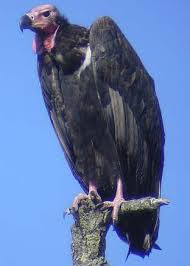
Vulture
Vulture

And so they got no further. Then one shouted aloud, “He who can fly the highest will be king.” “Yes, yes,” they all screamed, and at a given Signal they all ascended straight up into the sky.

Vulture flew for three whole days without stopping, straight toward the sun. Then he cried aloud, “I am the highest, I am king.”

T-sie, t-sie, t-sie,” he heard above him. There Tink-tinkje was flying. He had held fast to one of the great wing feathers of Vulture, and had never been felt, he was so light. “T-sie, t-sie, t-sie, I am the highest, I am king,” piped Tink-tinkje.

Vulture flew for another day still ascending. “I am highest, I am king.”

T-sie, t-sie, t-sie, I am the highest, I am king,” Tink-tinkje mocked. There he was again, having crept out from under the wing of Vulture.

Vulture flew on the fifth day straight up in the air. “I am the highest, I am king,” he called.

T-sie, t-sie, t-sie,” piped the little fellow above him. “I am the highest, I am king.”

Vulture was tired and now flew direct to earth. The other birds were mad through and through. Tink-tinkje must die because he had taken advantage of Vulture’s feathers and there hidden himself. All flew after him and he had to take refuge in a mouse hole. But how were they to get him out? Some one must stand guard to seize him the moment he put out his head.

Owl
Owl

Owl must keep guard; he has the largest eyes; he can see well,” they exclaimed.

Owl went and took up his position before the hole. The sun was warm and soon Owl became sleepy and presently he was fast asleep.

Tink-tinkje peeped, saw that Owl was asleep, and z-zip away he went. Shortly afterwards the other birds came to see if Tink-tinkje were still in the hole. “T-sie, t-sie,” they heard in a tree; and there the little vagabond was sitting.

White-crow, perfectly disgusted, turned around and exclaimed, “Now I won’t say a single word more.”

And from that day to this Whitecrow has never spoken. Even though you strike him, he makes no sound, he utters no cry.

South African Folk Tales, by James A. Honey, 1910, Baker & Taylor Company

Black Fashion Week in Paris, 2013

Designs by Martial Tapolo at BFW 2013 (Source: Pierre Rene-Worms - RFI)
Designs by Martial Tapolo at BFW 2013 (Source: Pierre Rene-Worms – RFI)
Designs by Sidy Counda at BFW 2013 (Source: Pierre Rene-Worms - RFI)
Designs by Sidy Counda at BFW 2013 (Source: Pierre Rene-Worms – RFI)

Last week was the second edition of ‘Black Fashion week in Paris’, a fashion show where African stylists and designers, and those of the African diaspora expose their work.  The Fashion show was held a few meters from the Chanel and Ritz houses, and was organized by the Senegalese stylist Adama Paris who perpetuated the work done by Alphadi with the FIMA (Festival International de la Mode Africaine).  16 stylists of African descent presented their work, ranging from the maestro himself, Alphadi, to Adama Paris, to the Cameroonian Martial Tapolo, to the Haitian Zacometi (who specializes in men’s fashion only), to the Malian Mariah Bocoum, or to the Malagasy Eric Raisina, etc.  This was a golden opportunity to discover new talents, and introduce their styles to the global scene, from Dakar to Antananarivo, and hopefully to shops in Los Angeles, and Paris.  It was pure beauty, and I wanted you to check out the RFI diaporama on Black Fashion Week 2013.   Don’t forget to check out the website of Black Fashion Week Paris.  Enjoy the new era of African stylists who are introducing styles just as hip as Chanel and Dior.  Below is a video of the first edition: Black Fashion Week 2012.

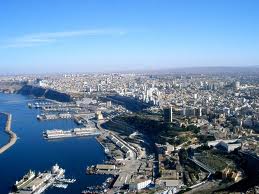
Why the name: Algiers?

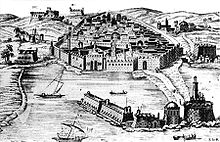
Algiers at the beginning of the Ottoman rule, 16th century AD

I have often wondered what the name, Algiers, for the capital of Algeria meant.  I always thought it interesting for a capital, and a country to have the same name: Alger (in French) the capital and Algeria, the country.

Modern-day Algiers
Modern-day Algiers

For starters Alger (in French) or Algiers (in English) is a name deriving from the Catalan Alguère, which itself comes from Djezaïr, name given by Bologhine ibn Ziri, founder of the Berber Zirid dynasty who built the city in 944 on the ruins of the ancient Roman city Icosium (or the seagull island), Djezaïr Beni Mezghenna.  The name, as given by Bologhine ibn Ziri, referred to the four islands which laid off the city’s coast until becoming part of the mainland in 1525.  In Arabic, Al-Djaza’ir (الجزائر), “les Îlots” (the Islands), in French “les Iles de Mezghenna” or the islands of Mezghanna  (جزاير بني مزغنا Djezaïr Beni Mezghenna).  According to Middle Ages Muslim geographers, the term island could also refer to the fertile coast of Algeria stuck between the vast Sahara, and the Mediterranean Sea, appearing as an island of life, Al-Jaza’ir.

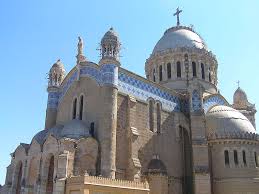
Basilique 'Notre Dame d'Afrique' in Algiers
Basilique ‘Notre Dame d’Afrique’ in Algiers

Algiers is often nicknamed El-Behdja (البهجة, the joyous), El Mahroussa (the well-kept) or alternatively Alger la Blanche (“Algiers the White”) for the glistening white of its buildings as seen rising up from the sea.  Algiers is located on the west side of a bay of the Mediterranean Sea, also known as the Algiers bay.  The modern part of the city is built on the level ground by the seashore; while the old part, the ancient city of the deys, the Ottoman rulers, climbs the steep hill behind the modern town and is crowned by the casbah or citadel, 122 metres (400 ft) above the sea.  The casbah, which is an ancient neighborhood of Algiers (and a UNESCO World Heritage site), was built on the side of one of the hills that points west of

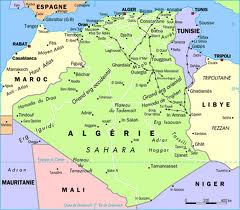
Carte de l'Algerie (Map of Algeria)
Carte de l’Algerie (Map of Algeria)

the Algiers bay; the casbah and the two quays form a triangle.  Under Ottoman rule, from 1510 to early 1800s, new neighborhoods arose on the hills overseeing the bay.  Algiers and Algeria later fell into French rule in the 1830s, and Algeria became independent on 5 July 1962.

Today, ‘Algiers the White’ is an important vibrant city of almost 4 million inhabitants in North Africa.  It is in essence a joyous city with a glistening white essence on the Mediterranean sea.  Enjoy this video on Algiers.

African Alphabets: Ancient Writing in Africa

'Afrikan Alphabets: The Story of Writing in Afrika' by Saki Mafundikwa
‘Afrikan Alphabets: The Story of Writing in Afrika’ by Saki Mafundikwa

I always thought that the Egyptian hieroglyphs or the yet undeciphered Meroitic alphabet were not the only signs of ancient writing in Africa.  I also always thought that there were other forms of writing throughout Africa, and not just in the northern part.  So I was happy to hear Saki Mafundikwa, the founder of Zimbabwe‘s first graphic design school and new media, talk about his book Afrikan Alphabets: The Story of Writing in Afrika, which is a comprehensive review of African writing systems throughout centuries.  Mafundikwa left a very successful career in New York to return to his home country and open this school, so as to inspire the newer generations of African designers to look inward (to their own rich cultures) as opposed to outward (toward Europe) as they have done in the past decades.  He sums it up so well in his favorite Ghanaian glyph, Sankofa, which means “return and get it” — or “learn from the past.”  It is refreshing to learn about these systems, from simple alphabets to secret symbols, from the Adinkra of Ghana, to Mende, Vai, Nsibidi, Bamum, Somali, and Ethiopian scripts which date back centuries.

It is above all refreshing to realize that Africans have their own way of thinking which can be perceived in their designs, and that ultimately graphic designs date as far back as the ancient Egyptians and can be observed throughout Africa.  Take the time to read Saki Mafundikwa in his own words.  Enjoy Saki Mafundikwa’s speech at one of the TED conference.

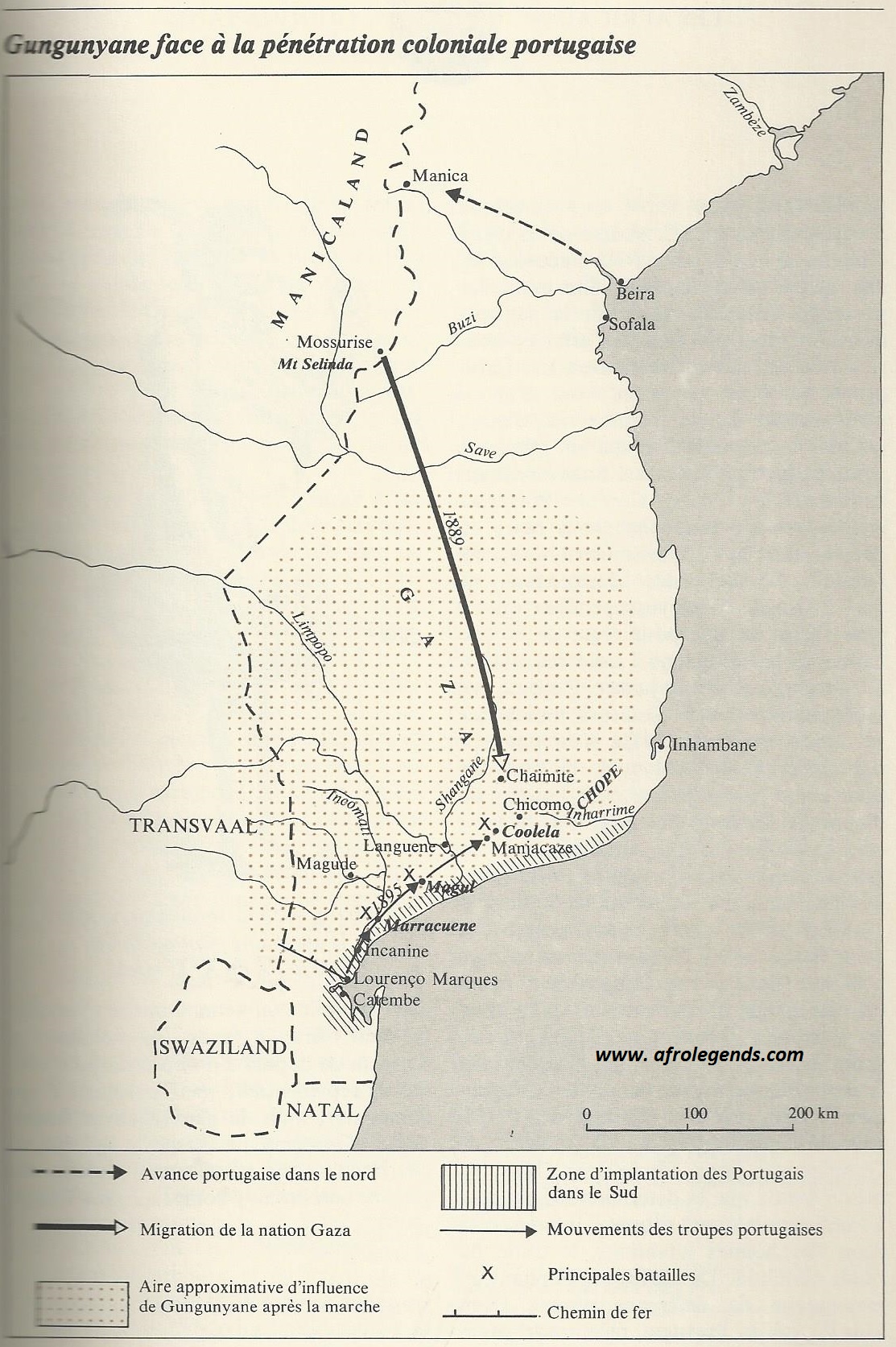
Gungunyane’s Kingdom before and after Migration

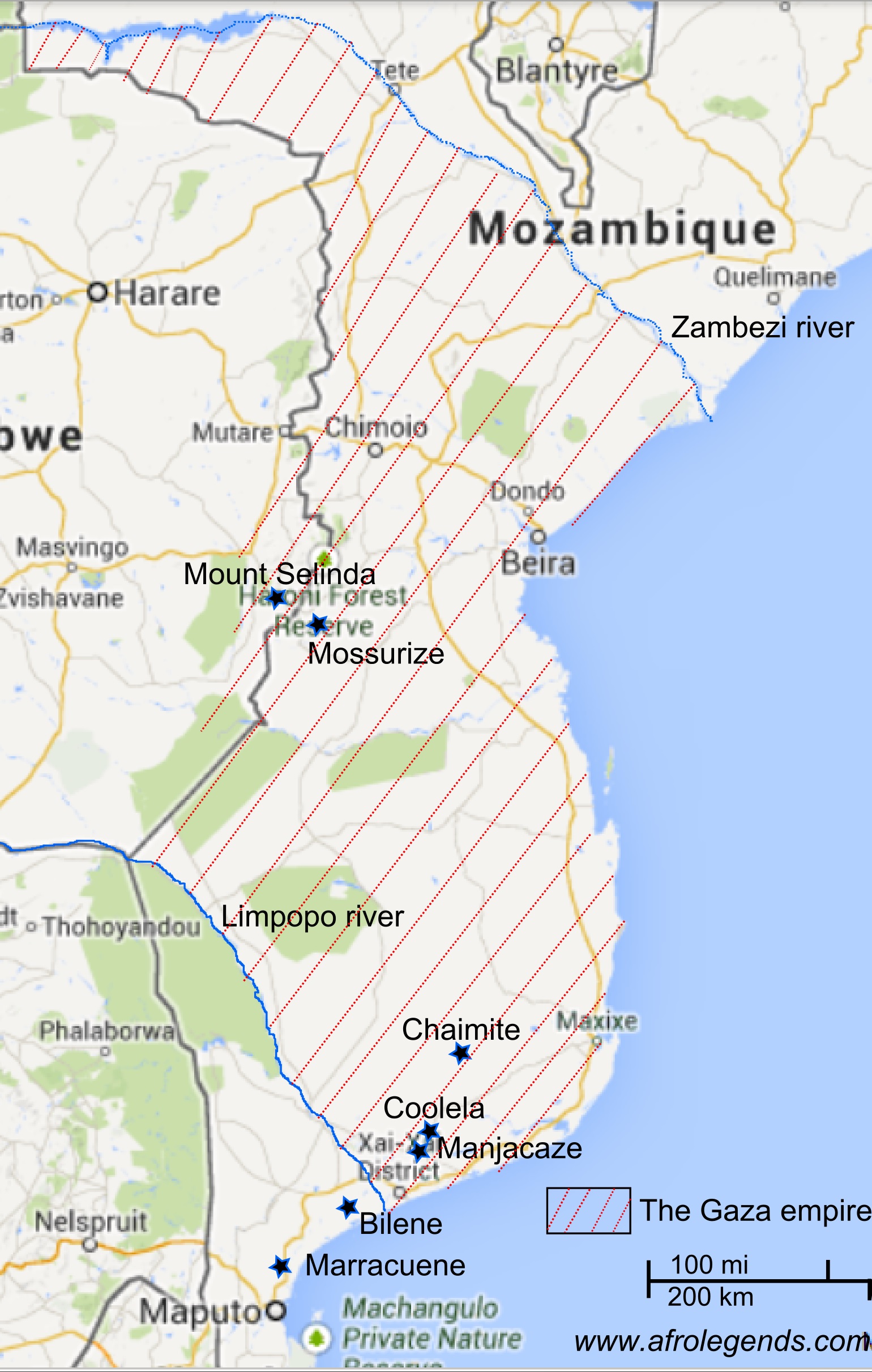
The Gaza empire after migration in 1889
The Gaza empire after migration in 1889 (Source: Les Africains, Vol 3, P. 181, C. Julien, Ed. J.A., 1977)
The Gaza empire at its heights around 1860s

Following up on Gungunyane, the Lion of Gaza, I propose here maps of his kingdom before and after the migration.  I found a map of Gungunyane‘s kingdom, the Gaza empire, after migration from Mount Selinda, in ‘Les Africains,’ Vol. 3, P. 181, C. Julien, Editions J.A., 1977.  I also made an approximative map of what would have been the Gaza empire at its heights in 1860s, before migration, using the well-known boundaries of the Zambezi and Limpopo rivers, and Mount Selinda (in modern day Zimbabwe) as well as the city of Mossurize in Mozambique.  Enjoy!

Kofi Awoonor: Celebrating the Life of Ghanaian Poet

Kofi Awoonor
Kofi Awoonor

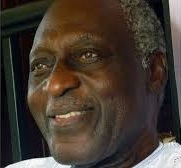
Today, I would like to talk about the legendary Ghanaian poet, writer, and diplomat Kofi Awoonor who lost his life this past weekend during the shootings at the Westgate Mall in Nairobi, Kenya.

Well, many articles would tell you all about this man who was born George Kofi Nyidevu Awoonor-Williams, but who will end up using Kofi Awoonor as his pen name.  Kofi Awoonor was a poet whose poetry was based on Ewe / Ghanaian mythology and imagery.  His writings include the oral traditions of African village songs, with their various communal forms, themes, and functions/ceremonies.  For instance, his poem ‘The Purification’ records a sacrifice to the sea-god in a time of poor fishing.  One can find a sense of melancholy in his writings.  Enjoy this snippet from one of his poem ‘Songs of Sorrow.’  To learn more about this man, check this very good article on The Guardian, the BBC, and don’t forget to go to The Poetry Foundation of Ghana to read the end of this poem and other pieces by him.

Songs of Sorrow

I
Dzogbese Lisa has treated me thus
It has led me among the sharps of the forest

Returning is not possible
And going forward is a great difficulty
The affairs of this world are like the chameleon faeces
Into which I have stepped
When I clean it cannot go.
I am on the world’s extreme corner,
I am not sitting in the row with the eminent
But those who are lucky
Sit in the middle and forget
I am on the world’s extreme corner
I can only go beyond and forget.
My people, I have been somewhere
If I turn here, the rain beats me
If I turn there the sun burns me
The firewood of this world
Is for only those who can take heart
That is why not all can gather it.
The world is not good for anybody
But you are so happy with your fate;
Alas! the travelers are back
All covered with debt.

 …

By Kofi Awoonor

Gungunyane: the Lion of Gaza or the Last African King of Mozambique

Gungunyane, the Lion of Gaza

Today, we will talk about one of the greatest chief in Mozambique‘s modern history: the Shangaan king Gungunyane, of the Gaza Empire.  He governed a region which encompassed parts of eastern Rhodesia (in modern day Zimbabwe), and southern Mozambique.  He was known as the Lion of Gaza.

So who was Gungunyane?  Born Mdungazwe (which means ‘one who confuses the people’ in Zulu) around 1850, he will change his name from Mdungazwe to Gungunyane upon his ascension to the throne in 1884. Gungunyane was born on the Gaza territory, which extended from the rivers Zambezi and Incomati, to the Limpopo river, and would go all the way into modern-day Zimbabwe.  He was the son of Mzila, who reigned from 1861 to 1884.  He was also the grandson of Soshangane, the founder of the Nguni or Gaza empire, after his defeat at the hands of Shaka Zulu in 1820 in Zululand during the Battle of Mhlatuze river.  In its initial stages, the Gaza empire expanded over 56,000 km2 (22,000 sq mi) of land, with its capital being Chaimite.  At the death of his father Mzila, Gungunyane ascended the throne after a fratricidal battle with his other brothers.

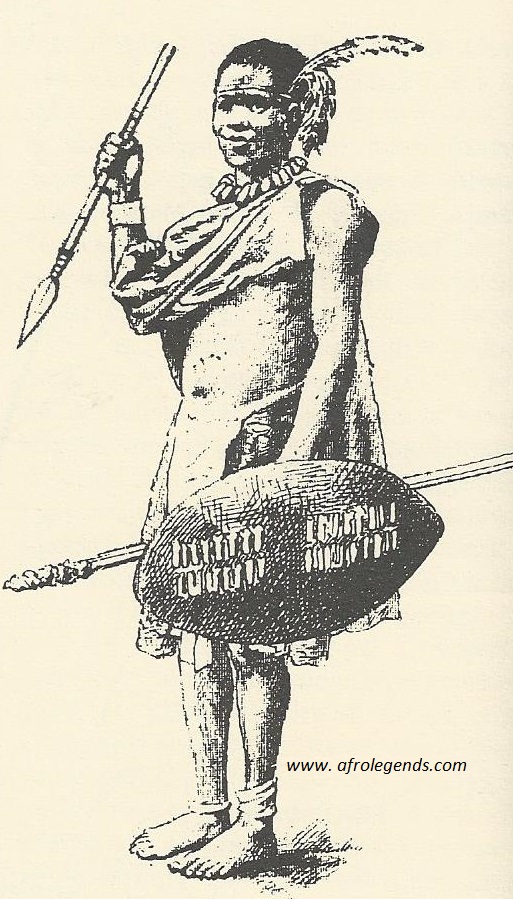
Picture of a Vatua-Shangaan warrior, taken at the end of the 19th century (Source: 'Les Africains', Vol.3, P.182, Ed. J.A. 1977)
Picture of a Vatua-Shangaan warrior, taken at the end of the 19th century (Source: ‘Les Africains’, Vol.3, P.182, Ed. J.A. 1977)

At his ascension, the Portuguese sent him emissaries in 1885 who tried to have him sign treaties to recognize Portugal’s sovereignty in the region promising: to give his territory to no other than Portugal, to allow that a Portuguese agent reside with him as advisor, to have Portugal’s colors raised over his kraals, to allow Portuguese subjects to circulate freely in his territory, to allow only Portuguese to exploit his mines, to allow the establishment of schools and churches, etc.  For which Gungunyane would retain full jurisdiction over the Gaza territory with the right to administer it, and to raise taxes.  This was unacceptable to Gungunyane who refused to sign.

The southern region of Mozambique was a penetration road for the Portuguese who had been arming vassals of the Shangaan.  Thus in 1888, Gungunyane and his advisors decided to move their kraals from the Rhodesian plateau to the shores of the Limpopo river. This decision will end up costing them a lot, as 40,000 to 100,000 people made the move.  Several fractions left in april 1889, while the king himself moved from Mount Selinda on 15 June 1889.  This decision was motivated by the desire of Gungunyane to settle an old score with chief Speranhana (who was armed by the Portuguese) of the Chopi people from between the Limpopo and Inharrime, and the need to recover his father’s land in the region of Bilene.  In 1889, the Lion of Gaza invaded the Chopi territory, and installed a kraal in Manjacaze.  However, the battle against the Chopi will last until the end of his reign, and will greatly weaken the Shangaan.

Throughout his reign, Gungunyane never signed any treaties, because he never trusted neither the Portuguese nor the translator (even if the translator was his own son).  He was a skilled negotiator, and would always try to settle everything diplomatically.  He played well the British and Portuguese interests in the region… this might have been his downfall in the end.

In 1890, Gungunyane prohibited the sale of alcohol by Portuguese merchants on Gaza territory.  In 1891, the Portuguese adopted a decree to ban the sale of alcohol on Gazaland, and agreed to work with Gungunyane to implement this… but as we all know the Portuguese never stopped selling alcohol in the region (this seems like a century old practice from Europeans selling cheap alcohol in Africa, and turning Africans into drunkards).

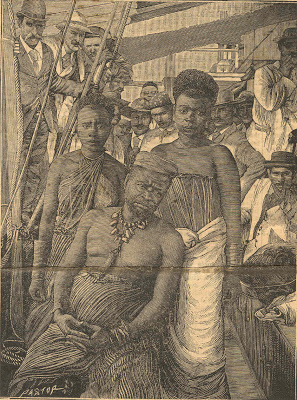
Picture of captured Gungunyane on board the ship 'Africa' from the Diario Ilustrado - 15 March 1896
Picture of captured Gungunyane on board the ship ‘Africa’ from the Diario Ilustrado – 15 March 1896

The Portuguese never stopped trying to control Gungunyane who never stopped wanting more independence (it was his land after all).  They kept enforcing treaties.  In 1893, the conflict in Matabeleland between the British and Lobengula forced several Ndebele to seek refuge in the Gaza territory (one of Gungunyane’s sister was married to Lobengula) creating confusion.  In 1894, the Portuguese used a succession quarrel between Ronga chiefs to attack Gungunyane.  No proof was found of Gungunyane’s involvement into the hostilities.  On 22 August 1894, war started, when the Ronga troops defeated the Afro-Portuguese troops with Ronga chiefs Mahazul and Matibejana of Zixaxa attacking Lourenço Marques.  However, the Ronga chiefs were defeated by the Portuguese during the battle of Marracuene on 2 February 1895.  The Ronga chiefs thus sought refuge into Gungunyane’s kingdom.  Gungunyane kept negotiating, but now the sine qua non condition to any negotiation was the surrender of the Ronga chiefs, with other clauses such as the full control of his territory by the Portuguese, the installation of military bases, the payment

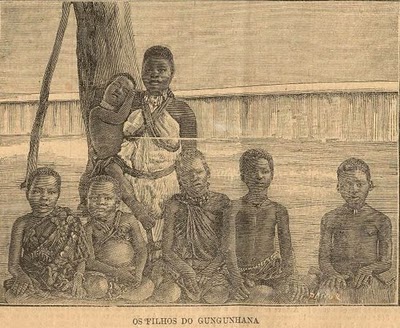
Picture of Gungunyane's children on board the ship 'Africa'- from the Diario Ilustrado -15 March 1896
Picture of Gungunyane’s children on board the ship ‘Africa’- from the Diario Ilustrado -15 March 1896

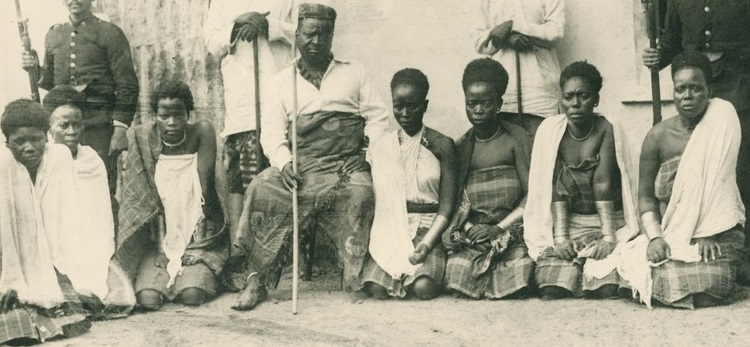
of an annual tax of 10,000 pounds, etc.  For the Lion of Gaza, this meant the end of his independence.  Negotiations were still ongoing, but by September, the Portuguese had invaded the territory of Cossine which was an integral part of the Gaza kingdom.  On 7 November 1895, on lake Coolela, not far from Manjacaze, the Portuguese crushed 8 Shangaan regiments.  Coolela became the Waterloo of Gungunyane.  The Lion gathered his treasures and took off.  For almost a month, Portuguese kept looking for him thinking that he had sought refuge in Transvaal.  However, Gungunyane had sought refuge in Chaimite, the sacred village of the Shangaan people.  While many of his dignitaries, and sons managed to escape into the Transvaal, the Lion never left Chaimite, and on 28 December 1895, he was captured there by Mousinho de Albuquerque, the Portuguese military governor of Gaza.  Gungunyane was first sent to Lisbon, and then later to the island of Terceira on the Portuguese Azores, with his son Godide, some of his wives, and dignitaries. He will die there on 23 December 1906.

In exile in Acores, from l to r: Zixaxa, Molungo, Godide, and Gungunyane
In exile in Acores, from l to r (top): Zixaxa, Molungo, Godide, and Gungunyane
Gungunyane and his wives in exile in Acores

Under Gungunyane, the Shangaan empire grew more powerful compared to his father’s years.  The Shangaan system expanded at a time when Mozambique was at the center of European greed and attacks.  Portuguese who had arrived in the area in 1891, were amazed by Gungunyane’s power, and wrote that the Gaza empire was “the biggest empire that the negro race had created in oriental Africa.”  Many were quite skeptical when they learnt of the Lion of Gaza’s defeat.  A contemporary Portuguese wrote in 1910 that: “the king of the Vatua [Shangaan] empire was a fine diplomat who, knowing that we did not have the military strength to counter his power, managed to turn us [the Portuguese] into docile vassals.” To learn more, check out the book ‘Les Africains, Vol. 3, C. Julien, editions J.A. 1977’, as well as VidasLusoFonas, and the book Gungunhana no seu Reino by Maria da Conceicao Vilhena.