Crème et lait proviennent d’un même pis; mais après avoir battu le lait, on obtient le beurre(Proverbe Peul – Afrique de l’Ouest et Afrique Centrale). – Les enfants seront différents plus tard d’après leur éducation.
Cream and milk come from the same udder; but after beating the milk, we obtain the butter(Fula proverb – West Africa and Central Africa). – Children will be different later depending on their upbringing.
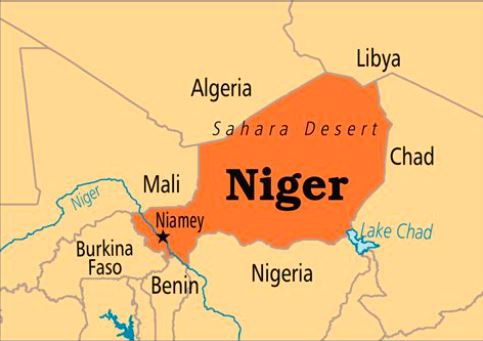
Last week, on June 19th, Niger announced plans to nationalize its uranium venture which until now had been operated by the French company Orano. By this, the Niger government has decided to gain control over its resources from France. For many years, the French state owned company Orano, which was previously Areva, has been extracting uranium in Niger, enjoying a full monopoly, paying barely anything to the country including no taxes (Mali and Niger end Long-Standing Tax Treaties with France). This quest for freedom or rather fairness by Niger is not something new which started with the government of President Abdourahamane Tchiani, but rather the culmination of years of an unfair treatment based on an unbalanced relationship with the French company and government. In the 2000s, then President Mamadou Tandja had sought to re-negotiate the partnership with then Areva (now Orano) which until then had enjoyed a de facto4 decade monopoly in the country paying almost nothing to the locals; he tried to curb the French influence by striking a deal with the China Nuclear International Uranium Corporation in 2007 to develop a uranium mine. As expected, Tandja was deposed in a coup in 2010, coup financed by the metropolis. Niger Takes Control of its Uranium, and Niger and Orano: Disagreement.
In yet another assertion of sovereignty, the government of Niger announced on Thursday, June 19, that it would nationalize the Somaïr uranium venture, wresting control from the multinational nuclear fuel cycle corporation Orano.
Orano is owned by the French state, which, the government noted, has been “openly hostile toward Niger since July 26, 2023”, when the then president Mohamed Bazoum, domestically perceived as a French puppet, was ousted in a popularly supported coup.
Without yielding to French threats of war, the military government replacing Bazoum’s regime consolidated widespread support by expelling French troops, fulfilling the demand for which mass protests had been underway in the lead-up to his removal.
Flag of Niger
… France has long exerted a monopoly over Niger’s uranium, which is among the highest grade in Africa. It has been fueling French nuclear power plants, lighting up a third of its light bulbs, while over 85% of Nigeriens lacked connection to the electricity grid.
… The nationalization changing this neo-colonial arrangement “will allow for healthier and more sustainable management of the company and, consequently, optimal enjoyment of the wealth from mining resources by Nigeriens,” its statement added.
Threatening Niger with “legal actions, including criminal proceedings if necessary”, Orano said it “intends to seek full compensation for the damages suffered and will assert its rights to the stock corresponding to Somaïr’s production to date.”
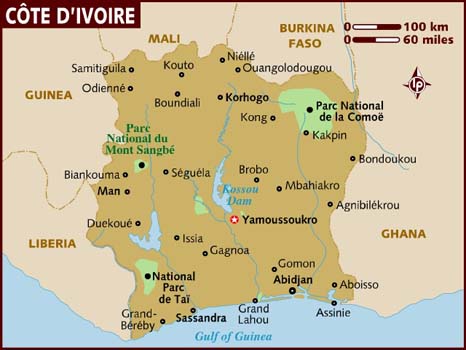
During a meeting with Ivorian Prime Minister Robert Beugré Mambé, the CEO of Resolute Mining, Chris Eger, specified that the construction of the mine will begin in the first quarter of 2026, for a duration of two years. The planned investment amounts to 300 billion CFA francs (approximately 530 million USD).
Map of Cote d’Ivoire
Hummm, Isn’t it a bit suspicious that this large deposit is right near the border with Burkina Faso? We all know that these people plan over decades, so what if the location of the mine in the northeast is not only used for gold extraction, but also as a base for attacks in the neighboring country (U.S. military posture in Africa shifts while terrorist threats intensify)? It is no secret that Côte d’Ivoire is being used as a Western base against the countries of the AES (Mali, Burkina Faso, Niger). Moreover, for many years, people have mentioned the geological survey conducted by the UNESCO (or one of the UN-organization) on Africa which was never made public to African countries. Are we to think that the same Resolute Mining which owns the Syama gold mine in Mali or the Mako gold mine in Senegal, with mining permits in Guinea, never did a geological survey into neighboring Côte d’Ivoire before? Lastly, this is the same Resolute Mining which refused to pay taxes to Mali for years Mali wins $160m in Gold Mining Dispute; Has Côte d’Ivoire negotiated well, or were they too excited by the gold findings? Again, this is where unity would significantly help our countries… here Resolute Mining is signing in Côte d’Ivoire, if they were to sign with a smaller country, less developed, the government maybe so happy that they sign anything or do not negotiate well enough for their populations to benefit from this manna… and these contracts lasts for many many years!
Anyways, we applaud the findings in Côte d’Ivoire, and wish that the government would think of opening a refinery in their own country as well, and train its youths, like in Mali… oh wait… the government of Côte d’Ivoire does not like the Mali of Assimi Goïta!
As of June 2025, the Zimbabwean government has announced that exports of raw lithium concentrate will be banned starting in January 2027. This move is meant to push mining companies to build local processing plants and keep more of the value chain within the country, thus helping towards the country’s development, and stopping the cycle of exports of raw materials and barely anything (The Lithium of Zimbabwe). This should also create employment for the locals.
Lithium
Several Chinese firms—like Sinomine and Zhejiang Huayou Cobalt—are already building lithium sulfate plants at the Bikita and Arcadia mines. These facilities will refine lithium concentrate into lithium sulfate, a key ingredient for battery-grade chemicals like lithium carbonate and hydroxide.
There is not yet a full refinery built, but this ban indicates Zimbabwe’s clear shift from being just a raw exporter of lithium. Given the importance of lithium in the electric car revolution as a material for batteries, this is really a game changer. We applaud Zimbabwe, and call other countries to learn from Zimbabwe, Mali, Burkina Faso, and Niger.
Kwame Nkrumah
This is where the dream of Kwame Nkrumah, of a real African Union, comes back; we are not talking about the current union which is just a puppet organization serving the interest of the Western powers. Kwame Nkrumah: African Visionary and Ghana’s First President. Currently, each country is negotiating individually, which may yield good or not so good results, if they do not have good negotiators or good mining lawyers in the case of lithium for instance. However, some would end up being taken advantage of just because they are not exposed to the new changes, don’t know, and could accept really low prices which may affect even their neighbors. Being United would insure good negotiations across the board learning from others, and also ensure that the multinationals respect the local governments and populations; and if they are kicked out of one country because of law or contract infringements, that they do not just run to another to perpetuate the cycle. This is what the AES is doing (The AES Creates a Joint Military Force), and all African countries should.
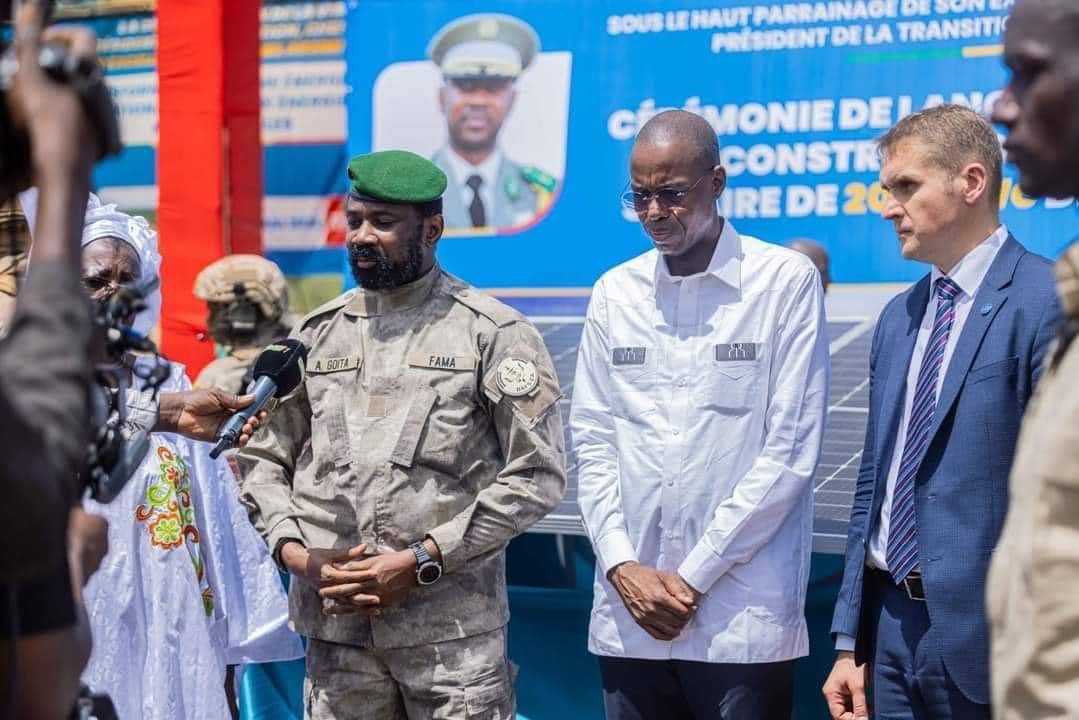
President Assimi Goita of Mali during the launching of a public gold refinery (Source: akondanews.net)
Today, June 17, 2025, Mali has begun the construction of a new state-controlled gold refinery. The facility, built in partnership with Russia’s company Yadran Group, is expected to process up to 200 metric tons of gold annually, significantly increasing Mali’s refining capacity. The refinery is part of the broader mining reforms taken by the government of Assimi Goïta to keep more gold processing within the country rather than exporting raw materials. This should, in principle, help develop the local manpower. The state will hold a 62% stake, with Yadran Group owning the remaining 38%. This refinery is intended to serve as a regional hub, processing gold not only for Mali, but in the long term for neighboring countries like Burkina Faso as well. This project reflects the wider trend in the Sahel, and particularly in the AES, where countries are revising mining laws so as to keep more value-added processing at home.
Flag of Mali
It is about time that Mali, and other African countries learn to process their materials at home, instead of exporting the raw materials to later on import the same things, or letting the others reap fruits from our raw materials. Just imagine for a second if the Democratic Republic of Congo had the power to develop its cobalt, tantalum, tin, uranium, etc., at home, wouldn’t it impact its populations for better? Or just imagine if Ivory Coast, the number one world producer of cocoa was processing its cocoa at home, instead of exporting the raw beans to Europe for Europeans to process, how would this fundamentally change the Ivorian economy?
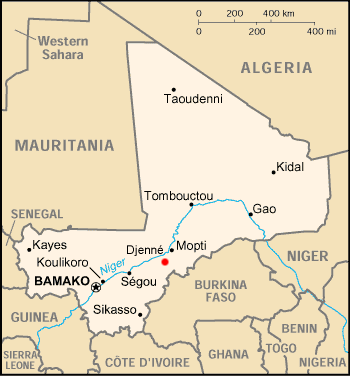
Map of Mali
Of course, when you read the MSM magazines, they will title Junta-led Mali begins construction of gold refinery in partnership with Russia; instead of the Malian government begins the construction of a gold refinery! They are upset that Mali, and all the other countries of the AES, Burkina Faso and Niger, are taking steps to nationalize, to improve, and to build factories to refine their God-given resources in their own lands, thus taking a step towards lifting their nations out of poverty! This, of course, would not help the West which would rather have a weak African government or puppet governments.
Moreover, yesterday 06/16, the Malian courts ordered that the Loulo-Gounkoto gold mine be placed under provisional administration for six months. The deposit has been the subject of a tug-of-war between the Malian government and the Canadian mining group Barrick Gold for the past two years, over tax dispute (Mali wins $160m in Gold Mining Dispute). The Malian authorities hope to resume production operations halted in January at this strategic gold site, while gold prices are at their highest.
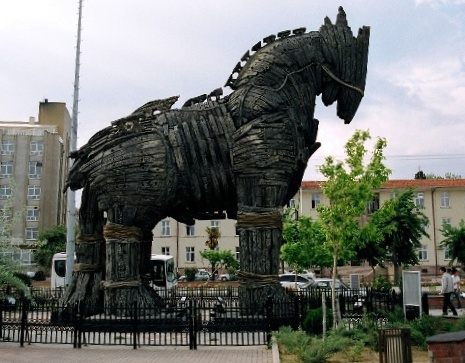
A replica of the Trojan Horse, used in the 2004 film Troy, stands today in Çanakkale, Turkey, the modern-day location of the city of Troy (Source: Wikipedia)
Have you ever received a poisoned gift? Do you remember the Fall of Troy with the story of the Trojan horse as told in the Odyssey of Homer? The Greeks built a huge wooden horse at the behest of Odysseus, and hid a select force of soldiers inside including Odysseus himself; they pretended to sail away leaving the wooden horse behind, and the Trojans thinking that it was a gift from the Greeks pulled the horse into their city as a victory trophy. That night, the Greek force came out of the horse, opened the city gates for the rest of the Greek army, and destroyed the entire city defeating the Trojans.
Last week, we heard Bill Gates say that he will be leaving the majority of his $200 billions to the future of Africa towards education, healthcare, and innovation. His focus will be maternal and child health, infectious diseases, and poverty. He plans to work closely with governments, local organizations, and partners across Africa to implement plans. It is quite laudable that such a rich man would want to “give away” his fortune. However, one cannot be blinded by some loud elements that would make this questionable.
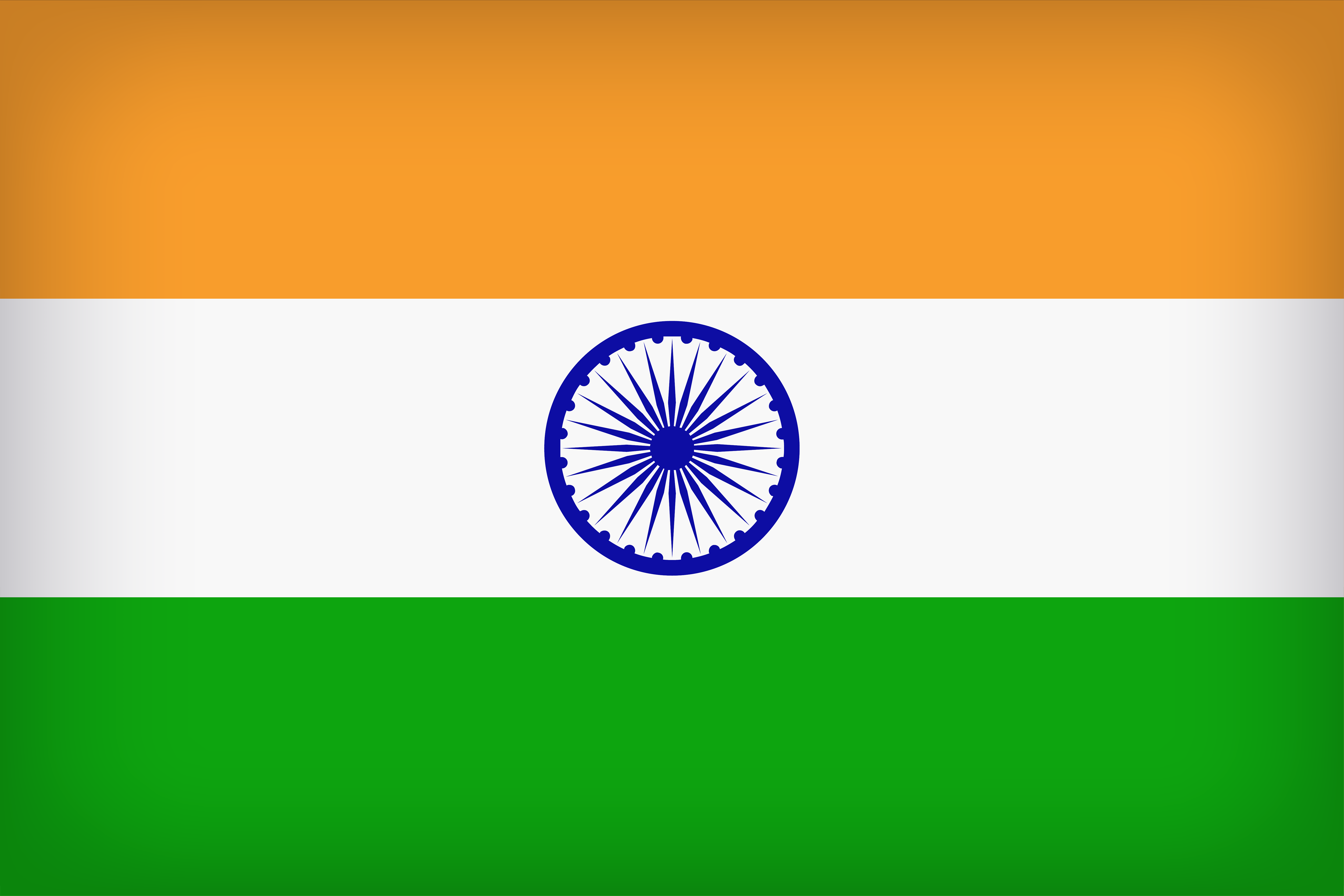
Flag of India
In 2009, the Bill & Melinda Gates Foundation was involved in a clinical trial of cervical cancer vaccines in India which killed and handicapped thousands of girls, causing the organization to be kicked out of the country. In December 2024, Gates called India “a laboratory to try things,” which caused an uproar. Indian farmers have also protested against controversial laws promoting privatization of agriculture passed by the government supported by Gates.
Flag of Kenya
In Kenya, the Bill & Melinda Gates Foundation faced criticism for its involvement in the livestock vaccination; the green revolution promised by Gates through one of his organizations AGRA has wreaked so much havoc and destruction. There have also been adverse effects of some of his other vaccines (including meningitis or tetanus) on young girls, or the polio vaccine which caused issues, in some cases there are claims of young girls getting sterilized or dying. This caused the removal of the foundation’s diplomatic immunity in the country. Can you imagine a non governmental organization and its staff receiving diplomatic immunity from legal action in a country? What are they hiding to need such? This was canceled in April 2025. Recently, we heard about genetically modified (GM) mosquitoes introduced by his foundation in Djibouti to fight malaria; who has approved this? Once the mosquitoes are released in Djibouti, what is to stop them from crossing the border to Eritrea, Ethiopia, Somalia, or even Yemen?
Thus, when this same person, who for many years was the richest man on earth and thus could pay off any government in the world, says he is pledging his money to Africa for “maternal and child health“, it raises concerns. Remember when Melinda Gates said that “family planning is vital” and pledged almost $5 billion to ensure that the African woman is less fertile, less encumbered and yes, she said more “liberated“. In a 2010 TED talk, Bill Gates expressed the hope that vaccines along with “family planning” could bring population growth to nearer zero.
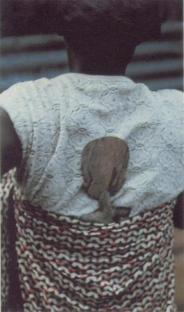
An Akua’ba tucked into the wrapper of an Asante woman. Photograph by Herbert M. Cole, Ghana, 1972 (RandAfricanArt.com)
Why is the fertility of the African woman such a problem to these people (remember Macron and his monologue about African women having too many children?)? We do not worry about theirs, why worry about ours? In a world where some countries (Japan, Italy, South Korea, …) are facing population crises, not producing enough children to regenerate the society, and trying to find ways to circumvent this, why do these people have issues with African fertility? It is no secret that the African population represents 18% of the world’s population, and has the youngest population in the world.
Thus, when Bill Gates says he is pledging his money for the well-being of Africa… it is clear that Africans should treat it as a Trojan horse. Why Africa? As shown in the article by S. Ahmed, and others on India, there are 54 countries and governments in Africa with very poor control and thus there will be little accountability for anything that could possibly go wrong, and as Gates said about India, and maybe now Africa, it is so easy “to try things” on the continent without much control! Africans, beware of free money! There is no free lunch out here!
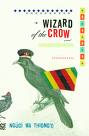
On the black woman. “I believe that black has been oppressed by white; female by male; peasant by landlord; and worker by lord of capital … the black female worker and peasant is the most oppressed. She is oppressed on account of her color like all black people in the world; she is oppressed on account of her gender like all women in the world; and she is exploited and oppressed on account of her class like all workers and peasants in the world. Three burdens she has to carry.” Wizard of the Crow
On unity. In A Grain of Wheat, Ngũgĩ stressed the importance of unity of resisting tyranny, “Our fathers fought bravely. But do you know the biggest weapon unleashed by the enemy against them? It was not the Maxim gun. It was division among them. Why? Because a people united in faith are stronger than the bomb.”
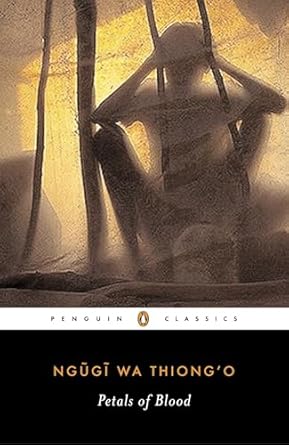
Petals of Blood by Ngũgĩ wa Thiong’o
Like Sengat-Kuo in his poem “Ils sont venus“, Ngũgĩ highlighted in Petals of Blood the holy trinity of the Bible, the guns, and commerce to conquer and oppress Africans, “He carried the Bible; the soldier carried the gun; the administrator and the settler carried the coin. Christianity, Commerce, Civilization: the Bible, the Coin, the Gun: Holy Trinity.“
Language as a weapon. In his groundbreaking book Decolonising the Mind: The Politics of Language in African Literature, he championed the use of the mother tongue, arguing, “To speak one’s language is to celebrate one’s identity, … but to impose a language is a way to divide people – it is to practice tribalism of another kind.”
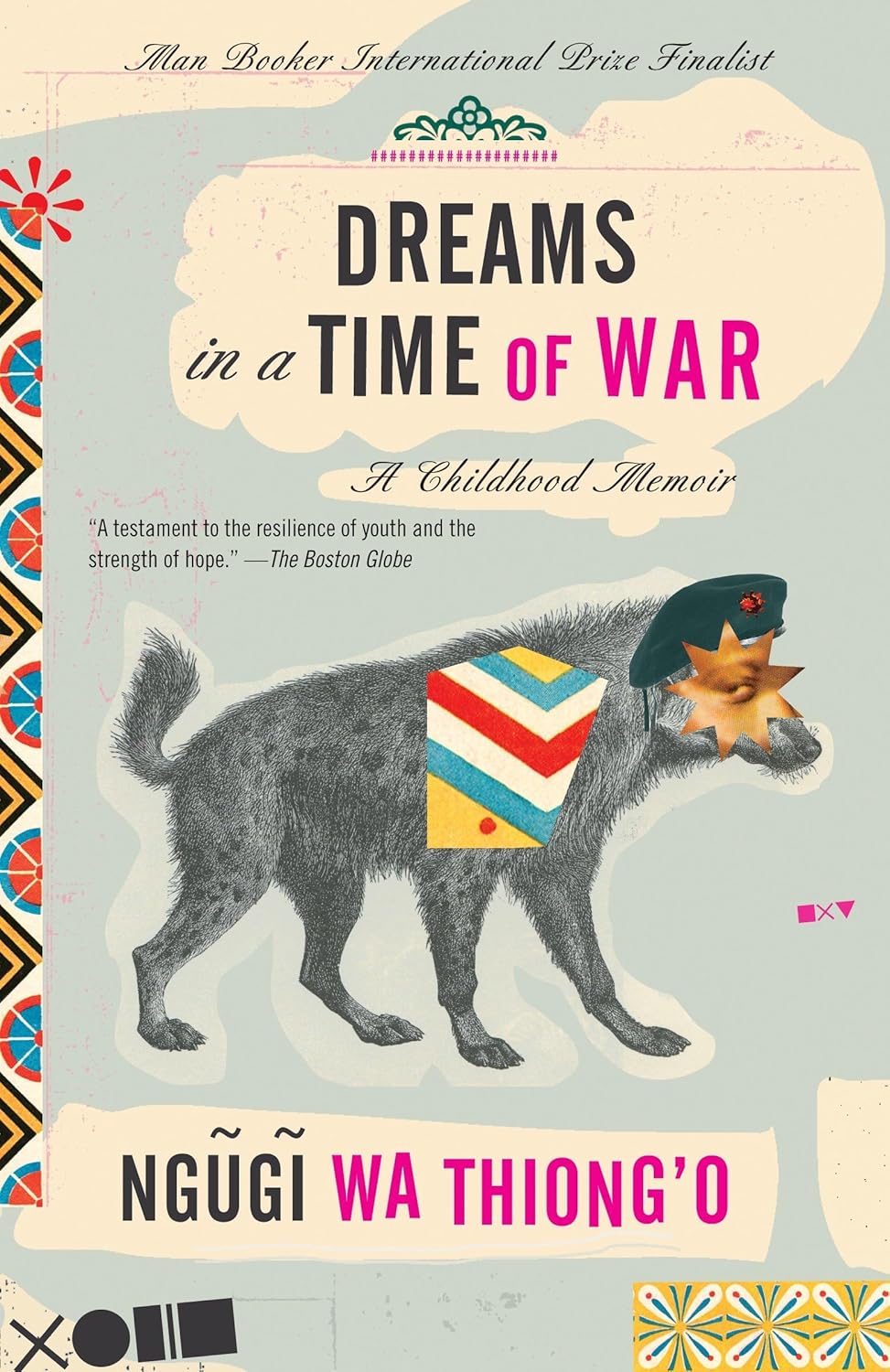
Dreams in a Time of War: A Childhood Memoir by Ngũgĩ wa Thiong’o
On Women condition. In Wizard of the Crow, Ngũgĩ said, “The condition of women in a nation is the real measure of its progress.“
On self-validation. in Dreams in a Time of War, he added “Belief in yourself is more important than endless worries of what others think of you. Value yourself and others will value you. Validation is best that comes from within.“
World acclaimed Kenyan writer Ngũgĩ wa Thiong’o is no longer. Millions of school children in Africa grew up reading his first books Weep not child (1964), the first novel in English published by an East African, followed by The river between (1965) and A Grain of Wheat (1967). A Cameroonian friend of mine used to love reading The river between, and could recite almost every line. Weep not child explored the impact of the Mau Mau rebellion on a young boy’s family and education, The river between focused on the cultural clash between traditional Gikuyu society, while A Grain of Wheat focused on the disillusionment of the post-independence era.
Chinua Achebe (Source: AP Photo)
Like the venerated Chinua Achebe, Ngũgĩ wa Thiong’o was counted among the baobabs of modern African literature, as the author of several novels, plays, short stories, critical pieces, and children books. Like Achebe, he was tipped several times to win the Nobel Prize for Literature, leaving fans dismayed each time the medal slipped through his fingers. We are counted among those fans who each time hoped, but were always disappointed… it’s like the real African authors never get rewarded. This is a lesson for all that we need to reward our own, create awards and celebrate our own, instead of waiting for others to celebrate them. His daughter Wanjiku wa Ngũgĩ who announced his passing on May 28, 2025, said, “He lived a full life, fought a good fight. As was his last wish, let’s celebrate his life and his work.”
“Weep not Child” by Ngugi wa Thiong’o
Ngũgĩ reached fame writing in English, and then decided to write in Gikuyu, his mother-tongue. Today, his books are written in Gikuyu, and then translated into English; he was a strong proponent of African languages and was adamant about expressing his art in Gikuyu. Like so many East African leaders, he attended the prestigious Makerere University in Uganda, and later the University of Leeds in the UK. Upon his return to Kenya, he taught at the University of Nairobi where he worked to “decolonize the minds,” campaigning to decolonize the curriculum by prioritizing African literature and languages. He was instrumental in the abolition of the English Literature Department in favor of a broader, African-centered literary program. The 1970s decade also saw him drop his patronym James Ngugi, to be fully known as Ngũgĩ wa Thiong’o.
“The wizard of crow” by Ngugi wa Thiong’o
His work spanned over six decades, documenting the transformation of his country, Kenya, from a colony of Great Britain to a democracy with all its issues. He fought the government and was arrested several times, and spent a year at a maximum security prison where he wrote his novel Devil on the Cross (Caitaani mũtharaba-Inĩ), the first modern novel in Gikuyu, written on prison toilet paper. Once out of prison, faced with constant harassment from the government, he went into exile and taught at some of the world’s best universities, including Yale University, New York University, Northwestern University, and the University of California, Irvine where he was a Distinguished Professor of English and Comparative Literature and served as first director of the International Center for Writing and Translation.
Ngugi wa Thiong’o (Source: TTbook.org)
His was a unique voice, a voice which never stopped to urge for the decolonization of the minds. To this effect, he wrote Decolonising the Mind: The Politics of Language in African Literature (1986) which advocates for linguistic decolonization of Africa; the book became one of his best known non-fiction work. In his speech at Wits University in Johannesburg in 2017, titled ‘Secure the base, decolonise the mind’, Ngũgĩ spoke about the ‘power relationship between the language of the conqueror and the language of the vanquished’, and asked whether, after fifty years, we have ‘regained the cultural and intellectual independence that we had lost to colonialism’, adding ‘I have always argued that each language, big or small, has its unique musicality; there is no language, whose musicality and cognitive potential, is inherently better than another,’ he said [The Johannesburg Review of Books]. Ngũgĩ is survived by 9 children of whom 4 are also authors like himself.















 African Heritage