

We have previously talked about the Ishango bone, or rather the first evidence of a calculator in the world. Named after the place where it was found in the Democratic Republic of Congo (DRC), the Ishango bone is what is called a bone tool or the craddle of mathematics, and dates as far back as 22,000 years ago, in the Upper Paleolitic era; It is the oldest attestation of the practice of arithmetic in human history.
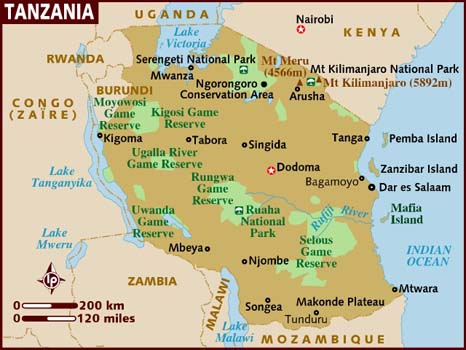
This month, archaeologists have published in the journal Nature their discovery of the earliest known bone tools, showing evidence of their use 1.5 million years ago. These bone tools were found in the Olduvai Gorge, in Tanzania. The tools were carved from elephant and hippopotamus bones. The article, Systematic bone tool production at 1.5 million years ago by de la Torre et al., was published on March 5, 2025, and provides new insights into the intelligence and innovation of East African hominins who showed “a transfer and adaptation of knapping skills from stone to bone,” which until now were thought to be restricted only to European sites dating back 500,000 years.
Excerpts below are from AfricaNews. To read in depth, please check out the original article of de la Torre, I., Doyon, L., Benito-Calvo, A. et al. Systematic bone tool production at 1.5 million years ago. Nature (2025). https://doi.org/10.1038/s41586-025-08652-5 and the Nature Podcast by N.P. Howe & S. Bundell .
As the authors say in the Nature article, “… East African hominins developed an original cultural innovation that entailed a transfer and adaptation of knapping skills from stone to bone. By producing technologically and morphologically standardized bone tools, early Acheulean toolmakers unravelled technological repertoires that were previously thought to have appeared routinely more than 1 million years later.”
=====

Archaeologists have discovered the earliest known bone tools, pushing back evidence of their use by around a million years.
The find suggests early humans had more advanced tool-making skills than previously thought. These 27 fossilised bones, shaped into tools 1.5 million years ago, are rewriting the history of early human technology.
The collection, found in Tanzania’s Olduvai Gorge, provides the earliest evidence of deliberate bone tool-making by ancient hominins. Carved from the thick leg bones of elephants and hippos, the implements reveal that early humans were using more complex toolkits than previously thought.
Researchers know that simple stone tools were being made as far back as 3.3 million years ago. But until now, bone tools were believed to be a much later innovation. The well-preserved artifacts, some measuring up to 40 centimetres, show clear signs of intentional shaping. At the time they were created, our ancestors lived a precarious hunter-gatherer existence on the plans of the Serengeti region, a landscape teeming with wildlife. They made them using a technique similar to how stone tools are made, by chipping off small flakes to form sharp edges, revealing skilled craftsmanship.
… The tools were likely used as handheld axes for butchering animal carcasses, particularly scavenged remains of elephants and hippos. Unlike later tools, they were not mounted on handles or used as spears. Researchers say the uniform selection of bones, primarily large leg bones from specific animals, suggests early humans deliberately sought out the best raw materials for making tools.
… The discovery dates back more than a million years before Homo sapiens emerged. At the time, at least three different hominin species lived in the region, including Homo erectus, Homo habilis, and Paranthropus boisei.
…

 African Heritage
I believe that these were *Travel* guides.
The marks are a tally of how many days travel to reach a *specific* protected and safe *stopover* place. Once the group were able to gather enough new provisions and were well rested, then they would travel on for the number of Days to the next stopover location. That is why the tallies of each section are a completely different number. The blank spaces *between* the tallies do not indicate a tally of how long each stopover was, because that could vary depending on how much restocking of food and how much rest the members of the group needed.
The return trip would use this same number of days travel tally *in reverse* as a guide for the return travel.
LikeLike
Thanks Sofiapmail for sharing
LikeLike