Mali, Burkina Faso, and Niger all leave the ECOWAS

Map of Mali with its capital Bamako

The authorities of Mali, Burkina Faso, and Niger have announced simultaneously on 28 January 2024, their decision “in complete sovereignty on the immediate withdrawal” from the regional economic bloc that is the Economic Community of West African States (ECOWAS). Mali, Burkina Faso, and Niger stated, ECOWAS “under the influence of foreign powers, betraying its founding principles, has become a threat to its member states and its population.” The three countries have accused the regional bloc of failing to support their fight against “terrorism and insecurity,” while imposing “illegal, illegitimate, inhumane, and irresponsible sanctions.” All three countries were founding members of ECOWAS over 50 years ago.

Burkina Faso
Burkina Faso

In reality, this comes as no surprise as it is the normal evolution of the state of things. After the coup in their respective countries, the ECOWAS has suffocated these countries by suspending all three countries and imposing heavy sanctions on Mali and Niger that have only served to exacerbate the populations’ sentiments that it is a puppet organization serving foreign interests. Niger even tried to amend the situations by inviting ECOWAS representatives to the country last week, but only the member from Togo showed up. Why should anybody remain a member of an organization that punishes the populations? Are they trying to pressurize the three landlocked countries? It is sad that we, Africans, have organizations that only work to serve the interests of others. It should not even be allowed for coastal countries to use sea access to landlocked ones as a pressure point! That is totally inhumane!
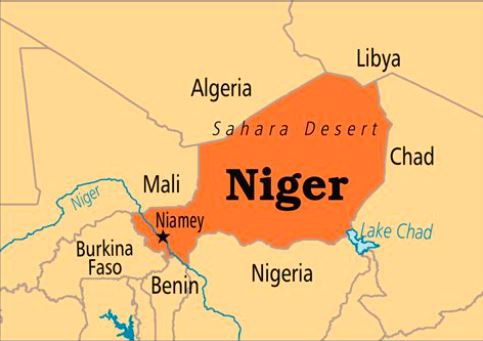
Map of Niger

We all joined these organizations thinking that they would serve common African goals…. unfortunately, under external orders, they instead impose heavy sanctions on sister states. It is about time that we, Africans, unite around the cause of Burkina Faso, Mali, and Niger, to free our continent. Their fight should be our fight, as they are fighting for our freedom, particularly that of Francophone Africa. Since the coup in Niger and rupture with France, Niger’s economy has been doing better even with all the sanctions, than since independence. Does that not tell us something? No wonder, all the European generals have been having meetings in West Africa in recent weeks, and even the American Secretary of State Anthony Blinken was in Cote d’Ivoire just a few days ago, while the populations are focused on the African Cup of Nations. We should not forget that now is the New Scramble for Africa, and Africans should not allow history to repeat itself!
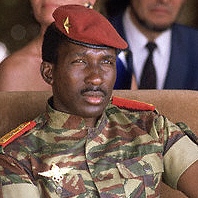
Thomas Sankara
Thomas Sankara a Ouagadougou

And of course, the Western media predict all doom to these countries. Freedom is not cheap, but it is best to be free of one’s destiny than being a slave at the mercy of someone else… Like Thomas Sankara said, “… the slave who is not capable of assuming his rebellion does not deserve that we feel sorry for himself. This slave will respond only to his misfortune if he is deluding himself about the suspect condescension of a master who claims to free him. Only struggle liberates …” [«… l’esclave qui n’est pas capable d’assumer sa révolte ne mérite pas que l’on s’apitoie sur son sort. Cet esclave répondra seul de son malheur s’il se fait des illusions sur la condescendance suspecte d’un maître qui prétend l’affranchir. Seule la lutte libère »] Discours de Sankara à l’ONU le 4 octobre 1984 (texte intégral) 

Ghana Artefacts “Return” Home 150 years later … on Loan

Asante ceremonial cap worn by courtiers at coronations is among the items that will be loaned back to Ghana (Source: British Museum / BBC)

The news is everywhere, Asante gold artifacts are returning home after 150 years … on loan from the UK to Ghana. Let’s repeat that, Ghanaian artifacts looted 150 years by British forces in modern-day Ghana, are now being returned to Ghana on a loan from the UK. What the heck? So someone comes to your house, steals from you, and then years later, after you have begged, says “I am returning some of the stuff I stole from you on loan only!” How does that make sense? People say, “it is a step forward, we need to acknowledge it, and be grateful for progress.” Grateful? Grateful for what? Because the British are loaning things they stole from the Asante kingdom of Ghana, back to Ghana? Some of these loaned items are like the crown jewels of the kingdom, and have high spiritual values as well. And this comes after Ghanaians have negotiated for very long … can you imagine? … a loan!

Excerpts below are from the BBC.

=====

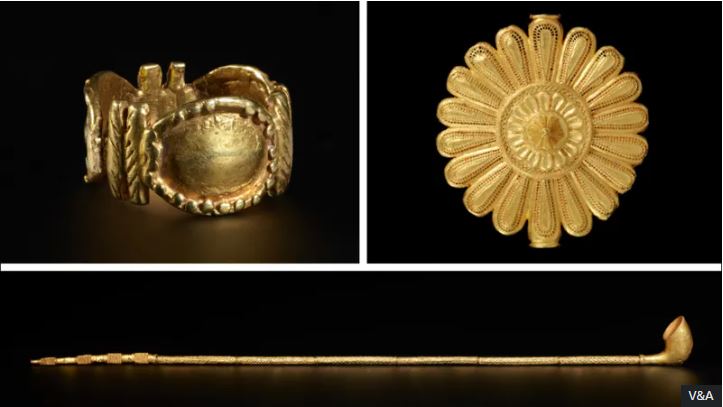
The V&A is lending 17 items including an Asante gold ring (top left), a gold badge worn by the king’s “soul washer” and a ceremonial pipe (Source: V&A Museum / BBC)

The UK is sending some of Ghana’s “crown jewels” back home, 150 years after looting them from the court of the Asante king.

A gold peace pipe is among 32 items returning under long-term loan deals, the BBC can reveal.

The Victoria & Albert Museum (V&A) is lending 17 pieces and 15 are from the British Museum.

Ghana’s chief negotiator said he hoped for “a new sense of cultural co-operation” after generations of anger.

Some national museums in the UK – including the V&A and the British Museum – are banned by law from permanently giving back contested items in their collections [somehow, they are not banned by law from taking stolen goods], and loan deals such as this are seen as a way to allow objects to return to their countries of origin .

But some countries laying claim to disputed artefacts fear that loans may be used to imply they accept the UK’s ownership. Tristram Hunt, director of the V&A, told the BBC that the gold items of court regalia are the equivalent of “our Crown Jewels“.

The items to be loaned, most of which were taken during 19th-Century wars between the British and the Asante [known as the Anglo-Ashanti wars, series of conflict wars which lasted from 1824 to 1900], include a sword of state and gold badges worn by officials charged with cleansing the soul of the king.

British troops ransacking Fomena Palace en route to Kumasi in 1874

Mr Hunt said when museums hold “objects with origins in war and looting in military campaigns, we have a responsibility to the countries of origin to think about how we can share those more fairly today. It doesn’t seem to me that all of our museums will fall down if we build up these kind of partnerships and exchanges.” [that’s why they only loan a minuscule number at a time … so their museums don’t fall apart].

However, Mr Hunt insisted the new cultural partnership “is not restitution by the back door” – meaning it is not a way to return permanent ownership back to Ghana. [The UK are still the owners of these Ghanaian artifacts stolen from Ghana].

The three-year loan agreements, with an option to extend for a further three years, are not with the Ghanaian government but with Otumfo Osei Tutu II – the current Asante king known as the Asantehene – who attended the Coronation of King Charles last year. [Did the negotiation include attending the British King’s coronation, as a condition for loaning?]

The items will go on display at the Manhyia Palace Museum in Kumasi, the capital of the Asante region, to celebrate the Asantehene’s silver jubilee.

The Asante gold artefacts are the ultimate symbol of the Asante royal government and are believed to be invested with the spirits of former Asante kings.

They have an importance to Ghana comparable to the Benin Bronzes – thousands of sculptures and plaques looted by Britain from the palace of the Kingdom of Benin (Benin City: the Majestic City the British burnt to the ground), in modern-day southern Nigeria. Nigeria has been calling for their return for decades.

Nana Oforiatta Ayim, special adviser to Ghana’s culture minister, told the BBC: “They’re not just objects, they have spiritual importance as well. They are part of the soul of the nation. It’s pieces of ourselves returning.” She said the loan was “a good starting point” on the anniversary of the looting and “a sign of some kind of healing and commemoration for the violence that happened“.

UK museums hold many more items taken from Ghana, including a gold trophy head that is among the most famous pieces of Asante regalia. The Asante built what was once one of the most powerful and formidable states in west Africa, trading in, among others, gold, textiles and enslaved people. The kingdom was famed for its military might and wealth. …

Burning of Kumasi by British troops in 1874

Europeans were attracted to what they later named the Gold Coast by the stories of African wealth and Britain fought repeated battles with the Asante in the 19th Century. In 1874 after an Asante attack, British troops launched a “punitive expedition”, in the colonial language of the time, ransacking Kumasi and taking many of the palace treasures.

[The items on loan] include three heavy cast-gold items known as soul washers’ badges (Akrafokonmu), which were worn around the necks of high ranking officials at court who were responsible for cleansing the soul of the king. …

The British Museum is also returning on loan a total of 15 items, some of them looted during a later conflict in 1895-96, including a sword of state known as the Mpomponsuo.

Proverbe Bamiléké sur l’intimidation / Bamileke Proverb on Intimidation

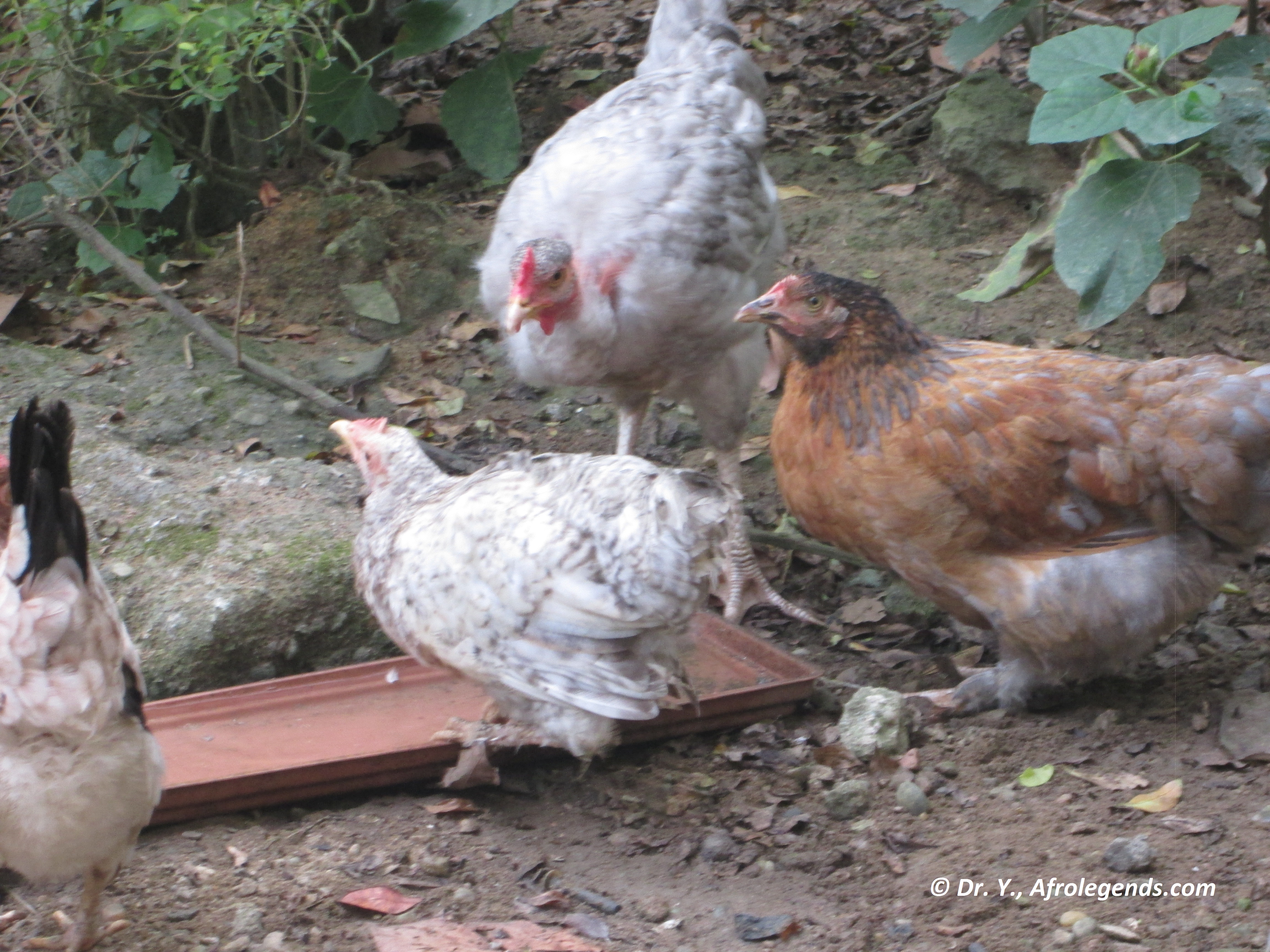
Poules / hens

Le vent n’arrache jamais la queue de la poule (proverbe Bamiléké – Cameroun). – quelqu’un peut vous intimider, mais ne peut rien contre vous.

Le vent / The wind

The wind never pulls out the hen’s tail (Bamileke proverb – Cameroon). – someone can intimidate you, but cannot do anything against you.

Happy Timkat in Ethiopia

Flag of Ethiopia

Tomorrow in Ethiopia will be the celebration of the Timkat or the Ethiopian festival celebrating the Epiphany.  This year, it takes place on 20 January given that it is a leap year, and on 19 January on regular years (which is the 10th day of the TerrEthiopian calendar).  This festival celebrates the baptism of Jesus Christ on the Jordan river by John the Baptist (Matthew 3:13–17; Mark 1:9–11; Luke 3:21–23).  It is particularly praised for its reenactment of the baptism.  Pilgrims come from around the country to celebrate the Epiphany, which lasts three days.  During the ceremonies of Timkat, the Tabot, a model of the Ark of the Covenant, is reverently wrapped in rich cloth and borne in procession on the head of the most senior priest to a place near the river, where a special tent will be erected for it.

The best place for the celebration is in Gondar at the Fasilides Castle: a Pure Gem of Ethiopia’s Rich History. Given our previous articles, the Timkat Festival of Epiphany and Timkat or the Ethiopian Epiphany, this year, we will show a video of a previous celebration at the Fasilides Castle in Gondar. Enjoy!

Proverbe sur les décisions / Proverb on Decisions

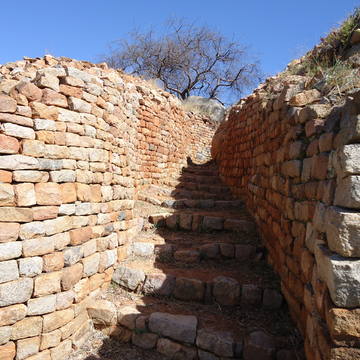
A passageway at Khami (WHC-UNESCO website)

Fi woroko se Ada (Owe Yoruba – Nigeria)

Faites un pas audacieux pour apporter un changement (proverbe Yoruba – Nigeria)

Take a bold step to make a change (Yoruba proverb – Nigeria)

Ethiopia – Somaliland Agreement: Will Sea Access lead to Conflict in the Horn of Africa?

Flag of Ethiopia

Last October, Ethiopian prime minister Abiy Ahmed declared that having sea access was an existential issue for Ethiopia, which is the largest most populous landlocked country in the world with over 100 million inhabitants. Everyone started fearing, because since Abiy’s arrival, Ethiopia has been in conflict internally in Tigray and Oromia. Everyone started fearing for a renewed conflict with Eritrea, after the peace treaty signed between both nations on 9 July 2018 which formally ended the Eritrean–Ethiopian border conflict. The worries stemmed from the fact that Ethiopia lost its sea access when Eritrea seceded in 1993. The conflict between Ethiopia and Eritrea is like the conflict between China and Taiwan… except it takes on an existential nature in the case of Ethiopia which is landlocked because of it. So when Prime Minister Abiy made his announcement in October, everyone on the horn of Africa started sweating. Ethiopia begged its coastal neighbors, but Djibouti, Eritrea, and Somalia all rejected its pleas for direct access to a port on the Red Sea.

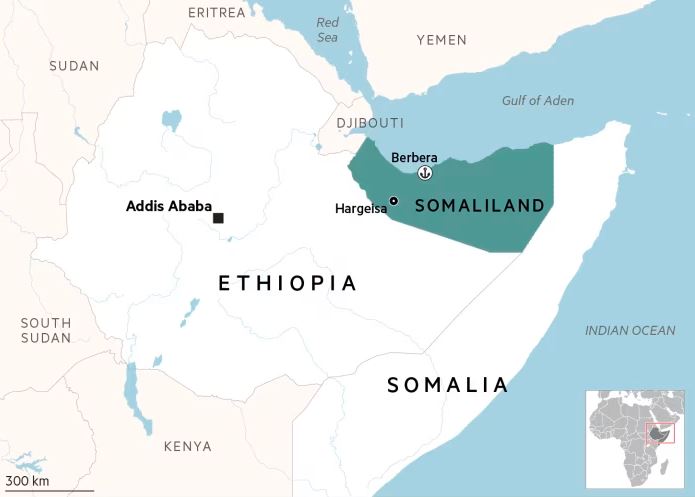
Map of the sub-region with Somaliland and its port of Berbera highlighted (Source: Financial Times)

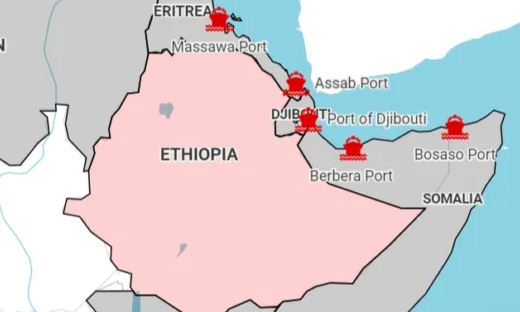
On January 1, 2024, Ethiopia announced an agreement signed with Somaliland to lease the port of Berbera on the Red Sea, and a 20-km stretch of Red Sea coastline for 20 years, in exchange Somaliland will receive shares in its neighbor’s flagship carrier, Ethiopian Airlines, Africa’s most successful airline – and eventual recognition as an independent state. Prime Minister Abiy’s office said the agreement would “pave the way to realize the aspiration of Ethiopia to secure access to the sea.Somaliland’s foreign ministry said in a statement that the “historic agreement ensures Ethiopia’s access to the sea for their naval forces, reciprocated by formal recognition of the Republic of Somaliland, marking this as a significant diplomatic milestone for our country.” This agreement paves the way for Ethiopia to establish a commercial and military presence on the coast. I breathed a sigh of relief… which I had to take back the following day when Somalia’s President Hassan Sheikh Mohamud called the Ethiopia-Somaliland agreement an act of agression! He sees it as such, because the agreement would seem to imply that Ethiopia will recognize Somaliland as an independent state. Somaliland seceded from Somalia more than 30 years ago, but is not recognized by the African Union (AU) or the UN as an independent state. Quickly, both the US and the African Union have backed the territorial integrity of Somalia and urged all parties to cool tensions. 

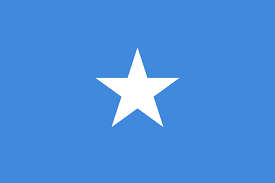
Flag of Somalia

Ethiopia and Somalia are two states with a lengthy history of military conflict and animosity. Now, the president of Somalia is campaigning up and down the horn of Africa and has gotten the support of Egypt (remember that Egypt is mad at Ethiopia for building the Grand Ethiopian Renaissance Dam on the Nile and getting its proper share of the Nile’s waters – story for another day), Turkey, the puppet organization that is the AU, the European Union (EU), and the US. He stepped up the rhetoric by saying: “We will defend our country, we will defend it by all means necessary and seek the support of any ally willing to help us.” and called on youths “to prepare for the defense of our country“.

Map of the region with the different countries involved and ports (Source: Medium.com)

In my simple views, given Ethiopia’s large population, economic weight, and regional cloud (Ethiopia is now a member of the BRICS), any neighboring coastal state would benefit from working with it and developing agreements that will allow the use of its ports; it should be a win-win situation! Thus, it would seem careless for Somalia to want to start war, when all that could be done is get an agreement from Ethiopia to pay Somalia instead or split the proceeds from Somaliland… Ethiopia is definitely not getting access to the port of Berbera for free! Why is Somalia seeing a war threat from Ethiopia and not Somaliland… their issue is with Somaliland, why not deal with that? Neighboring Sudan has been at war since the middle of last year. Conflict would further destabilize the entire region, which is so close to the strategic Gulf of Aden on the Red Sea, one of the world’s largest shipping routes. Could this be a way for the Somalian president to justify his poor internal politics, by diverting his people’s attention towards war? These African countries are always ready and eager to lease their lands, ports, airports, for a specific duration to European or Chinese or even South African companies, why is it so hard to do the same for fellow African neighbors?

To learn more, read this article from the Conversation, Medium, or Modern Diplomacy. Dear reader, do you think this is the beginning of yet another conflict in the Horn of Africa? Do you think this will further play into the New Scramble for Africa?

The 2023 Africa Cup of Nations is Here!

AFCON 2023 – CAN 2023 (Source: CAF online)

The 2023 Africa Cup of Nations (AFCON) or Coupe d’Afrique des Nations (CAN) is upon us! For one month the best football teams of the African continent will face each other in Côte d’Ivoire. This is the second time in the country’s history to host the tournament. Abidjan est doux deh! (Abidjan is sweet!). The cup will start tomorrow, Saturday January 13, 2024 at the new Alassane Ouattara stadium of Abidjan, one of the six arenas for this year’s African Cup of Nations. The Africa Cup of Nations will kick off with a game between the host nation Côte d’Ivoire and Guinee Bissau.

This year promises to be hot! Will Senegal, the last CAN winners, renew the feat, thus winning back-to back cups? Will Morocco, the first African team to ever get to the semi-final of the World Cup, win this year’s CAN? Will the country with the most cups, seven-time champions Egypt, take this one home? Will the usual heavy contenders like Côte d’Ivoire, Nigeria, Cameroon, or Ghana take it home? Or will a newcomer upset the balance? It will be hot. A record 7 million dollars will go to the winners of this year’s cup; it is a 40% increase from the last tournament won by Senegal in 2022. The runners-up will pocket 4 million dollars.

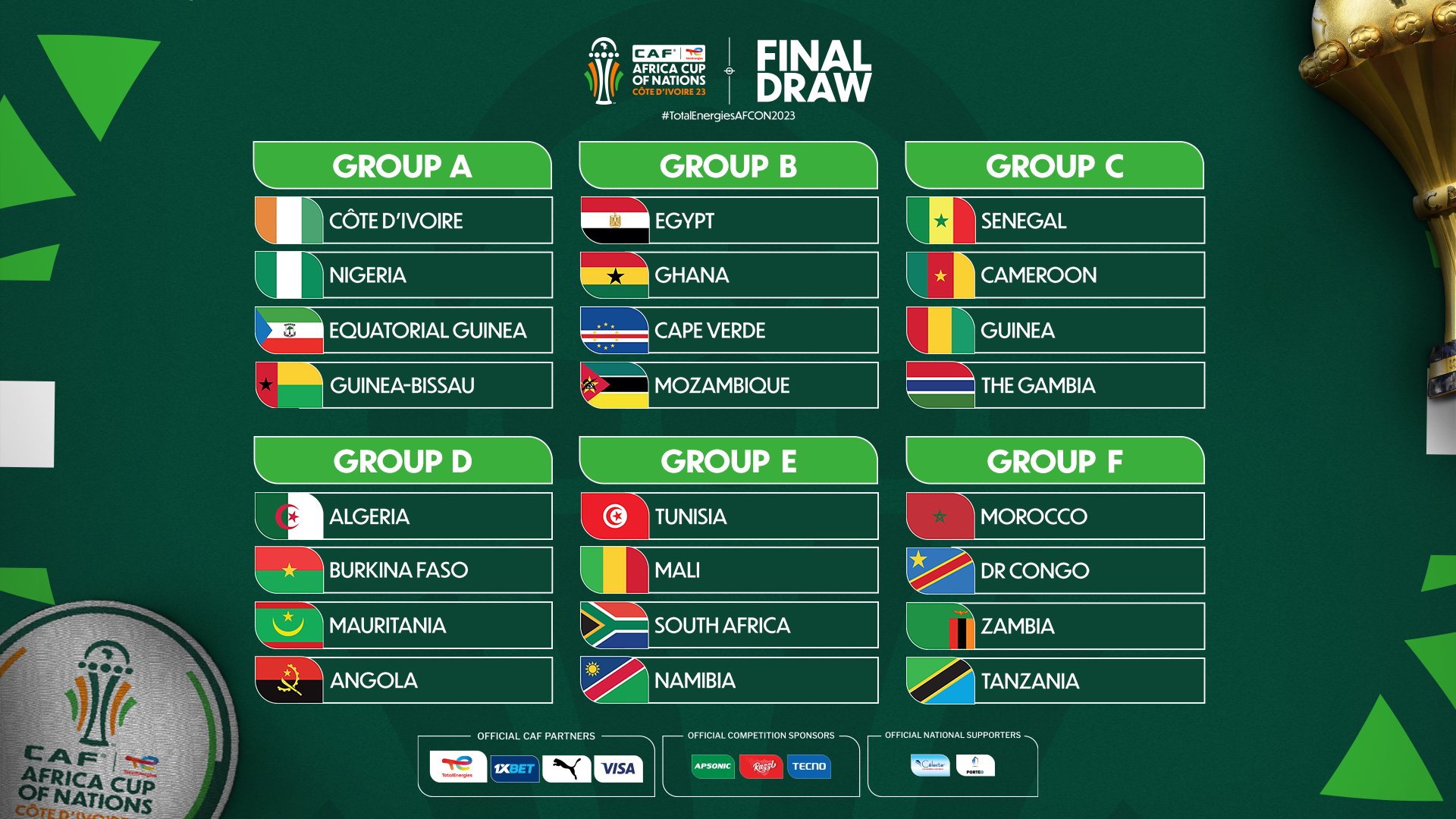
Final Draw of CAN 2023 (Source: CAF online)

The 24 teams have been split into six groups of four teams, with the hosts in Group A alongside three-time champions Nigeria, Equatorial Guinea and Guinea-Bissau. The teams will face each other in 5 cities: Abidjan, Yamoussoukro, San Pedro, Bouake, and Korhogo. The tournament was scheduled to be held in June-July 2023, but it has been moved (back to the original timeframe) to avoid a clash with the West African rainy season – it used to always take place during even-numbered years from January-February, until the European clubs asked for it to be moved to June-July to favor their off-season given that a lot of African players play in European leagues, but that time frame has always been detrimental to most countries in Africa, as it is either the rainy season or winter; our elders were wise enough to place the tournament at a time that suited most African nations! I prefer to call it CAN 2024 or AFCON2024; it makes more sense, and it is taking place in 2024!

Akwaba, the elephant welcomes you to Cote d’Ivoire (Source: COCAN2023.ci)

Already, several teams have arrived in Côte d’Ivoire opening up with players displaying an assembly of colors and traditions, proudly showcasing their nations’ cultural diversity. We cannot wait to see their football prowess on the field. As expected, this year’s mascot is an elephant which is Cote d’Ivoire’s animal symbol named “Akwaba“, which means “Welcome” in Baoulé language. So everyone is Akwaba in Côte d’Ivoire and may the best team win! Who do you think will win?

The mind as a weapon – Quote by Steve Biko

Black Consciouness Movement flag with Steve Biko

Let’s open the year with this quote from Steve Biko, the leader of the Black Consciousness movement which guided the movement of student discontent into a political force unprecedented in the history of South Africa, culminating in the Soweto uprising of 1976, which helped in toppling the apartheid regime. His quote below applies to all societal problems, it is the issue of the haves and the have-nots, racism, classism, exploitation, and is of great actuality. 

The greatest weapon in the hand of the oppressor is the mind of the oppressed.” Speech in Cape Town, 1971

Happy 2024!

Fireworks
Fireworks

Friends, 2024 is here! Let’s make the best of it! 2023 was a difficult year for some, a happy one for others, a painful one here, or a prosperous one there, a healthy one sometimes, or a harmonious one… it was another year, and now it is time to close that chapter and start the brand new chapter that is 2024. Fellow readers, we wish you all an AMAZING new year. May 2024 mark the beginning of new chapters, the fulfillment of some, and also the closure of old ones. May this new year bring you a lot of joy, success, prosperity, love, harmony, and peace; may your dreams be fulfilled, and last a lifetime. 

Dr. Y, Afrolegends.com

The top 5 posts of the year 2023 are listed below with three old-time favorites, “Love Poem for my Country” by Sandile Dikeni took first place as the most read post of the year, while another favorite poem “My Name” by Magoleng wa Selepe took third place, and the “History of African Fabrics and Textiles” took fifth place. The surprise of the year was the post “The Charter of Imperialism,” which totally makes sense given the earthquake that took over Africa with the total rupture of French relations in several West African countries. We wish you a full and amazing new year, rich in blessings and greatness. We promise you, here, at Afrolegends.com, a total new approach for this new year and lots of new surprises… stay tuned! Keep your heads up, and may your year bring in new fruits, bright fruits, that stem from unity as beautiful as the fruits in the pictureI love this picture because not only does it symbolize unity, it only symbolizes growth, and beauty! As always, like Agostinho Neto said, “A luta continua … a vitória é certa!

  1. ‘Love Poem for my Country’ by Sandile Dikeni
  2. The Charter of Imperialism
  3. ‘My Name’ by Magoleng wa Selepe
  4. The Lebombo Bone: The Oldest Mathematical Artifact in the World
  5. History of African Fabrics and Textiles