
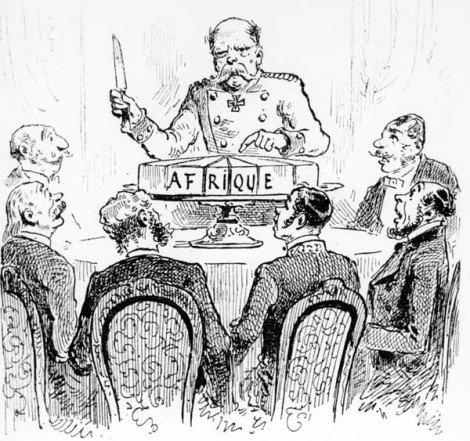
Have you ever heard of the Duchy of Courland and Semigallia? Did you know that this somewhat unknown place in Europe had colonies and slave forts in Africa? And played a part in the slave trade? Did you know that it owned St James Island, modern-day Banjul, the capital of the Gambia? See… when I tell you that the plundering of Africa of her resources, both human and minerals, was perpetrated by the united nations of thieves, and that so many countries in Europe took part in it, you have a hard time understanding it right? It was not just the usual suspects: France, Great Britain, Spain, Portugal, who took part in the Atlantic slave trade and beyond, but even Denmark, Brandenbug-Prussia (part of modern Germany), Holland, Sweden, Norway, and the Duchy of Courland. Let me tell you more about it.
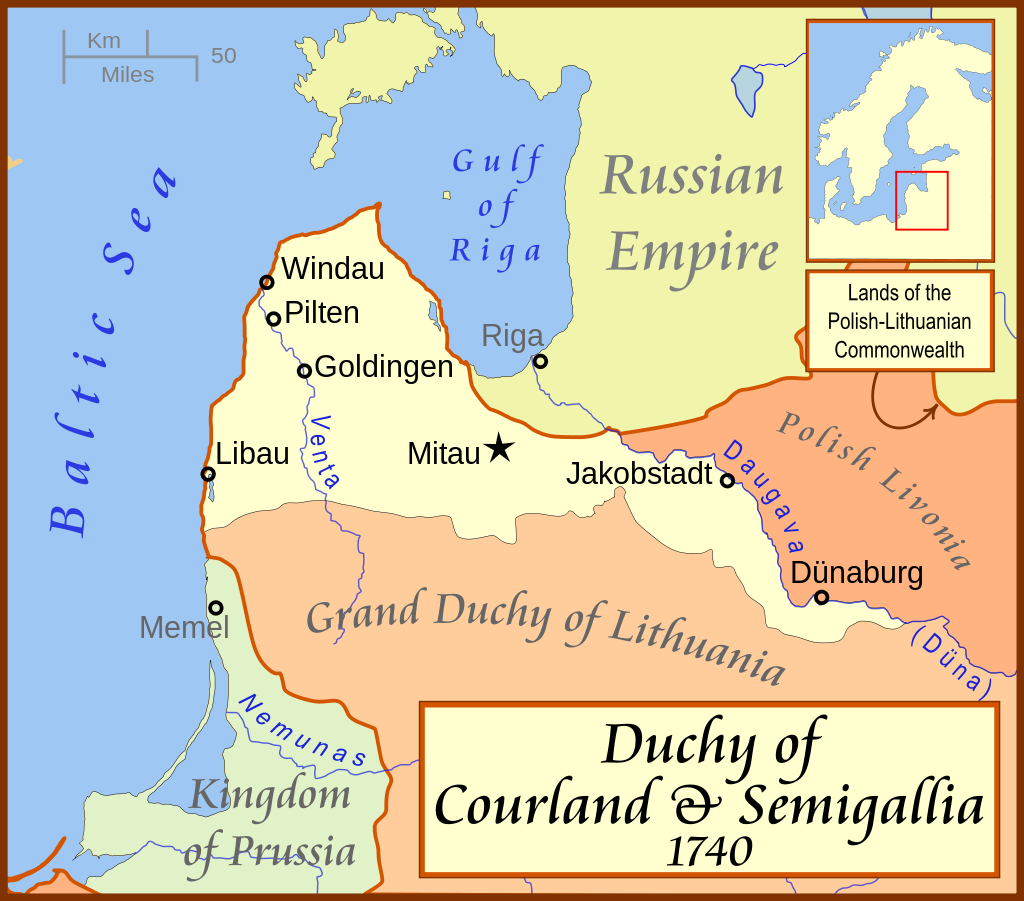
Well, the Duchy of Courland and Semigallia was a duchy in the Baltic region, in what was then known as Livonia, which existed from 1561 to 1569 as a vassal state of the Grand Duchy of Lithuania and subsequently part of the Crown of the Polish Kingdom from 1569 to 1726 and incorporated into the Polish–Lithuanian Commonwealth in 1726. On 28 March 1795, it was annexed by the Russian Empire in the Third Partition of Poland. There was also a short-lived wartime state existing from 8 March to 22 September 1918 with the same name. The area became a part of Latvia at the end of World War I. At some point it was also part of Sweden.
Although small, the Duchy was wealthy and took a “modest” part in the European colonization settlement attempts of West Africa and the Caribbean. Like Brandenburg, that had far larger German colonizing power before the formation of the German Empire, the Polish-Lithuanian fief of Courland had a European expansionist past. Its colonies were established under Jakob, Duke of Courland and Semigallia, and were indirect colonies of the Polish–Lithuanian Commonwealth. During Jakob’s reign which lasted from 1642 to 1682, the Duchy established trading relations with all of the major European powers.
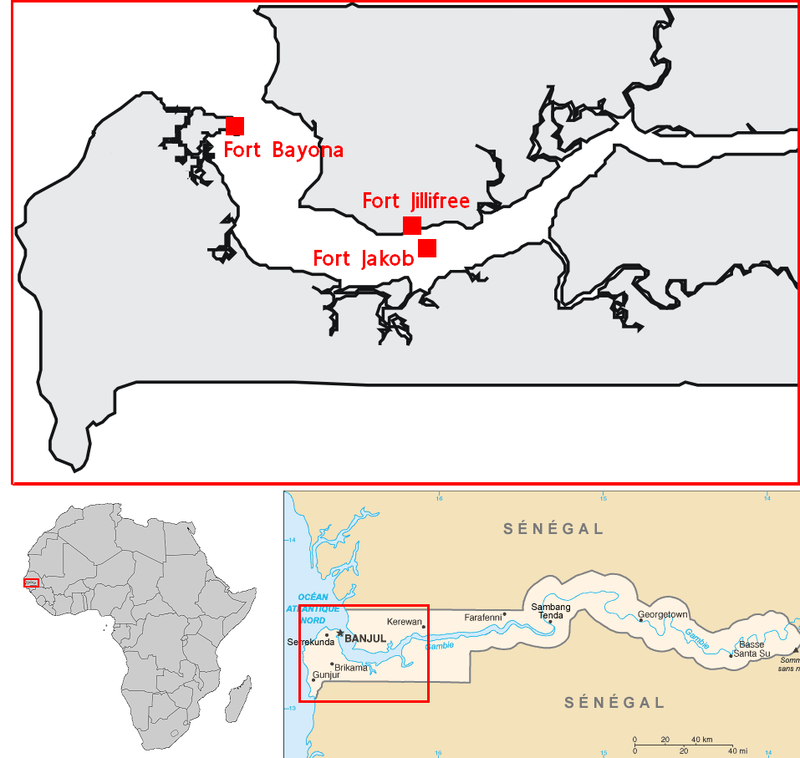
In 1651, the Duchy gained a colony in Africa on St. Andrew’s Island (modern-day Kunta Kinteh Island, renamed after the hero of the movie and book ‘Roots: The Saga of An American Family’ by Alex Haley) in the Gambia River and went on to build Fort Jakob on the island. The Duchy also gained control of additional land, which happened to include St. Mary Island (modern day Banjul) and Fort Jillifree. The Duchy’s colonies exported sugar, tobacco, coffee, cotton, ginger, indigo, rum, cocoa, tortoise shells, as well as tropical birds and their much sought after feathers. They also established a colony in the Caribbean in Tobago. In the end, the Duchy would manage to retain control of these lands for less than a decade and the colonies were formally ceded to England in 1664.
Can you imagine that I, an African child, just learnt this recently? We should definitely throw away all these history books, which choose to “forget” to mention that slavery and later the scramble for Africa was like a gold rush, led by an ensemble of nations which resemble the NATO of today, where almost every European country took part in it! One may argue, what is the need of knowing this? Don’t you see that what Africa is living through today is a repeat of yesterday? Can you count the number of joint European forces in Mali? in Libya? in the DRC? Today it is called the United Nations. It is about time that Africans write their own history! Enough is enough! We need to know what happened yesterday to be better prepared for today and tomorrow.

 African Heritage
I can definitely hear your frustration for not knowing this sooner. That’s something I’ve been feeling after I graduated university. Even as a geography nerd, I had never heard of that duchy before and I only thought Livonia was just a town in Michigan. I didn’t even know that Lithuania was in on any colonization of Africa which is mind blowing to me. So many of the history books in the West are full of revisionism and that’s not even getting into the stupid American arguments going on right now in academia with which parts of Black history should or shouldn’t be taught. Don’t even get me started when I hear people use the term “critical race theory” which is a dog whistle from some racist people to try to avoid talking about the explicit parts of Black history that would make those of European descent very uncomfortable (examples: Black Wall Street Massacre, The Devil’s Punchbowl, etc.) and that’s just American history. It’s great that people like you actually care about the real history and sharing it.
LikeLike
Yes… I too… only knew of Livonia on the outskirts of Detroit… I was stunned by this finding. I totally agree with you with the latest history revisionism that is currently ongoing… it is annoying. Thanks for telling me about “The Devil’s Punchbowl”… I did not know about it until you mentioned it.
LikeLiked by 1 person
Gotcha. That’s how I heard of that name even though I’ve never been to that town before. The history revisionism is getting out of hand in America. Today is the 100th anniversary of the Black Wall Street Massacre and that still wasn’t in the curriculum in America and that’s not counting the politicians trying to block “critical race theory”. No problem about The Devil’s Punchbowl. I didn’t know what it was until a few years ago.
LikeLike
The history revisionism is everywhere… and is getting out of hand
LikeLiked by 1 person
Exactly. It really needs to stop.
LikeLike
About erasing part of history it’s actually not that true. Even in Poland and Lithuania most of people never even heard of colonizating efford beacouse it’s such an obscure and small part of history. Those who know about it don’t try to deny existence of colony. ATHROUGH Kurlanders never participated in slave trade and mantained strait buissness relatioships with locals (they actually bought exotic friuts). They never stole anything and outside of building traiding outpost did not interfered with people around them
LikeLike
Capybara… thanks for your comment…. as you can see the erasing part of history is the same everywhere when it comes to slavery and colonization… just as you pointed out that in Poland and Lithuania majority of people do not know this (a few probably know), it is the same with say Germany where today many Germans do not even know that their country had colonies in Africa (and that was not so far back)! Or like the majority of French/British not knowing that French/British slavers were paid off for their slaves after the abolition of slavery, while the slaves received nothing. It is done on purpose.
LikeLike
Dr. Y maybe you should read up on this history, Courlanders were not Polish-Lithuanians, they were a vassal state operating on their own made up of German nobles.. you even say they were Latvians, this is like saying the colonization of the Philippines was done by Aztecs because it was colonized directly from Mexico using Mexican administration. Does this make sense? Latvians were indigenous people that were colonized by Germans creting Courland, those Germans used native Latvians as serfs – which in Eastern Europe and the Baltics was pretty much slavery. Also, most Poles and Lithuanians themselves were serfs at the time FYI. Poles actually helped fight revolutionary wars against western monarchs in the Americas, and many of them who were sent by Napoleon to Haiti to quench the Haitian Revolution, turned on the French to aids the enslaved Haitian population. This was due to the fact that most of them were slaves themselves not long before. But either way Poland-Lithuania had nothing to do with Courland outside of keeping it as a vassal state they won in a war. It was German nobles controlling and profiting off this, Poland-Lithuania relied on their own internal slavery of their own population for capital.
LikeLike
Thank you Juancho for your comment and information on the Courlanders. Could you please share a place I could read on this rich history you seem to be familiar with? Would you then say that, at the time of the purchase of the St James colony, that the area was not a vassal state of the Grand Duchy of Lithuania and subsequently part of the Crown of the Polish Kingdom?
I did not say that they were Latvians; I said that the area became a part of Latvia after World War I. Moreover, the Philippines were not colonized by Aztecs, but by Spain and administered from Mexico which was also a colony of Spain.
LikeLike
They were not Polish-Lithuanians, they were German nobles and most of their slaves were Latvian serfs actually, so they didn’t need to participate in the African slave trade as much, since most of their capital came from the explotation of indigenous Baltic people
LikeLike
Yep, it is a very depressing (but also interesting) part of Latvia’s past. The Duchy of Courland and Semigallia also had a colony in the Carribean iirc. In any case, thank you very much for bringing this to light! I am not sure to whom this forgetting is aimed at, but any new information about the atrocious past of European colonialism’s history is a good thing.
Of course, it should be mentioned that the people in charge of The Duchy of Courland and Semigallia who were doing this colonial venture, were also enserfing (occasionally enslaving afaik) and oppressing the native Baltic and I think Finnic peoples (Latvians and some Livonians I imagine). So… one could say that oppression is in their blood, to some extent. Well, I dislike essentialism, so “in their culture” would probably be a better way to say it (in that, it is something that can be changed, rather than something permanent in all Baltic Germans – after all, modern Baltic German historians have apologized for their past of oppression of the native Baltic peoples. I imagine they will do the same for this event).
LikeLike
Thank you Shúuta na’ Ssumúu for sharing this important piece of information about the history of the region of the Duchy of Courland and Semigalia, and the fact that the people in charge a) had a colony in the Caribbean as well as in Africa, b) were also enserfing and oppressing the native Baltic and Finnic people, and c) the Baltic German historians have apologized for their past oppression of the native Baltic people. It was really part of “their culture” as you pointed out. It would be good if they could also acknowledge their African past more widely.
LikeLike
Baltic Germans (the people who were doing this colonization) don’t really exist anymore, they’re just Germans now because they were expelled from the Baltics by Soviets. So most of them don’t have ties to their Baltic ancestry anymore or even much knowledge of their ancestors.
LikeLike