President Biden’s First Visit to Africa : The Lobito Atlantic Railway Project

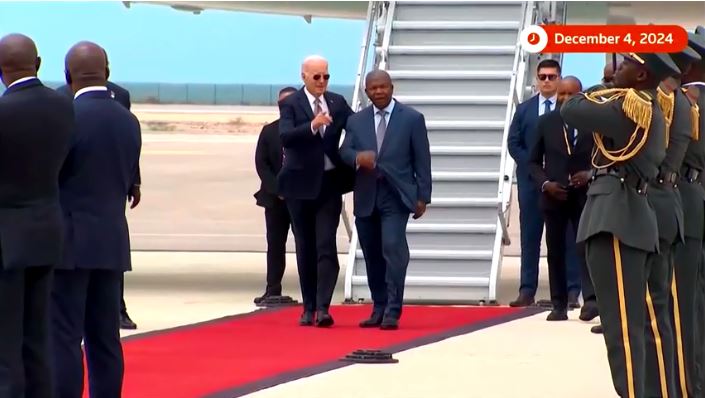
Angola President João Lourenço welcomes U.S. President Joe Biden on the day of his arrival on Dec 4, 2024, at Catumbela Airport in Catumbela, Angola 

What could a president who has just pardoned his son from crimes during thanksgiving weekend when everybody was asleep, be doing in a lightning visit to Africa in the ending times of his term? It sounds fishy right? As we have learnt in the past, the transition times are the shady times of an administration. So what was President Biden doing in Angola at this time? Why wait until the end of his term for his first visit to Africa? Why was he not then at the re-opening ceremony of the Notre Dame Cathedral in France with all world leaders at the end of the week? We are told that this lightning first visit to Africa is to cement a deal that will benefit Angola, the Democratic Republic of Congo (DRC), and Zambia: the deal called the Lobito Atlantic Railway project.

A map of the Lobito Atlantic Railway project (Source: LobitoCorridor.org)

The Lobito Corridor is connected by a stretch of railway infrastructure snaking through mineral (70% of the world’s cobalt is found in the DRC) and oil-rich parts of Angola, the DRC, and Zambia (70% of the world’s copper). Many of these minerals are considered critical for the energy transition adding an additional layer of urgency (The New Scramble for Africa, The Geological Scandal that is the Democratic Republic of Congo (DRC), DRC and Zambia Sign Over Cobalt and Copper Resources Rights to the United States?, When Einstein Wrote to the US President about Congo for its Uranium ). The Lobito project provides a faster access route to the mines in these parts of the world and a pathway to the Atlantic Ocean. The rail route was established in the early 1900s and thrived until the mid-1970s. During the dark days of Angola, in the civil war era, the Angolan parts of the railway were destroyed. From 2006 to 2015, the Lobito project was resurrected/rehabilitated by the Chinese government in the region, who spent over $2 billion rail-for-oil program, but JLo as João Lourenço, the president of Angola is known, has decided to change hands from the Chinese to the Americans and Europeans. In 2022, the Lobito Atlantic Railway concession, a 30-year concession (extendable an additional 20 years), was awarded to a consortium of Western companies.
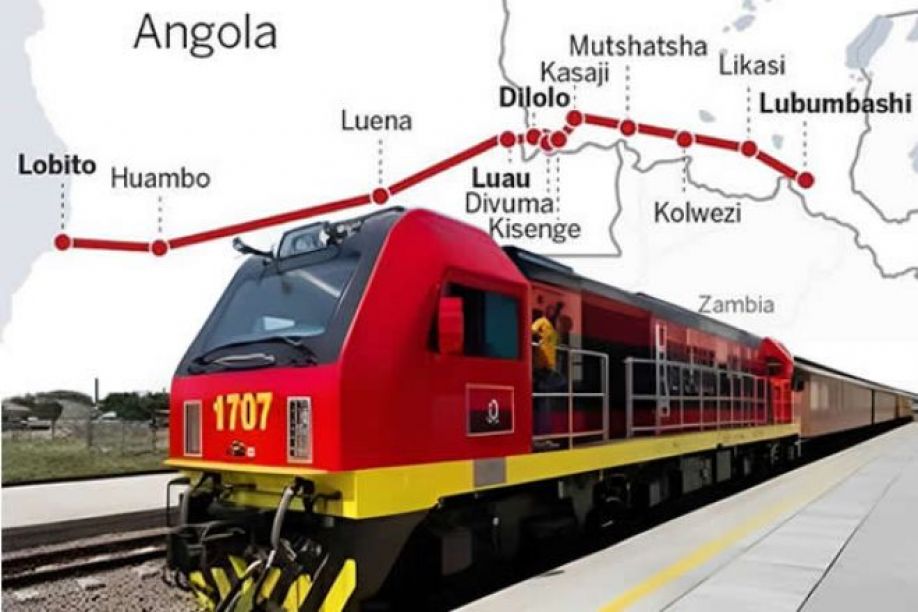
Lobito Atlantic Railway (Source: Angola24horas.com)

This investment represents the first alternative from Washington DC to China’s Belt and Road Initiative. As President Biden said in 2023 during JLo’s visit to Washington, “This [the Lobito railway project] first-of-its kind project is the biggest US rail investment in Africa ever,” … “A partnership between Angola and America is more important and more impactful than ever.” President Hichilema of Zambia said, “This corridor is of vital importance to opening up our countries, to opening up our regions, the continent, and truly the global economy,… This project is a huge opportunity for investment, for trade.”

Many see the Lobito Atlantic Railway project more as a West (US/Europe) vs. East (China) war interest on the African continent; while some imagine a money laundering scheme (after all Africa is known for its opacity in accounting) in the last days of an outgoing administration. You, dear reader, what do you think this is?

For more information, please read the Lobito Corridor, US News, CNN, and the White House press release.

Zambia breathes a Sigh of Relief after $6bn Debt Deal

Zambian flag
Zambian flag

At end of 2021, we all screamed when we heard news that the only Ugandan international airport at Entebbe was about to be seized by China to pay the country’s debt. This was avoided at the last minute. Zambia is another matter all together, when talking about Zambia these days, there is no way to avoid the Zambia Sovereign Debt Crisis: in 2020, it was the first country to declare bankruptcy as the pandemic had drawn it to its knees, and it was on the verge of a full Chinese takeover. Can you only imagine the instantaneous gray hairs a president will get after getting elected and finding that not only are the country’s coffers empty, but above all, the country is so deep in debt that it will need a miracle to come out of it? Today, President Hichilema applauded the debt deal, which is a big step forward. However, one cannot help but wonder what sort of deals were made, and how many generations of Zambians will have to pay for it (DRC and Zambia Sign Over Cobalt and Copper Resources Rights to the United States?). At this point, don’t you think former president Edgar Lungu and its cronies deserve to be prosecuted for madly borrowing away Zambians’ future? Below are excerpts from the BBC.

====

Map of Zambia
Map of Zambia

Zambia’s President Hakainde Hichilema can finally breathe a sigh of relief as the outlines of a deal aimed at lifting his country out of its debt crisis have been unveiled.

In 2020, the copper-rich country became the first African nation to default on its debt payments during the Covid pandemic. It was burdened by loans and high interest rates that severely restricted the government’s ability to invest in critical social programmes and infrastructure development, both crucial for economic growth.

Following months of talks, Zambia has now successfully agreed new repayment terms with its state creditors on up to $6.3bn (£5bn) debt, including over $4bn owed to China.

Although the details of the deal have not yet been released [as always, populations are kept in the dark, while their future is being signed over], it appears that Zambia will be granted an extended repayment time of over 20 years, including a three-year grace period with interest-only payments.

Experts have praised the government for securing the agreement and are hopeful that this will improve Zambia’s economic situation.

Economist Isaac Mwaipopo, from the think-tank the Centre For Trade Policy and Development, believes it will help inspire investor confidence, but urges the government to follow an economic recovery plan.

There’s a need to come up with a clear plan in terms of reconstructing the economy, especially that we will still be on an IMF programme [which developing country has ever been helped by the IMF?] for the next three years. It will be very important that sectors are identified which can be strategic for growth, boosting job creation and aiding poverty alleviation.”

… By renegotiating the debt terms, Zambia gains valuable breathing space to stabilise its economy, implement necessary reforms and pursue long-term growth. This newfound flexibility can be redirected toward investment in healthcare, education, infrastructure and social welfare.

Zambia Sovereign Debt Crisis

Zambian flag
Zambian flag

When we talk about Zambia these days, there is no way to avoid the elephant in the room: its debt. In 2020, Zambia became the first African country to declare bankruptcy (possibly worldwide) as the pandemic had brought it to its knees: the coffers were empty, and the country owed China, its main creditor, over $3 billion with no clear way to pay it back. This past Tuesday, the IMF announced that Zambia was seeking as much as $8.4 billion in debt relief in preparation for discussion on restructuring foreign liabilities. African debt as Thomas Sankara pointed a while back is a tricky subject… so there is already that fundamental question of debts owed to European countries (like France) which milk Africa via fake currencies such as the FCFA, and treacherous partnerships signed decades ago which benefited only the West. For today though, how did Zambia get here in the first place?

President Edgar Lungu (Source: AllInZimbabwe.com)

The country’s debts quadrupled between 2014 and 2019 amid a surge in infrastructure borrowing under Edgar Lungu, the former president, who lost elections last year to Hichilema. Needless to say that right before Lungu came into power, there had been a collaboration between Norway and Zambia to help the country get better hold of its revenues, via a mineral mining monitoring project aimed at boosting tax revenues. As we learned at the beginning of the week, Zambia is rich in minerals, particularly copper. However, upon arrival in power, president Lungu stopped the program (aimed at helping its country negotiate better deals for its mines), and went into an infrastructure shopping spree with no real regards for what was in his treasury’s coffers; no wonder he got the boots at the end of his first term. This, added to all previous debts, and the pandemic which hit just as the new president was getting into office, made for the perfect storm.

Excerpts below are from the Times talking about Zambia’s discussions this week, and hopefully the start of a better way to close on the debt. Let’s not veil ourselves though, since its creation has the IMF ever helped a single African country come out of problems? Hard to believe that it will – maybe the case of Zambia will be different? You can also read articles from Bloomberg, Atlantic Council, and Financial Times.

====

Map of Zambia
Map of Zambia

Not that long ago Chinese credit was easy to get in Zambia. A government department could contact a Beijing lender directly without needing to get it signed off by finance ministers.

Millions of dollars were squandered or used to line pockets. Ministers campaigned in helicopters and the president had a Gulfstream jet. All the while the debts were racking up. It could not last.

We have lost an obscene amount of money on corruption — money that could have been used to feed, house, clothe and educate our children,” said Hakainde Hichilema, a man once mocked as “calculator boy” for his head for dry numbers.

President Hakainde Hichilema (Source: FaceofMalawi.com)

A year after securing the presidency — at his sixth attempt — in a landslide, Hichilema is unpicking the ruinous rule of his predecessor, Edgar Lungu, who threatened to turn Zambia into the new Zimbabwe.

Under Lungu’s administration, international debt quadrupled to more than 120 per cent of Zambia’s GDP. He failed to negotiate a lifeline from the International Monetary Fund (IMF) after it became the first African state to default since the 2005 agreement to wipe clean the debts of 30 of the continent’s poorest states.

The $1.3 billion IMF bailout secured by Hichilema’s government last week was seen as a huge vote of confidence in his commitment to restraint and reform. A successful exit from default could make Zambia a model for other states in Africa, where China is the biggest lender and the threat of debt distress is high. China has overtaken the World Bank as the biggest foreign creditor to developing countries.

… Zambia’s debt of $6 billion to 18 different lenders was twice previous estimates.

… New laws on transparency and a cap on future borrowing will keep things honest, [Hichilema] said. “The only change we can probably say is that we have just raised the bar in terms of engagement.

So Long to Kenneth Kaunda: Zambia’s First President

Kenneth Kaunda
Kenneth Kaunda

Last Thursday, the first president of Zambia, Kenneth Kaunda, changed dimensional plane to join his ancestors. At 97 years old, he was one of Africa’s last surviving liberation leaders. To a generation of Africans, and to many of us, Kenneth Kaunda epitomized the African struggle for independence.

Born into a family of 8 children in Lubwa in the north of then Northern Rhodesia (now Zambia), Kaunda was the last born of parents who immigrated from Nyasaland (Malawi). He trained as a teacher, then became involved in politics, first as secretary of the local young men’s farming association and later as a founding member of the Northern Rhodesian African National Congress in 1949. In 1955, both him and Harry Nkumbula, party president were imprisoned for 2 months. Later Kaunda broke away from the ANC, to found his own party, the Zambian African National Congress (ZANC) in October 1958 which was short-lived. In March 1959, the ZANC was banned and Kaunda was sentenced to 9 months‘ imprisonment, which he spent first in Lusaka, then in Salisbury When he was freed from prison in 1960, he joined the principal nationalist party, the United National Independence Party (UNIP), which campaigned and fought against British colonial rule. He was influenced by Martin Luther King Jr. and Kwame Nkrumah, both of whom he met on different occasions. On 24 October 1964 he became the first president of an independent Zambia.

Zambian flag
Zambian flag

Kaunda started with the great advantage of leading an African state with a stronger economic base than any of its neighbors but there was a shortage of native Zambians who had the skills and training to run the country [similar to so many African colonies… the Europeans were there to pillage and exploit the resources of the countries, and not build their local forces!]. The policy of sanctions imposed by the British government on the breakaway country proved at least as damaging to the Zambian economy (similar to what they did to Zimbabwe under MugabeIs Zimbabwe the New Haiti?) over the years, probably as punishment for his support for the liberation of his neighbors.

Affectionately known as KK, or Mzee, Kaunda worked tirelessly towards to the freedom of the whole of Southern Africa from white rule; he supported the fight of other countries against repressive, racist regimes in South Africa, Namibia, Angola, Mozambique and Southern Rhodesia (Why the name: Zimbabwe?). It took several years, but his support never faltered.

He remained a staunch defender of the Zimbabwean President Robert Mugabe [Robert Mugabe, Freedom Fighter and First President of Zimbabwe Lives On], and said, “I’ve been saying it all along, please do not demonise Robert Mugabe. I’m not saying the methods he’s using are correct, but he was put under great pressure.”

As a testimony, President Hage Geingob of Namibia said in a statement “Africa lost“a giant of a man. …Kenneth Kaunda was a generous, affable, and a resolute leader who freed our region from colonialism.”

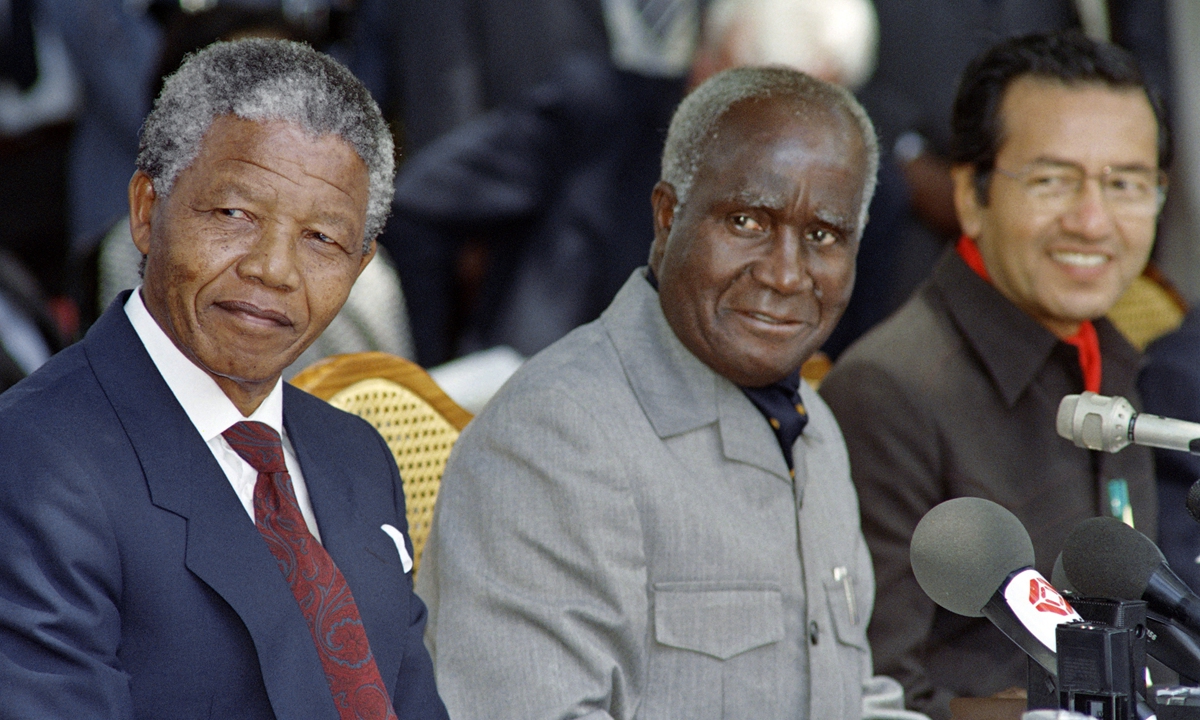
Photo taken on February 28, 1990 showing Zambia’s president Kenneth Kaunda (Center) and South Africa’s African National Congress (ANC) leader Nelson Mandela (L) attending a press conference at the Presidential House in Lusaka. (Source: AFP)

South Africa’s President Cyril Ramaphosa described Kaunda as a “rightfully revered father of African independence and unity… Under his leadership, Zambia provided refuge, care and support to liberation fighters who had been forced to flee the countries of their birth.” “He stood alongside the people of South Africa at the time of our greatest need and was unwavering in his desire for the achievement of our freedom. We will never be able to repay the debt of gratitude,” Ramaphosa added.

For our founding father, it was not enough for his country Zambia to be liberated when the region and the African continent remained bonded in the shackles of colonialism and apartheid,” current Zambian President Edgar Lungu told mourners at Kaunda’s house in Lusaka … “[Kaunda] soldiered on to seek freedom for humanity.”

Please enjoy articles on the Al-Jazeera and the very good article by the Global Times [With love and respect, Chinese people cherish memory of Zambia’s Kaunda, ‘an old and good friend’]. Please watch the video I posted a few years ago on the great Kenneth Kaunda, Zambia’s first president.

Why the name: Lusaka?

Map of Zambia
Map of Zambia

Today, I will be talking about Lusaka, the capital of Zambia and its largest city.  The actual location of the city of Lusaka corresponds to that of a village which was named after its chief Lusaaka, and which was located at Manda Hill, near the current site of the Zambian National Assembly building.  In the Nyanja language, Manda means graveyard.

Zambian flag
Zambian flag

The area was expanded by British settlers in 1905 with the building a the railway. Due to its central location and its position on the railway at the crossroads between the Great North Road and Great East Road, Lusaka is chosen to replace Livingstone as the capital of the British colony of Northern Rhodesia (Southern Rhodesia being today’s Zimbabwe) in 1935.  With the fusion of the Northern Rhodesia (Zambia) with Southern Rhodesia (Zimbabwe) and Nyasaland (Malawi) in 1953, Lusaka became the center of independentist movements amongst the educated elite, which eventually led to the creation of the Republic of Zambia.  In 1964, Lusaka became the capital of the newly independent country Zambia, with the country’s first president being Kenneth Kaunda.

Lusaka is not only the capital of the country, but also the capital of the province of Lusaka, which is the smallest and the second most populated of the nine provinces of Zambia.

Lusaka
Lusaka

Today, Lusaka is one of the fastest-developing cities in Southern Africa.  It is the centre of both commerce and government in Zambia and connects to the country’s four main highways heading north, south, east and west, including the famous Cairo Road which is a section of the Great North Road and was so named because it is a link in Cecil Rhodes‘ then dream of a Cape to Cairo Road through British colonies in Africa.  The city is also located at an altitude of 1300 m above sea level.  English is the official language of the city, but Nyanja, and Bemba are commonly used as well.

In recent years, Lusaka has become a popular urban settlement for Zambians and tourists alike.  Check out the map of city of Lusaka, or the newspaper Lusaka Times to get more news about this great city whose name hails from that of a local king.  Enjoy the video below about the city of Lusaka.

Zambia wins the African Cup of Nations

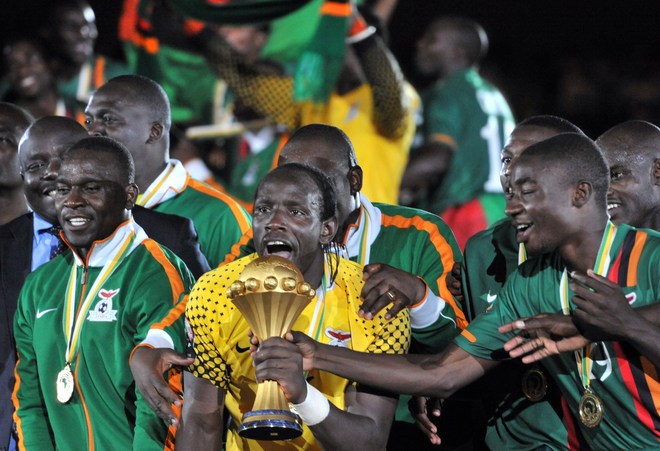
Zambia's national team celebrate their win of the African Cup of Nations (Source: AFP)
Zambia’s national team celebrate their win of the African Cup of Nations (Source: Issouf Sanogo/AFP)

Wow, I started watching the finals yesterday rooting for Zambia to win against Côte d’Ivoire… I had watched them throughout the cup, and the last one as well, and knew that they were a young strong team to reckon with.  Throughout the game, I prayed that the memory of those Zambian players who died in a plane crash in 1993 in Gabon be honored.  At the time when the crash occurred, the Zambian team was on its way to Senegal from Libreville (Gabon) to play a world-cup qualifier.  We, Africans, were all stunned, and cried as an entire country had lost their heroes.  One of the only survivors was Kalusha Bwalya who would have been on the plane during the crash, but had found his own way to Senegal (he was playing for PSV Eindhoven in the Netherlands, and had to make separate arrangements to meet the team in Dakar).  We watched and cried with Kalusha who had lost all his teammates.

Zambia's national team, the Chipolopolo
Zambia’s national team, the Chipolopolo

Imagine rebuilding an entire mature team who had just crashed? It will take a lot of years to foster the same talent and train them.  The country had just lost a generation of extremely talented football players.  Kalusha went on to become coach of Zambia (at the 2006 CAN), and is currently the president of the football association of his country. It is extremely symbolic that Zambia won last night in Libreville (Gabon) against Côte d’Ivoire (who played outstandingly well), only a few hundred metres inland from the crash site.  The Chipolopolo (the Copper Bullets) dedicated their victory to the ones who lost their lives in the 1993 tragedy.

Kenneth Kaunda, the first president of Zambia

Kenneth Kaunda
Kenneth Kaunda

Affectionately known as KK, Kenneth Kaunda was the first president of Zambia.

Kenneth Kaunda with Nelson Mandela

While president of Zambia, Kenneth Kaunda nationalized the copper mines, and also worked towards freeing all the Black people of Southern Africa from white supremacy. He supported freedom fighters in the Portuguese colonies of Angola and Mozambique, in Southern Rhodesia (today’s Zimbabwe), Namibia, and South Africa. He even met with Pieter Botha and B.J. Vorster to solve the issue of apartheid in South Africa, but got no results. Being so close to all these countries and seeing what his fellow brothers were going through made him want to fight. He played a crucial part in the liberation of all of southern Africa from white supremacy. Zambia paid a price for its backing of those countries by being bombed by the Apartheid government.

KK on a Zambian currency note

One thing I remember clearly is the day KK went on national television to sensibilize the Zambian people about the danger of AIDS. He had just lost his son to AIDS, and he was on tears, and urged the people of Zambia to take precautions. I was impressed! How many presidents do you see doing that? or at least how many African presidents do that?

Please enjoy this interview given by Kenneth Kaunda to CNN African voices. One other special plus… Kenneth Kaunda is a great singer!

Don’t forget to watch Part 2 and 3 of the interview.