The Importance of the Timbuktu’s Manuscripts and their Return

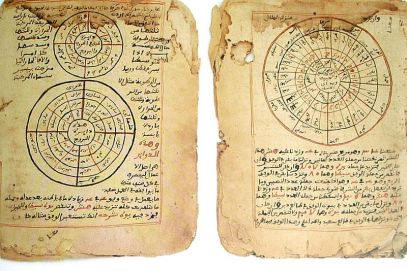
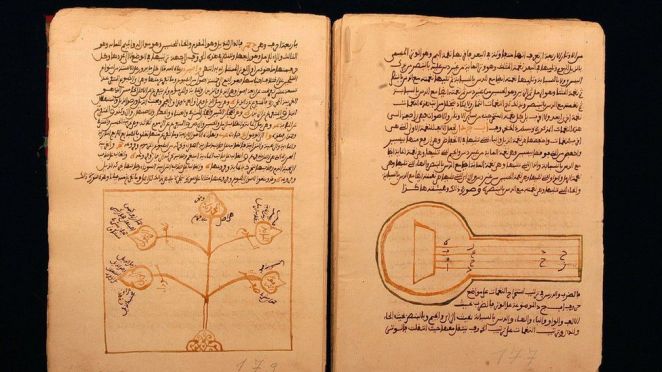
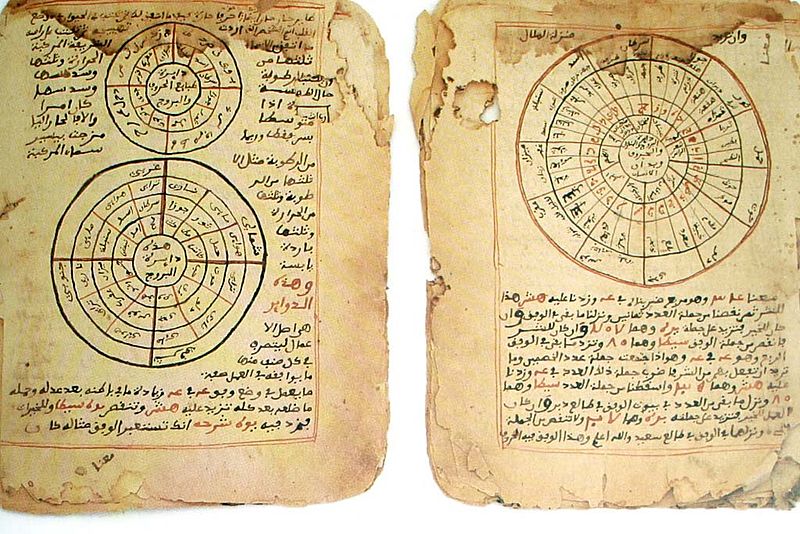
Manuscripts a Tombouctou (Mali) montrant de l'astronomie et mathematique
Manuscripts a Tombouctou (Mali) montrant de l’astronomie et mathematique

The Timbuktu’s Manuscripts are Returning Home to their rightful owners, after over 10 years away. It is so beautiful that the families who own these multi-centennial parts of African history get to have them back as it is not only part of their heritage, but ours also, and we are thankful for them to have protected throughout the centuries.

At the Ahmed Baba Institute in Bamako, people have been actively working on digitalizing all the manuscripts for humanity’s sake. These challenge the eurocentric views that “Africans have not entered enough in history” as the former French president Sarkozy said, even though many scholars from around the world used to travel to Timbuktu to find the best teachers. Through these manuscripts, we discover brilliant scholars, doctors, lawmakers, astronomers, mathematicians, geologists, and much more. After all, Timbuktu, was one of the world’s first and oldest university.

Excerpts below are from Africanews, and check out the Google Arts & Culture (Timbuktu Manuscripts now Available OnlineThe Lost Libraries of Timbuktu).

=====

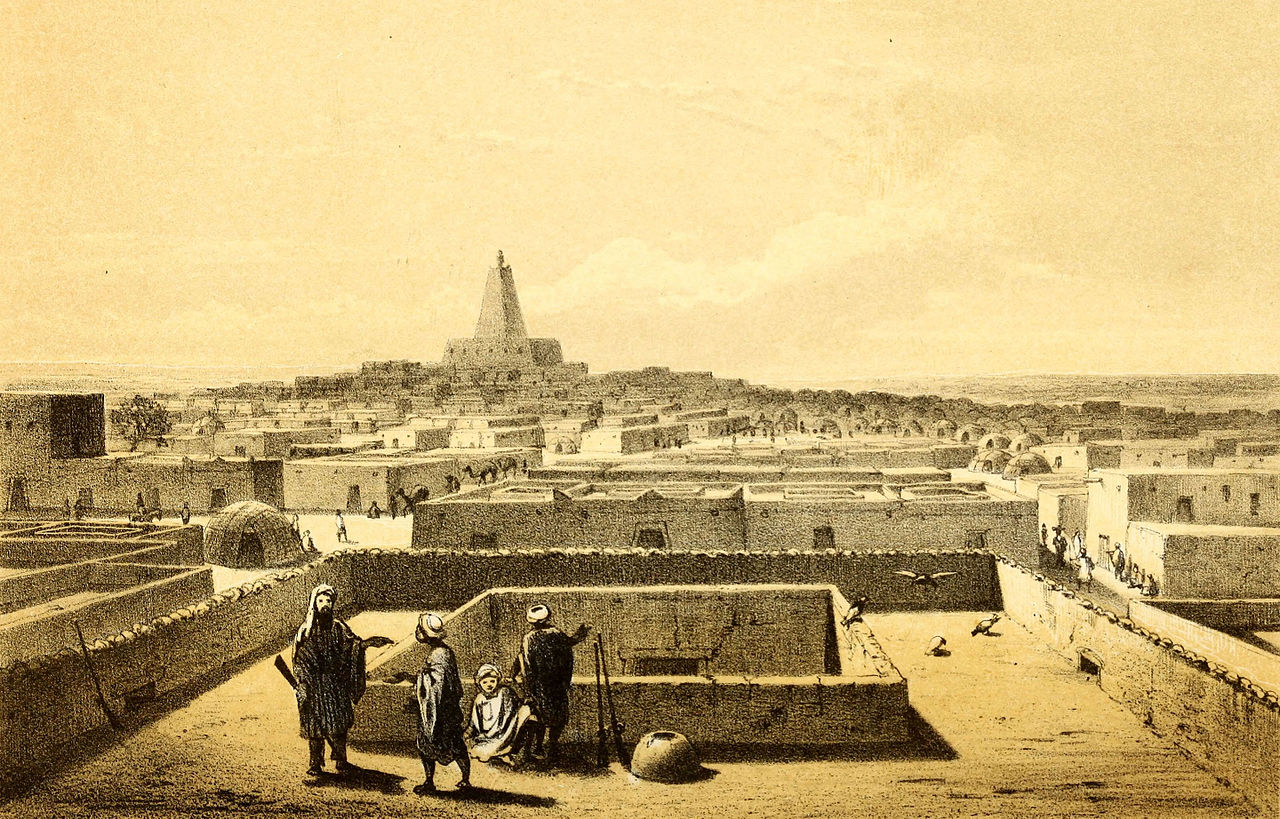
Timbuktu from a terrace by Heinrich Barth 1858

Among the manuscripts are medical texts, legal rulings, letters, astronomical notes and chronicles of West African empires.

In some pages, scholars debate whether smoking tobacco was moral or forbidden.

In others, officials urge reducing dowries so poorer men could marry.

Marginal notes record earthquakes and local events long forgotten elsewhere.

Sane Chirfi Alpha is the founding member of SAVAMA DCI, which is a local nonprofit organisation dedicated to the safeguarding, preservation, and promotion of the ancient Timbuktu manuscripts. He says the collection reveals a depth of scholarship that challenges assumptions about the region’s past.

According to old documents, there were doctors here in Timbuktu who performed surgery to treat cataracts. The same manuscript also says that a doctor from Timbuktu saved the French throne. The crown prince was sick, and French doctors could not cure him. It was the doctor from Timbuktu who cured him.”

…  One important tradition still documented in many manuscripts is the chain of teaching, where scholars recorded who taught whom through generations.

Dr Mohamed Diagayaté, general director of the Ahmed Baba Institute says: “When a student finishes studying with a scholar, that scholar gives him a certificate saying he has taught him a subject, which the student has mastered. The certificate also says that the student learned it from a certain scholar, and that this scholar learned it from another scholar, going right back to the person who wrote the original document.

Timbuktu Manuscripts now Available Online

Manuscripts a Tombouctou (Mali) montrant de l'astronomie et mathematique
Manuscripts a Tombouctou (Mali) montrant de l’astronomie et mathematique

I am happy to announce that the Timbuktu manuscripts are now available online. Can you imagine that? Treasures of our ancestors, writings, judgments, mathematical concepts, architectural findings, from those great scribes of ancient times. Up to 40,000 pages will now be available online, covering wide topics from biology to music to religion. 

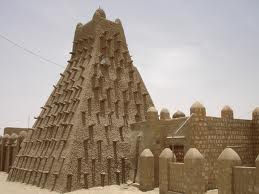
Sankore Mosque in Timbuktu

With the Islamic attacks on Mali, Timbuktu has been under occupation since 2012 (Tensions Escalating in Mali). As you all know Timbuktu was a great center of knowledge in search for many centuries starting at least in the 12th century. It was visited by people from around the world, in search of knowledge. There were over 700,000 manuscripts at the great Sankore University in Timbuktu, and many more at other public and private libraries including the  Ahmed Baba InstituteAl-Wangari Library, and others (Lost Libraries of Timbuktu, Timbuktu under Attacks: Arise to save African Treasures). Many families smuggled the manuscripts to safety from Timbuktu to the capital of Bamako. The manuscripts contain centuries of African knowledge and scholarship on topics ranging from mathematics to astrological charts, biology, geography, laws, etc. They were written on various materials ranging from ancient paper, goat, sheep and even fish skins. Some were written in verse, poetic meter, while others in narrative styles using dialogues, stories of kings, scribes, noblemen, fables, anecdotes. They were renowned in the world for their physical beauty and outstanding wisdom.

Timbuktu_Abdel Kader Haidara
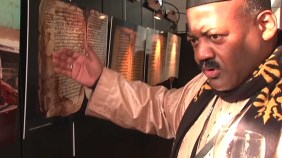
Dr Abdel Kader Haidara talking about the manuscripts of Timbuktu

In 2014, Dr Abdel Kader Haidara known for his work on the protection and preservation of the Timbuktu manuscripts and who smuggled over 350,000 manuscripts out of the city away from the jihadists, called on Google and invited the company to visit Mali and see the renowned manuscripts and join in the digitization of these treasures. Thus the collection Mali Magic was born as a collaboration between Google, local, and international partners. It took several years of combined efforts from Mali’s traditional leaders, historians, and digital archaeologists to digitize these ancient manuscripts, some dating back to the 11th century

Enjoy this article on the BBC website, and do not forget to visit the amazing work Mali Magic. The Library of Congress has also placed some manuscripts online. 

Timbuktu_Manuscript
Manuscript of Timbuktu (Google Arts and Culture)


Timbuktu: Saving One of the World’s Oldest Universities

Everybody on the blog loved this video of Timbuktu about its great university, one of the world’s oldest universities. I loved these centuries’ old manuscripts on medicine, art, literature, astronomy, and other subjects. The idea that my ancestors knew all these things, and that even today people are still trying to decipher these, make me so proud. The great historian Ibn Battuta talked about Timbuktu’s great universities, scientists, and scribes, and the beauty and wealth of the place when he visited in the 1300s. Enjoy the video below.