

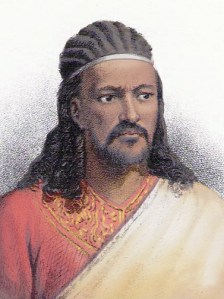
When Emperor Tewodros II was crowned King, the British Consul Walter Plowden who knew well the political events of Ethiopia during the 1850s and had foretold the rising star of Kassa, the Emperor’s birth name, the freelance warrior from Qwara, described him as such:
“The King Theodorus is young in years, vigorous in all manly exercises, of a striking countenance, peculiarly polite and engaging when pleased, and mostly displaying great tact and delicacy. He is persuaded that he is destined to restore the glories of the Ethiopian Empire and to achieve great conquests: of untiring energy, both mental and bodily, his personal and moral daring is boundless… When aroused his wrath is terrible, and all tremble; but at all moments he possesses a perfect self-control. Indefatigable in business, he takes little repose night or day: his ideas and language are clear and precise; hesitation is not known to him; and has no counsellors or go-between. He is fond of splendour, and received in state even on a campaign. He is unsparing in punishment — necessary in a wilderness as Abyssinia (at that time). He salutes his meanest (poor) subjects with courtesy, is sincerely though often mistakenly religious, and will acknowledge a fault committed to his poorest follower in a moment of compassion with sincerity and grace. He is generous to excess, and free from all cupidity, regarding nothing with pleasure or desire but munitions of war for his soldiers. He has exercised the utmost clemency towards the vanquished, treating them more like friends than enemies. His faith is signal: without Christ I am nothing.”






 African Heritage