
A few years ago, a colleague of mine visited Antigua, and when he came back, he told me that during his tour of the island, his guide told him that most of the island was peopled by descendants of slaves who all came from Cameroon. I was stunned, as at the time, I did not know of a slave fort in Cameroon, and how could an entire island in the Caribbean be filled with descendants from Cameroon? This was when I started digging, and a few years later, Pr. Lisa Marie Aubrey’s research came out which validated the whole story.
Today, we will talk about a slave fort whose existence was not even known until the 2000s, yet, it is said that at least 10% of all African slaves taken to the new world must have passed through its “gates”. This slave fort is Bimbia, in Cameroon. It is listed nowhere in Cameroonian history books, and even in African books. Even today, children learning about the slave trade in Cameroon, do not know about Bimbia. There is indeed a great silence about the existence of slave forts in the crook of the Gulf of Guinea whether in Nigeria, Cameroon, or Gabon.

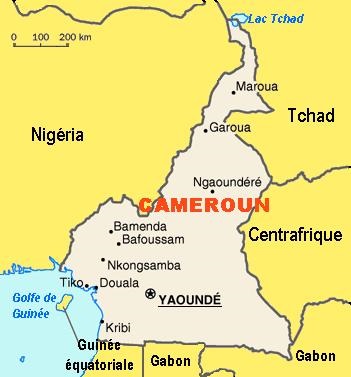
Located in the South West region of Cameroon, Bimbia is a small village about 5 km from the seaside city of Limbe, on the hills surrounding the city center. It is strategically located on the Gulf of Guinea, in the nook of its elbow, east of the Bight of Biafra, between Rio del Rey and Cameroons River (as the Wouri river was known back then). The site was only re-discovered in 1987 during the earthworks on the church dedicated to the memory of Alfred Saker church, and is now classified as a national heritage of Cameroon.

What brought Bimbia back from its oblivion? Most likely the fact that since Ancestry DNA has gained in popularity over the years, many African American actors, producers, politicians, such Spike Lee, Quincy Jones, Eddie Murphy, Blair Underwood, Chris Tucker, Condoleeza Rice, Oprah Winfrey, or Brazilian Regina Ribeiro, and more have found their origins in Cameroon. This was surprising, and led to more research to find out where their ancestors could have come from, given the absence of information on slave forts in the region.

According to Pr. Lisa Marie Aubrey of Arizona State University who published her study in 2014, thousands of Africans were taken from the slave fort of Bimbia, similar to Gorée in Senegal, or more. From her research, she found out that at least 166 slave ships left the coasts of Cameroon. Bimbia is not the only slave fort found in the country, Rio del Rey near the Bakassi peninsula and Cameroons Town (Douala) are the others. From the ships inventoried, 9 left the territory in 1600, 98 in 1700, and 59 in 1800. 15 left from Bimbia, 9 from Rio del Rey, and 32 from the Wouri River.
The slaves who arrived in Bimbia from hinterland came from everywhere, but the majority came from the Grassfields, the Bamileke region, Northwest, Noun, Mbam, Tikar region, and even as far north as the Hausa region.

For anyone visiting today, the road to Bimbia from Limbe is a tough road, sometimes impracticable during the rainy season; the site is hidden in a deep and lush green forest, with huge bamboos around. As a matter of fact, the slaves who ran away used this hostile environment with treacherous ravines, hills, and volcanic rocks to hide, to their advantage.
Bimbia was considered such a good location for the ships traveling the coast because of Nicholls Island whose south coast constitutes a deep sea port with at least 6 m depth, thus allowing ships to accost easily with no fear of crashing. Nicholls Island is located 300 m away from Bimbia which is on the continent; thus providing slavers with a perfect path to the continent for slaves. Once the slavers had gotten slaves from Bimbia, they could also make transit on the nearby island of Fernando Po (Bioko – where Malabo, the capital of Equatorial Guinea is located). Thus, slaves were brought from the hinterland, and kept in Bimbia, while awaiting the arrival of the slave ships; once the slave ship arrived, the slaves were taken from Bimbia to nearby Nicholls Island 300 m away, from where they were then moved into the ships to far away destinations never to see their continent again.

For today’s visitor, there are still vestiges that testify of Bimbia’s dark history: brick columns, rusty chains hooked on the falling walls, iron chunks here and there, bells, and the manger where the slaves were fed..
Although Bimbia has now entered the national heritage of Cameroon, it has not yet become as popular a destination as it should, like Goree, Elmina Castle, Cape Coast and others. This may be more due to the lack of organization in the overall tourism of the country, bad governance, and also the accessibility to the place. This is a call to more historians, particularly Cameroonian and African historians to restore the story of Bimbia and many of the other hidden slave forts of West and Central Africa.


 African Heritage