Niger to Nationalize Uranium Mining

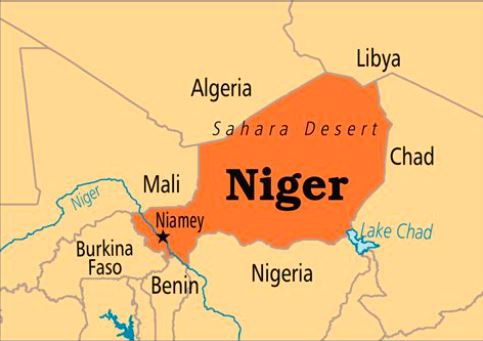
Map of Niger

Last week, on June 19th, Niger announced plans to nationalize its uranium venture which until now had been operated by the French company Orano. By this, the Niger government has decided to gain control over its resources from France. For many years, the French state owned company Orano, which was previously Areva, has been extracting uranium in Niger, enjoying a full monopoly, paying barely anything to the country including no taxes (Mali and Niger end Long-Standing Tax Treaties with France). This quest for freedom or rather fairness by Niger is not something new which started with the government of President Abdourahamane Tchiani, but rather the culmination of years of an unfair treatment based on an unbalanced relationship with the French company and government. In the 2000s, then President Mamadou Tandja had sought to re-negotiate the partnership with then Areva (now Orano) which until then had enjoyed a de facto 4 decade monopoly in the country paying almost nothing to the locals; he tried to curb the French influence by striking a deal with the China Nuclear International Uranium Corporation in 2007 to develop a uranium mine. As expected, Tandja was deposed in a coup in 2010, coup financed by the metropolis. Niger Takes Control of its Uranium, and Niger and Orano: Disagreement.

Below are excerpts from People’s Dispatch

=====
Uranium

In yet another assertion of sovereignty, the government of Niger announced on Thursday, June 19, that it would nationalize the Somaïr uranium venture, wresting control from the multinational nuclear fuel cycle corporation Orano.

Orano is owned by the French state, which, the government noted, has been “openly hostile toward Niger since July 26, 2023”, when the then president Mohamed Bazoum, domestically perceived as a French puppet, was ousted in a popularly supported coup.

Without yielding to French threats of war, the military government replacing Bazoum’s regime consolidated widespread support by expelling French troops, fulfilling the demand for which mass protests had been underway in the lead-up to his removal.

Flag of Niger

France has long exerted a monopoly over Niger’s uranium, which is among the highest grade in Africa. It has been fueling French nuclear power plants, lighting up a third of its light bulbs, while over 85% of Nigeriens lacked connection to the electricity grid.

… The nationalization changing this neo-colonial arrangement “will allow for healthier and more sustainable management of the company and, consequently, optimal enjoyment of the wealth from mining resources by Nigeriens,” its statement added.

Threatening Niger with “legal actions, including criminal proceedings if necessary”, Orano said it “intends to seek full compensation for the damages suffered and will assert its rights to the stock corresponding to Somaïr’s production to date.”

Niger Takes Control of its Uranium

Map of Niger

Last week, Orano, the French nuclear company which until now controlled the mining of uranium in Niger, has announced that the Niger government had taken control of its Somair uranium mining. Orano owns about 63 % of the mine. Orano claims that the government had been stopping them from resuming exports and operation, when we know that the degradation (Niger and Orano: Disagreement) is in part because they were trying to force the government to go through Benin whose border has remained closed, previously due to ECOWAS blockage (fueled by France), and now given that it hosts French military bases. The media tell us that Niger is not that important and Orano, France, and the EU have been able to find alternative suppliers in Canada, Uzbekistan, Australia, Namibia, and others… if that is the case, then why do they persist in Niger? Why not leave Niger alone? Is it because the uranium from Niger was dirt cheap, and now paying from it at regular prices from those other sources hurts the pocket book? The BBC admits that “the timing could hardly be more awkward, as Western countries struggle to meet the challenge of climate change and cut their carbon emissions from electricity generation.” Overall, the West is unhappy that Niger is now seeking other partners such as Russia, China, and others. 

Flag of Niger

The Western mainstream media, in a case of absolute double standard keeps calling the government of Niger, “military junta“, while calling the Syria terrorists “liberators.” These same media are all up in arms in the case of Niger, Mali, and Burkina Faso. Today, the BBC received a 3-month ban in Niger, while the Nigerien government is filing suits against RFI for spreading fake news that could destabilize the social peace and inciting war propaganda against the local government.

Excerpts below are from the BBC. For the full article, check out How a uranium mine became a pawn in the row between Niger and France. Enjoy!

=====

In the latest sign of a dramatic deterioration in relations, Niger’s military rulers appear increasingly determined to drive France out of any significant sector in their economy – and particularly uranium mining. This week the French state nuclear company Orano announced that the junta … had taken operational control of its local mining firm, Somaïr.

the crisis facing Orano in Niger represents a significant practical challenge for French energy supply. With 18 nuclear plants, totalling 56 reactors, which generate almost 65% of its electricity, France has been ahead of the game in containing carbon emissions from the power sector. … So, over the past decade or so, [France] has imported almost 90,000 tonnes – a fifth of which has come from Niger. … Last year, as West African neighbours responded to the coup in Niger by imposing a trade blockade that paralysed uranium exports, other suppliers readily stepped into the breach. The European Union’s imports of the mineral from the country plunged by a third, but these were largely replaced by Canada.

… After last year’s coup, Orano itself tried to stay out of the diplomatic row, keep a low profile and carry on operating normally. But the Ecowas trade blockade prevented it from exporting the output from the Somaïr mine, near Arlit, in the Sahara Desert. And even after the sanctions were lifted in late February, the usual uranium export route, via Benin’s port of Cotonou, remained blocked, because the junta kept the border closed in an ongoing political row with Benin….  In June the junta cancelled the French company’s rights to develop a new mine at the large Imouraren deposit, which had been seen as the uranium sector’s principal new hope for future growth. Meanwhile, the export blockage was pushing Somaïr, which by November was sitting on 1,150 tonnes of blockaded stocks of uranium concentrate worth $210m (£165m), into financial crisis.

Niger’s junta feels no need to make concessions to Orano because it is now buoyed by a sharp rise in oil exports, thanks to a new Chinese-built pipeline. With that financial cushion, the regime appears prepared to bear the cost of paralysing and probably dismantling the traditional uranium partnership with France – now its main international opponent.