
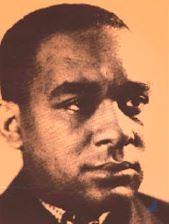
I found this gem of a poem by the great African poet David Mandessi Diop. Diop was born in France, of a Cameroonian mother from the royal Bell line with illustrious members such as Rudolf Duala Manga Bell and Ndumbe Lobe Bell (King Bell) both kings of the Duala people, and a Senegalese father. Although he died young, in a plane crash in 1960, he has left a strong imprint on African poetry. His most famous poem, Africa, has been one of my favorites growing up and was thought in schools throughout the continent. His work always focused on a condemnation of colonialism and slavery, while filled with hope for an independent Africa.
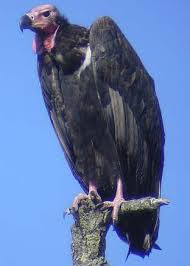
Thus, the poem Les Vautours (The Vultures) explores the horrors of colonialism and its impact on Africa. As one can guess, the Vultures are the colonizers who preyed on a fragile Africa, and exploited it with extreme violence. With the arrival of the Europeans, there was a clash of civilizations, Christianity was imposed upon our ancestors via machine guns as noted by the author’s reference to “monotonous rhythm of Pater-Nosters,” and slavery and later forced labor took a toll on them in the plantations or on the roads built referenced as “bloody monument.” When the author mentions “mutilated promises through machine guns,” it reminds us, for example, of the Thiaroye Camp where the tirailleurs were killed by French forces for simply asking for their pension after having served to free France from Nazi forces during World War II. As always, the author finishes on the high note of hope “Spring will put on flesh under our steps of light.” As one reads this poem, it appears that The Vultures are still at work on African soil, but the Spring is putting on flesh under Africans’ steps as we can see in the AES and more.
The original was published in Coups de pilon, Présence Africaine, 1956. Translated to English by Dr. Y., Afrolegends.com
=====
Les Vautours par David Mandessi Diop / The Vultures by David Mandessi Diop
| Les VautoursEn ce temps là
A coups de gueule de civilisation A coups d’eau bénite sur les fronts domestiqués Les vautours construisaient à l’ombre de leurs serres Le sanglant monument de l’ère tutélaire En ce temps là Les rires agonisaient dans l’enfer métallique des routes Et le rythme monotone des Pater-Noster Couvraient les hurlements des plantations à profit O le souvenir acide des baisers arrachés Les promesses mutilées au choc des mitrailleuses Hommes étranges qui n’étiez pas des hommes Vous saviez tous les livres vous ne saviez pas l’amour Et les mains qui fécondent le ventre de la terre Les racines de nos mains profondes comme la révolte Malgré vos chants d’orgueil au milieu des charniers Les villages désolés l’Afrique écartelée L’espoir vivait en nous comme une citadelle Et des mines du Souaziland à la sueur lourde des usines d’Europe Le printemps prendra chair sous nos pas de clarté. |
The VulturesIn that time
When civilization struck in a fit of anger When holy water struck domesticated foreheads The vultures built in the shadow of their claws The bloody monument of the tutelary era In that time Laughter died away in the metallic hell of the roads And the monotonous rhythm of Pater-nosters Covered the screams on plantations run for profit O sour memory of extorted kisses Promises mutilated by machine-gun blasts Strange men who were not men You knew all the books you did not know love Or the hands that fertilize the womb of the earth The roots of our hands deep as the revolt Despite your hymns of pride among graveyards Villages laid to waste and Africa dismembered Hope lived in us like a citadel And from the mines of Swaziland to the heavy sweat of Europe’s factories Spring will take shape under our steps of light. |



 African Heritage