
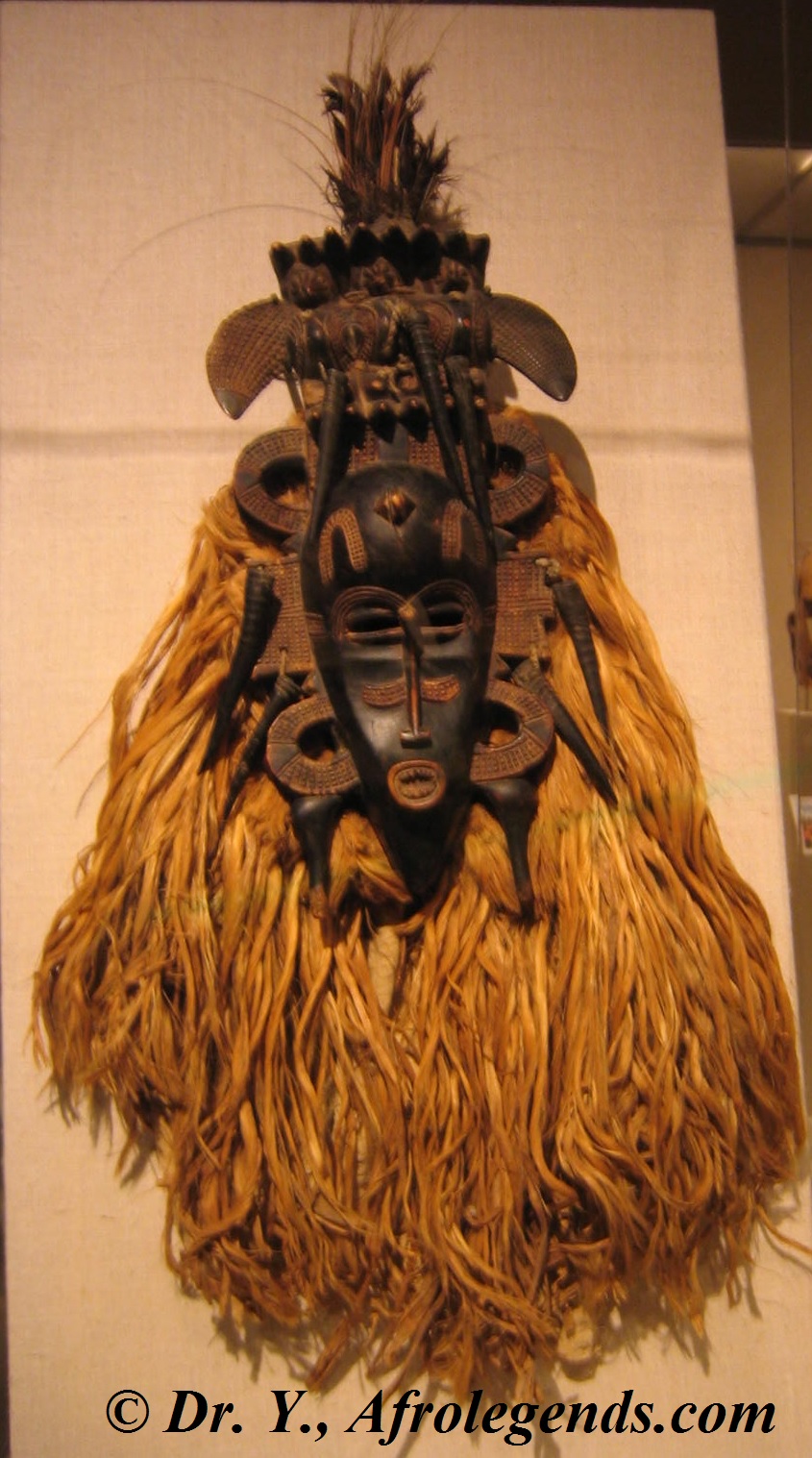
In Africa, there is the concept of fetishism which has been prevalent as a description of African beliefs. Thus, a fetish is an object which holds spiritual power or supernatural significance. Given that African statues hold deep cultural, spiritual, and symbolic significance [Authorship in African Art: The Case of Yoruba Art], the term fetishism has been historically associated to them. Early European anthropologists have linked African religions and statues to fetishism. However, we are learning that this was a technique designed by Europeans to denigrate and dehumanize the African person so as to justify slavery [Dum Diversas or The Vatican’s Authorization of Slavery] early on, and colonialism later on.
Cheikh Anta Diop, the great Senegalese historian, anthropologist, philosopher, physicist, and politician, showed in his book, Nations Nègres et Culture: de l’Antiquite nègre égyptienne aux problèmes culturels de l’Afrique noire d’aujourd’hui, that fetishism in Africa is not an inherent school of thought, but rather arose from the disconnection of modern Africans to their original religions due to violent exposure to centuries of attacks (slavery) from the West. Thus, he said,

“From one end of Black Africa to the other, passing through Egypt, the statues were originally intended to be the support of the immortal “double” of the ancestor after his earthly death. Placed in a sacred place, the statue was the object of offerings and libations: this fact, misinterpreted by Westerners, created the false idea of fetishism. In reality, there is a tendency towards fetishism, that is, idolatry, only where the meaning of the cult has been forgotten through a break in tradition.”
Cheikh Anta Diop, Nations Nègres et Culture, Présence Africaine, Paris p. 339 (1954). Translated to English by Dr. Y, Afrolegends.com.



 African Heritage