Robert Mugabe, Freedom Fighter and First President of Zimbabwe Lives On

Robert Mugabe_4
Robert Mugabe (History.com)

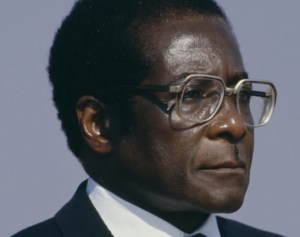
One of Zimbabwe‘s great sons is no longer: Robert Mugabe, the first president of Zimbabwe has passed away. This was a man who tirelessly fought for his country’s liberation, and for the Black race as a whole. Some have called him an icon of liberation, and indeed he was!

Robert Mugabe epitomized the freedom fights of then Rhodesia, a British colony ruthlessly run by a white minority. This once beautiful place had been renamed after  Cecil Rhodes a white tyrant who committed the greatest atrocities in that country in the name of the superiority of one race over the other and capitalism. It was only befitting that a freedom fighter like Robert Mugabe should come up, and fight to not only reclaim the land of his ancestors, but also appropriately reinstate it to its past glory, that of Great Zimbabwe !

Flag of Zimbabwe
Flag of Zimbabwe

Few people have sacrificed so much for a fight for freedom. After criticizing the government of Rhodesia in 1964, Robert Mugabe was imprisoned for more than a decade without trial. Mugabe lost his then only child while in prison; the colonial government did not allow him to bury him (almost 30 years later, he went on to have other children).

Robert Mugabe embodied Africa’s struggle against colonialism. He was a courageous politician, imprisoned for daring to defy white-minority rule. Later on, he was vilified by the ‘international community‘ (now we all know that this means: parts of Europe + USA) for restoring their lands to Africans, because this attacked whites’ interests in his country. I am not sure how to this day, some people believe that it is okay for less than 5% of the population to own 90% of the land in a country which is not even theirs… that is beyond me… what about those who were born there? what about those whose land it is? Will it be okay if the few Africans who have immigrated to say France, owned 90% of the land there?… Now will we all hear about injustice!
Robert Mugabe_7
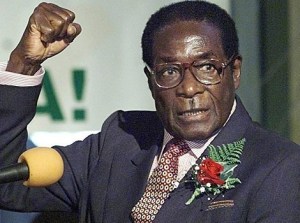
Zimababwe’s President Robert Mugabe chants Zanu PF slogans with supporters gathered at the Harare International Conference Centre in Harare, Wednesday May 3, 2000. (AP Photo/Christine Nesbitt)

Learning of the passing of Robert Mugabe, many world leaders have expressed their condolences… below are just a few.

Julius Malema of South Africa said, “I’m saddened by the passing of our martyr and giant of the African revolution cde President Robert Mugabe. Let’s continue the fight and protect his legacy. We must not allow our enemies to tell us how to remember him; we know our heroes.”

Joseph Kabila, former president of the Democratic Republic of Congo (DRC) said, “We will forever remember the worthy son of Africa, who came to our rescue when our country was victim of a foreign aggressor. The continent has lost one of its pan-African leaders, a hero of independence.

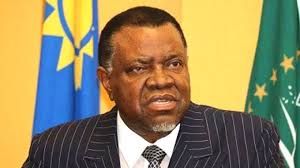
Hage Geingob
Hage Geingob of Namibia (ZimbabweSituation.com)

Kenya’s President Uhuru Kenyatta said Mr Mugabe had “played a major role in shaping the interests of the African continent” and was “a man of courage who was never afraid to fight for what he believed in even when it was not popular.

Hage Geingob, president of Namibia added, “… Robert Mugabe [was] an extraordinary revolutionary and tenacious freedom fighter who contributed immensely to Africa and Namibia’s cause for freedom.

Jerry J. Rawlings, former president of Ghana said, “RIP Comrade Mugabe. You lived for the dignity of your fellow black. Your African pride, dignity and audacity were unassailable. Africa has lost a bold and noble Statesman.

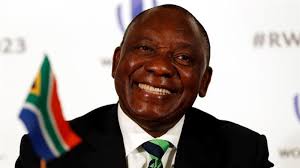
Cyril Ramaphosa
Cyril Ramaphosa of South Africa (AlJazeera.com)

South Africa’s President Cyril Ramaphosa called Mr Mugabe a “champion of Africa‘s cause against colonialism” who inspired our own struggle against apartheid“. And indeed Robert Mugabe supported the fight against apartheid and tremendously helped the ANC in its struggle to defeat that monster called apartheid. Ramaphosa added that under Mugabe’s leadership, “Zimbabwe’s sustained and valiant struggle against colonialism inspired our own struggle against apartheid and built in us the hope that one day South Africa too would be free”. During the decades of our own struggle, Zimbabwe’s liberation movement supported our own liberation movement to fight oppression on multiple fronts. After Zimbabwe achieved independence, the apartheid state brutalised and violated Zimbabwe as punishment for supporting our own struggle” . Many Zimbabweans paid with their lives so that we could be free. We will never forget or dishonour this sacrifice and solidarity.”
Robert Mugabe_China
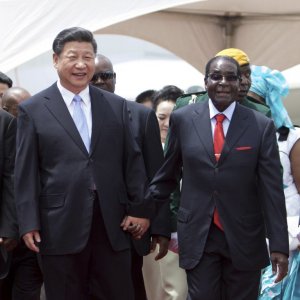
Xi Jinping of China with Robert Mugabe (Source: South China Morning Post)

In his condolence message, Chinese President Xi Jinping said China had “lost an old friend and a good friend.” Foreign ministry spokesman Geng Shuang said Mugabe’s death was deeply mourned in China, noting that the former president opposed foreign interference and actively promoted Beijing’s relations with Zimbabwe and Africa. China described Mugabe as an “outstanding leader of the national liberation movement and statesmanwho firmly defended the country’s sovereignty, as African leaders termed him a “liberator” and “pan-Africanist.

Robert Mugabe and Zimbabwe, a Short Biography

Flag of Zimbabwe
Flag of Zimbabwe

Here is a documentary about Robert Mugabe and his history, his life, and his leadership. This video talks about him, the fight for independence, the loss of his first son while imprisoned by the British in Rhodesia, and the renaming of the country from Rhodesia to Zimbabwe, after the Great Zimbabwe  Empire. I only recently found out that Mugabe had been influenced by Kwame Nkrumah: African Visionary and Ghana’s First President. He had lived and trained at the Takoradi Teacher Training College in Ghana, where he met his first wife Sally Hayfron Mugabe. It is sort of a short biography.

Mugabe to Trump: “Blow Trumpet of Peace”

Last week at the UN general assembly, President Mugabe of Zimbabwe asked President Trump of the United States to “blow the trumpet of peace.” I liked this, because I believe every leader out there should be blowing the trumpet of peace, and as a matter of fact, everyone of us has the mission to blow the trumpet of peace in our homes, at work, in our cities, in our countries, to make the world a better place for all of us. Enjoy!

Fidel Castro: Ideas cannot be Killed!

 fidel-castro_4« ¡ Las ideas no se matan ! » « Ideas cannot be killed ! »

This is the sentence shouted out to the killing squad which was about to execute Fidel Castro on 26 July 1953, and this saved him. Indeed, El Commandante stood for ideas and above all for love: love of humanity, and planet earth. He understood that imperialism was nullifying the human being, and crushing people under its hands. He worked for the freedom of mankind. Fidel showed us that the size of a country or its people does not matter when fighting for great ideas and principles. Cuba is a small country, but its actions, its help, has been immense to Africa for the past 50 years. Even to this day, doctors across Africa are trained in Cuba, and Cuban doctors have vastly supported the health-care services of many countries including Ghana.

Nelson Mandela wrote from Robben Island, about Cuba: “It was the first time that a country had come from another continent not to take something away, but to help Africans to achieve their freedom.” Indeed, Cuba’s help to Africa has been selfless, and loving, and that of true brotherhood.

fidel-castro_2As a towering figure who stayed true to his Marxist-Leninist ideology even after the collapse of the Soviet Union, Fidel Castro has empowered countless Africans. The struggle for liberation from colonial powers by Africans benefited vastly from help from this little country in the western hemisphere.
When Africa cried, Cuba was there. When Portuguese were killing, subjugating, imprisoning Angolans, Bissau-Guineans, Cape Verdians, Mozambicans, Cuba was there. When Apartheid and the South African regime was oppressing (with support of the Western world) Black South Africans cried, and Fidel heed their calls. When Lumumba was killed, and Congo at lost, they called and Fidel answered. When Namibia was crushed, Fidel and Cuba helped free them from the Apartheid regime. When Ethiopians needed help, Fidel provided troops and expertise. When France was perpetrating a genocide in Algeria, Cuba helped free them.

Castro’s support for Africa’s liberation led him to meet with some of the continent’s leaders including Patrice Lumumba of Congo, Ghana’s Kwame Nkrumah, Sam Nujoma of Namibia, Nelson Mandela of South Africa, Muammar Gaddafi of Libya, and Robert Mugabe of Zimbabwe.

Amilcar Cabral
Amilcar Cabral

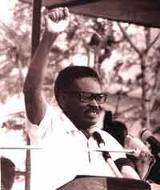
Responding to calls for help from the Angolan leader
Agostinho Neto who was trying to liberate his country from the Portuguese, Castro sent troops to Angola. Today, Angola is free of civil war thanks to the unfailing support of Fidel. Cuban soldiers are documented to have fought alongside Namibians and South Africans to prevent the apartheid regime from spreading all over southern Africa. They have also helped in Mozambique, and Guinea Bissau & Cape Verde supporting Amilcar Cabral. Between 1966 and 1974 a small Cuban force proved pivotal in the Guineans’ victory over the Portuguese. This time Cuba’s involvement also stretched to medical support (Cuban doctors) and technical know-how. Ultimately, Cuba’s successful battle against South Africa in Angola also hastened the Apartheid regime’s withdrawal from Namibia after 70 years of occupation, and led to that country’s subsequent independence.

Cuban troops have since the 1960s, served in Algeria, Guinea, Guinea Bissau, Equatorial Guinea, Sierra Leone and Libya. Cuba was a thorn for the imperialists in Africa, France in Algeria, Portugal, Great Britain, South Africa, etc.

Agostinho Neto
Agostinho Neto

In a 1998 speech, Fidel Castro told the South African Parliament (it was his first visit to the country) that by the end of the Cold War at least 381,432 Cuban soldiers and officers had been on duty or “fought hand-in-hand with African soldiers and officers in this continent for national independence or against foreign aggression.

Given this history, it was no surprise that one of Mandela’s first trips outside South Africa – after he was freed – was to Havana. There, in July 1991, Mandela, referred to Castro as “a source of inspiration to all freedom-loving people,” adding that Cuba, under Castro’s leadership “helped us in training our people, gave us resources to keep current with our struggle, trained our people as doctors.”  At the end of his Cuban trip, Mandela responded to American criticism about his loyalty to Castro and Cuba: “We are now being advised about Cuba by people who have supported the Apartheid regime these last 40 years. No honorable man or woman could ever accept advice from people who never cared for us at the most difficult times.”

fidel-castro_5Altogether fitting was Cuban President Raul Castro’s address at Nelson Mandela’s funeral in 2013. In Johannesburg, Raul reminded his audience: “We shall never forget Mandela’s moving homage to our common struggle when on the occasion of his visit to our country on July 26, 1991, he said, and I quote, ‘the Cuban people have a special place in the hearts of the peoples of Africa’.”

Upon arrival in Havana, Robert Mugabe of Zimbabwe said, “Fidel was not just your leader. He was our leader and the leader of all revolutionaries.

So in essence, many countries in Africa became independent thanks to Cuba and Fidel Castro, thanks to his ideals and his love of freedom. I am not sure that there is a single African country which has not benefited in some way shape or form from Cuba. We all owe Fidel our love, our lives, our freedom, and we salute him: So long El Commandante, thanks to you, we are free! Thanks to you, we fought a long battle and won! thanks to you, we started new chapters and became ‘free’ countries! Africa owes you so much!


What did we celebrate in 2013 in Africa?

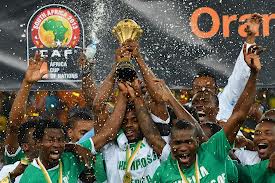
Super Eagles lifting the trophy

Pretty Yende
Pretty Yende

There was a lot to celebrate in Africa in 2013.  Here are some of those things.

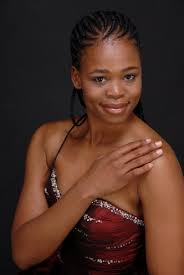
– In January, South African opera singer, Pretty Yende, was the first African to perform at the Metropolitan Opera House in New York City.  You can watch her interview on BBC.

– On February 10, Nigeria’s Super Eagles won this year’s African Cup of Nations.  Stephen Keshi’s team made us all proud.

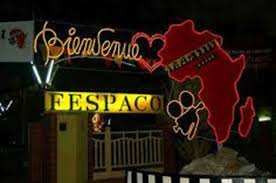
– In MarchFESPACO 2013 was a success and featured movies and documentaries from across the continent.

FESPACO 2013
FESPACO 2013

– On March 14, Uhuru Kenyatta won Kenya’s presidential elections.  These elections were the people’s choice, and Uhuru Kenyatta defeated the ‘machine’-chose guy Raila Odinga (Obama’s cousin); a very good example of democracy by Africans for Africans.

– In April, Cecile Kyenge became the first Black minister nominated in Italy.  Dr. Kyenge is originally from the Democratic Republic of Congo.

– On 31 July, Zimbabwe general and presidential elections went peacefully with the full re-election of Robert Mugabe.

– In August, 12 political figures from Laurent Gbagbo‘s FPI were released in Côte d’Ivoire.  Among them was Pascal Affi N’Guessan, previous prime minister of Gbagbo, who was unjustly detained without hearing for 2 years.

Samuel Eto'o Fils 'Birth of a Champion'
Samuel Eto’o Fils ‘Birth of a Champion’

NoViolet Bulawayo was the first black African woman and Zimbabwean author to be shortlisted for the prestigious Man Booker Prize for her novel We need new names.

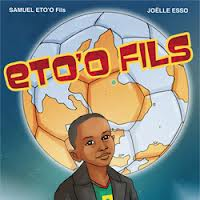
– In September, Samuel Eto’o Fils (Cameroonian and one of Africa’s best soccer forward) came out with an autobiographic comic book.  Birth of a Champion is the first comic book on an African football player, and will hopefully inspire many youths around the globe.

– In November, Cameroonian author Léonora Miano won the 2013 Feminina Prize for her novel La Saison de l’Ombre, which talks about slavery from those who lived after seeing their relatives captured.

Aliko Dangote
Aliko Dangote

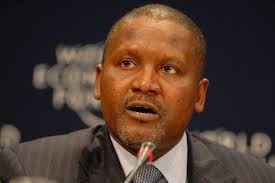
– Nigerian billionaire Aliko Dangote, Africa’s richest man, vowed to build the largest privately owned refinery in Nigeria, which produces more oil than any other African country but must import most of the motor fuel and diesel it uses because existing refineries are dilapidated and inefficient.

Folorunsho Alakija
Folorunsho Alakija

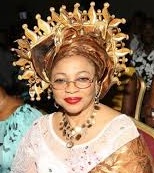
– This year also saw two African women cross the billionaire bar: Isabel Dos Santos of Angola, and Folorunsho Alakija of Nigeria.  Alakija is actually the richest black woman billionaire ahead of Oprah.

– Five (5) African nations won their tickets to the World cup in Brazil 2014.  The 5 countries are: Algeria, Cameroon, Cote d’Ivoire, Ghana, and Nigeria.