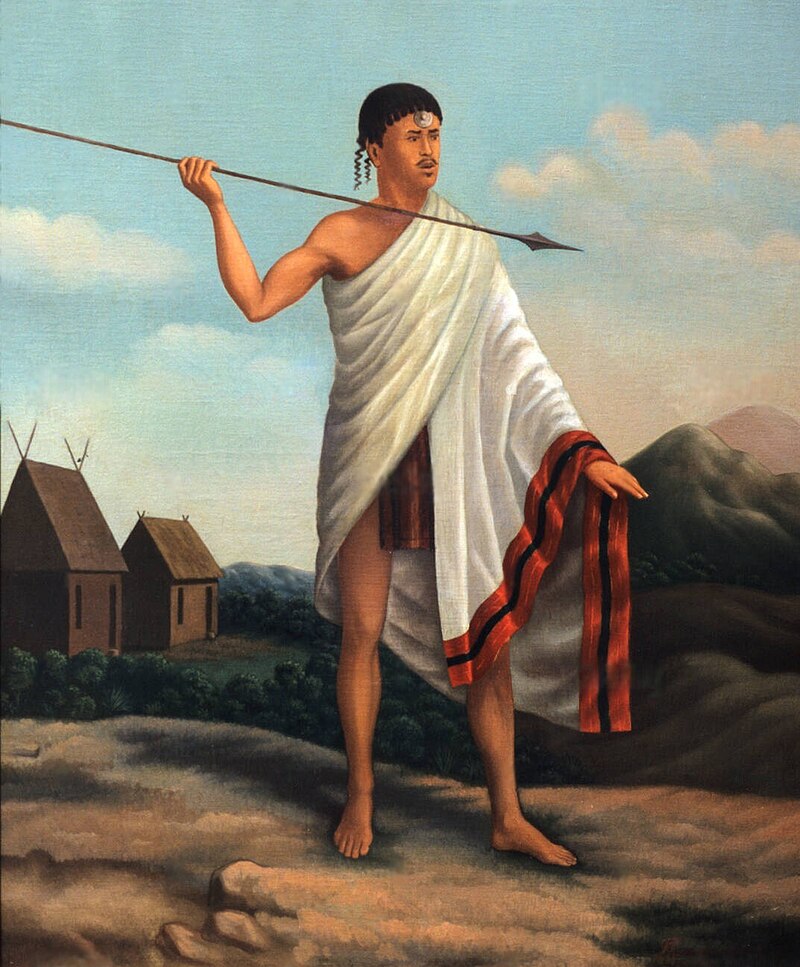
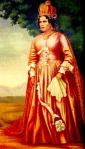
Andrianampoinimerina, portrait painted around 1905 by Ramanankirahina
As we learned, Andrianampoinimerina is known as the first Ruler of the Kingdom of Imerina in Madagascar, the one who unified the Merina people of Central Madagascar. His reign was marked by the reunification of the Imerina after 77 years of civil war, and he also led the subsequent expansion of his kingdom to nearby territories, thereby initiating the unification of Madagascar under Merina rule. His legacy was followed by his son Radama I who successfully continued it, unifying 2/3 of the great island under his rule.
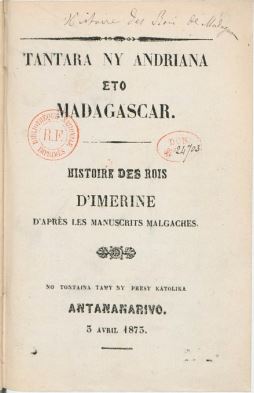
Tantara ny Andriana
Below is an excerpt of Andrianampoinimerina’s speech, taken from the Tantára ny Andriána, edition 1968. It is an immense collection of the oral traditions of Madagascar collected by R.P. Callet, a Jesuit priest from 1868 to 1881. The book is in Malagasy. A French translation was published in 4 volumes by the Malagasy Academy from 1935 to 1958. The numbers at the head of each excerpt indicate the page numbers of the original.
=====
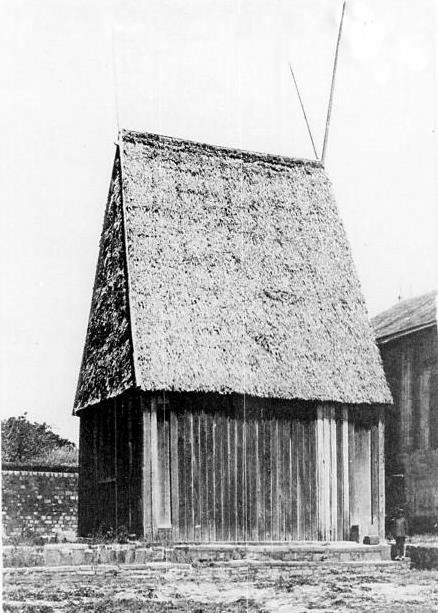
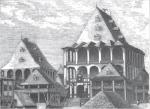
One of King Andrianampoinimerina’s residences within the Rova of Antananarivo, Madagascar
Excerpts from Andrianampoinimerina’s Speech
708.« I see the different castes: all belong to me and all have my affection, he said, and I will unite you; I will make of Imerina a guinea fowl of a single color.»
728.« This is what I will tell you, O Merina: the country and the kingdom are mine; I will share the land with you… to allow you to live… I will give a rice field to each man; I will see to it that all the Ambaniandros1 have the same belly. »
731.« Here is the forest: I make it the great undivided heritage, the means of subsistence for orphans, for single women, for all the unfortunate… whoever goes there, do not prevent them: all will be able to take and act as they please. »
757.« The men guilty of these crimes, even if they were great figures, even if they were caste leaders, even if they were my relatives…, I will put them to death; I will reduce their women and children to slavery and I will confiscate their property… The Merina, my subjects, are like a lámba without inside or back, like the circular and uniform edges of a pot. »
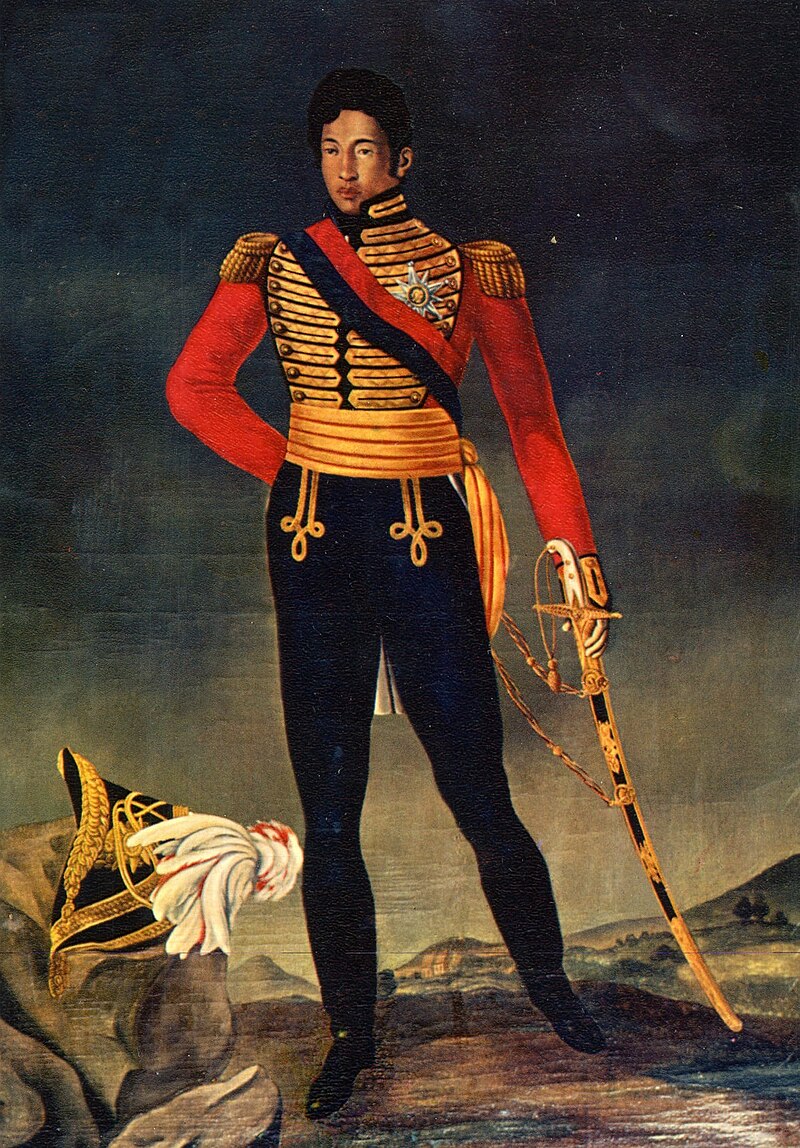
Radama I (c. 1810 – 1828)
802.« There is no other enemy to my kingdom than famine, because one cannot, when hungry, think of the State: the great, then, seek to devour the small, and the small to steal… If there are people who do not work, I invite you, oh my subjects, to cultivate their lands… you will take the harvests, but will give them back their land when they are determined to work it. »
1054.(Excerpt from his recommendations before his death) « O my friends, let Radama be for you a young gosling to whom you will bring what you have conquered… Do not present him with unfaithful reports, do not deceive him. For the King has no parents; he has no brothers; those who obey his instructions and who trust in his laws are his parents… »
1056.« … and I declare to you too, O Radama, that Imerina is now unified and that the sea will be the limit of your rice field. »
Andrianampoinimerina, portrait painted around 1905 by Ramanankirahina
Andrianampoinimerina is known as the first Ruler of the Kingdom of Imerina in Madagascar. He is known as the one who unified the Merina people of Central Madagascar. His reign was marked by the reunification of the Imerina after 77years of civil war, and he also led the subsequent expansion of his kingdom to nearby territories, thereby initiating the unification of Madagascar under Merina rule. He is a cultural hero who is revered by the Merina people in particular, and all in general. He is known as one of the greatest military and political leaders of the history of Madagascar.
Who was Andrianampoinimerina ? His name means “the king in the heart of Imerina.” He deposed his uncle, King Andrianjafy who had ruled over northern Imerina (Imerina Avaradrano).
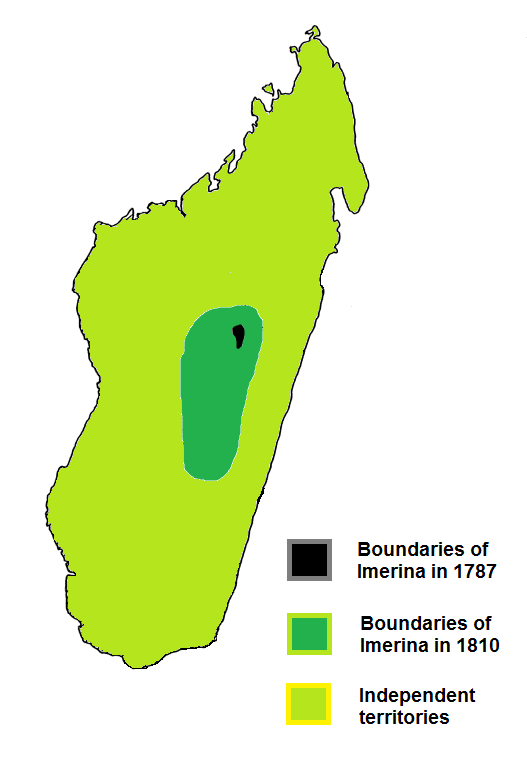
Expansion of Merina Kindgom during reign of Andrianampoinimerina 1787-1810 (Source: Wikipedia)
Andrianampoinimerina was born Ramboasalamarazaka (from the short form: Ramboasalama, Ramboa and Salama to mean “healthy dog” – name given as part of tradition to ward off evil spirits away from a newborn) around 1745 in Ikaloy, in central Madagascar, to Princess Ranavalonandriambelomasina, daughter of King Andriambelomasina of Imerina, and her husband Andriamiaramanjaka, an andriana (noble) of the Zafimamy royal family in the independent kingdom of Alahamadintany to the north of Imerina. His mother’s brother Andrianjafy was named Andriambelomasina‘s successor and was king of Imerina Avaradrano, the northern quadrant of the former Kingdom of Imerina, from 1770 to 1787. Prior to Andrianampoinimerina’s reign, Imerina Avaradrano had been locked in conflict with the three other neighboring provinces of the former kingdom of Imerina which had last been unified under King Andriamasinavalona a century before. Andriamasinavalona divided the kingdom among his four favorite sons; which led to 77years of civil war and famine. This explains why freedom from famine and unity were very important to Andrianampoinimerina.
Radama I (c. 1810 – 1828)
He deposed his uncle, King Andrianjafy, to take over power in 1787. He ruled under the name of Andrianampoinimerina which means “the venerated or desired Prince of Imerina,” and ruled the Imerina Kingdom for 23 years until 1810. Andrianampoinimerina established his capital at Ambohimanga, which is today a site of great spiritual, cultural and political significance that was designated a UNESCOWorld Heritage Site in 2001. The king’s original royal lodgings can still be visited at Ambohimanga. Later, he moved the political center to Antananarivo. He expanded his territory through diplomacy, marriage alliances, and military campaigns, absorbing neighboring ethnic groups and regions. Known for his administrative reforms, he developed civil and penal codes, organized public works, and regulated markets. He also strengthened Merina social structures, promoted a state religion centered around his kingship, and built a citizen army.
Today, he is revered as a cultural hero. Andrianampoinimerina laid the foundation for a unified Malagasy identity. His legacy was carried forward by his son, Radama I (Queen Ranavalona I‘s husband), who continued the mission of national unification.
Today I will be talking about a great queen of Madagascar, Queen Ranavalona I who fought against French and British expansionism in Madagascar, and strongly believed in autarky (self-sufficiency).
Born by the name of Mavo(or Ramavo) around 1788, Ranavalona I will later be named Rabodonandrianampoinimerina(which means the smart grand-daughter of Andrianampoinimerina) in reverence to her uncle, the King Andrianampoinimerina. She became Queen of Madagascar after the death of her husband Radama I and was coronated on 12 August 1829. She was also designated by the title Ranavalo-Manjaka I (« Reigning Ranavalona »). She reigned over the Kingdom of Madagascar from 1828 to 1861.
Ranavalona I followed in the footsteps of her predecessors, with the territorial expansion of her kingdom, and led several expeditions to pacify conquered territories such as the meridional Menabe, the Boina, and the north-east regions of the island (Madagascar). Fervent nationalist, she fought against foreign influence, including that of Christian missionaries. During her reign, the power of some castes increased, like that of the andriana or the royal family, or that of the military chiefs, the hova.
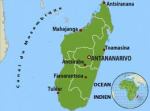
Madagascar
Ranavalona’s 33-year reign was distinguished by an ongoing struggle to preserve the political and cultural sovereignty of Madagascar in the face of increasing European influence and competing French and English bids for domination over the island. In the beginning of her reign, Ranavalona I tried to continue the work of modernization started by her predecessor. Very soon, she faced the hostility of the French, who in 1829, attacked different points on the oriental coast of the island. This unexpected aggression sharpened the queen’s distrust of European ambitions; especially since the British missionaries installed at the heart of the island since 1820 were converting many. Fearing the loss of the independence of her country, she denounced the anglo-malagasy treaty of 1820, and asked the British to give up on the religious extension in her country, and to focus only on the educational works she wanted for her people. However, the British refused, and in 1835, she had them expelled from the island. To counter-balance the European influence on the island, the monarchy created contacts between the ports of Majunga, and Zanzibar.
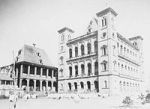
Manjakamiadana, the Royal compound built for Queen Ranavalona I
Manjakamiadana,encased in stone under the orders of Ranavalona II
Ranavalona I then hired the services of Jean Laborde who accomplished quite a lot of modern upgrades, the most important of these will be providing Madagascar with a metallurgic and chemical industry. He also built the queen a new residence known as the Manjakamiadana, which became the largest structure on the Rova grounds, the royal compound in Antananarivo. The residence was made entirely from wood and bore features of a traditional andriana home, including a central pillar (andry) to support the roof. The palace would eventually be encased in stone in 1867 by James Cameron of the London Missionary Society during the reign of Ranavalona II. The original wooden palace of Ranavalona I and virtually all other structures of the historic Rova compound were destroyed in a 1995 fire, leaving only the stone shell to mark where her palace had once stood. Renovation is on the way.
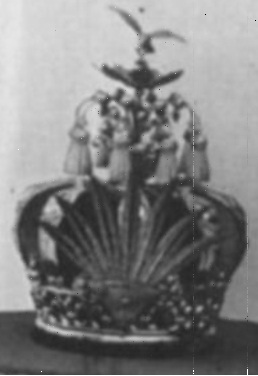
Royal Crown of Madagascar as worn by King Radama II, Ranavalona I’s successor (ca 1862)
Ranavalona pursued a policy of autarky (self-sufficiency) and isolationism, diminishing economic and political ties with European powers, repelling a French attack on the coastal town of Foulpointe, and taking vigorous measures to eradicate the small but growing Malagasy Christian movement initiated under Radama I by members of the London Missionary Society. She made heavy use of the traditional practice of fanompoana (forced labor in lieu of tax payments in money or goods) to complete public works projects and build a standing army of between 20,000 and 30,000 Merina soldiers, whom she deployed to pacify outlying regions of the island and further expand her realm.
Subsequently, to try to eradicate Christianity among her subjects, as she believed (and rightfully so) that this was a means of infiltration of the colonial ambitions of Europeans on the island, she had converts (considered as traitors) run off. As she declared in 1849: « Miala amiko ka mba ialako, mahafoy ahy ka mba foiko ! » (« they [christians] have denied me [ as a living symbol of their homeland], therefore I deny them as well; they have rejected me, I reject them! »).
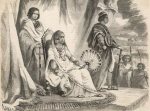
Ranavalona I on the throne
She said in a letter addressed to the Europeans: “To all Europeans, British and French, in recognition for the good you have done to my country by teaching European wisdom and knowledge, I would like to express my thanks. … You can keep following your customs. Have no fear for I have no intention of modifying your habits. But if I see some of my subjects trying to change the rules established by the twelve great kings, my ancestors, I will not possibly consent: because I will not allow men to come and change anything to all the ideas I have received from my ancestors, which I had accepted without shame or fear. You are free to teach my people science and wisdom, but when it comes to touching our ancestors’ customs, it is a vain work, which I will fully oppose….”
Ranavalona I continued the works of Andrianampoinimerina and Radama I. In her country, she is seen as a great sovereign, true symbol of patriotic and national pride. However for Europeans, she has been described as a tyrant… but like her so many great African kings and queens defending their country against foreign invasion/colonization have been portrayed as cruel, and ignorant. Faced with the contempt of Christian converts, she proudly stated: ”ny fomban-drazako tsy mba mahamenatra ahy na mampatahotra ahy!” (“I do not feel any shame or fear about my ancestors’ customs”). Enjoy this great video, and honor one of Africa’s earlier nationalist and independentist: Queen Ranavalona I.




 African Heritage