Happy Taombaovao Malagasy: Celebrating the Malagasy New Year

Madagascar
Madagascar

Last week, March 10-11 marked the celebration of Malagasy New Year… the Malagasy new year is not in January, because the Malagasy calendar is a lunar calendar with thirteen lunar months of 28 days. Each lunar month starts with the first moon. Up until 1810, every region of Madagascar had its own calendar; then under the Kingdom of Madagascar whose kings reigned from 1810 to 1896, the calendar was standardized. From 1810 to 1881, the Kingdom of Madagascar’s new year always started with the first day of the month of Alahamady, i.e. the first moon of the month. This month corresponds to the end of the rainy season, and the rice harvest, rice being the staple food of the Malagasy people. Compared to the Gregorian calendar, the fararano and the Alahamady occur between March and April around the first moon closest to the 21 March equinox. With the fararano, in the olden days, Malagasy people would congratulate themselves on having emerged victorious from the violent winds, the torrential rains, landslides, devastating fires, but also from the period of Maintso ahitra or famine. The month of Alahamady is a month of celebration, and symbolizes power, wealth, and even royal power. The great king  Andrianampoinimerina, at the origin of the unification of Madagascar, is quoted with this famous formula, “I have no enemy, except famine.” He was also born on the first day of the month of Alahamady, thus his formula symbolized victory in general, but victory over famine in particular.

Depiction of the 1895 French war in Madagascar.

Starting in 1897, the celebration was officially abolished by the French colonial period which viewed it as pagan, and as a tradition that would undermine the Malagasy conversion/obedience as it linked them to their pasts, their ancestors, and culture; it was thus celebrated in secret by some. Since the 1990s, the celebration is now seeing a resurgence. Today, it is a national celebration known as the Taombaovao Malagasy, literally Malagasy New Year. It lasts 2 days and is observed throughout the entire territory. It helps to convey and spread the 7 foundations of the Malagasy philosophy: faith in zanahary (The Creator, God), the value of Aina (life), the fahamasinana (the sense of the sacred), the fihavanana (solidarity and mutual aid), the fahamarinana (the sense of fairness and justice), the fahasoavana (happiness) and the link to ancestral heritages.
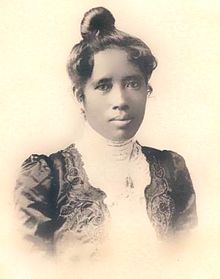
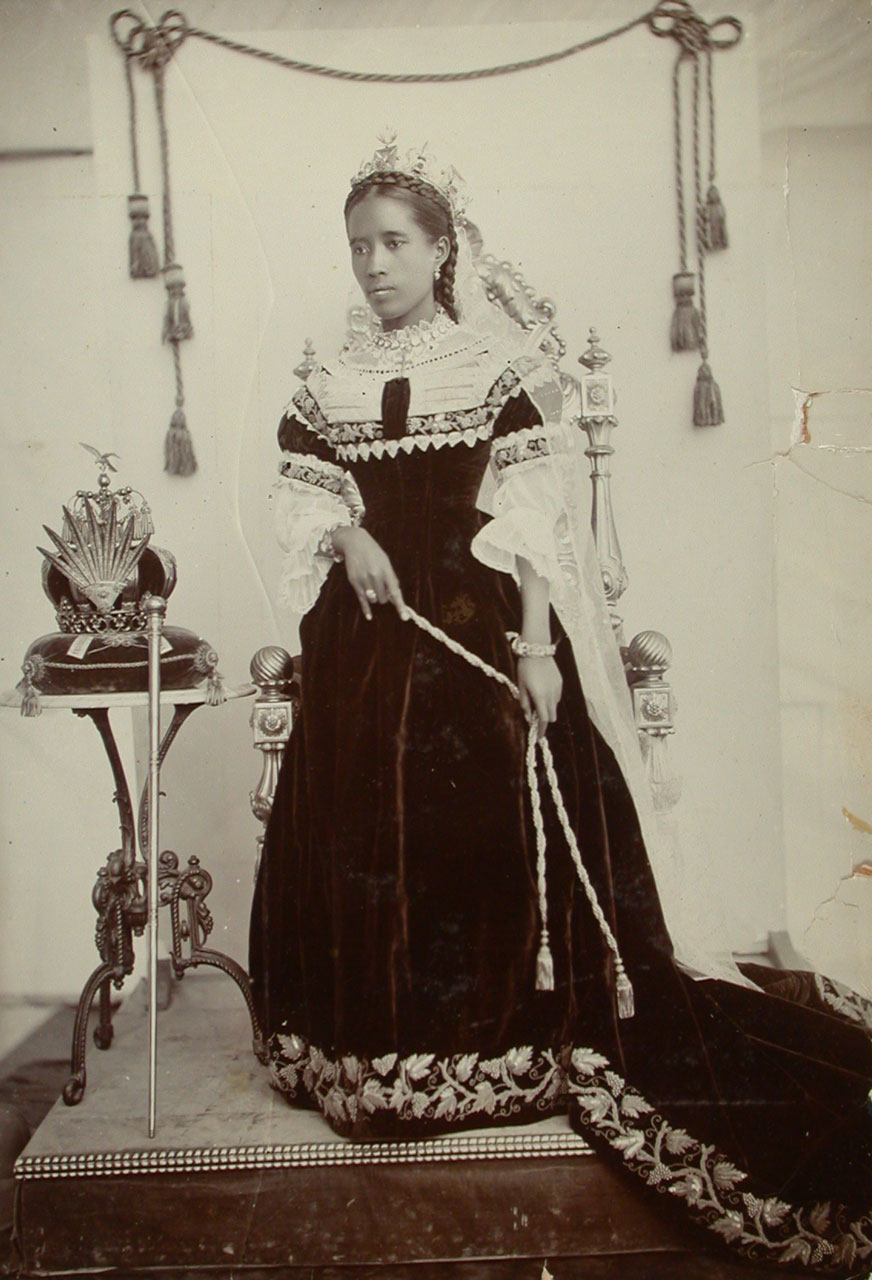
Queen Ranavalona III of Madagascar

This year, it was celebrated on 10 and 11 March. In the opening, Princess Ratsimamanga, a descendent of Queen Ranavalona III, the Last Monarch of the Kingdom of Madagascar, performed the rite of Tsodrano, the blessing, and said during the official ceremony to all officials and public present, “I bless you in the name of the seven royal tombs so that you and your families be in good health, so that you could have the strength to contribute the the well-being of the nation.” She added, this Taombaovao ceremony symbolizes “a spiritual renewal in the hearts of Malagasy people… Us, Malagasy, our ancestors have not gone far, and are always with us. It is our ancestors who pray for us to be together, for us to produce good things in the future, for the harvest to be good.”

After the blessing, comes the ceremony of Tatao, where the people share a plate of rice cooked in milk and sprinkled with honey. Princess Ratsimamanga explained, “rice represents abundance so that there will be no famine. Milk is for offspring. And the honey is to make things sweet. These three things that we put in the pot and share with everyone symbolize the fact that we are productive, that we have the strength to fight evil in the country.”

Rare Footage from Queen Ranavalona III’s Time

Queen Ranavalona III of Madagascar

I found this really good video on the story of the last monarch of the Kingdom of Madagascar, Queen Ranavalona III. It is a short documentary, very well done with footage from those years… As you can see the queen had a gentle nature, and calm resolve around her. She was also beautiful and fashionable. A tiny note, in the video, it is said that Princess  Marie-Louise Razafinkeriefo, heiress to the queen, was the daughter of Ranavalona III’s sister. In reality, Marie-Louise was the grand-daughter of the Queen’s sister Princess Rasendranoro, and was born in exile. Her mother was Princess Razafinandriamanitra, a daughter of Princess Rasendranoro and a niece of Ranavalona III. Please enjoy!

Queen Ranavalona III’s Belongings Returning Home to Madagascar

Queen Ranavalona III in full regalia, standing beside a throne table on which are the Royal crown and sceptre, ca 1890 – 1895

Last December, there was an auction in England of Queen Ranavalona III, the Last Monarch of the Kingdom of Madagascar photographs, letters, and fashion belongings. These were collected by Clara Herbert, who worked for the Madagascan royal family from the late 1890s to the 1920s, and were passed down through her family, and ended up in the attic of a house in Surrey. Auctioneer Kerry Taylor pieced together Ranavalona’s story from the box of photographs, postcards, souvenirs, receipts and diaries and sold them on auction. The government of Madagascar was able to purchase a lot of it. I was quite moved because this is part of the history and pride of Madagascar, and I am glad the government of Madagascar worked to have it returned. Enjoy! Excerpts below are from an article from The Guardian.

======

An archive of fashion, photographs and letters telling the remarkable story of the last queen of Madagascar will return home after it was bought at auction by the island’s government.

The jumble of ephemera, along with an ornate 19th-century dress, all relates to the life of Queen Ranavalona III, who was dethroned by the French and exiled to Algiers.

Queen Ranavalona III of Madagascar

… The president of Madagascar, Andry Rajoelina, said: “Madagascar attaches great importance to the acquisition of these royal items as part of the reappropriation of Malagasy national history and cultural heritage. They will be installed in the newly reopened, restored Queen’s palace, where they will be displayed to the general public.

… Taylor [the auctioneer] said she was delighted the archive was heading to Madagascar. … “The queen and princess were separated during their lifetimes from their people and it gives me enormous satisfaction to know that this collection will soon be on its way home where it will be fully appreciated, admired and cared for in perpetuity.”

Queen Ranavalona III, the Last Monarch of the Kingdom of Madagascar

Queen Ranavalona III of Madagascar

Today we will talk about the last queen of the Kingdom of Madagascar, Queen Ranavalona III. She reigned from July 30, 1883 to February 28, 1897. Like many African kings and queens of the late 1800s and early 1900, she was deposed by the European colonizer, in this case the French, and sent into exile first on the island of Reunion, and then later in Algeria (just like the King of Dahomey, Béhanzin) where she died, never to see her native Madagascar again.

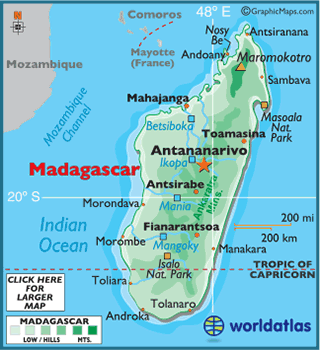
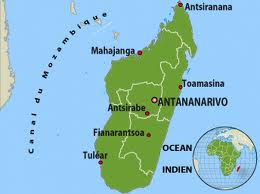
Map of modern-day Madagascar

Who was Ranavalona III? Well, as her name goes, she was the third Malagasy queen with the name Ranavalona. She became queen after the death of her grand-aunt, queen Ranavalona II. Ranavalona III was born Princess Razafindrahety in 1861. She was raised as a protestant, and taught by instructors from the London Missionary Society. Upon completion of her education, she married nobleman Ratrimo, but he died under suspicious circumstances in May 1883, just 2 months after Queen Ranavalona II’s passing. Rumor had it that the prime minister Rainilaiarivony had poisoned her husband, Ratrimo so as not to relinquish power. The young princess then ascended the throne of Madagascar at the tender age of 22, on July 13, 1883. It is said that she was chosen over her older sister, Rasendranoro, because of her conciliatory nature which the prime minister and other members of the Andriana looked for.

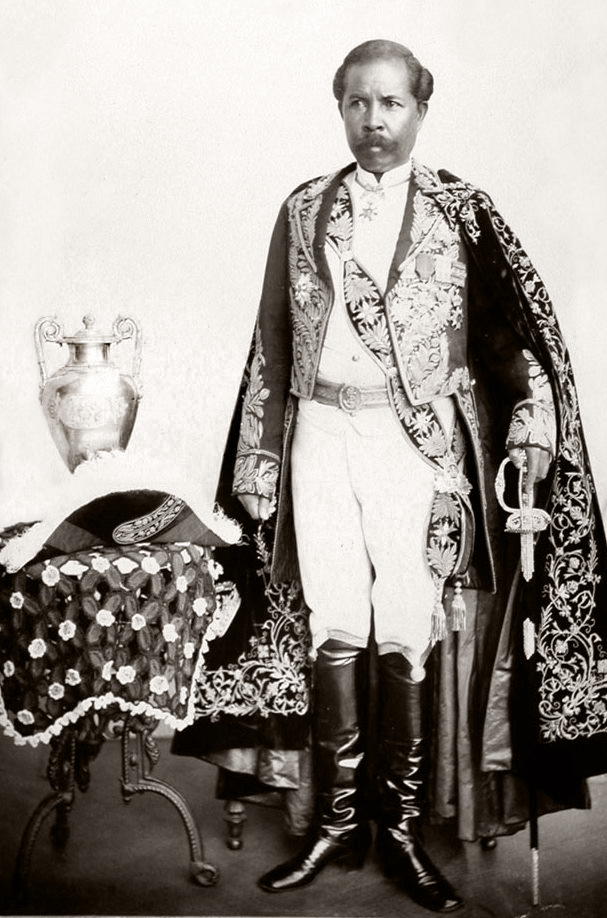
Prime Minister Rainilaiarivony of Madagascar

At the time of Ranavalona III’s ascension, Madagascar was navigating a shift from absolute rule (power in the hands of the king/queen) to constitutional monarchy. Under the new system, true authority was vested in the prime minister: in this case, Rainilaiarivony, who secured his grasp on power by marrying the newly crowned—and recently widowed—queen. In accordance with tradition, Rainilaiarivony had previously wed both of Ranavalona III’s predecessors, Ranavalona II and Rasoherina. Lucky man, wouldn’t you think? One man married to 3 successive queens! Probably the only one in history (this will be the story for another day)! Rainilaiarivony largely oversaw the day-to-day governance of the kingdom and managed its foreign affairs.

Illustration of France implanting its protectorate on Madagascar

As a queen, Ranavalona III inherited a kingdom which was assaulted by the French who wanted her country to be part of their protectorate. Throughout her reign, she tried to strengthen trade and diplomatic relations with the United States and Great Britain, in an effort to keep the French at bay. In 1886, the queen solicited U.S. intervention to help protect Madagascar from the French but was ignored. She, like many kings and queens of Africa back then, was probably not aware of the scramble for Africa, and the Berlin Conference (Selection from the 1885 Berlin Conference Final Act, The Berlin Conference 1884 – 1885 – Final Act (Continuation)), where Europeans allocated areas of the continent to themselves. She was forced to sign a treaty that gave France a certain control of Madagascar in order to prevent war, but the French wanted full control over Madagascar and did not back down. Ranavalona III successfully kept the French at bay until 1896 when the French declared Madagascar as their colony. Repeat French attacks on coastal port towns and an assault on the capital city of Antananarivo ultimately led to the capture of the royal palace in 1895, ending the sovereignty and political autonomy of the century-old kingdom (French Colonial Treaty in Madagascar : 18 January 1896).

Queen Ranavalona III

The newly installed French colonial government promptly exiled prime minister Rainilaiarivony to Algiers, Algeria. Ranavalona and her court were initially permitted to remain in Madagascar as symbolic figureheads, but the outbreak of a popular resistance movement – the menalamba rebellion – and discovery of anti-French political intrigues at court led the French to exile the queen to the island of Réunion on February 27, 1897.

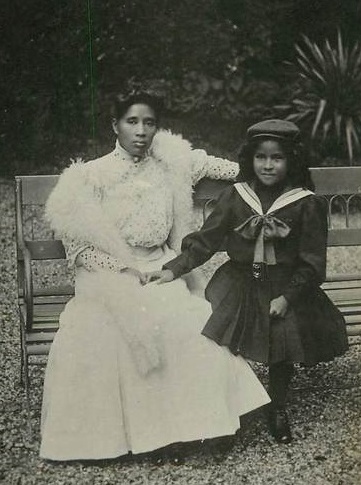
Queen Ranavalona III with her grandniece Marie-Louise ca 1905 in exile in Algiers, Algeria

Rainilaiarivony died that same year in Algiers, and shortly thereafter Ranavalona was relocated to a villa in Algiers, along with several members of her family. Despite Ranavalona’s repeated requests, she was never permitted to return home to Madagascar. Like many African kings and queens, she was deported (Deportation of African Heads of States). She died of an embolism at her villa in Algiers on May 3, 1917 at the age of 55. Her remains were buried in Algiers but were disinterred 21 years later and shipped to Madagascar, where they were placed within the tomb of Queen Rasoherina on the grounds of the Rova of Antananarivo (Rova de Manjakamiadana). you remember Queen Ranavalona III, remember that she was a queen who fought against the foreign invasion to the best of her ability, but above all remember that all she wanted was the independence of her people and culture.