

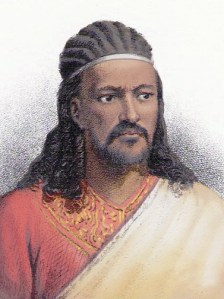
This is a heartbreaking news. Last week, Buckingham Palace, and the UK government refused to return the remains of Prince Alemayehu, son of Emperor Tewodros II, to Ethiopia. Prince Alemayehu’s remains are still in Great Britain 150 years after his death. How preposterous is this! Few years ago, when the Ethiopian government asked, the British said that they could not identify his bones (Ethiopians urge Britain to return bones of ‘stolen’ prince after 150 years). Today, Ethiopians thought that now that there is a new occupant in Buckingham Palace, King Charles III, Prince Alemayehu’s remains will finally return home. However, Buckingham Palace said that returning his remains will not be possible, as it will disturb the resting place of several others in the vicinity. From not being able to identify his bones a few years ago (when in this day and age the remains of King Richard III of England have been identified 500 years after his death), to disturbing others buried there, it makes us wonder if they ever even took the time to look. These are the same people who only returned the hair of Emperor Tewodros II only in 2019. It is so painful to hear… it feels like part of Emperor Tewodros II is still stuck in England. As one looks at pictures of the young orphaned prince who arrived in the UK at the age of 7, and who died at the age of 18, there is so much pain in his face.
Below are snippets of the article; for the full version, go to the BBC.
=====

Buckingham Palace has declined a request to return the remains of an Ethiopian prince who came to be buried at Windsor Castle in the 19th Century.
Prince Alemayehu was taken to the UK aged just seven and arrived an orphan after his mother died on the journey. Queen Victoria then took an interest in him and arranged for his education – and ultimately his burial when he died aged just 18.
But his family wants his remains to be sent back to Ethiopia. “We want his remains back as a family and as Ethiopians because that is not the country he was born in,” one of the royal descendants Fasil Minas told the BBC. “It was not right” for him to be buried in the UK, he added.
… in a statement sent to the BBC, a Buckingham Palace spokesperson said removing his remains could affect others buried in the catacombs of St George’s Chapel in Windsor Castle. “It is very unlikely that it would be possible to exhume the remains without disturbing the resting place of a substantial number of others in the vicinity,” the palace said. The statement added that the authorities at the chapel were sensitive to the need to honour Prince Alemayehu’s memory, but that they also had “the responsibility to preserve the dignity of the departed“.
How Prince Alemayehu ended up in the UK at such a young age was the result of imperial action and the failure of diplomacy. In 1862, in an effort to strengthen his empire, the prince’s father Emperor Tewodros II sought an alliance with the UK, but his letters making his case did not get a response from Queen Victoria. Angered by the silence and taking matters into his own hands, the emperor held some Europeans, among them the British consul, hostage. This precipitated a huge military expedition, involving some 13,000 British and Indian troops, to rescue them [no diplomacy, always force and violence].

The force also included an official from the British Museum. In April 1868 they laid siege to Tewodros’ mountain fortress at Maqdala in northern Ethiopia, and in a matter of hours overwhelmed the defences. The emperor decided he would rather take his own life than be a prisoner of the British, an action that turned him into a heroic figure among his people.

After the battle, the British plundered thousands of cultural and religious artefacts. These included gold crowns, manuscripts, necklaces and dresses. Historians say dozens of elephants and hundreds of mules were needed to cart away the treasures, which are today scattered across European museums and libraries, as well as in private collections. [In the case of Maqdala in 1868, it is said that 15 elephants and 200 mules were needed to cart away all the loot from Maqdala. British forces looted the place with no restrain].
The British also took away Prince Alemayehu and his mother, Empress Tiruwork Wube. [The loot was not enough… the young prince and the Empress too].
…



 African Heritage