French President Macron Admits French Repression in Cameroon’s Independence Struggle

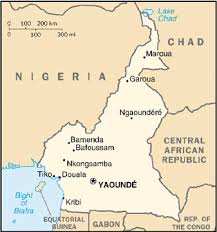
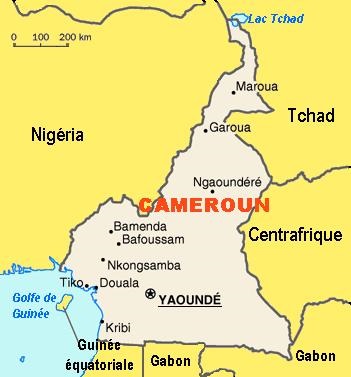
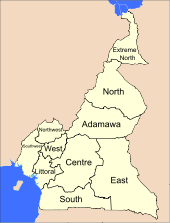
Map of Cameroon, with the capital Yaoundé

This past Tuesday, the French President, Emmanuel Macron, acknowledged the violence committed by France in Cameroon during and after the country’s “independence” in 1960. The French repression of Cameroonian independence movements went from 1945 to 1971 and thousands of lives were taken, and the country set back several years back! Just imagine, hundreds of villages bombed with napalm! Unlike Vietnam, where people knew about this, in Cameroon, a country in central Africa, it was a total media blackout; and the silence went on for decades! This acknowledgment comes after the publication of a joint report by Cameroonian and French historians (France Delivers Classified Colonization Documents to Cameroon).

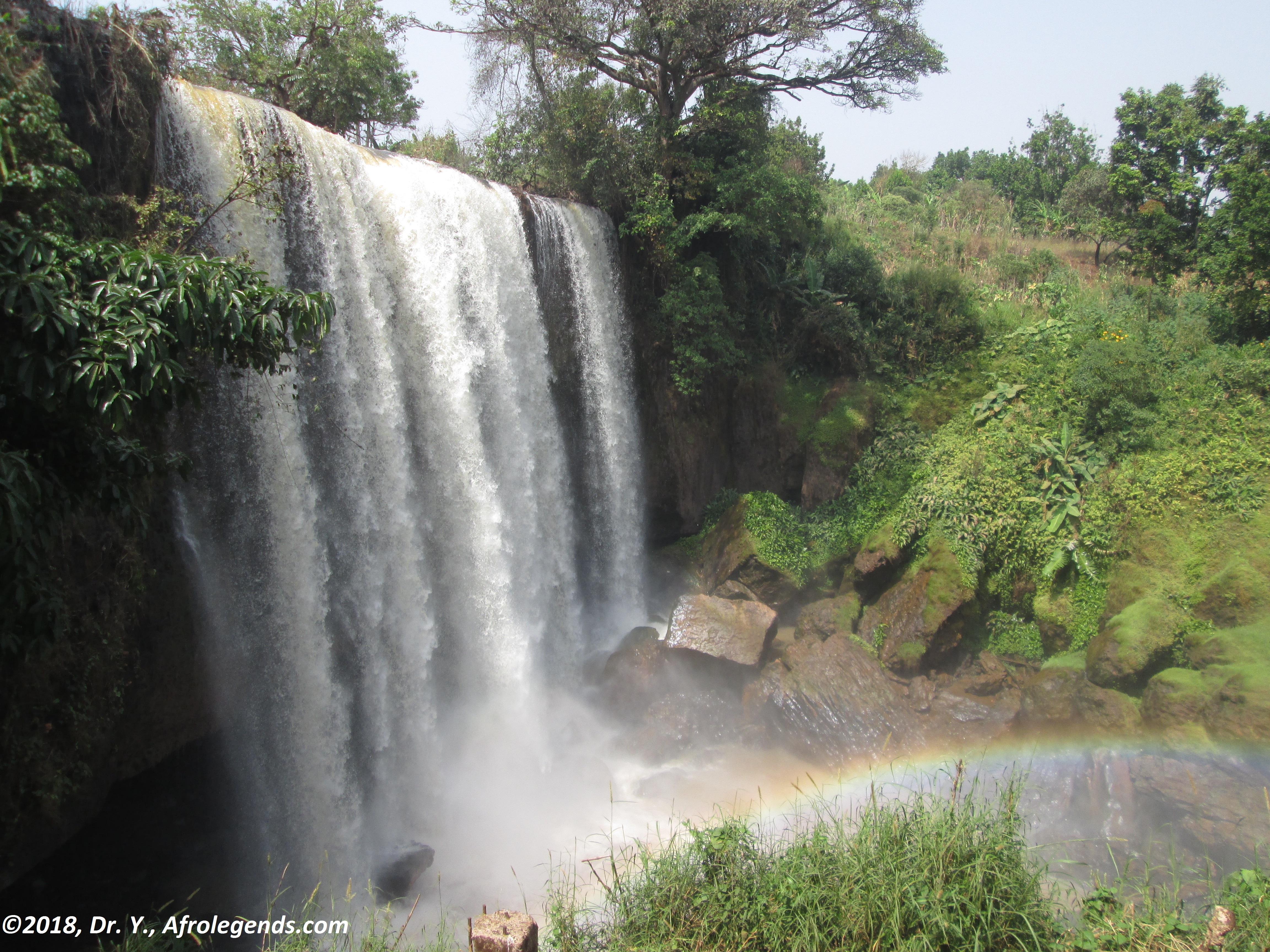
Metche Waterfalls in Cameroon was the site of French genocide there

In a letter to Cameroon’s President Paul Biya made public on Tuesday August 12, 2025, Macron said the report made clear “a war had taken place in Cameroon [like we did not already know that], during which the colonial authorities and the French army exercised repressive violence of several kinds in certain regions of the countryIt is up to me today to assume the role and responsibility of France in these events” .

Why do we get this sentiment of déjà vu? Well, because in 2015, Francois Hollande, then French President Acknowledged French Genocide in Cameroon. Not too long ago, Emmanuel Macron acknowledged the massacre of Thiaroye (Thiaroye: A French Massacre in SenegalA French Commission to investigate the Thiaroye Massacre ?), and the Algerian murders (France Admits Murder of Algerians … A Step Forward?), … but again fell short of apologizing. What next for Macron? An acknowledgment of the massacres in Madagascar? These French presidents are in the business of acknowledging, admitting, and then stopping short of apologies. Why bother?

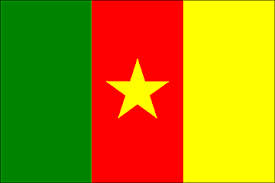
Flag of Cameroon

Lastly, why is this acknowledgment coming now, in the middle of the electoral turmoil in Cameroon? when France could have simply said something, in good faith, to its puppets of Yaounde last week after the main opposition candidate’s name was removed from the election list? Or is this a way to distract people again? Why now, 10 years after Hollande… are they waiting for most of the survivors to die like for Thiaroye? At this point, it is safe to tell these French presidents to shove their “acknowledgments,” for they are meaningless!… Words, words… no action! It’s more a mockery of our pain!

To learn more check the articles in BBC and RFI. Excerpts below are from the BBC.

=====

French President Emmanuel Macron has acknowledged the violence committed by his country’s forces in Cameroon during and after the Central African nation’s struggle for independence.

However, Macron fell short of offering a clear apology for the atrocities committed by French troops in its former colony, which gained independence in 1960.

UPC Leaders (L. to R.) front row: Castor Osende Afana, Abel Kingué, Ruben Um Nyobé, Felix Moumié, and Ernest Ouandié

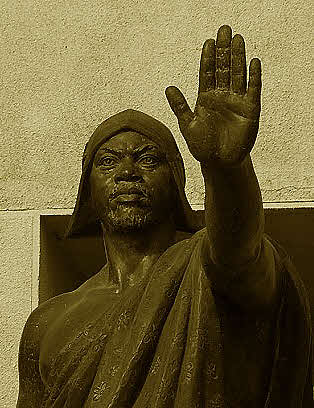
The French leader cited four independence icons who were killed during military operations led by French forces, including Ruben Um Nyobe, the firebrand leader of the anti-colonialist UPC party [somehow they refused to acknowledge their hands in the murder of Félix Moumié in Geneva by one of their agents – talk of a case of selective amnesia!]. France pushed hundreds of thousands of Cameroonians into internment camps and supported brutal militias to quash the independence struggle, the AFP news agency quotes the report as saying. Tens of thousands of people were killed between 1956 and 1961, the historians’ report said.

… Commenting on Macron’s lack of apology, one of the historians who contributed to the report said it was their job to “establish the facts and figures after having gone through the archival documents” and not to “recommend apologies“.

… While Macron did not address calls for reparations, it is likely to be a key talking-point in Cameroon going forward [like after Hollande’s 2015 visit? – Bro… it has been 10 years already!]….

Poster commemorating the 80th anniversary of the Thiaroye Massacre (Source: Seneplus.com)

… Last year, [France] acknowledged for the first time that its soldiers had carried out a “massacre” in Senegal in which West African troops were killed in 1944

… France has also made several attempts over the years to reconcile with its former colony Algeria, but has stopped short of issuing a formal apology. In 2017, Macron, then a presidential candidate, described the colonisation of Algeria as a “crime against humanity“, but two years later, he said there would be no “repentance nor apologies” for it [See… in the business of acknowledging, but not apologizing].


Cameroon – History Repeats Itself ?

Flag of Cameroon

Africans, it is so important to know our history, so as to be better equipped so it does not repeat itself again and again and again. I would like to publish here the words of the Cameroonian filmmaker Jean-Pierre Bekolo, who highlights the fact that history is repeating itself in Cameroon. Although many may not totally agree with him, the similarities between the events of 1955 and 2025 are numerous. In 1955 in Cameroon, the Union of the People of Cameroon (UPC) of Um Nyobe (Ruben Um Nyobé: Fighting for the independence of Cameroon), was shut down as it was fighting for the total independence of Kamerun. In reality, Cameroon never got its independence as the then colonial regime and later the puppet government killed the independence movement, and Cameroon’s freedom was confiscated. Today, the same thing is happening again: the main candidate who represents a change, whatever it is, a new chapter in the life of the country (the current leader has been in power for 43 years now, and was in the high levels of power – minister and prime minister – 20 years before that) has been blocked from participating in the upcoming elections by some “magic” trick. The 12 October 2025 elections will go on without him even though he has a major support of the population, and this is starting to look like a carbon copy of the events of 1955. Truth be told, Cameroon, like many Francophone African countries never got its independence. Thus, maybe the real battle is to break the chains of bondage, and resume the fight our forefathers started? Let’s have Millions of African Leaders: Be the Leader You Want to Have!

The excerpts below is from Actu Cameroun based on Jean-Pierre Bekolo Facebook’s post. Enjoy!

=====

Map of Cameroon, with the capital Yaoundé

“Is it possible to compare what happened in 1955 in Cameroon with what we are experiencing today? Yes, we can say—with all the caution required for such a historical comparison—that the Cameroon of 2025 resembles, in many ways, that of 1955. If we need our history, it is not to complain, but to move forward. However, in Cameroon, history has not freed us: it has chained us. The events we are experiencing today, and which we will experience until October 12, could well be an almost exact repetition of a drama already played out during the colonial era—and never closed.

… It’s 1955. Two camps are facing off. On one side, those who want Cameroon to belong to its children. On the other, a colonial power that gives nothing away without repression. And between the two: collaborators, opportunists, wheeler-dealers, those who know where the truth lies but hope for crumbs. These don’t really believe in the system, but they find it to their advantage. They don’t support the regime out of conviction, but out of comfort, cowardice, or calculation. They know exactly what needs to be done for this country to change—but they prefer to wait for their appointment, their per diem, their prestigious position. They are the same people Fanon described: local elites who serve domination without bearing its name, intellectuals who rent from the established order, journalists of silence. In 1955, the colonial power identified two targets to be destroyed: the radicals, who must be killed, and the moderates, who must be bought or neutralized. Any voice in favor of an independent Cameroon is then a threat. We must divide, oppose, buy, crush…

… In May 1955, while Cameroon is still officially under French rule, the Union of the People of Cameroon (UPC) embodies a strong desire for independence. Its vision is clear: to build a free, sovereign nation, free from colonial rule and compromise. But this ambition is perceived as subversive. On May 20, 1955, the colonial government banned the UPC. In the following days, many cities go up in flames: Douala, Yaoundé, Ebolowa… The repression is brutal. It marks the beginning of what is now called the war of liberation, with its trail of violence, clandestinity, and sacrifices. Um Nyobè and his comrades are forced to flee, then to engage in armed struggle. In July 1955, the official ban on the UPC is confirmed. The nationalist movement is criminalized, the 1956 elections take place without it, and the independence project carried by the Cameroonian people is confiscated.”

Cameroon – Where Self-Hate is used to Keep a Country in Bondage

Flag of Cameroon

It is no secret that the political climate in Cameroon is like an open wound for sore eyes. The Cameroonian regime which has been in place for the past 43 years, and since independence given that the current leader Paul Biya had been in positions of power 20 years prior, is known for being addicted to magic tricks and forgery! The regime’s latest magic trick has been to eliminate the best candidate, Maurice Kamto, by a wave of a wand, or rather a pen, a virtual pen. Over the past two weeks, we have seen a high minister of the nation erase the strongest candidate’s name on the election website, and produce a candidate out of nowhere, and then cement the whole with the stamp of the regime’s judicial arm that is the Constitutional Court this past Monday; all of this crowned by the silence of that double-sided international community (IC) which is always partisan in the face of Cameroonian pain (Cameroon and the Double Standard of the ‘International Community’). What is shocking in Cameroon is not really that a system is trying to maintain itself, but that the population has turned on its highest fighter and defender in bouts of apathy, and hate, hate of itself! I hear people spew insults and hate against those who ask the populations to fight for their freedom, and for their strongest defender of the hour, Maurice Kamto. Yes, Cameroon is a repressive dictatorship, which the IC still calls a democracy, but it is not a crime to dream and wish for a better country! It is actually a divine right!

I have been trying to find words… but Jean-Pierre Bekolo described this weird Cameroonian behavior better in Actu Cameroun. Excerpts below are from Actu Cameroun. Enjoy!

======

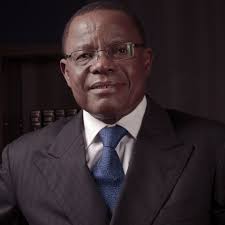
Maurice Kamto

For Jean-Pierre Bekolo, “Kamto is disturbing because at a time when everyone was accepting the established order, he spoke where we were silent, dreamed where we survived, proposed where we suffered. He is the slap of reality for those who had become accustomed to looking the other way. So we hate him. Not for what he did, but for what he awakens. Because in a dictatorship, the worst enemy is not the one who destroys, but the one who reminds us that everything could be different.”

… Kamto didn’t steal. Kamto didn’t kill. Kamto didn’t insult. Kamto didn’t call for war. He just wanted to be president. And for that, Maurice Kamto was imprisoned, insulted, demonized, humiliated, and censored. Why would many of his own fellow citizens rejoice in his suffering?

… This is a more serious, more deeply rooted phenomenon: a toxic, collective hatred against anyone who dares to stand up in a country where you are taught from childhood to walk bent over.

In a normal society, one can debate, oppose, and propose. In a normal society, wanting to lead one’s country is a civic act. But in some dictatorships, like the one that still haunts Cameroon under the spectral shadow of Paul Biya, wanting to be president is seen as a crime of lèse-majesté, madness, an insult to the order of things.

… Kamto is certainly not perfect; he even has many flaws, but no more than Paul Biya’s regime.

The most worrying thing is that this hatred against Kamto is a symptom of the regime’s success. It no longer rules solely through the police, the army, or fear. It rules from within people. It has colonized their minds. It has succeeded in making the people themselves insult the one who speaks in their name. It has turned society against its own sentinels. The system has entered our bodies.

It’s no longer just the government that represses—it’s society that self-censors, that self-punishes, that self-expels its own hopes. And this mechanism is much more sustainable than brute repression.

Tonight, Kamto may or may not be rejected by the Constitutional Council [he has been rejected], but the hatred against him, which is in fact hatred against ourselves, will remain, and that’s what must be stopped. Dreaming is not provocation.

Kamto is not hated for having acted badly if we compare his actions to those of the current system; we want him neutralized for having dared to imagine another outcome, another policy, another ethic, another way of being Cameroonian. He dared to disagree without fleeing, to protest without violence, to oppose without hatred. And this is what makes him unbearable in the eyes of a system that only knows how to operate in the shadows, contempt, and fear.

In all this, it is not Kamto who is to be pitied. It is Cameroon. A Cameroon that celebrates the punishment of those who want to love it differently. A Cameroon that rejoices when those who dare to hope are repressed. A Cameroon that laughs at the suffering of those who refuse to remain silent

….

GoodBye to a Courageous Leader : Ni John Fru Ndi and Ushering the Multi-Party Era in Cameroon

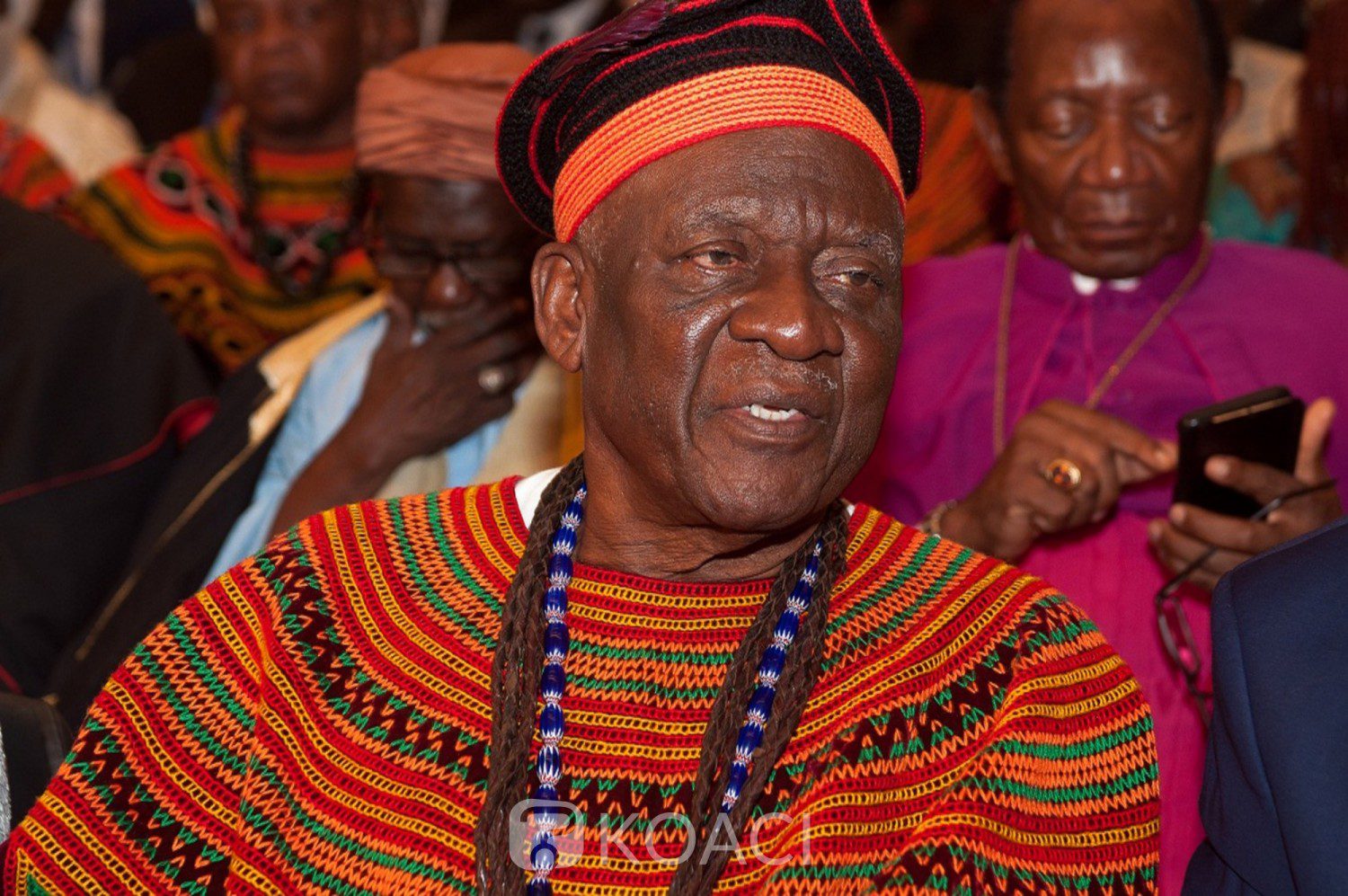
John Fru Ndi (Source: NewsduCamer.com)

Ni John Fru Ndi, the major political opponent to the current president of Cameroon for almost 3 decades has passed away. Affectionately called “The Chairman,” John Fru Ndi came up at the twilight of the National Conference in Cameroon with the creation of the Social Democratic Front (SDF) in 1990. Over the years, his party came to symbolize hope in a place where there had been no ‘real’ leadership change in over 30 years. His party was seen as the main opposition party to the government for over 2 decades. He was unavoidable in the political arena, and ran for president several times. He came close to winning in the October 1992 presidential election, but through some constitutional gymnastics and some play by the Supreme court (always) his win was pulverized and given to the governing party. The Supreme Court judge who heard his petition alleging fraud, said his “hands were tied” – and let the official results granting victory to incumbent Paul Biya, with 40% of the vote, stand. This caused great upset among SDF supporters and Fru Ndi was placed under house arrest for three months in his home in Bamenda, and a state of emergency was declared in the country. Later, Fru Ndi was nonetheless invited with his wife to the inauguration of US President Bill Clinton in January 1993.

Ni John Fru Ndi (Source: Bonaberi.com)

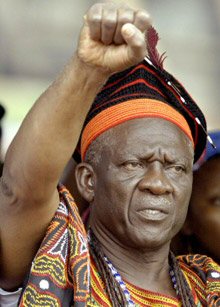
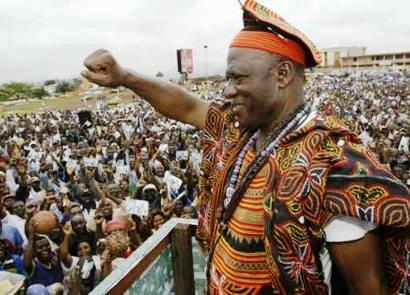
Like everyone back then, Fru Ndi began his political career in the 1980s as a member of Biya’s Cameroon People’s Democratic Movement (RDPC). Through the years, he grew frustrated with the one-party system. In 1990, during the years of the National Conference when Cameroon officially ended the one-party rule, he formed the opposition party the Social Democratic Front (SDF). Although he hailed from the Northwest province of Cameroon (English speaking area of Cameroon), he strove to represent all Cameroonians, and aspired for the unity of the entire country seeking a federally unified Cameroon. He addressed the masses in pidgin English. Soon, SDF came to stand for “Suffer don finish” – where with his arrival in power, his party would usher the end to suffering. At political rallies, he would raise his fist to shout “SDF” to the crowd, who would chant back en masse: “Power to the people!” This call and response was repeated until the third time when they would roar back: “Power to the people and equal opportunities!” The masses were galvanized; for many Cameroonians who had been muzzled for far too long under the one-party frame, this was the opportunity to exercise their civic duties and participate in the political life of their country. They saw in Fru Ndi the alternative to the stuck-up politics. Their efforts were repressed by the governing party; the early 1990s were the years of strikes, street protests, “zero-deaths,” and more.

John Fru Ndi addressing the masses in Bamenda (Source: Cameroonpostline.com)

In recent years, Fru Ndi was not a supporter of the secessionist rebellion in Anglophone Cameroon that has claimed tens of thousands of lives and displaced countless people over the last six years. He was even kidnapped twice and beaten up by militants of the secessionist group in 2019, and part of his house was burnt down. The  secessionists were angered by what they saw as his betrayal for not supporting their demand for an independent state of Ambazonia, as they call Cameroon’s two English-speaking areas – the Northwest and Southwest regions. This forced him to sadly relocate from his beloved Bamenda to the capital Yaounde. He was very proud of his origins and rarely was seen wearing anything but atogho, traditional Bamileke clothing from the Northwest region, or Boubou: A Traditional African Garment.

Flag of Cameroon

Many claim that he should have united the opposition behind one leader against the government, as he had failed to get the coalition formed by the opposition to agree to field a single candidate to take on Mr Biya; or that he had been corrupted by the governing party.  Fru Ndi may have made mistakes, but at some point he represented the hopes of millions, hopes for a different future, a different alternative; and he had the courage to stand up and create a party who united people from all levels of the society, ushering the era of multi-party in Cameroon which was often paved with thorns. He has left a major imprint in Cameroon’s politics.

Below are some tributes from AfricaNews,

I salute the memory of a singular, charismatic and courageous leader,” said current opposition leader Maurice Kamto who ran for president in 2018.

The story of the return to multi-party politics in Cameroon cannot be written without [Fru Ndi’s] name in bold gold,” said politician Akere Muna, who ran for president in 2018. “His life is a lesson to the fact that leadership is about serving and not about being served,” he said.

Ni John Fru Ndi for the SDF (Social Democratic Front, editor’s note) was the guide, that is to say, the man who traced the furrow along which we walk, the man who against all odds imposed the return to a multi-party system in Cameroon on 26 May 1990 and with it a set of individual and collective freedoms granted to the entire Cameroonian people” Marcel Tadjeu , Chairman of the Douala 5 SDF electoral constituency told AfricaNews correspondent.

Read also articles on the BBC, ABC, and AfricaNews.

Who / What did we Celebrate in Africa in 2019?

Gbagbo
Laurent Gbagbo

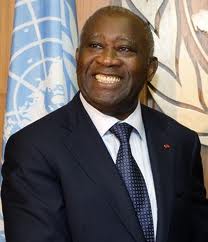
1. The liberation of President Laurent Gbagbo and Charles Blé Goudé (How long shall they kill our prophets…?) from the Hague after 8 years unjustly accused of crimes against humanity. All charges were dropped, Laurent Gbagbo, Former President of Cote d’Ivoire, was acquitted of War Crimes, yet Blé Goudé and him are still persecuted by the prosecutor, and Blé Goudé is still stuck in the Hague unjustly, while Gbagbo is in Belgium; both are unable to return home to Côte d’Ivoire. This is another case of Deportation of African Heads of States. Our prayers have been answered, and we will continue until they can both return home, and until Côte d’Ivoire is rid of all the nonsense brought by France there.  As Agostinho Neto Neto said: “La luta continua e la victoria e certa!”

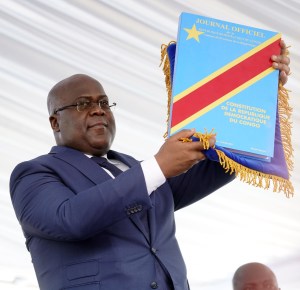
2. Democratic Republic of the Congo (DRC)‘s first democratically elected president, Felix Tshisekedi, was invested on 24 January which marked a historic day in the life of the DRC. Félix Antoine Tshilombo Tshisekedi marked the first peaceful transfer of power in the history of the DRC in 60 years, since the Belgium granted it independence.

Ethiopia_Abiy Ahmed
Abiy Ahmed, Prime minister of Ethiopia (Source: sa.breakingnews.co.za)

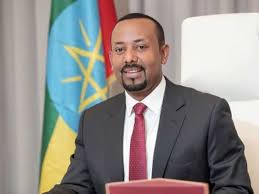
3. Abiy Ahmed, the Prime Minister of Ethiopia was awarded the Nobel Peace Prize this year. We celebrate it, but it has become quite controversial as he was awarded the Nobel for his work in ending the 20-year post-war territorial stalemate between Ethiopia and Eritrea…. the question remains as to why wasn’t his Eritrean counterpart recognized as well … doesn’t it take two to tango? Remember how F. de Klerk and Mandela were both awarded the Nobel peace prize for the end of apartheid? Both sides were recognized… so why not in the case of Ethiopia and Eritrea?

Tunisia_Saied
Kais Saied,  new president of Tunisia getting sworn in (Source: Al Jazeera)

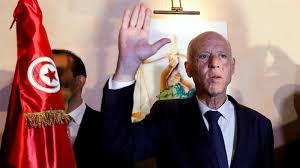
4. Tunisia celebrated the election of Kais Saied aka ‘The Robot’: The Political Outsider Who Won the Tunisian Presidential Election. Saied, a political outsider and retired law professor, won the presidential election with a landslide victory. We cheered with the Tunisian people for a good election and hopefully a good choice.

5. Cameroon’s opposition leader Maurice Kamto was freed after almost 10 months of unjust arrest. This has helped us all uncover yet another scandal: Cameroon and the Double Standard of the ‘International Community’. Kamto had been locked up with over 200 of his supporters at the capital’s maximum security prison for a peaceful march. He has now been freed, and all charges dropped, while the situation in Cameroon keeps disintegrating under the leadership of France’s puppet Paul Biya and his croonies.

6. Rwanda announced the opening of the first mobile phone manufacturing plant in Africa. The mobile phones will be entirely made in Rwanda… for Rwandans. Rwanda opens first entirely homemade smartphone factory. The Mara Group, a pan-African business headquartered in Dubai, says the factory will deliver “high quality smartphones at an affordable price.” Volkswagen will also open its first ever car assembly factory in Africa in Rwanda.

Kipchoge_INEOS 2019
Eliud Kipchoge after crossing the sub-2hour marathon line (Source: Standard.co.uk)

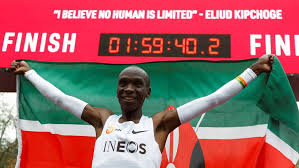
7. Eliud Kipchoge of Kenya ran a sub-2 hour marathon to become the first person in recorded history to run a marathon in such times.

7. Kenya’s Brigid Kosgei set a jaw-dropping new women’s world record at the Chicago marathon with a time of 2:14:04, breaking the record set by British runner Paula Radcliffe in 200316 years ago.

CAN 2019_Algeria
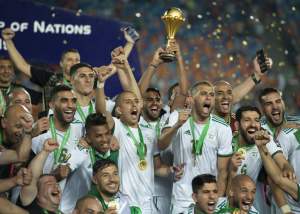
The Fennecs of Algeria celebrating their title at the CAN 2019 (Source: The Guardian)

8. The Fennecs of Algeria won the African Cup of Nations 2019 in Cairo, Egypt. The Fennecs of Algeria defeated the Lions of the Teranga of Senegal 1-0 to become Africa’s new champions. This was their second title since 1990. They were clearly the tournament’s best team. The revelation of CAN 2019 tournament was the Barea of Madagascar which for their first participation ever to the African Cup of Nations, performed extremely well, and went as far as the quarter finals.

Cape to Cairo_Alvin Zhakata_1
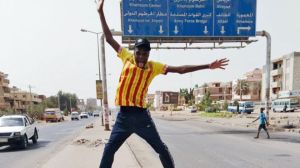
Alvin Zhakata in Khartoum, Sudan (Source: Alvin Zhakata)

9. This year also saw several fans attempt the journey from Cape to Cairo: Trekking 10,000 km for the African Cup of Nations. One of them finished: Alvin Zhakata, of Zimbabwe, trekked 10,000 km to cheer for the Zimbabwean warriors at the 2019 Africa Cup of Nations in Cairo. Even though he arrived late, after his team had been eliminated, he was offered a VIP ticket to the final. What Zhakata did was no easy feat: he traveled from Cape Town to Cairo by foot enduring visa delays, internet blackouts and revolutionary protests all for the love of football. This was also a bold political statement to all African leaderswe need roads to connect each other; we need better visa system for Africans, safer travel, and increased trade among each otherwe need a united AfricaZhakata’s statement is one of Unity, … African Unity

10. To end the year in fanfare, Ethiopia celebrated the launch of its first satellite. This is an outstanding feat and we are happy to celebrate with Ethiopian scientists and all Ethiopians.

Cameroon and the Double Standard of the ‘International Community’

tshisekedi_2
Felix Tshisekedi on investiture day

During the last elections held on 30 December 2018 in the Democratic Republic of the Congo (DRC),  Félix Tshisekedi was pronounced winner . He  defeated another opposition leader, Martin Fayulu, as well as Emmanuel Ramazani Shadary, who was supported by term-limited outgoing president Joseph Kabila. Immediately, the ‘international community (I.C.)’ pounced on Tshisekedi claiming that he could not have won, and that it was but Martin Fayulu the second who had won. There were even threats by the ‘international community’ via the French government through her Ambassador to the Congolese government. Tshisekedi’s victory has since then been upheld by the constitutional court of the DRC, and he was installed as president on 24 January 2019.

Maurice Kamto
Maurice Kamto (Maurice Kamto Facebook page)

In Cameroon, the story is a fair tale. After the 7 October 2018 presidential elections, opposition candidate Maurice Kamto, from all indications, came out winner of the elections against outgoing president, Paul Biya, who has been in power for the past 37 years… It was total silence by the I.C., in the case of Cameroon, who saw nothing wrong with a man who had been in power 37 years! They clapped and called those elections a standard of democracy! In the western media, there was no mention of Maurice Kamto, and the international community saw nothing wrong with the results of a presidential election being read 2 weeks after polling took place! This is the same international community that was so eager to get the results out in a timely manner in other countries such as the DRC, Madagascar, etc. Yet, Maurice Kamto won the elections and no mention of what happened to him took place. For Kabila in the DRC, the international community, via its medias, spent long time telling the world how Kabila had been in power for 18 years, and how anti-democratic that was. Yet in Cameroon, Paul Biya has been in power for 37 years, and they are clapping and calling the electoral hold-up democratic!

Cameroon_Provinces
Map of Cameroon with all its regions

Since then, Cameroon has further descended into the abyss that it slipped into 37 years ago. Not only is the Cameroon territorial integrity in question: Boko Haram in the North has cut off the 2 northernmost regions from the rest of the country, the 2 English-speaking regions are cut off from the country ; in the East of the country, armed bands coming from the Central African Republic (CAR) are terrorizing the population, and in the Adamawa Region, armed groups coming from CAR are kidnapping people for ransom including traditional chiefs and stealing cattle; there are refugees both inside and outside the country, and post-electoral violence has ushered in a profound exacerbation of tribalism leading to the politics of divide-and-conquer. It looks like the ultimate objective is dividing Cameroon, like in Sudan, with an exacerbation of ethnic differences with a further push toward chaos for better exploitation of the country’s resources and emptying it of its youths.

Paul Biya_1
Paul Biya, President of Cameroon

If the I.C. can scream for DRC, and publish articles about Martin Fayulu being the winner in its media the day after publication of results, with the catholic church complaining about results, why does it not show any indignation or some concern for Cameroon? How can a 37-year-old rule in Cameroon be applauded and referred to as being democratic by the I.C., while an 18-year rule in DRC is called a dictatorship? Why is 85-year-old Paul Biya’s 37-year rule being applauded when Mugabe in Zimbabwe was vilified? How can Biya, with nothing to show for his stewardship, not even the integrity of his territory, not even roads, but total chaos and backwardness, be applauded by BBCRFI,  The Guardian, and France 24?  How can a president purposely destroy its country including its resources and be applauded by this so-called democratic I.C.? Well, because he serves the interests of the I.C., and has been a good student and puppet in helping the I.C. pillage the resources of his country. Cameroon is so rich in natural resources: oil, cocoa (6th producer), coffee, natural gas, gold, diamond, etc. In the robbery that is so synonymous with France’s predatory behavior in Africa (particularly in its so called “pré-carré”), why should this be a surprise? France’s nature in Africa, and the I.C.’s in general, has been and remain predatory.

Cameroon_flag
Flag of Cameroon

In Cameroon today, there is a strong dictatorship. The mafia that is synonymous with this regime has been repressing in blood all peaceful demonstrations and marches for the upholding of the genuine electoral results. All protest marches calling for the electoral records to be published are either banned or have seen the winner of the elections Maurice Kamto and his team arrested, including many innocents who have been screaming for a change, for a chance to have better life, roads, jobs, better healthcare, etc. People in the English-speaking provinces have been, hurt, beaten or killed, for simple claims which are basic human rights. A lot of them are currently displaced…  people in the north provinces have been displaced, and hurt by Boko Haram… yet BBCRFI, and the likes of them say nothing! Instead they applaud a government which refuses to negotiate with its own people. We do not ask them to intervene, but if those medias are supposed to be impartial, then they should be impartial, otherwise they should clearly state their agenda: portrayal of Africa as poor and in need of help, pillaging of African resources, promotion of wars on the African continent to help their cronies those western multinationals destroy and get all resources for nothing.

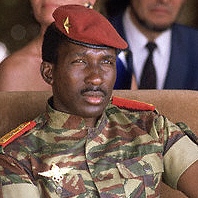
Thomas Sankara
Thomas Sankara a Ouagadougou

We, Africans, should recognize that we are not, and never were independent. We should protest and fight pacifically like this is our last fight. A mother sending her child to school, a father being able to feed his family, university graduates finding jobs in countries where everything is yet to be built, roads, water, electricity, basic human rights to respect, all of that are rights… and it looks like we will have to earn them  ourselves. Like Thomas Sankara said, “the slave who is not capable of assuming his rebellion does not deserve that we feel sorry for him. This slave will respond only to his misfortune if he is deluding himself about the suspect condescension of a master who claims to free him. Only struggle liberates… [ l’esclave qui n’est pas capable d’assumer sa révolte ne mérite pas que l’on s’apitoie sur son sort. Cet esclave répondra seul de son malheur s’il se fait des illusions sur la condescendance suspecte d’un maître qui prétend l’affranchir. Seule la lutte libère …(Discours de Sankara à l’ONU le 4 octobre 1984 (texte intégral) Speech delivered on October 4, 1984 during the UN general Assembly)].” DO NOT trust this condescending I.C., DO NOT trust their media that is very partial, and were all against Laurent Gbagbo, who today has been acquitted from crimes invented by this I.C. and its cronies. We have to fight for our own rights, our own freedom,  acknowledge that we are in charge of our own destinies, and never expect some partial Western media to report on the truth!

“Cameroon: I too, Sing Cameroon” by Sarah Anyang Agbor

Cameroon_flag
Flag of Cameroon

A few years ago, I came across this poem by  Sarah Anyang Agbor, and thought I will share it with you today.  It focuses on the Anglophone issues of Cameroon: institutionalized divisions rooted in colonial legacies.  As the Anglophone crisis persists in Cameroon, as the current Cameroonian government persists in trying to split its own country into further little pieces of the pie, under the politics of divide-and-conquer, I had to share this. Where other countries and governments fight to stay one, fight to remain united, fight to serve their compatriots, this 36-year-old Biya regime indulges in tribalism, division, blindness, mismanagement, embezzlement, violence, repression, incompetence, dilapidation of public goods, nepotism, stupidity, cronyism, … and the list is so long.

Sarah Anyang Agbor1
Sarah Anyang Agbor (Source: Science Forum South Africa)

Agbor’s poem is inspired by the great American Renaissance author Langston Hughes‘ poem ‘I, Too‘ , whose first sentence is I, too, sing America, in which he expresses the Afro-Americans’ experiences of prejudice and discrimination. In ‘I too, sing Cameroon‘, I love the way she manages to say it all in a few words: “I am the ninth and tenth provinces … I too can feel … .” I love the strength in her words. In reality, what she says can also be applied to other provinces and peoples of Cameroon. The 36-year-old regime has not been good to the majority of its population: no roads, no hospitals, no jobs, destruction of the social net, destruction of the educational system, desolation, ruins, nothing good at all, and all should unite to see it gone forever for it is a total failure. Enjoy! The author also read her poem on the BBC Poetry postcards in 2014.


“I too, Sing Cameroon” by Sarah Anyang Agbor

I too sing Cameroon.
I am the ninth and tenth provinces
Or is it regions?
I just want to be human,
Not superhuman
Accepted as a person

I know how you perceive me:
“Traitor”, “Opposition”, BamiAnglo2
A figment of your own imagination.
Why do you see an Anglophone and you hear-
“Gunshots!? Crisis!? Protests!? Grumblings!?
You got criminals! We’ve got criminals!”

I too can feel
I too can dream
I too can lead.
But you look down on me
And call me “Anglofou”3
You say you are the top dog
And I the underdog.
Now I am the country nigger “Anglofou”
Now I am the house nigger.

Tomorrow
When the stakes are down
Will it be my turn to look down at you?
Will I call you “Franco Fool?”
Or will I call you brother?
That tomorrow will surely come
No one will dare say to me:
“Anglofou”4; “Parlez Anglais”5
“Les Anglos-la”6

Besides, I have walked up the ladder
With the virus of bilingualism
And I will sit at the table
And you will see the good in me.

I too, sing Cameroon!


1 Inspired by the talk on Harlem Renaissance, DVC series at the American Embassy in Yaoundé on 28-09-2007.
2 A Bamiléké who has grown up with English as a second language, hence, such a person is a Bamiléké from predominantly French-speaking Cameroon by origin and Anglophone by culture.
3 Anglophone fool; crazy English-speaking person
4 An abusive term, most often used by Francophones, to denigrate Anglophones.
5 Speak English
6 Those Anglophones

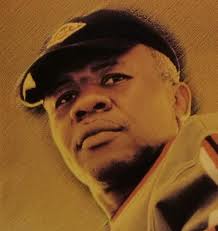
Lapiro de Mbanga in his own words

Lapiro de Mbanga
Lapiro de Mbanga

I decided to make a compilation of some of Lapiro de Mbanga’s words in his interviews.  The full interview to Daniel Brown from Freemuse can be found here; for the interview Lapiro gave to Le Messager, click here; and lastly the interview to Phoenix Gauthier can be found on RFI.  The video below shows Lapiro de Mbanga’s proudly expressing himself at the Oslo Freedom Forum in 2013.  Enjoy!!!

============

About life in prison: … There is no hygiene here and we must share our most intimate moments with the other cellmates. … I should have been taken to hospital for a consultation but my status as a political prisoner has meant I have not been allowed to go once in these two years. I somehow survived the typhoid attack in December by taking the antibiotics my wife Louisette brought me. It’s fortunate she comes every few days. It’s a five-hour round trip from Mbanga, it’s taking a toll on her, too. …  I wake at 7 to 8 every morning …. I keep informed about the outside world thanks to TV5 [France’s international station] or Radio France International. I eat, chat with the others in the cell, play Ludo, scrabble, draughts. It’s impossible to compose in such an atmosphere. I need calm, serenity. Here, I cannot concentrate and write the thoughtful songs people expect of me.

Pius Njawe in jail
Pius Njawe, a Cameroonian journalist and martyr in jail

We have penal rations twice a day. At 1pm we are given boiled corn and at 5pm there’s rice in some warm water. It’s the same every day. It’s way below minimum requirements. My wife brings me food every two days, I couldn’t survive otherwise. I’ve seen people die of hunger. It happens every day in Cameroonian prisons.
Normally, I should have no contact with the outside world. Telephones are illegal here. I’m speaking to you because we have to scheme like common crooks. In prison there are all kinds of trafficking going on, including this one. You pay guards to turn a blind eye. You know, in Cameroon you can buy everything. This country has been world champion in terms of corruption.  It’s everywhere and filters down to here. (Source: Daniel Brown, Freemuse)

On being scared for his life because of his outspokenness: It’s all part of my struggle. If I was the scared type I would never have started singing in 1985. I’m not going to start getting scared after all these years. My struggle has always been to denounce inequalities and danger is part of that mission. The only thing that has changed for me since 1985 is I’m at the head of a family with six children. I can guarantee my own security, but not theirs. I’m scared for them. But I have no choice. If you start such a struggle, somebody must pay. Still, my family is unhappy with such risk taking. That’s why I think if I don’t go into exile after this prison term, I won’t survive very long out therethey’ll kill me. Because it’s obvious people in charge don’t want to be confronted with somebody who stops them from just getting on with things. (Source: Daniel Brown, Freemuse)

On going to exile: For starters, I am not in exile; I am political refugee in the USA. I needed a social security and an insurance for the future of my children; I refuse to manufacture unemployed people full of diplomas who will retire without ever having worked.  [Pour commencer, je ne suis pas en exil; je suis réfugié politique aux USA. J’avais besoin d’une sécurité sociale et d’une assurance pour le futur de mes enfants; je refuse de fabriquer des chômeurs bardés de diplômes qui vont aller à la retraite sans avoir jamais travaillé.] (Source: Le Messager 04 April 2013)

Flag of Cameroon
Flag of Cameroon

About the way he spends his days now in the US: I dedicate myself to my children’s education. I have, during 3 decades, focused my life on my struggle, the fight against social inequalities, forgetting that I was first a head of family. Despite what the Um [Nyobé], Ouandié, Moumié, and all the known and unknown freedom fighters have done, nobody knows what has become of their offspring. For me, it is very serious. It is as if they had fought for nothing. [Je me consacre à l’éducation de mes enfants qui sont ici avec moi. J’ai pendant 3 décennies focalisé ma vie sur mon combat, à savoir la lutte contre les inégalités sociales oubliant que j’étais d’abord un chef de famille. Malgré tout ce que les Um, Ouandié, Moumié et tous les autres combattants connus et inconnus ont fait, personne aujourd’hui ne sait ce que sont devenues leurs progénitures, Pour moi, c’est très grave. C’est comme s’ils ont combattu pour rien …].  (Source: Le Messager 04 April 2013)

About his rupture with Biya and Fru Ndi: Paul Biya, even if he listens to my songs, does not count on my very short list of friends. So no need to break up with him even though I never voted neither for him, nor for Ahidjo’s party which he hijacked in Bamenda in 1985. Fru Ndi, whom I now call “CHIENMAN” and not Chairman, has ceased to be worthy of my respect, given his multiple reversals and changes. … I cannot be in good terms with an individual who plots against the people, it is as simple as that.  [Paul Biya même s’il écoute mes chansons, ne compte pas sur la liste très restreinte de mes amis. Donc pas besoin de rompre avec lui encore que je n’ai jamais voté ni pour lui-même, ni pour le parti de Ahidjo qu’il a détourné à Bamenda en 1985. Fru Ndi que j’appelle désormais “CHIENMAN” et non Chairman, a cessé depuis bien longtemps d’être une personne ayant droit à mon respect, compte tenu de ses multiples virements, revirements et retournements de veste. … Je ne peux pas être en bon terme avec un individu qui complote contre le peuple, c’est aussi simple que cela]. (Source: Le Messager 04 April 2013)

On his dream for Cameroon? I dream of a Cameroon where the power will belong to the people.  Where the wealthy will not use the misery of the poor by giving them some rice, fish, beer and 1000 FCFA to stay in power and plunder the country’s resources.  [Je rêve d’un Cameroun dont le pouvoir appartiendra au peuple. Où les riches ne vont pas se servir de la misère des pauvres en donnant aux démunis du riz, du poisson, de la bière et 1000f pour aller au pouvoir piller les ressources du pays.] (Source: Le Messager 04 April 2013)

Lapiro de Mbanga
Lapiro de Mbanga

On his struggle: The fight continues. I got out of jail only three months ago. And I need to continue the fight at a greater level. … You have seen my environment. Here in Mbanga, it is 7:30PM and it is already dark everywhere. Without electricity, you can be attacked. Yet, there are people who fight at work all day. And at the end of the day, there is no light, no health, the children cannot go to school. There is no escape. That is my fight, my struggle. It is for that Cameroon that I am fighting. And I want the Americans and Europeans to understand. I come to tell them: thank you for fighting for Lapiro de Mbanga [release] , but there are 20 millions of Lapiro de Mbanga in Cameroon who experience the martyr daily. Wake up and do something. [Le combat continue. Je suis sorti de prison il y a seulement trois mois. Et je dois continuer le combat au niveau des grandes instances. … Vous avez vu mon environnement. Ici à Mbanga il est 19h30 et partout il fait noir. Sans électricité vous pouvez être agressé ici. Pourtant, il y a des gens qui se battent au travail toute la journée. Et, à la fin, il n’y a pas de lumière, ni de santé, les enfants ne peuvent pas aller à l’école. Il n’y a pas d’issue. C’est ça mon combat. C’est pour ce Cameroun-là que je me bats. Et je veux que les Américains et les Européens comprennent. Je viens leur dire par ma voix : merci d’avoir combattu pour Lapiro de Mbanga, mais il y a 20 millions de Lapiro de Mbanga au Cameroun qui subissent le martyr au quotidien. Réveillez-vous et faites quelque chose.] (Source: RFI, P. Gauthier, 12/07/2011)