A French Commission to investigate the Thiaroye Massacre ?

Poster commemorating the 80th anniversary of the Thiaroye Massacre (Source: Seneplus.com)

Five days from the celebration commemorating 80 years since the Thiaroye: A French Massacre in Senegal, French parliamentarians called on Tuesday 26 November for the establishment of a commission of inquiry to shed light on the bloody chapter in the French colonial history in Senegal that is the Thiaroye Massacre. If the commission receives the green light, then the work will start in March 2025, when they could then summon and hear historians, descendants of the victims of the massacre, and more. As a refresher, on the night of 30 November to 1 December 1944, African soldiers who had who had fought alongside French people to liberate France of the Nazi menace, were shot by Frenchmen, for asking for their pay in Thiaroye, thus the Thiaroye massacre !
Flag of Senegal
Flag of Senegal

Like our Cameroonian brothers and sisters would say, “A quelle heure ?” (at what time?) or rather why now? How convenient! Or this is for show for the new government of Senegal, to act as if the French have taken note to please the new Senegalese government? They always wait for everyone to be dead to ask for and open bogus commissions that will end nowhere… did you see our dear Senegalese Tirailleurs who begged for many years, and only until most of them had died did they get some recognition from the French, At Last: Senegalese Tirailleurs now allowed to receive their pension while living in Senegal. We do remember the British Government apologizes for Mau Mau atrocities or that commission created for the French genocide in Cameroon.

To learn more, check out RFI. Do you think this commission will amount to anything? Will it even be accepted in the French parliament?

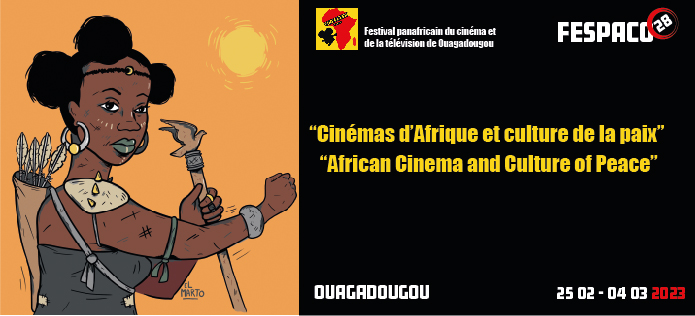
FESPACO 2023: Tunisian Film ‘Ashkal’ Wins the Golden Stallion of Yennenga, and Women Filmmakers are Recognized

FESPACO 2023 theme ‘African Cinema and Culture of Peace’

The biennial African film festival, FESPACO, took place this year from 25 February to March 4. On March 4, the winner was announced, and Tunisian Youssef Chebbi won the Golden Stallion of Yennenga (Etalon d’or de Yennenga) for his film ‘Ashkal‘ which centres on the investigation into the killing of a caretaker on a construction site at Carthage on the outskirts of his hometown. He won the first prize over Burkinabe filmwriter Apolline Traore, who picked up the Silver Stallion of Yennenga for the film ‘Sira‘, while the Bronze Stallion was awarded to Kenya’s Angela Wamai for ‘Shimoni‘.

FESPACO 2023

The Festival Panafricain du cinema et de la television de Ouagadougou (FESPACO) is the Panafrican Film and Television Festival of Ouagadougou, which happens to be the largest African film festival. It is held biennially in Ouagadougou, the capital of Burkina Faso. First established in 1969, and boasting some of Africa’s greatest writers and filmmakers (like Ousmane Sembene), the FESPACO offers a chance for African filmmakers and professionals to showcase their work, exchange ideas, and meet other filmmakers, and sponsors.

Golden Stallion of Yennenga
The Golden Stallion of Yennenga

There were a total of 170 entries selected for the FESPACO festival in the capital Ouagadougou, including 15 fiction feature films in contention for the Yennenga Golden Stallion award and a prize of around $30,000. A big win for women filmmakers, with the second and third prizes won by Apolline Traore and Angela Wamai respectively. Burkinabe filmmaker Apolline Traore won the Silver Stallion for Siraabout a woman kidnapped by Jihadists, and Kenyan director Angela Wamai took home the Bronze Stallion for Shimoni, about a schoolteacher rebuilding his life in his remote village after a harsh stint in jail. In 2019, Burkinabe director Apolline Traore had said that any award had to be earned, not considered a token gesture; we are glad for the recognition her work and that of others is getting recognized.

The film, ‘Cuba in Africa‘ produced by Negash Abdurahman won the Thomas Sankara Prize. The film talks about the altruism of Cubans who sacrificed their sons and daughters on behalf of Africa; Cuban volunteers gave their lives to help Angola, Namibia, Guinea Bissau and Cape Verde, and others win independence, and contributed to the fall of apartheid in South Africa. It is a story all Africans should learn.

The 29th edition of Fespaco will be held from 22 February to 1 March 2025, also in Ouagadougou, Burkina Faso.

‘Thiaroye Massacre’ by Ousmane Sembene

The great Senegalese filmmaker Ousmane Sembene made a movie about the Thiaroye massacre committed by French forces in Senegal during the night of 30 November – 1 December 1944! The movie, Camp de Thiaroye, was made in 1988. It took almost 20 years for a French president, Francois Hollande in 2012, to acknowledge it. A massacre which occurred because the Tirailleurs Senegalais asked to be given the pay they had been promised for services rendered, defending France in France against Hitler’s Nazi forces. Those Senegalese men were killed by French men for asking to be paid after defending France with their lives!

Thiaroye: A French Massacre in Senegal

I just learned of the story of the Thiaroye massacre by French forces on African troops which occurred during the night of 30 November to 1 December 1944. African soldiers who had fought alongside French people to liberate France of the Nazi menace, were shot by Frenchmen, for asking for their pay! Can you believe it! They were promised a pay, they fought for France in France to liberate France, and when they got back to Senegal they were not paid; so they asked for their pay, and they were shot! Even the French president François Hollande in October 2012 had to acknowledge this atrocity… of course, he just acknowledged it, and never apologized! As you can see, France has committed some of the greatest atrocities in this world, but no one says a word, well because it is against Africans, so ‘it does not count’? Even today, they continue, with the FCFA, impoverishing and living off of Africans’ sweat! The great Senegalese filmmaker Ousmane Sembene made a movie about it!

FESPACO: An African Film Tradition

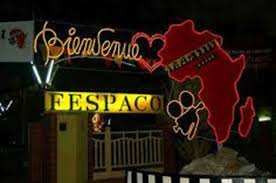
FESPACO 2013
FESPACO 2013

With the upcoming closing ceremony of the FESPACO this Saturday, I thought it important to talk about Africa’s film tradition. For starters, the FESPACO (Festival Panafricain du cinema et de la television de Ouagadougou) is the Panafrican Film and Television Festival of Ouagadougou, the largest African film festival, held biennally in Ouagadougou, the capital of Burkina Faso. First established in 1969, and boasting some of the Africa’s greatest writers and filmmakers (like Ousmane Sembene), the FESPACO offers a chance to African filmmakers and professional to showcase their work, exchange ideas, and meet other filmmakers, and sponsors. Filmmakers from around the continent all come together in Ouagadougou which is transformed into the Hollywood or the Cannes of the continent for this special occasion. This year’s FESPACO is presided by legendary director Euzhan Palcy (who made: Rue Cases Negres, A Dry White Season, Ruby Bridges).

Golden Stallion of Yennenga
The Golden Stallion of Yennenga

This year, 755 movies are competing in different categories. 20 feature films will be competing for the Golden Stallion of Yennenga (Etalon d’Or de Yennenga) which will be awarded Saturday March 2nd. The select 20 features in the ‘long metrage’ section address various subjects such as clandestine immigration (‘La Pirogue’ from Senegalese Moussa Traore, which was a big hit at last year’s Cannes festival), journalism and censorship (‘Les Chevaux de Dieu’ by Moroccan Nabil Ayouch, also featured at Cannes 2012), love (‘Love in the Medina’, by Moroccan filmmaker Abdelhai Laraki), war (‘La genese de la bataille d’Alger’, by Algerian filmmaker Said Ould Khelifa), theft in society (How to steal 2 million, from South African Charlie Vundla), ‘La republique des Enfants’ (Children’s republic) by Bissau-Guinean filmmaker Flora Gomes– a country abandoned by adults where children organize themselves into a prosperous country, or revolution and prostitutes in a war camp (‘Virgem Margarida’ directed by Mozambican Licinio Azevedo – which premiered at the Toronto International Film Festival last year).

Enjoy this photojournal by Nic Bothma on the the Guardian’s website. You can read some movies’ sypnosis on Gabonews. Enjoy the generic of this year’s festival, which tells the story of the famous princess Yennenga, and the festival.

Ousmane Sembene: the Father of African cinema

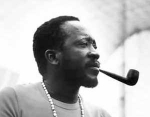
Ousmane Sembene
Ousmane Sembene

Ousmane Sembene, was indeed the Father of African cinema. To think that this was a man who had stopped school in 6eme, and written one of the most interesting books in Africa (God’s bits of Wood)! To think that this man became the Father of African cinema is impressive!  This is a man who fought injustice, and fought for equality. He loved Africa with everything he had! After writing books, he realized that most people in his country spoke Wolof, and some of them could not read his books, he switched to cinema! He would tour villages in his country Senegal to show his movies, and other countries in Africa. He apparently came to Cameroon once to show the movie “Le Mandat“,

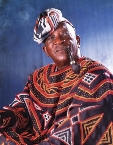
Ousmane Sembene en tenue Bamileke

and a police officer came to him and asked him where he had found the story… and Sembene to tell him, he just thought of it… and the officer to say “It actually happened to me“! That was Sembene, a man who could connect with people, and discuss African issues. He showed that it was possible to make a movie in an African language! His movies and books dealt with immigrants in Europe, colonialism, female genital circumcision, African beggarism, etc… “La Noire de …” was the first feature film produced by a sub-saharan African filmmaker. This man was simply a genius! He went from fisherman, railroad worker, docker in Europe, to writer, and filmmaker. He was one of the founders of the FESPACO, the festival of African cinema in Ouagadougou, Burkina Faso. A statue now stands in Ouaga, in honor of Ousmane Sembene!

God's bits of Wood
God's bits of Wood
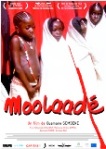
Moolaade
Moolaade

The last movie of Ousmane Sembene was “Moolaade“, a gem of African film… it was ranked among the 10 best movies of the year 2004 by the Boston Times. I actually own the movie, and it is simply outstanding! Can you believe that it was ranked among the 10 best movies in the USA, and won an award at the Cannes festival? Wow… I wish Sembene had lived even longer… but I know his legacy lives forever!

The New York Times wrote about him:

http://www.nytimes.com/2007/06/12/movies/12semb.html?_r=2&ref=movies&oref=slogin

http://en.wikipedia.org/wiki/Ousmane_Semb%C3%A8ne

http://www.ousmanesembene.com/

http://www.nytimes.com/2007/06/11/world/africa/11sembene.html

CNN also made a piece on Sembene and 2 other brilliant African filmmakers… check it out: Driven by His Convictions

Check out the videos:

Le Fespaco, plus grand festival du cinéma africain, fête ses 40 ans