Niger to Nationalize Uranium Mining

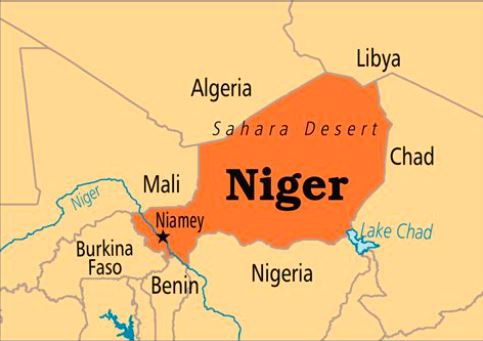
Map of Niger

Last week, on June 19th, Niger announced plans to nationalize its uranium venture which until now had been operated by the French company Orano. By this, the Niger government has decided to gain control over its resources from France. For many years, the French state owned company Orano, which was previously Areva, has been extracting uranium in Niger, enjoying a full monopoly, paying barely anything to the country including no taxes (Mali and Niger end Long-Standing Tax Treaties with France). This quest for freedom or rather fairness by Niger is not something new which started with the government of President Abdourahamane Tchiani, but rather the culmination of years of an unfair treatment based on an unbalanced relationship with the French company and government. In the 2000s, then President Mamadou Tandja had sought to re-negotiate the partnership with then Areva (now Orano) which until then had enjoyed a de facto 4 decade monopoly in the country paying almost nothing to the locals; he tried to curb the French influence by striking a deal with the China Nuclear International Uranium Corporation in 2007 to develop a uranium mine. As expected, Tandja was deposed in a coup in 2010, coup financed by the metropolis. Niger Takes Control of its Uranium, and Niger and Orano: Disagreement.

Below are excerpts from People’s Dispatch

=====
Uranium

In yet another assertion of sovereignty, the government of Niger announced on Thursday, June 19, that it would nationalize the Somaïr uranium venture, wresting control from the multinational nuclear fuel cycle corporation Orano.

Orano is owned by the French state, which, the government noted, has been “openly hostile toward Niger since July 26, 2023”, when the then president Mohamed Bazoum, domestically perceived as a French puppet, was ousted in a popularly supported coup.

Without yielding to French threats of war, the military government replacing Bazoum’s regime consolidated widespread support by expelling French troops, fulfilling the demand for which mass protests had been underway in the lead-up to his removal.

Flag of Niger

France has long exerted a monopoly over Niger’s uranium, which is among the highest grade in Africa. It has been fueling French nuclear power plants, lighting up a third of its light bulbs, while over 85% of Nigeriens lacked connection to the electricity grid.

… The nationalization changing this neo-colonial arrangement “will allow for healthier and more sustainable management of the company and, consequently, optimal enjoyment of the wealth from mining resources by Nigeriens,” its statement added.

Threatening Niger with “legal actions, including criminal proceedings if necessary”, Orano said it “intends to seek full compensation for the damages suffered and will assert its rights to the stock corresponding to Somaïr’s production to date.”

Who / What did We Celebrate in Africa in 2024 ?

There was a lot to celebrate in Africa this year. Below are just a few:

  1. Alliance des Etats du Sahel (AES) (Source: Alliance-sahel.org)
    In January, Mali, Burkina Faso, and Niger left the ECOWAS creating a major seismic shift in the organization. Mali, Burkina Faso, and Niger all leave the ECOWAS. This came as no surprise given that the coup to topple puppet governments in their respective countries, the ECOWAS had suffocated these countries by suspending all three countries and imposing heavy sanctions on Mali and Niger that exacerbated the populations’ sentiments that it is a puppet organization serving foreign interests. Niger even tried to amend the situations by inviting ECOWAS representatives to the country, but only the member from Togo showed up. Why should anybody remain in an organization that punishes its member populations? 
  2. In January, Ghanaian artifacts were returned home for the first time in 150 years, on a “loan”. Ghana Artefacts “Return” Home 150 years later … on Loan. It is a disappointment that African governments can only get “loans” for what is dutifully theirs from those institutions which have amassed millions over the year from the exhibition of stolen African artefacts.
  3. The Elephants are winners of the Africa Cup of Nations 2023 (Source: CAFonline.com)
    In February, the Elephants of Cote d’Ivoire gave us a thrill from being redeemed in the knockout stage with 2 defeats (among which a 4-0 loss against Equatorial Guinea) that left them open to elimination, and a redemption that came from being one of the four best 3rd-placed team, a coach sacking, and a coach change, to lift the trophy of the Africa Cup of Nations. It was a real “Coup du Marteau” (Tam Sir, we are talking about your special song!) The Ivorians added to their previous Nations Cup wins of 1992 and 2015 (Côte d’Ivoire wins the 2015 Africa Cup of Nations) and became the first tournament hosts to triumph since Egypt lifted the trophy in 2006. CAN 2023: the Elephants of Côte d’Ivoire are the New Champions
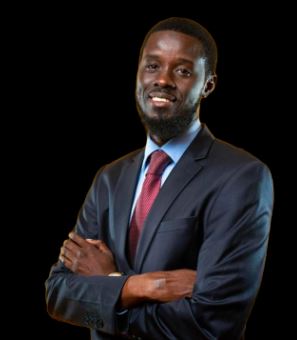
  4. Bassirou Diomaye Faye (Source: Seneweb.net)
    In March, Bassirou Diomaye Faye was elected president of Senegal, making him the youngest African president at 44. This was a joyous moment for the Senegalese people who stood to have their democratic system and constitution upheld. Faye is very unconventional, as the youngest with no political background (he was previously a tax officer), he is also the first Senegalese president to openly have two wives. With his friend and Prime Minister Ousmane Sonko, we hope for better governance for Senegal. Senegal Presidential Elections: Bassirou Diomaye Faye is set to be the next president. Either way, the Senegalese have demonstrated once again, that although their democracy is young, it is not to be messed with!
  5. Map of Niger
    In mid-March, Niger suspended military “cooperation” with the USA, with immediate effect. Operating from years of condescending treatments of those deemed inferior, particularly of Africans, the Americans had decided to dictate their will, like the French before, to Niger people and deny their sovereign rights to choose their own partnerships in their fight against terrorism. The spokesman of Niger’s government, Colonel Amadou Abdramane, exposed the fact that the military “cooperation” with the US was not even a real one, i.e. the US had installed their largest drone base in Africa, and possibly in the world, in Niger via a verbal agreement only, and the Niger people had to pay for the American base in their country, while the Americans never raised a hand to help Niger fight against terrorist attacks that were maiming their citizens [Bye Bye to French Troops in NigerFrance set to Withdraw Troops and Ambassador from Niger]. Niger suspends military “cooperation” with the US, effective immediately.
  6. Alliance des Etats du Sahel (source: linfodusahel.com)
    Mali, Niger, and Burkina Faso’s leaders met on July 6, 2024 in Niamey, Niger, as part of the first summit of the Alliance des Etats du Sahel (AES – Alliance of the Sahel States). During the summit, the three leaders signed a confederation treaty aimed at strengthening the links between the three nations in terms of defence, and other aspects such as the economy, infrastructures, and more. They reinforced their mutual defence pact.
  7. Right before the Paris Olympics, brother Biniam Girmay of Eritrea made history by becoming the first African to win a stage at the Tour de France, and two more stage victories which helped him capture the green jersey for the highest points scorer – a first for anyone from the continent.
  8. Faith Kipyegon winning historic 3rd gold medal at the Paris 2024 Olympics (source: Kelly Ayodi for Olympics Kenya – EastleighVoice.co.ke)
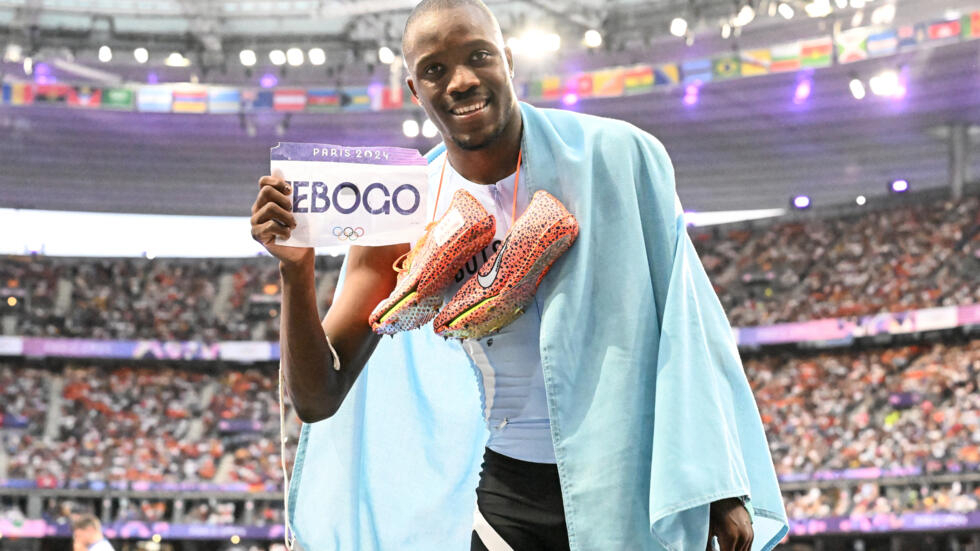
    The Paris 2024 Olympics ended with a strong show from African athletes who shined in various  disciplines, and represented many countries including outside of Africa. They made us proud and served us joy, endurance, and passion. We will list just a few. We had a lot of firsts, like our Kenyan sister Faith Kipyegon who won her 3rd successive Olympic gold in the women’s 1500 m, making her the first African athlete to ever win gold in the same event 3 times in a row. Our brother Letsile Tebogo of Botswana earned the top most place in the Men’s 200 m thus giving Botswana and Africa as a whole its first ever olympic gold medal in the 200 m; Tebogo also led the Botswana’s team to a silver medal in the
    Letsile Tebogo after winning gold in 200m (Source: Onuaonline)
    Men’s 4x400m relay, again a first for any African country ever. Ugandan brother Joshua Cheptegei delivered on his promise for his last Olympics to be memorable by winning gold in the Men’s 10,000 m, and landing Uganda its first gold at the games. Tatjana Smith of South Africa made her country proud by winning gold and silver medals in the Women’s 200m and 100m breaststroke events. Akani Simbine and South African track team delivered us silver in the Men’s 4 x 100 m relay, again a first for South Africa, and for Africa as a whole.  Kaylia Nemour gave Algeria and Africa its very first victory ever in gymnastics with a gold in the Women’s Uneven bars in artistic gymnastics. Tamirat Tola, who was just added to the Ethiopian Olympics’s team 2 weeks prior, took home the gold medal in the Men’s Marathon. Ahmed Elgendy won the first gold medal for Egypt at any Olympics, becoming the first African and person to win in the new discipline of Men’s Modern Pentathlon. Cabo Verde got its very first medal at the Olympic games through David de Pina who won bronze in the Men’s 51 kg Boxing. Zambian Muzala Samukonga won the bronze medal in the Men’s 400m, giving his country its very first Olympic medal.
  9. Aliko Dangote, Africa’s richest man, has built one of the world’s largest oil refineries in Nigeria, Africa. The refinery opened its doors last year, and in May shipped out its first boat of refined jet fuel to the Netherlands. Since then, the refinery has gotten into agreements with the Nigerian governments and neighboring ones as well.
  10. Paris Paralympics 2024 (Source: https://www.paralympic.org/paris-2024)
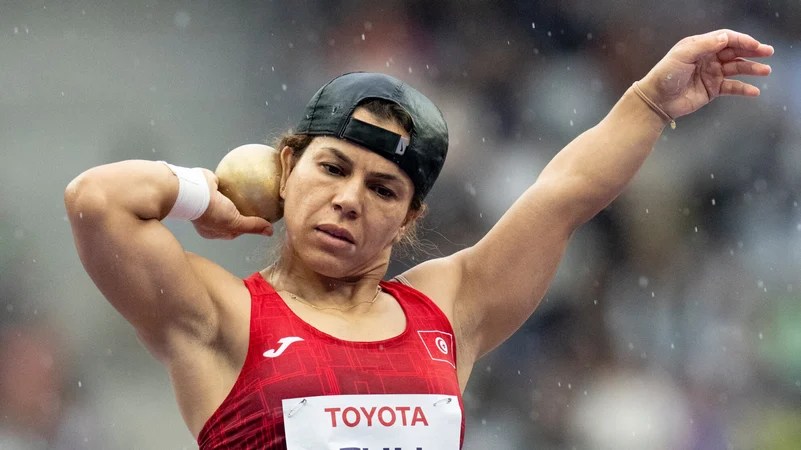
    Africa shone at the Paralympics, winning 64 medals, with Morocco getting the most medals with 15 medals, but Algeria topped the continent’s medal table thanks to its 6 gold medals vs. 3 gold for Morocco. Most medals were won in para-athletics and para-powerlifting disciplines. Veteran Raoua Tlili of Tunisia cemented her place as a legend in the F41 discus throw and shot put, winning 2 gold medals this year, giving her a total of 8 gold medals for her country, having competed in each Olympics since
    Raoua Tlili (Source: Outlook India)
    Beijing 2008. Nigeria’s Mariam Eniola Bolaji became the first African to win an Olympic or Paralympic medal in Badminton. Yovanni Philippe gave Mauritius its first medal ever by securing a bronze medal in the men’s T20 400m; while Annaba native, Brahim Guendouz won gold in para-canoeing’s KL3 class over 200m, giving Algeria its first ever medal in a discipline outside of para-athletics, para-judo, and para-powerlifting. 
  11. Gael Faye and his book Jacaranda
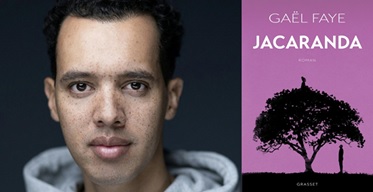
    African authors made great wins and firsts: they won the most important literary awards in French literature: the Goncourt prize, which was awarded to Kamel Daoud for his third novel titled «Houris», and the Renaudot prize awarded to Gaël Faye for «Jacaranda». Daoud’s novel is currently in a controversy. Africans win the Goncourt and Renaudot 2024 Literary Prizes.
  12. Zimbabwe’s new currency, the ZiG (Source: France24)
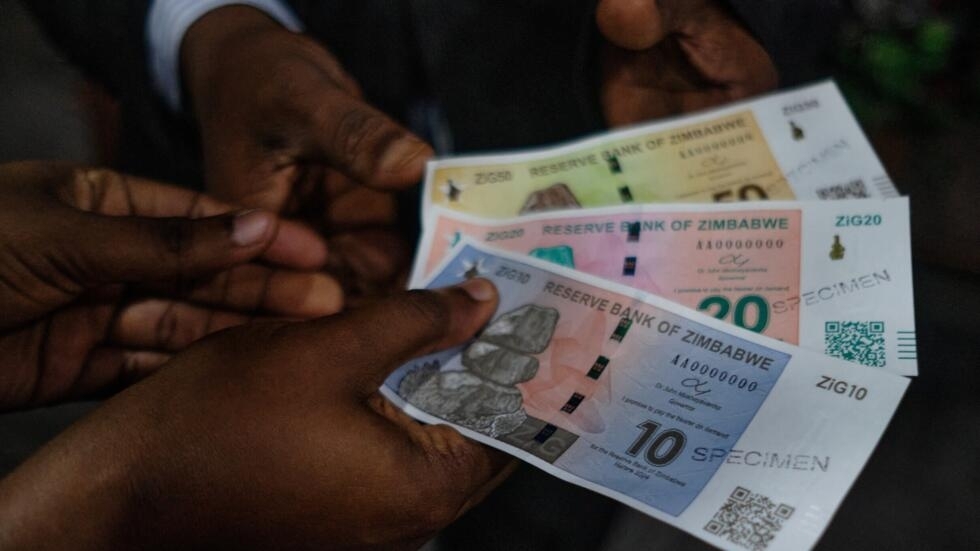
    Niger took control of its uranium when Orano has been suspended by the Niger government, while Mali inaugurated the construction of a lithium extraction plant (recall that Zimbabwe also inaugurated a lithium processing plant last year), and is working towards nationalizing its gold. Resolute Mining, has agreed to pay Mali’s government $160 millions to settle a tax dispute (Mali wins $160m in Gold Mining Dispute).  Zimbabwe Gold-Backed Currency was introduced in April; the ZiG, which stands for Zimbabwe Gold, was created as an effort to try to alleviate inflation, and stabilize the economy; thus far, it has not been successful, but it is only the beginning.
  13. Andakia
    A Senegalese startup, Andakia, has just introduced the very first African AI: AWA.  AWA is a Wolof-speaking artificial intelligence system; it is the brainchild of Alioune Badara Mbengue.  In an interview to TRT Afrika, Mbengue said, “AWA is the first AI that understands and speaks perfect Wolof. Our vision is to extend AWA to other African languages, enabling Africa to become a leader in digital innovation and ensure technological sovereignty tailored to its needs.” Users need to simply engage in a spoken exchange with the AI interface in Wolof, seeking general information or asking it to perform tasks such as ordering a taxi, ordering a meal, or carrying out financial and other transactions. This is revolutionary as it addresses the needs of the population. We applaud the amazing work of our brother and his team, and truly the sky is the limit. 

Niger Takes Control of its Uranium

Map of Niger

Last week, Orano, the French nuclear company which until now controlled the mining of uranium in Niger, has announced that the Niger government had taken control of its Somair uranium mining. Orano owns about 63 % of the mine. Orano claims that the government had been stopping them from resuming exports and operation, when we know that the degradation (Niger and Orano: Disagreement) is in part because they were trying to force the government to go through Benin whose border has remained closed, previously due to ECOWAS blockage (fueled by France), and now given that it hosts French military bases. The media tell us that Niger is not that important and Orano, France, and the EU have been able to find alternative suppliers in Canada, Uzbekistan, Australia, Namibia, and others… if that is the case, then why do they persist in Niger? Why not leave Niger alone? Is it because the uranium from Niger was dirt cheap, and now paying from it at regular prices from those other sources hurts the pocket book? The BBC admits that “the timing could hardly be more awkward, as Western countries struggle to meet the challenge of climate change and cut their carbon emissions from electricity generation.” Overall, the West is unhappy that Niger is now seeking other partners such as Russia, China, and others. 

Flag of Niger

The Western mainstream media, in a case of absolute double standard keeps calling the government of Niger, “military junta“, while calling the Syria terrorists “liberators.” These same media are all up in arms in the case of Niger, Mali, and Burkina Faso. Today, the BBC received a 3-month ban in Niger, while the Nigerien government is filing suits against RFI for spreading fake news that could destabilize the social peace and inciting war propaganda against the local government.

Excerpts below are from the BBC. For the full article, check out How a uranium mine became a pawn in the row between Niger and France. Enjoy!

=====

In the latest sign of a dramatic deterioration in relations, Niger’s military rulers appear increasingly determined to drive France out of any significant sector in their economy – and particularly uranium mining. This week the French state nuclear company Orano announced that the junta … had taken operational control of its local mining firm, Somaïr.

the crisis facing Orano in Niger represents a significant practical challenge for French energy supply. With 18 nuclear plants, totalling 56 reactors, which generate almost 65% of its electricity, France has been ahead of the game in containing carbon emissions from the power sector. … So, over the past decade or so, [France] has imported almost 90,000 tonnes – a fifth of which has come from Niger. … Last year, as West African neighbours responded to the coup in Niger by imposing a trade blockade that paralysed uranium exports, other suppliers readily stepped into the breach. The European Union’s imports of the mineral from the country plunged by a third, but these were largely replaced by Canada.

… After last year’s coup, Orano itself tried to stay out of the diplomatic row, keep a low profile and carry on operating normally. But the Ecowas trade blockade prevented it from exporting the output from the Somaïr mine, near Arlit, in the Sahara Desert. And even after the sanctions were lifted in late February, the usual uranium export route, via Benin’s port of Cotonou, remained blocked, because the junta kept the border closed in an ongoing political row with Benin….  In June the junta cancelled the French company’s rights to develop a new mine at the large Imouraren deposit, which had been seen as the uranium sector’s principal new hope for future growth. Meanwhile, the export blockage was pushing Somaïr, which by November was sitting on 1,150 tonnes of blockaded stocks of uranium concentrate worth $210m (£165m), into financial crisis.

Niger’s junta feels no need to make concessions to Orano because it is now buoyed by a sharp rise in oil exports, thanks to a new Chinese-built pipeline. With that financial cushion, the regime appears prepared to bear the cost of paralysing and probably dismantling the traditional uranium partnership with France – now its main international opponent.

Niger and Orano: Disagreement

Flag of Niger

Orano has been suspended by the Niger government. However, Orano states that they have suspended the Niger government. What is the truth?

France is the biggest electricity seller in the world, and this because of Niger who contributes up to 15% (probably more – they don’t want to tell us). Niger is the third uranium provider of the European Union. At one point, France was paying Niger 0.80 Euro/kg of uranium, while paying Canada 200 Euro/kg for the exact same quality; and this has been going on for decades! Is this not pillaging a country?

Map of Niger

Orano, previously known as Areva, has been in Niger for over 70 years. Yet in 70 years, they have not built a single school, roads, or even hospital for the locals (Mali and Niger end Long-Standing Tax Treaties with France). These French companies have similar behaviors in all of their previous colonies, in Cameroon for example, Safacam has been there 130 years, but the road there is impracticable – they can grab everything, without even giving simple things like roads to the locals! Moreover, many do not pay taxes in the local countries, but back to their home countries. Such contempt! How are the locals supposed to develop themselves? And then if one adds the FCFA scheme (The 11 Components of the French Colonial Tax in Africa) and it is game over!

Well, good riddance to bad rubbish… goodbye to Orano. The French thought that by having the Benin-Niger border closed via ECOWAS sanctions, that Niger, a landlocked country, will suffocate. When Benin realized that their sanction was affecting their own economy via the Benin port, given that Niger’s exports were no longer going through Benin, they back-pedaled trying to bring Niger in. However, it has been proven via intelligence, that there are French military bases in Benin and so Niger has refused to reopen their border with Benin. They have reopened all other borders with neighboring countries but Benin. Recall that Benin also tried to stop Niger oil going through the Niger-Benin Oil pipeline (at 1950 km, it is the longest oil pipeline in Africa) on Benin territory, until the Chinese government gave Talon a small tap on the back questioning his poor judgement to stop crude oil, forcing Talon to reopen the tap for oil.

To learn more, please check out RFI, and VOA. Excerpts below are from the VOA.

=====

Niger’s military junta is disputing a decision by French nuclear fuel firm Orano to halt uranium production, according to a document from a state partner in the venture seen Friday by Agence France-Presse.

Orano announced last month that it was stopping production as of Thursday, owing to what it termed increasingly difficult operating conditions in the country and financial issues.

… The French lamented the withdrawal by the junta in June of a permit for one of the largest uranium deposits in the world, Imouraren, and the impossibility of exporting the raw material with Niger’s border with Benin closed for what Niamey says are security reasons.

Despite its status as a co-shareholder, Sopamin was not consulted on this serious decision” to halt production, the company, which has operated for half a century in the country’s north, said in a document dated Thursday.

The Nigerien firm complained that the decision “lacks transparency” and “violates a number of principles and practices essential to governance and commitments between stakeholders.”

… The ruling [government], which took power last year in a July coup, says it will revamp rules regulating the mining of raw materials by foreign companies in what is the world’s seventh-largest uranium producer.

… In September, Niger’s Council of Ministers adopted a draft decree creating a state entity, “Timersoi National Uranium Company,” abbreviated to TNUC