Description of the Bornu Empire in 1582

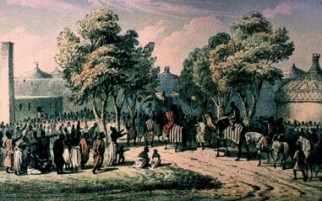
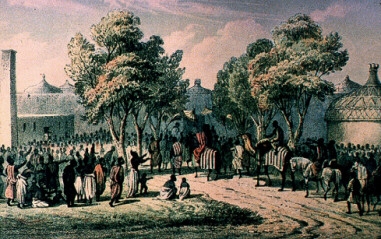
Kanem-Bornu court in the 1700s

As we saw from the description of a Bornu Maï (King) in the 17th century, the Bornu Empire was a prosperous empire with great kings.

Below is another description, this time of the Bornu Empire in 1582. Immediately, we notice the impressive size of the capital city most likely Ngazargamu, the respect given to the kings, who were treated just like the kings of Timbuktu. It is also good to note the level of education of these kings, as well as their relations with Libya and beyond, Turkey. Lastly, slaves were not traded here, but rather leather. Was this the source of the great Libyan leather?

=====

The Bornu in 1582, from an Italian Geographer : Giovanni Lorenzo Anania
Tchad_Lake Chad
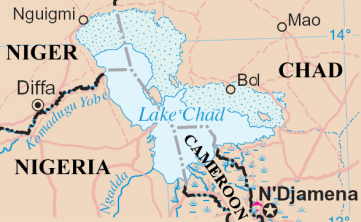
Lake Chad

Then there is Borno on the edge of the Negro river (where there is a large lake formed by the said river [this is most likely the Yobe River also known as Komadugu Yobé River which flows into Lake Chad]). It is an immense city with a lot of traffic, having its own king who is treated with the same ceremonies, both by foreigners and by his own vassals, as those in use among the king of Tungubuto (Timbuktu). We kneel down on our knees, throwing sand on anyone’s head. He is served with great zeal by eunuchs and young girls whom they render sterile with certain potions.
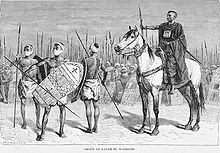
Group of Kanem-Bu warriors in the 1800s

In his correspondence, writing to foreign princes, he uses the Arabic language, as Giovanni di Vesti tells me, a very honorable person, and who was a slave to the son of a great count among the Turks. He himself saw a letter that the king of Borno wrote to the Pasha of Tripoli with great eloquence and art. This prince is so powerful that several times he has raised an army of hundred thousand men against the king of Cabi (Kebbi [in modern day Nigeria]). The blacks, it is said, regard him as an emperor, so great is his power. He owns a multitude of horses which Arabs bring from their country, and they make a great profit by selling them for at least a thousand or seven hundred crowns each. These horses do not stay alive for long, because when the sun enters the sign of Leo, many of them die every year from the extreme heat. Today many Turks arrive, seeking adventure, and many Moors from Barbary, who are their scholars. They are very well paid, because they are few in number, as it happens with all those blacks who are Muslims. And many merchants depart from there every year, carrying so much excellent quality leather that it seems extraordinary in Fizzan (Fezzan [in Libya]). Then they return with big quantities of horses, accompanying the caravans of black merchants.

Edition critique par Dierk Lange

Les Africains, vol. 3, Editions J.A., 1977, p. 57. Translated to English by Dr. Y., Afrolegends.com

The Kanem-Bornu Empire: linking ancient Chad, Libya, Cameroon, Niger and Nigeria

Kanem-Bornu court in the 1700s

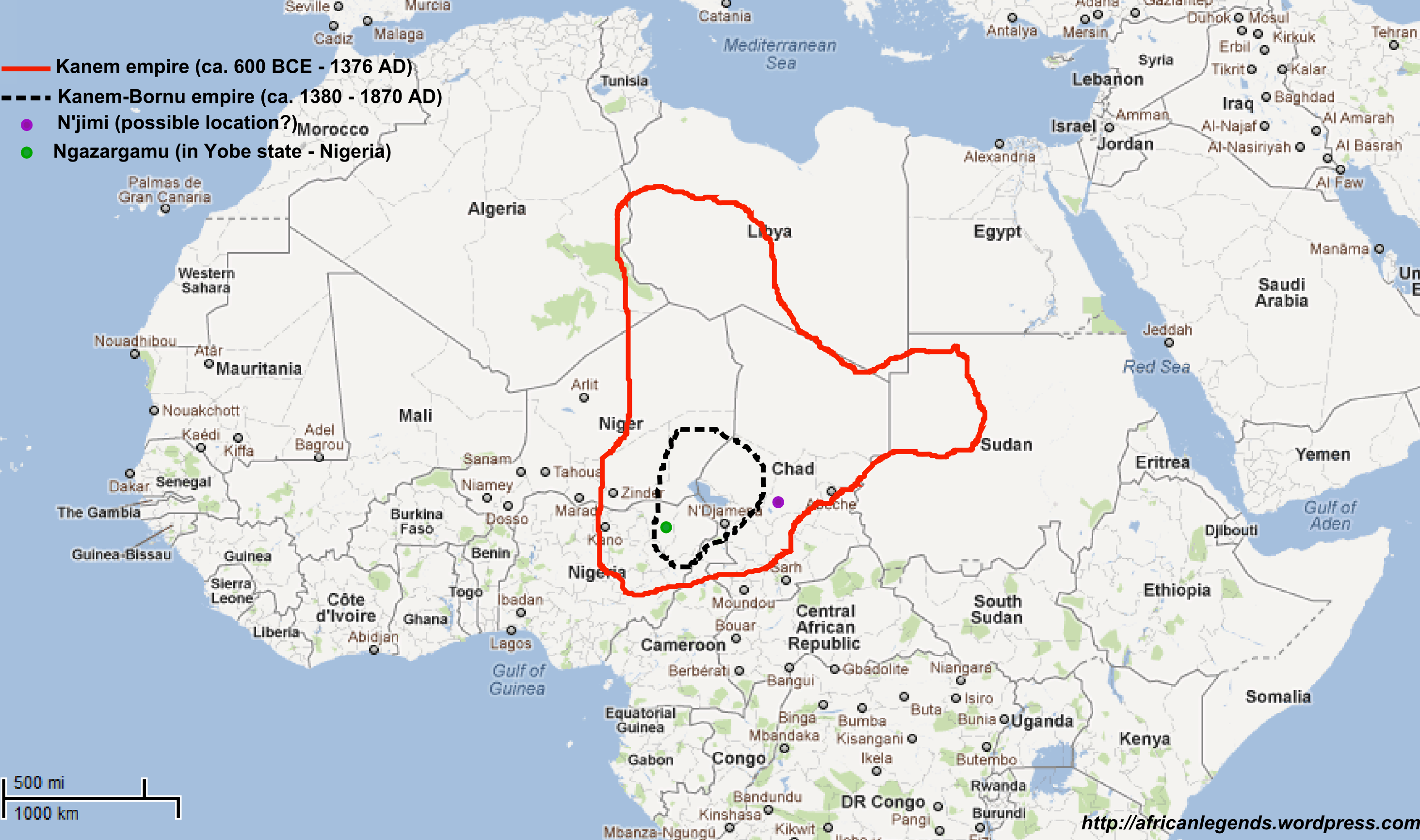
When the Zaghawa (people of Kanem) arrived in the area around Lake Chad, they found independent walled-cities states from the Sao civilization, a civilization which had flourished around the 6th century, with its center around the Chari river, south of Lake Chad.  The Zaghawa adopted some of the Sao customs, but fight among the two lasted from the 7th century until the 16th.  The conquest of Kanem by the Zaghawa was done under the Duguwa dynasty which was started by King Sef (also known as Saif… some people eager to change African history state that the Zaghawa were from Yemen… but we all know that they were local people) about 700 CE. The dynasty, Sayfawa or Sefuwa, is named for King Dugu, one of Sef’s sons, who was ruling about 785 CE.  Abandoning their nomadic lifestyle, the Zaghawa established a capital at N’Jimi (meaning “south” — the location of this town is still unknown, but it is believed to be around Lake Fitri).  Under the rule of Dugu, Kanem expanded to become an empire.  The Zaghawa kings, called maï, were regarded as divine and belonged to a ruling establishment known as the Magumi. They were recognized for a great amount of horses.  Kanem’s expansion peaked during the reign of Maï Dunama Dabbalemi (ca. 1221-59) and extended northward into the Fezzan region (Libya), westward into Kano (Nigeria), eastward to Ouaddaï (or Wadai), and southward into the Adamawa grasslands (Cameroon). They converted to islam around the 11th century CE.

Group of Kanem-Bu warriors in the 1800s

By the end of the 14th century, internal struggles and external attacks had torn Kanem apart. Between 1376 and 1400, six Maïs reigned, but were killed by foreign invaders.  Finally, around 1396 the Bulala invaders forced the once strong Sayfawa dynasty to abandon Njimi and move to Bornu on the western edge of Lake Chad.  Around 1472, Maï Ali Dunamami fortified the Bornu state, and established the capital at Ngazargamu, which had more fertile lands. Over time the inter-marriage between the Kanembu and the Borno people created a new people, the Kanembu, and a language called Kanuri.

The Kanem-Bornu empire peaked during the reign of Maï Idris Alooma (ca. 15711603) who is remembered for his great military and diplomatic skills.  His main adversaries were the Hausa to the west, the Tuareg and Toubou to the north, and the Bulala to the east. One epic poem tells of his victories in 330 wars, and over 1,000 battles.  He was a true military genius, and some of his innovations included the use of fixed military camps (with walls), permanent sieges, and “scorched earth” tactics, armored horses and riders, the use of Berber camels, of skilled Kotoko boatmen, and of iron-helmeted musketeers trained by Turkish military advisers. He had very strong diplomatic ties with Tripoli, Egypt, and the Ottoman empire, which at some point sent a 200-member ambassadorial party across the desert to Alooma’s court in Ngazargamu.  The state revenues came from tribute from vassal states, trans-saharan trade route, and slave trade. Many products such as cotton, natron (sodium carbonate), kola nuts, ivory, ostrich feathers, perfume, was, and hides were exported north via the Sahara desert.

Map of the Kanem and Kanem-Bornu empires

By the end of the 17th century, the empire started declining, and by the 18th century, it only extended westward into the land of the Hausa. By the early 19th century, the declining empire could not sustain the advance from the fulani warriors of Usman Dan Fodio who proclaimed the jihad war against the non-muslims.

To learn more about the Kanem-Bornu empire, check out: Jamtan.com, Daily Kos- Ancient Africa, BlackPast.org, The empire by the lake. Don’t forget to check out the book “Kanem-Borno: One Thousand Years of Splendor (Kingdoms of Africa)”  by Philip Koslow.  Back in those days, Lake Chad covered an area of about 10,000 m2… today it has sadly shrunk down to 1,300 m2, and is still shrinking! I could not find a really good map of the Kanem or Kanem-Bornu empire, so I used Google maps  and known maps from history books to make my own with some of the boundaries cited earlier. I have overlaid the Kanem and the Kanem-Bornu empires on the same map to give a better idea. Enjoy!