Who / What did We Celebrate in Africa in 2025 ?

We celebrated quite a few achievements in 2025 in Africa. Please find below a few that brought joy across the continent.

  1. AES Logo

    In January, our brothers of the Alliance des Etats du Sahel (AES) signed a joined military agreement. Last week in December, they held the second AES summit where they announced the creation of a radio, television, bank, and completion and progress on many more initiatives. The AES created a Joint Military Force. President Ibrahim Traoré of Burkina Faso succeeds to President Assimi Goïta of Mali for one year at the head of the confederation. We also salute the love shown by the brothers of Niger under President Tchiani who traveled over 1,400 km to bring fuel from Niamey to Bamako which has been under blockade by the terrorists. African Fraternity on Display in the AES.

  2. In March, the Burkinabe film “Katanga, the danse of the scorpions” won the Golden Stallion of Yennenga (Etalon d’or de Yennenga) at 2025 edition of FESPACO, one of Africa’s biggest film festivals. “Katanga, La Danse des Scorpions” by Dani Kouyaté, and FESPACO 2025: Burkina Faso Wins its First Golden Stallion in 28 years!
  3. In March also, archaeologists published in the journal Nature their discovery of the earliest known bone tools, showing evidence of their use 5 million years ago. These bone tools were found in the Olduvai Gorge, in Tanzania. The tools were carved on elephant and hippopotamus bones. Bone Tools found in Tanzania dated 1.5 million years ago.
  4. Angelique Kidjo

    In June, Franco-Beninese artist Angelique Kidjo became the First African Singer to get a Star on the Hollywood Walk of Fame. Over the years, she has won 5 Grammy awards and nominated 15 times. With a career spanning over 4 decades, she has been trained by some of Africa’s greats, and has sung and collaborated with some of the greats of the world.

  5. In June, Mali Launched a State Gold Refinery, Zimbabwe banned exports of lithium, while Cote d’Ivoire announced the discovery of large gold deposits on its territory, in the north, near the border with Burkina Faso. This month, Niger took control of its uranium, thus giving the country a true say in its development.
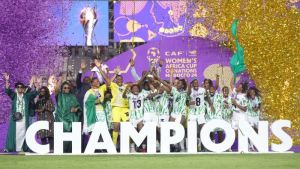
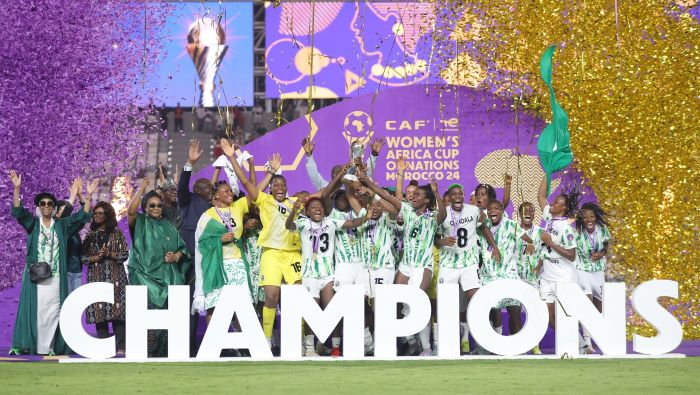
  6. Super Falcons defeat the Atlas Lionesses to win 10th title and become WAFCON 2024 winner (Source: BusinessDay.ng)

    At the end of July, the Nigerian Super Falcons, the Female national soccer team of Nigeria, won the Women’s African Cup of Nation (WAFCON). The Super Falcons of Nigeria defeated The Atlas Lionesses of Morocco to win the 2024 Women’s Africa Cup of Nations (WAFCON) in Morocco. Similarly, the D’Tigress, Nigerian Women’s Basketball team won their 7th African Cup, by defeating Mali at  FIBA Women’s AfroBasket Championship in Cote d’Ivoire. Now, we hope that these ladies will make it very far at their respective World Cups and make the continent proud.

  7. Mali recovered over a billion dollar from gold companies to reinvest and give back to their populations. These are the kind of gestures that unnerve the West. Mali Recovers over a Billion $ for its Miners. What a beautiful end-of-year present to the populations!
  8. Botswana’s 4×400 relay team celebrating their gold medal (Source: Reuters/Eloisa Lopez)

    Africans shone at the 2025 Tokyo World Athletics Championships, including Botswana which cemented its place in the athletic world by winning the country and continent’s first ever gold in 4 x 400 m relay in the men’s discipline. On Sunday, Botswana’s team of Lee Bhekempilo Eppie, Letsile Tebogo, Bayapo Ndori and Busang Collen Kebinatshipi edged out the United States, the winners of the last 10 world titles, in a rain-drenched race, while South Africa took third position. Africans are starting to be present in the sprint discipline and we are proud of their hard work.

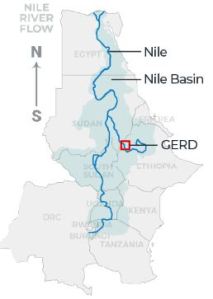
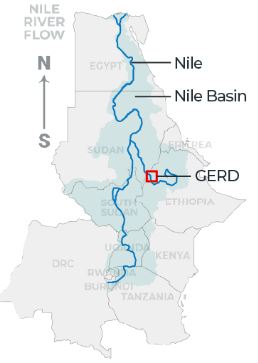
  9. Map of the Nile River flow and the location of Grand Ethiopian Renaissance Dam (GERD) in Africa

    This year saw the inauguration of the Great Ethiopian Renaissance Dam (GERD) in September. The dam has been almost entirely domestically funded through bonds and donations of the hard working populationsThe GERD has also united Ethiopian citizens across ethnic and political divides. Inauguration of the Great Ethiopian Renaissance Dam (GERD).

  10. The Timbuktu’s manuscripts have returned home after being hosted for almost a decade in Bamako. These are treasures that have been protected for centuries by local families, and they had had to move them because of the insurgency of western-funded terrorists’ attacks which had divided the country. Continuing on the artifacts subject, Great Britain and South Africa handed back Ghanaian royal artifacts. While France returned the skull of Beheaded King Toera of the Sakalava People of Madagascar 127 years after it was taken; one caveat, no genetic testing has conclusively established the identity of any of these skulls to be that of King Toera!
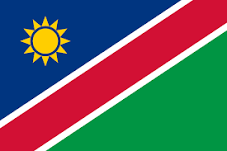
  11. Flag of Namibia

    Namibia made history as the only country in the world where Women hold Key Positions: women make up 57% of the government! Namibia has done what no other country in the world has ever done: the country has a female president Netumbo Nandi-Ndaitwah, vice-president Lucia Witbooi, speaker of the national assembly Saara Kuugongelwa-Amadhila, and secretary general of the ruling party. To the naysayers out there, remember that most of Africa has matriarchal traditions; thus it makes sense that it would be first.

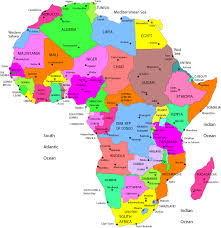
  12. Map of Africa

    This past November, African countries, assembled in Algiers, united to pass a resolution to have colonial era crimes recognized – it’s about time, and let’s hope it works, and that their union keeps up. This comes up as tensions between Algeria and France intensify, culminating with Algeria passing a bill last week requesting that France atone for its 130 years of occupation; France called it a blow to dialogue. African Countries are uniting to pass a Resolution to have Colonial Era Crimes Recognized.

  13. Meta bowed to Nigeria and paid up for privacy infraction. This is a first, and usually multinationals tend to do whatever in our countries… we applaud the judgment, and hope that this signals to those companies to start treating Africans like humans, with some measure of respect. Meta Bows to Nigeria and Pays for Privacy Infraction.
Namibia Makes History as the Only Country in the World where Women hold Key Positions

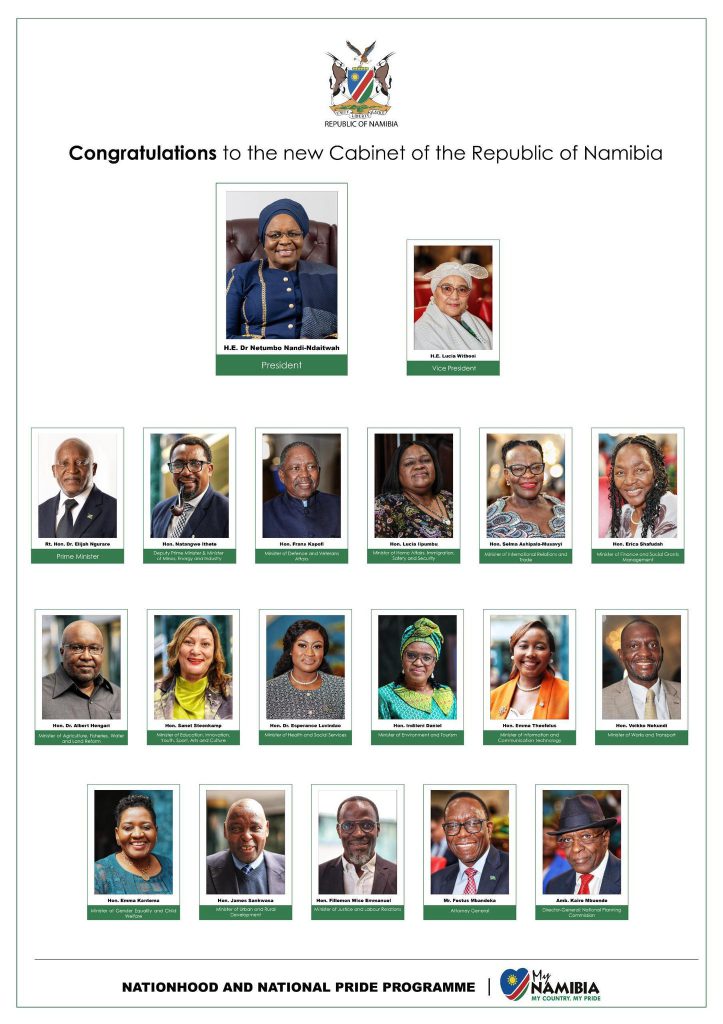
2025 Namibian Cabinet (Source: Malawi24.com)

At the United Nations (UN) general assembly last month, Namibian President Netumbo Nandi-Ndaitwah unveiled the long strides and historic milestones that the country has been making: women make up 57% of the government! Namibia has done what no other country in the world has ever done: the country has a female president Netumbo Nandi-Ndaitwah, vice-president Lucia Witbooi, speaker of the national assembly Saara Kuugongelwa-Amadhila, and secretary general of the ruling party, with 57% of the cabinet held by women, including top ministries such as finance, health, education, and international relations and trade. Namibia is the only country in the world where women hold the top positions. Namibia has closed 81% of his gender gap, ranking 8th globally, and ranking number one in Africa. This is an amazing milestone, and blueprint. Women literally rule in Namibia! Like we already said, as has been proven in history, Africa has a long tradition of having female rulers when no other part of the world does. Congratulations to Namibia, and we hope these women great work.

Excerpts below are from Malawi24. Enjoy President Nandi-Ndaitwah’s speech at the UN general assembly below. 

=====

Flag of Namibia

Namibia has entered a new chapter in its political history with the appointment of a groundbreaking all-women leadership at the highest levels of government. On Saturday, newly elected President Netumbo Nandi-Ndaitwah – Namibia’s first female Head of State – announced her inaugural Cabinet, naming Lucia Witbooi as Vice President and Ericah Shafudah as Minister of Finance. Just a day earlier, Saara Kuugongelwa-Amadhila was elected Speaker of the National Assembly, becoming the first woman to lead the country’s parliament. For the first time in Namibia – and in Africa – a nation is led by women across the top three offices of government: President, Vice President, and Speaker of Parliament.

So Long to Sam Nujoma, Namibia’s First President

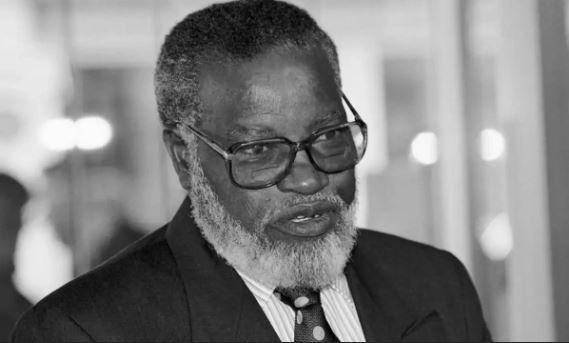
Sam Nujoma (Source: newscentral.africa)
This past Saturday, February 8 2025, Sam Nujoma, Namibia’s first president and founding father passed away at the age of 95. The ancestors are greeting this illustrious brother who fought for the independence of his country. Nujoma led the long fight for independence from South Africa for many years, which culminated with independence on 21 March 1990 of South West Africa, as the country was formerly known. Nujoma helped found Namibia’s liberation movement known as the South West Africa People’s Organisation (SWAPO) in the 1960s. After independence, Nujoma became president in 1990 and led the country until 2005.
Flag of Namibia
Samuel Shafiishuna Daniel Nujoma was born at Etunda, a village in Ovamboland, on 12 May 1929, to Daniel Uutoni Nujoma and Helvi Mpingana Kondombolo, an Uukwambi princess. From his mother, he inherited his strong charismatic influence during his political career.  He was the oldest of 11 children. His childhood was spent taking care of his siblings, tending to the family’s cattle, and farming.
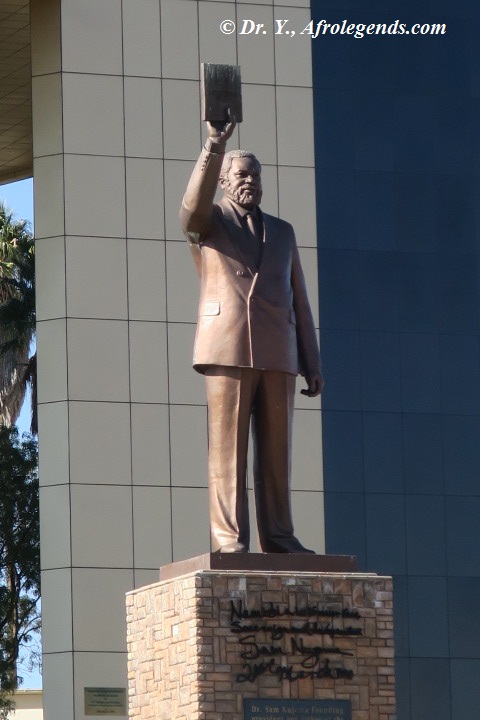
Statue of Sam Nujoma in front of the Independence Museum in Windhoek, Namibia
At the age of 17, Nujoma moved to the harbor town of Walvis Bay, where he slowly learned about the plight of Black people under white-minority rule; he also worked at a general store and later at a whaling station. In 1949, Nujoma moved to Windhoek where he worked as a railway sweeper for the South African Railways (SAR), while he went to night school. It was there that he was introduced to the Herero tribal chief Hosea Kutako, who was lobbying to end apartheid rule in Namibia, then known as South West Africa. Kutako took the young Nujoma under his wing, and mentored him as he became politically active among Black workers in Windhoek who were resisting a government order to move to a new township in the late 1950s. First, he joined with the Ovamboland People’s Congress (OPC) co-founder Jacob Kuhangua to start a Windhoek branch; at its first congress, he was elected president. At Kutako’s request, Nujoma began life in exile in 1960, first to Bechuanaland (now Botswana), then Bulawayo in then Southern Rhodesia (Zimbabwe), and later ending in Tanzania where he was welcomed by President Julius Nyerere. The same year, he was elected president of the South West Africa People’s Organization (SWAPO) in abstencia. The problem of South West Africa, similar to Kamerun, was that they were former German colonies, which had been placed under League of Nations mandate of South Africa in the case of South West Africa, and France and Great Britain for Kamerun; thus the country should have been independent a while back. Nujoma spent a few years asking the United Nations to ensure that the occupying power that was South Africa released control of South West Africa. After many unsuccessful tries, while shuttling from capital to capital in quest for support, he authorized the launch of armed resistance in 1966 against South African forces. The attack marked the beginning of the Namibian War of Independence, which would last more than 25 years.
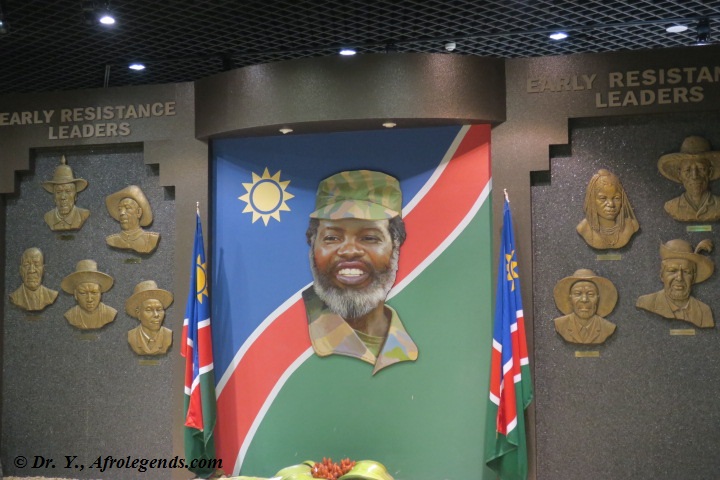
Sam Nujoma on a plaque to Early Resistance Leaders inside the Independence Museum in Windhoek, Namibia
On 19 March 1989, the signing of the cease-fire agreement with South Africa took place. After 29 years in exile, Nujoma returned to Namibia in September 1989 to lead SWAPO to victory in the UN-supervised elections that paved the way for independence. Nujoma was elected first president of the new nation which became independent on 21 March 1990. He was re-elected in 1994 and 1999, and stepped down in 2005. The current president of Namibia, President Nangolo Mbumba said of Sam Nujoma, He “inspired us to rise to our feet and to become masters of this vast land of our ancestors,” … “Our founding father lived a long and consequential life during which he exceptionally served the people of his beloved country.” Namibia’s Vice-President Netumbo Nandi-Ndaitwah, who is due to be inaugurated as president in March after leading SWAPO to victory in elections, said his “visionary leadership and dedication to liberation and nation-building laid the foundation for our free, united nation“.
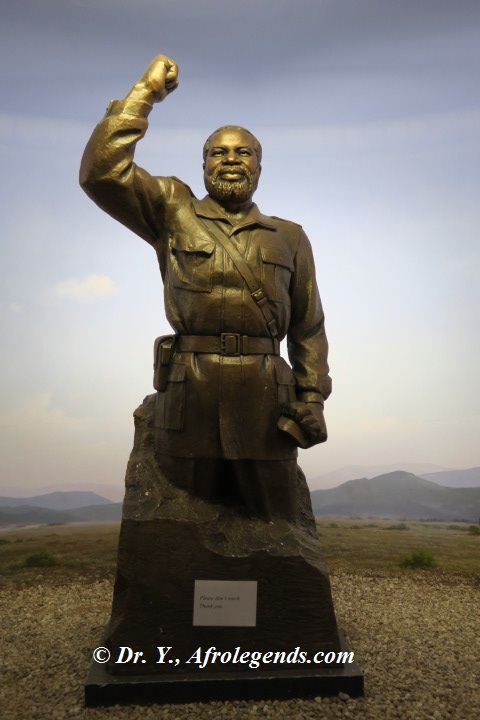
Bust of Sam Nujoma, inside Independence Museum, in Windhoek, Namibia
South Africa’s President Cyril Ramaphosa said the former Namibian president was an “extraordinary freedom fighter” who played a leading role in not only his country’s fight against colonialism, but also in the campaign that led to the end of the apartheid regime in South Africa in 1994. “President Nujoma’s leadership of a free Namibia laid the foundation for the solidarity and partnership our two countries share today – a partnership we will continue to deepen as neighbours and friends.” South African President Cyril Ramaphosa said Nujoma led Namibia’s independence movement “against the seemingly unshakeable might of colonial and apartheid authorities and forces” and spurred the anti-apartheid movement in South Africa on its own final steps to freedom. “Sam Nujoma inspired the Namibian people to pride and resistance that belied the size of the population,” Ramaphosa said. “Namibia’s attainment of independence from South Africa in 1990 ignited in us the inevitability of our own liberation.”