Fenus unciarum in the African Slave Trade

Inspection of a slave for sale

Fenus unciarum refers to an ancient Roman concept of interest on loans. The term “unciarum” comes from the latin “uncia,” which means “twelfth,” and “fenus” means interest. Essentially, it was a legal term used to describe the interest rate of 1/12 (or about 8.33%) per month, which translates to an annual interest rate of approximately 100%. The Twelve Tables, an early Roman legal code, established this rate to protect borrowers from exorbitant interest rates. This was a common practice in Roman law which was applied in Africa during the slave trade. The debtor who cannot redeem himself becomes a slave: he can redeem himself by selling his son to the creditor. According to the law of the XII tables, the creditor can sell the debtor beyond the Tiber.

The fidelity of this scheme in Black Africa under the slave system is corroborated by Mungo Park, the Scottish explorer who visited West Africa in the 1790s. After an exploration of the upper Niger River around 1796, he wrote a popular and influential travel book titled Travels in the Interior Districts of Africa in which he theorized the Niger and Congo merged to become the same river, though it was later proven that they are different rivers. In this book, he shed a light also on the fenus unciarum use in Africa. 

Slave capture

When a Negro takes goods on credit from Europeans on the coast and does not pay at the agreed time, the creditor has the right, according to the laws of the country, to seize the debtor or, if he cannot find him, someone from his family, or finally, as a last resort, someone from the same kingdom. The person thus seized is detained while his friends are sent to search for the debtor. When the latter is found, an assembly of the chiefs of the place is called, and the debtor is forced, by paying his debt, to release his relative. If he cannot do this, he is immediately seized: he is sent to the coast, and the other is set free. If the debtor is not found, the arrested person is obliged to pay double the amount of the debt, or he himself is sold as a slave…

From this, one can easily see how an entire kingdom could be captured.

Mungo Park describes Ségou in 1795

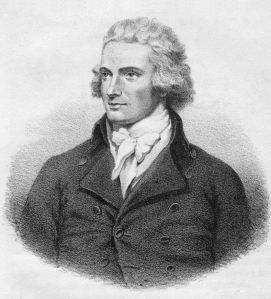
Mungo Park
Portrait of the Scottish explorer Mungo Park

Below is a description of the great city of Ségou (pronounce Segu) in Mali by the Scottish explorer Mungo Park in 1795. Here he describes the city’s population density, dynamism, architecture, and even their ways of life. He amply describes the roominess and surprised sturdiness of Ségou’s canoes which could host 4 horses. Mungo Park is simply astounded by the greatness of the civilization he encounters there, and concludes, “the crowded population and the cultivated state of the surrounding country, formed altogether a prospect of civilization and magnificence, which I little expected to find in the bosom of Africa.” Note that the city is surrounded by high mud walls probably similar to the Tata of Sikasso: an African Fortifying Wall.

=====

Mali_Ségou_La Mosquée (AOF)
The Mosque in Segou at the beginning of the 20th century

Sego, the capital of Bambarra, at which I had now arrived, consists, properly speaking, of four distinct towns ; two on the northern bank of the Niger, called Sego Korro, and Sego Boo and two on the southern bank, called Sego Soo Korro and Sego See Korro. They are all surrounded with high mud walls ; the houses are built of clay, of a square form, with flat roofs ; some of them have two storeys, and many of them are whitewashed.

Mali_Segou_Palais d'Ahmadou Tall
Entrance to Ahmadu’s palace in Segou-Sikoro published in the 1868 edition of the book by Eugene Mage Voyage dans le Soudan occidental (Sénégambie-Niger), Paris: Hachette

Besides these buildings, Moorish mosques are seen in every quarter ; and the streets, though narrow, are broad enough for every useful purpose, in a country where wheel-carriages are entirely unknown. From the best enquiries I could make, I have reason to believe that Sego contains altogether about thirty thousand inhabitants. The king of Bambarra constantly resides at Sego See Korro ; he employs a great many slaves in conveying people over the river, and the money they receive (though the fare is only ten cowrie shells for each individual) furnishes a considerable revenue to the king in the course of a year. The canoes are of a singular construction, each of them being formed of the trunks of two large trees, rendered concave, and joined together, not side by side, but end ways ; the junction being exactly across the middle of the canoe ; they are therefore very long and disproportionably narrow, and have neither decks nor masts ; they are, however, very roomy ; for I observed in one of them four horses, and several people crossing over the river. When we arrived at this ferry, with a view to pass over to that part of the town in which the king resides, we found a great number waiting for a passage ; they looked at me with silent wonder, and I distinguished, with concern, many Moors among them. There were three different places of embarkation, and the ferrymen were very diligent and expeditious ; but, from the crowd of people, I could not immediately obtain a passage ; and sat down upon the bank of the river, to wait for a more favourable opportunity The view of this extensive city ; the numerous canoes upon the river ; the crowded population and the cultivated state of the surrounding country, formed altogether a prospect of civilization and magnificence, which I little expected to find in the bosom of Africa.


Mungo Park, Travels in the Interior Districts of Africa: Performed Under the Direction and Patronage of the African Association, in the Years 1795, 1796, and 1797.

Sego = Ségou

Bambarra = Bambara

Sego Boo = Ségou-Bou

Sego Korro = Ségou-Koro

Sego See-Korro = Ségou-Sikoro

*The four cities mentioned here are actually on the southern shore, but there are on the northern shore some neighborhoods to which Mungo Park attributed excessive importance.

Role of Timbuktu as the Market of Gold

Mungo Park
Portrait of the Scottish explorer Mungo Park

Here are the words of the Scottish explorer Mungo Park in 1795 about the great city of Timbuktu, and its central place in the gold trade in Africa, and the world at the time.

====

Timbuktu is regarded as the gold warehouse of the Manding. It is where the merchants of TunisTripoliFez, Morocco, come to take it [gold] to distribute it in the whole North of Africa. The biggest part of this gold then moves on the Europe. One can observe that the Gold Coast of Guinea, which is thus called only because the trade of the gold dust is done there, is located towards the Manding: but I don’t know if the gold found there was brought from the mountains, through the rivers of the north or those of the south. Maybe through all ; because part of the gold of the Wangara is being sold on the south coast.

Mungo Park, Travels in the Interior Districts of Africa: Performed Under the Direction and Patronage of the African Association, in the Years 1795, 1796, and 1797. Vol. 2, P. 338, Paris, 1800.