Mangi Meli, the Chagga Leader Who Resisted the Germans in 1890s

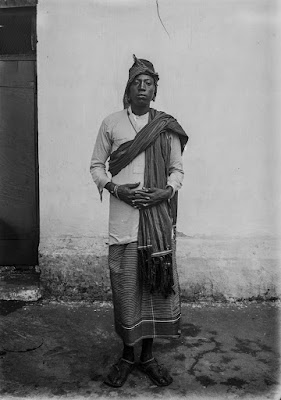
Mangi Meli of the Chagga of Moshi, ca 1890s (Source: Deutsche Fotothek)

Last September, we talked about a German museum which was able to match the DNA from looted African skulls to their descendants today. One of the skulls had a single word inscribed “Akida” who was believed to be a high-ranking advisor to Mangi Meli, a ruler of the Chagga people. It is no secret the fate that this advisor must have found, given that Mangi Meli had been hanged and decapitated by the Germans for leading an uprising against German invaders in 1900, along with 18 other ChaggaMeru, and Arusha leaders; it is not a far guess that Akida must have been hanged with King Meli.

Who was Mangi Meli?
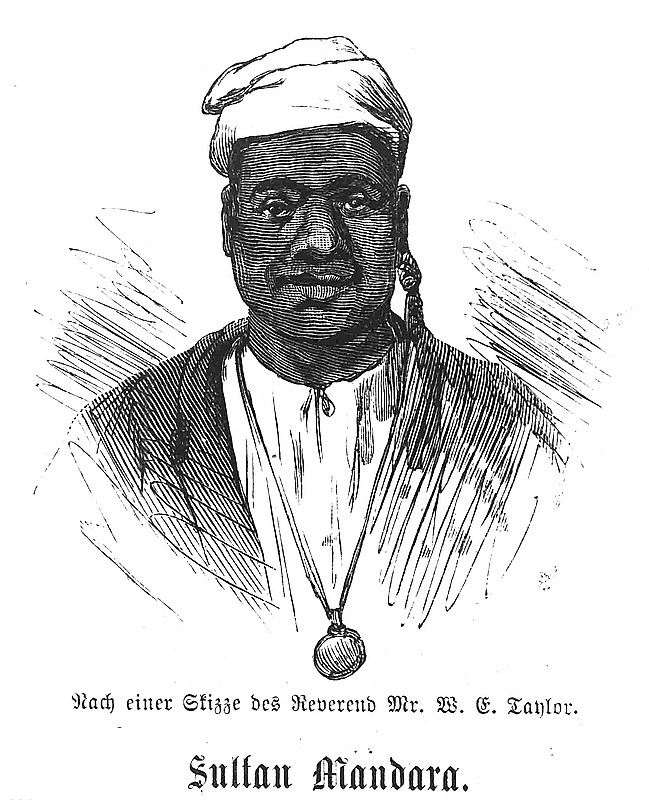
Sultan Mandara of the Moshi in 1888

Mangi (King) Meli was a ruler of the Chagga people of Moshi, one of the sovereign Chagga states, in the 1890s. He was the first son of Mangi Rindi Mandara from his second wife Sesembu. Born in 1866, he ascended his father’s throne in 1891. It is said that he was smart, exuberant, and extremely valiant.

Meli is hailed as one of the heroes of the former Tanganyika colony which was part of German East Africa which encompassed Rwanda, Burundi (Ruanda-Urundi), modern-day Tanzania (except Zanzibar), and part of the Kionga triangle in Mozambique. Meli has been prominent in the fight against colonial encroachment on the slopes of Mount Kilimanjaro.
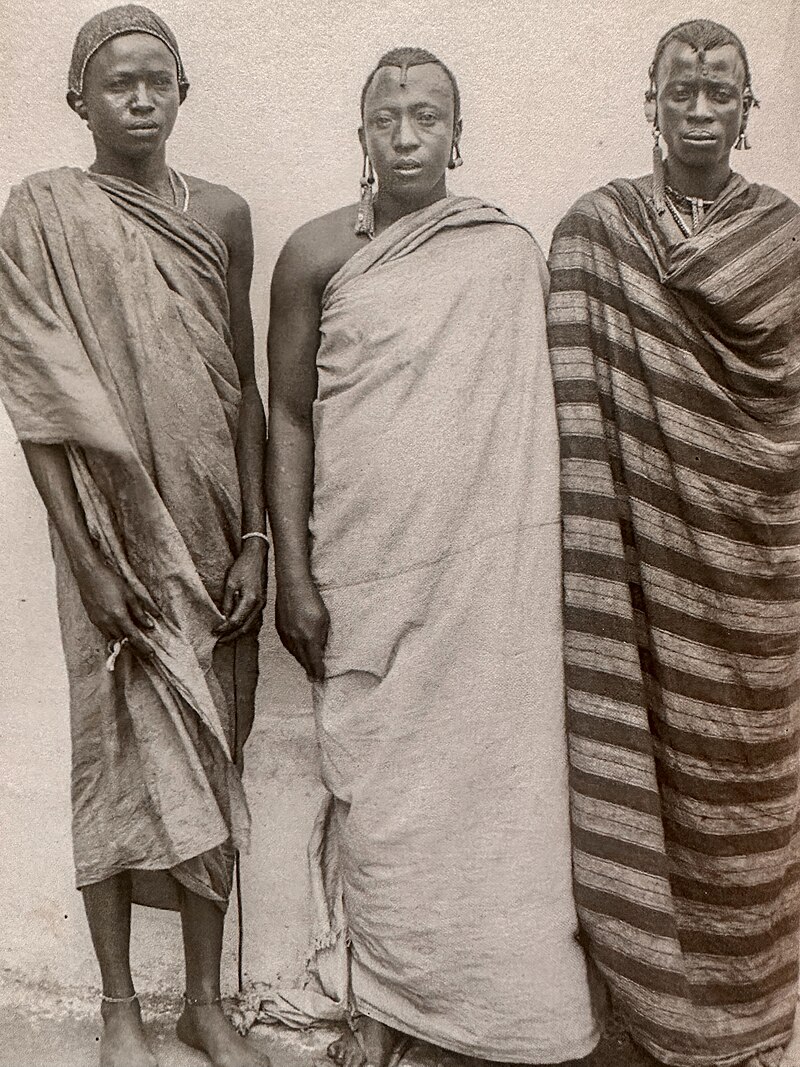
Mangi Meli and his Njama 1890s at the German Moshi Boma (Source: Deutsche Fotothek)

At the time when he became Mangi, the Germans were trying to lay hold on African territories, and every means were used. In 1892, there was an incident involving a young girl who the German forces wanted to capture, and when the Mangi of Moshi refused, the German troops fired, and the Moshi retaliated, killing one Askari (African serving in the German colonial forces). The German troops, led by Lt von Bulow, attacked, but were successfully defeated by Mangi Meli. This victory of the Meli made the Germans back down for 51 days.
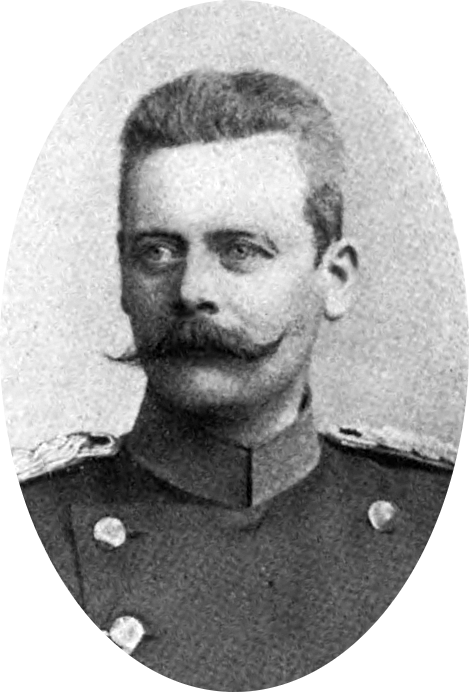
Friedrich von Schele

Based on the lie of a “Chagga revolt” orchestrated by a neighboring king, Mangi Marealle of Marangu who had made pacts with the Germans including the notorious murderer explorer Carl Peters, Col. Friedrich von Schele, the deputy governor, led the Germans as they moved back to Kilimanjaro on July 31, 1892, launching an effort to seize Meli of Moshi, destroying and plundering Meli’s lands. Yet they could not capture Mangi Meli. They occupied his lands and started enslaving his people. However, bidding his time to strike back, Mangi Meli united over following years with other Mangis of neighboring Chagga states, forming alliances with other Meru and Arusha kings as well. However, his plan was betrayed by an informant from Mangi Marealle. This plan culminated on 02 March 1900, when the Germans called the Chagga kings whom they accused of fomenting rebellion.
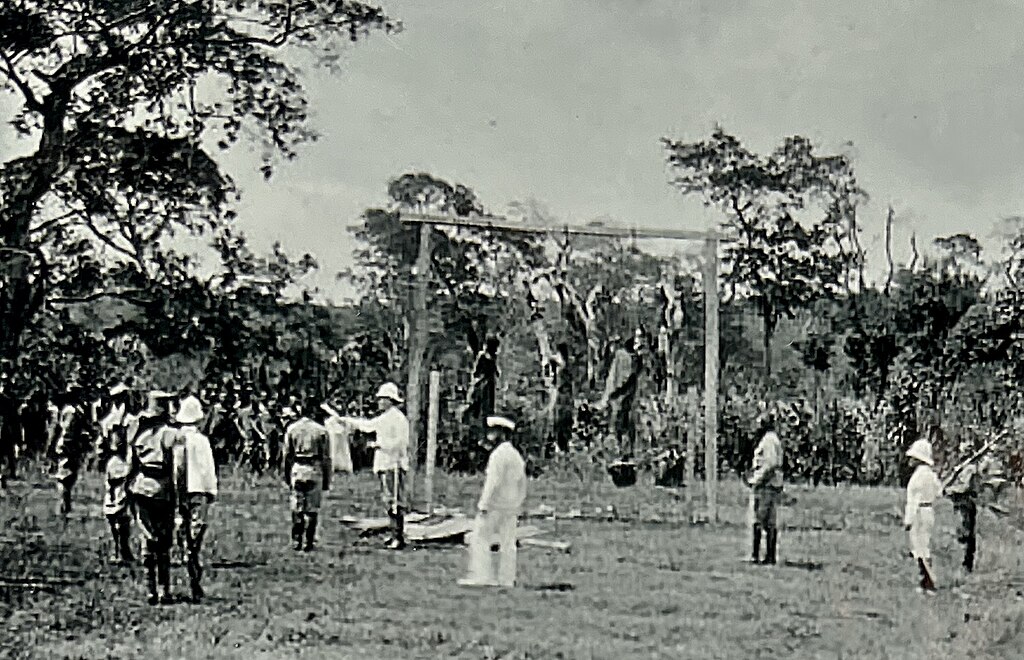
Hanging of Chagga men by the German Colonial Government ca 1890s – 1900

After his capture, Meli was convicted of rebellion and was hanged alongside 18 other kings and noblemen of ChaggaMeru, and Arusha; one of these kings was Mangi Ngalami of the Siha Kingdom, one of the numerous Chagga states. Their execution was public. However, when Meli was hanged, he did not die immediately; it is said that he hung on the tree for 7 hours alive until he was shot by a soldier. Following his death, the German colonial administration ordered his head be severed from the body; this was the fate for many executed on that day. The skulls are believed to have been sent to Berlin to Felix von Luschan, an anthropologist and curator at the Royal museum of Ethnology of Berlin, who requested them to Lt. Col. Moritz Merker who was second in command at the German military outpost of Moshi.
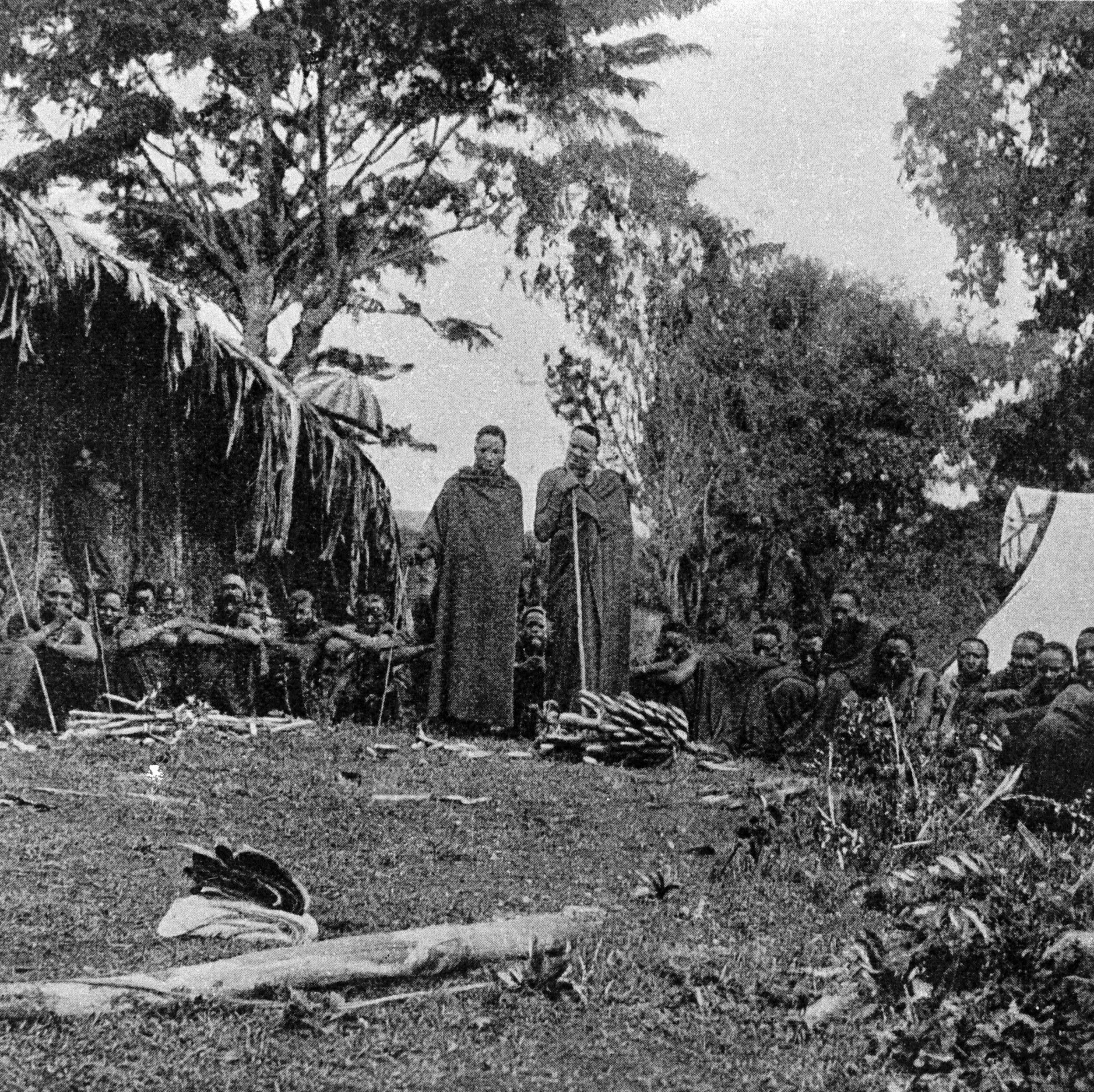
Mangi Ngalami, King of Shira, with another chief and their entourage. Reproduction from Johannes Schanz/ H. Adolphi, Am Fuße der Bergriesen-Ostafrikas, and published with the permission of the Evangelisch-Lutherisches Missionswerk Leipzig (Source: The Dial)

Today, descendants of both Mangi Meli and Mangi Ngalami and others are searching for the skulls of their ancestors. The grandson of Mangi Meli, Isaria Meli, has founded a foundation to search for the skull of Mangi Meli and turned to Stiftung Preußischer Kulturbesitz (SPK, Prussian Cultural Heritage Foundation) in 2016 to identify the remains of his grandfather, to no avail. Efforts are being made to recover his remains (and those of the other kings) and return them for proper burial in Tanzania. In Chagga culture, and many African cultures, the burial of a body after death is an essential ritual; without a proper funeral and resting place, the soul cannot find peace. Many of the skulls and remains ended up in different museums of Berlin, or in private collections (I cannot fathom why someone would want someone’s skull in their private collection ???). There are cases where entire skeletons were shipped to Germany. This was the case when in 1902, the whole skeleton of Mangi Lobulu of the Meru, another leader executed at the same time as Mangi Meli and Mangi Ngalami, was sent to Germany by Merker; over the decades, it eventually made its way to the American Museum of Natural History in New York City where it was located by German researcher Konradin Kunze 100 years later. 

Please check out Flinn Works production “Mangi Meli Remains,” and read the article in the Dial

As you think of Mangi Meli, remember his bravery, and celebrate his spirit for the freedom of the Chagga people, and others, on the slope of Mount Kilimanjaro.

‘On Top of Africa’ by B. Tejani

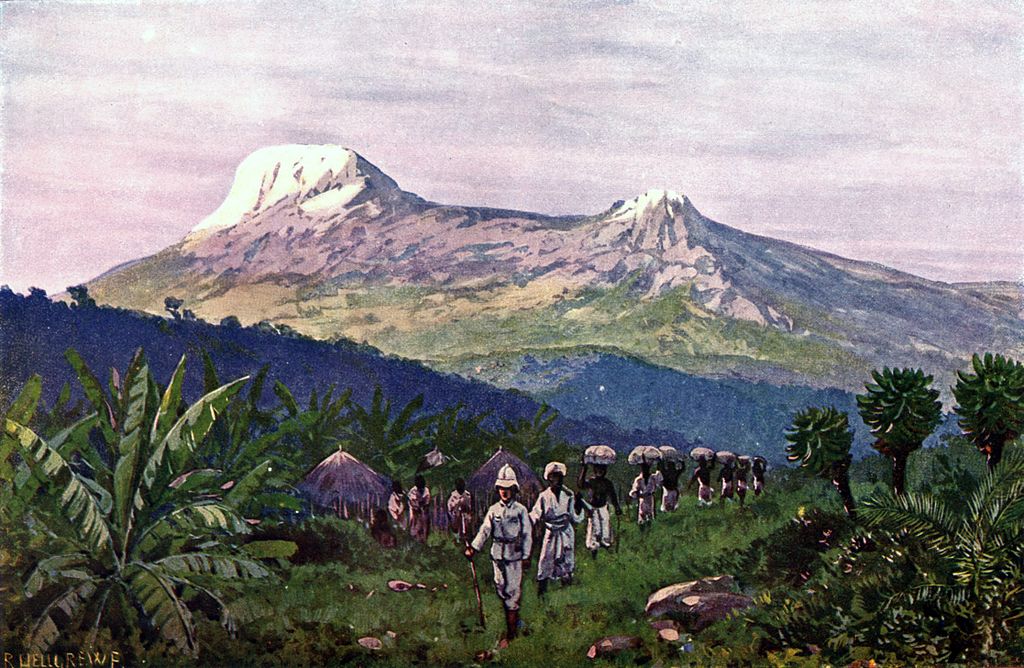
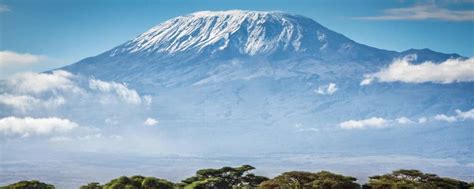
Mt Kilimanjaro, Tanzania

Have you ever dreamed of climbing Africa’s tallest mountain, Mt. Kilimanjaro? Of watching its snow-capped peaks under the tropics, near the equator? Mount Kilimanjaro rises to an elevation of 5,895 m above sea level and about 4,900 m above its plateau base in Tanzania; it is the largest and tallest free-standing mountain rise in the world, meaning that it is not part of a mountain range. The majestic Mount Kilimanjaro is an inactive snow-capped stratovolcano that extends for about 80 km from east-west and is made up of three principal volcanic cones namely Mawenzi, Kibo, and Shira. The highest summit of Kilimanjaro is located on the crater rim of Kibo volcano and has been named the Uhuru Peak, where ‘Uhuru’ means ‘freedom’ in the native Swahili language. Scientists estimate the glaciers may be completely gone in 50 years. Mount Kilimanjaro is often referred to as the “Roof of Africa”. Thus one can imagine what poet B. Tejani, and anyone who reaches the 4th tallest peak in the world, must have felt after ascending the mountain… on top of Africa, which is the title of Tejani’s poem about the joy of ascending Mt Kilimanjaro. Bahadur Tejani is a Kenyan author and poet, born of Gujarati parents in Kenya. He studied at the Makerere University in Uganda, Cambridge University, and the University of Nairobi. He later taught at the University of Nairobi in Kenya, as well as the University of Sokoto in Nigeria. As you read the poem, you are really transported to the slopes of the majestic mountain. As you watch the snow, ‘an ageless majesty‘ fills you. As you reach the summit, there is definitely at that moment ‘no great triumph in the soul‘, after the ‘agonied 20,000 steps upwards and onwards‘. Truly, only when the ordeal is finished ‘I shall remember the dogged voice of conscience self-pity warring with will‘. This poem is part of Poems from East Africa, ed. by D. Cook and D. Rubadiri (1971), p. 176. Enjoy!,

====

Mt Kilimanjaro in 1911

On Top of Africa‘ by B. Tejani

Nothing but the stillness

of the snow

and an ageless majesty

matched

by those enduring horizons that bridge the heights of you and me.

The phosphorescent sun gliding from the dark cloud under us

shone a brief once while we lay

retching in the rarefied air.

No great triumph in the soul of those

twenty thousand agonied steps upwards, always onward.

Only anguish of an ending -the vacuumed intestines shivering at

another onslaught of mountain sickness.

An ice-axe prod in the back and with it the terrible thought of the

awful retreat down the cold slopes of possible deaths; dumb eyes and

feet

lit by a single tireless search for slumber

which is as far away from us as we from the plains.

Only when the nightmare is over I shall remember the dogged voice of

conscience

self-pity warring with will

of the brown body

to keep up

with the black flesh

forging ahead

on the way

to Kilimanjaro.

When the Kilimanjaro Leads to Happy Corals !

Mt Kilimanjaro (Source: KidsKonnect.com)

What does the Kilimanjaro, the tallest mountain on African soil, have to do with corals in the ocean? Well, it turns out that there are channels of cool water that developed millions of years ago under the Mt Kilimanjaro, and these end in the Indian ocean off the coast of Mombasa. With the recent warming of the oceans, this cool water meets the ocean right on the coast to create a sort of marine sanctuary for corals, dolphins, and even species taught to be extinct. Enjoy excerpts below from the article at the Guardian!

======

Scientists have discovered a climate crisis refuge for coral reefs off the coast of Kenya and Tanzania, where species are thriving despite warming events that have killed their neighbours.

The coral sanctuary is a wildlife hotspot, teeming with spinner dolphins and boasting rare species, including prehistoric fish and dugongs. Researchers believe its location in a cool spot in the ocean is helping to protect it and the surrounding marine life from the harmful effects of the climate crisis.

[Tim] McClanahan, the lead scientist for the Wildlife Conservation Society, who lives and works in Mombasa, Kenya, said he had an “epiphany” when he realised why the reef was so rich in wildlife. The coastline has the highest density of dolphins in east Africa, and coelacanths, fish once believed extinct, swim in its deep waters. “I thought ‘why are all the animals here?’ And I realised it was because of Kilimanjaro,” he said.

The coral refuge, which stretches from Shimoni, 50 miles south of Mombasa, in Kenya to Dar es Salaam in Tanzania, is fed by cool water from deep channels formed thousands of years ago by glacial runoff from Mt Kilimanjaro and the Usambara mountains.