Niger to Nationalize Uranium Mining

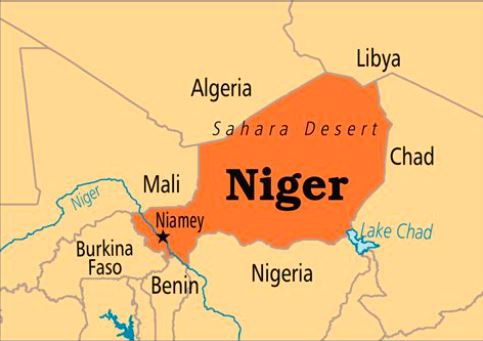
Map of Niger

Last week, on June 19th, Niger announced plans to nationalize its uranium venture which until now had been operated by the French company Orano. By this, the Niger government has decided to gain control over its resources from France. For many years, the French state owned company Orano, which was previously Areva, has been extracting uranium in Niger, enjoying a full monopoly, paying barely anything to the country including no taxes (Mali and Niger end Long-Standing Tax Treaties with France). This quest for freedom or rather fairness by Niger is not something new which started with the government of President Abdourahamane Tchiani, but rather the culmination of years of an unfair treatment based on an unbalanced relationship with the French company and government. In the 2000s, then President Mamadou Tandja had sought to re-negotiate the partnership with then Areva (now Orano) which until then had enjoyed a de facto 4 decade monopoly in the country paying almost nothing to the locals; he tried to curb the French influence by striking a deal with the China Nuclear International Uranium Corporation in 2007 to develop a uranium mine. As expected, Tandja was deposed in a coup in 2010, coup financed by the metropolis. Niger Takes Control of its Uranium, and Niger and Orano: Disagreement.

Below are excerpts from People’s Dispatch

=====
Uranium

In yet another assertion of sovereignty, the government of Niger announced on Thursday, June 19, that it would nationalize the Somaïr uranium venture, wresting control from the multinational nuclear fuel cycle corporation Orano.

Orano is owned by the French state, which, the government noted, has been “openly hostile toward Niger since July 26, 2023”, when the then president Mohamed Bazoum, domestically perceived as a French puppet, was ousted in a popularly supported coup.

Without yielding to French threats of war, the military government replacing Bazoum’s regime consolidated widespread support by expelling French troops, fulfilling the demand for which mass protests had been underway in the lead-up to his removal.

Flag of Niger

France has long exerted a monopoly over Niger’s uranium, which is among the highest grade in Africa. It has been fueling French nuclear power plants, lighting up a third of its light bulbs, while over 85% of Nigeriens lacked connection to the electricity grid.

… The nationalization changing this neo-colonial arrangement “will allow for healthier and more sustainable management of the company and, consequently, optimal enjoyment of the wealth from mining resources by Nigeriens,” its statement added.

Threatening Niger with “legal actions, including criminal proceedings if necessary”, Orano said it “intends to seek full compensation for the damages suffered and will assert its rights to the stock corresponding to Somaïr’s production to date.”

Who/What did we say goodbye to in Africa in 2020?

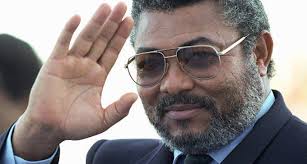
President Jerry Rawlings of Ghana (Source: thecable.ng)

Well, 2020 has been quite a year… when 2020 started, nobody could have told me that there would be a “global pandemic” and I would have believed it, that there will be a confinement and I would have believed, that people will be having “virtual parties” and I would have believed, or that people would have been walking around faceless i.e. masked and I would have believed. What a year! For sure, 2020 is going out, and there will be no other 2020. So let us remember 2020 in Africa, and remember the people, situations, and more that we said goodbye to.

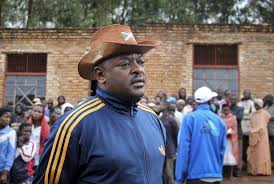
Pierre Nkurunziza during a community event (Source: PressHerald.com)
  1. President J.J. Rawlings, former President of Ghana joined his ancestors this past November. The Ghanaian president J.J. Rawlings has a strong place in history as an influential, courageous, tough-talking, bold, impactful leader and charismatic Statesman who left deep impressions on the political landscapes of his country and, indeed, Africa. Just like the Ghana of today owes a lot to Kwame Nkrumah the father of its independence, the Ghana of today owes a lot to J.J. Rawlings, the father of its economic stability and face-lift. There were a lot of tributes, and I found so much similarities between the words of Rawlings and some that I have echoed here on his blog, J.J. Rawlings in His Own Words: African Identity, Betrayal, and More.
  2. President Pierre Nkurunziza of Burundi left us this past June: Pierre Nkurunziza: So Long to the President who said ‘NO’ to the ICC, UN, WHO, BBC, and VOA. This president, Pierre Nkurunziza, was not a “traditional” president in his white marble castle, but was seen rather as a simple man, a man of the people, a man like the people he served, very religious and patriotic. Pierre Nkurunziza: Some of His Achievements for Burundi.
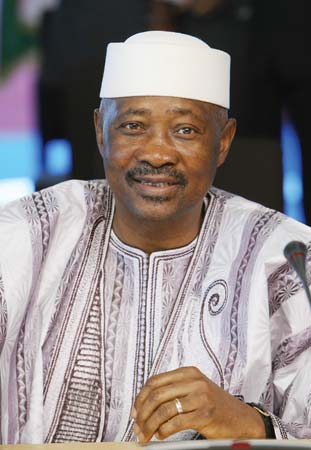
  3. Amadou Toumani Toure – ATT (Souce: Blackfacts.com
    The soldier of democracy, the former president of Mali, Amadou Toumani Toure (ATT), also changed plane this year: GoodBye to Amadou Toumani Touré (ATT) -Former President of Mali. As I said earlier, this was a man of integrity! Some may call him a realist. When then president Traoré asked the army to keep firing at the Malian people, he stood up and said ‘NO’. He took power, and steered the country towards its first democratic elections. Then he stepped down. Later, he won the presidential election with a coalition, and served 2 terms. When in 2012 there was a coup against him, he resigned, and left the office. Others in Africa should copy a page from ATT’s book.
  4. We said goodbye to the world-renowned Cameroonian/French saxophonist Manu Dibango. So Long Manu Dibango: Your Saxophone will Enlighten our Lives. His saxophone, big voice, and laughter brought joy, and influenced world-renowned musicians such as  Michael Jackson, Kool and the Gang, and more. As for me, I remember “Bienvenu, Welcome to Cameroon” and his collaboration with Fela Kuti as my favorites.
  5. This year we said goodbye to Mory Kante : the Electrifying Griot from Guinea. Often known as the “electronic griot” because he modernized local traditional instruments such as his kora which he electrified, and fused African music with styles and instruments from Western pop. His 1987 hit “Ye Ke Ye Ke” is a hit I still dance to. If you ever come across a kora, or listen to Ye Ke Ye Ke remember the electrifying griot Mory Kante and the great musical century-long traditions dating back to the Ghana Empire, Ancient Kingdom of Africa.
  6. Zindzi Mandela (Source: Timeslive.co.za)
    In July, Zindzi Mandela: the daughter of Nelson and Winnie Mandela passed away. As well, as being remembered by her family and loved ones, the world remembers her as the young woman who read Nelson Mandela‘s letter of rejection in 1985. Reading that letter required a lot of courage, determination and strength to defy the apartheid regime and stand in front of a full stadium thirsty for words of encouragement, and hope from their leaders to keep facing the injustices of an inhumane regime.
  7. This past November as well, Mamadou Tandja, the former President of Niger changed his plane of existence. Did you know that France’s nuclear power is funded by the uranium of Niger? and that Niger gets nothing for it? Tandja was the president who asked that the French nuclear company Areva start to pay something to Niger. During his terms, the relationship with Areva, which had enjoyed a de facto four decade monopoly in the country, worsened as he sought to curb the power of French influence by striking a deal with Sino-U in 2007 to develop a uranium mine, resulting in competition for Areva. As you can guess, he was deposed in a coup. Remember The 11 Components of the French Colonial Tax in Africa which gives France monopole over riches, mines, in a country? So long brother!
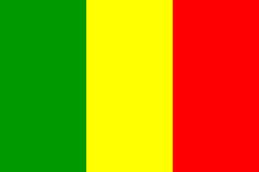
  8. Flag of Mali
    Flag of Mali
    In August, Ibrahim Boubacar Keita (IBK), president of Mali, was booted out of office: Bye Bye IBK: Mali Coup. This was a coup d’etat in Mali, and the Malian people rejoiced… but then as always France and its croonies ADO forced the Malian military leaders to promise to reinstate a civilian government and hold elections within a relatively short time frame. As always, France is there to bring back Africans into slavery… no wonder they can stay confined when they get 500 billions for free from African countries [The 11 Components of the French Colonial Tax in AfricaFCFA: France’s Colonial Tax on Africa, Africa is funding Europe!]. Is France Trying to (re) Colonize Africa?
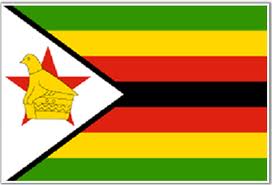
  9. Flag of Zimbabwe
    Flag of Zimbabwe
    In September, common sense left the government of Zimbabwe, when it decided to compensate white farmers the hefty sum of 3.5 billion dollars… within 12 months, when the country is currently on life support and there is no money in its coffers [Is Zimbabwe the New Haiti?]! This is outrageous! When the economy is in shambles, how can the government agree to this? Did these white farmers ever compensate the Africans after independence in 1980 for using their lands for a century, for abusing them off their lands? And for all the years of economic embargo forced on the country? Then in September, Zimbabwe agreed to return seized land to foreigners. What is funny is that the government has been doing this in hopes of having the embargo removed, but the country is still under serious economic embargoes. Don’t they learn from history? Zimbabwe is indeed the new Haiti!
  10. Flag of Mozambique
    Peace in northern Mozambique seems to have become evasive, ever since that 15 billion dollars contract with the French firm Total for the oil in Cabo Delgado, and the discovery of one of the largest oil, diamonds, rubies in the world there. Tell me it is not connected? Now they want us to believe that there is islamist insurgency in Mozambique of all places!… And now Pope Francis has money to help the people and children of Mozambique who have been displaced by conflict! … Why did the Vatican not help the government of Samora Machel back then? why the people of Mozambique? Those diamonds and riches are really Africa’s downfall! Just a look at the banks financing the project reminds you of the Berlin conference of 1884 [Selection from the 1885 Berlin Conference Final Act]: 19 commercial bank facilities among which UK Export Finance (UKEF), the Export Import Bank of the United States, Italy’s SACE, the Netherlands’ Atradius, the Export Credit Insurance Corporation of South Africa, Japan Bank for International Cooperation, Nippon Export and Investment Insurance, and the Export-Import Bank of Thailand [Reuters].