At the beginning of the month, Mali and Niger jointly put an end to two long-standing tax treaties with France. We know that French companies in Mali or Niger (and in other of the zone Franc countries) do not pay taxes in the African countries, but rather back in France, even though the generated revenues come 100% from the host African country. Imagine the economic losses for these countries? In most of these countries, the French companies will extract, say in the case of mining, the resources, without as much as building a single road or hospital for the local populations. One can thus understand the logic behind Mali and Niger governments’ actions. Some news media (mostly western ones) claim that now Malians or Nigeriens leaving in France will be subject to double taxation… but how many billion-euros generating Malian or Nigerien companies are there in France? The answer is ZERO! There goes that pointless argument about a few (granted there are a few) Malian citizens in France having to pay taxes, while Orano (old Areva) makes billions in Niger without paying taxes to the Niger government! Such an unfair treaty really needed to go!!!
In a significant shift in fiscal and diplomatic relations, Mali and Niger have taken a stand against France by revoking two long-standing tax cooperation treaties. Dating back to 1972, these agreements were initially crafted to circumvent double taxation, fostering mutual assistance in tax matters.
The decision, outlined in a joint statement from the governments of Mali and Niger, hinged on France’s ‘persistent hostile attitude’ towards both nations and the ‘unbalanced character’ of the agreements. These treaties, according to the statement, have led to substantial financial deficits for both West African countries.
This move signals a potential reconfiguration of the international tax landscape and geopolitical alignments in the region, particularly between these nations and France. The revocation of these treaties also depicts a wider discontent with France’s influence in West African affairs.
Niger’s junta has also scrapped two key military agreements with the European Union aimed at combating violence in Africa’s Sahel region. Moreover, Mali, Burkina Faso, and Niger have withdrawn from the G5 anti-jihadist force, further intensifying the region’s security concerns.
The answer is a resounding NO! or rather not yet! When someone has treated another like a sub-human, it might be hard to all of a sudden recognize the other person’s humanity. This is what Air France has been doing on the African continent. After helping to wipe out Air Afrique, it is no secret that Air France has been the main carrier servicing many African countries for the past decades, and it has enjoyed a perfect monopoly with super-hiked up prices… it is cheaper to fly to Paris from any African capital, than to fly to a neighboring country (story for another day).
Map of Mali with its capital Bamako
On August 7, the commercial company, Air France, decided to take a political stand against the countries of Mali, Burkina Faso, cancelling its flights to those countries without as much as a notice, a real breech of contract, because of the coup d’etat in neighboring Niger. Air France suspended its flights to Mali (seven per week) and Burkina Faso (five) on August 7 after the closure of the airspace of neighboring Niger following the coup in Niger. Imagine all the passengers who had paid tickets? Air France’s service is notoriously bad in Africa, do you think that they reimbursed them? Why should the coup in Niger make Air France stop servicing Mali or Burkina Faso? Just because the countries are neighbors? Imagine a country has issues with say, Germany, then as a result its airline cancels all flights to neighboring Belgium, and Netherlands without as much as a notice… the height of disrespect! how does it make sense?
After the suspension of Paris-Bamako connections by Air France, the Malian authorities decided on August 11 to cancel the company’s authorization to operate this line.
Now Air France would like to resume flights in Mali and Burkina Faso. Air France was set to resume this Friday October 13, and Malian authorities have halted the process with more requests to Air France. If you were the Malian or Burkinabe governments, would you agree? Shouldn’t there be new conditions to the partnership, if it is meant to resume?
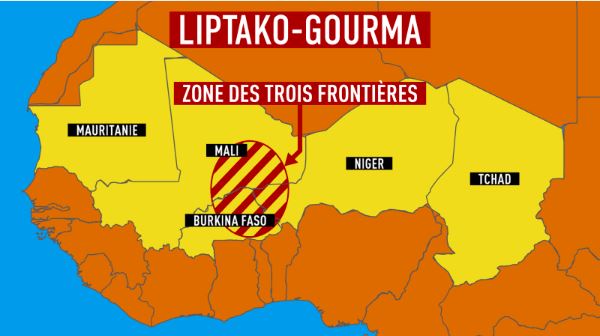
Map of Liptako-Gourma region (Source: aha-international.org)
We raise our hats to Mali, Burkina Faso, and Niger, countries which have signed the Liptako-Gourma Charter, a mutual defense pact to protect their countries, and fight effectively against terrorists which have been occupying the northern parts of their territories.
The Liptako-Gourma Charter establishes the Alliance of Sahel States (AES), which aims to “establish an architecture of collective defence and mutual assistance for the benefit of our populations“, Colonel and leader of Mali, Assimi Goïta wrote on X.
The Liptako-Gourma area is a region of over 370,000 km2, shared among the three countries, and which has been at the heart of the jihadists’ attack in recent years. It is difficult for a single country to face terrorists or try to defend itself, when those jihadists after attacking one run into the neighboring country in impunity. All three countries are faced with the same issues, and by this charter, they unite their efforts to defend themselves, thus tripling their forces.
Map of Mali with its capital Bamako
“This alliance will be a combination of military and economic efforts between the three countries“, Mali’s Defence Minister Abdoulaye Diop told journalists. “Our priority is the fight against terrorism in the three countries.”
The West African regional bloc ECOWAS has threatened to intervene militarily in Niger over the 26 July coup. Mali and Burkina Faso have quickly responded by saying that any such operation would be deemed a “declaration of war” against them (Niger Coup d’Etat: Airspace Closure, Sanctions, Diplomatic Overtures?, All Eyes on Niger, Niger – France Diplomatic Arm Wrestling). Thus the Liptako-Gourma is a clear creation of a defense alliance for these countries, a normal evolution, and a breath of fresh air. As always, united we stand.
The military leaders of Mali, Burkina Faso and Niger on Saturday signed a mutual defence pact, ministerial delegations from the three Sahel countries announced in Mali’s capital Bamako.
The Liptako-Gourma Charter establishes the Alliance of Sahel States (AES), Mali’s junta leader Assimi Goita posted on X, the social network formerly known as Twitter. Its aim is to “establish an architecture of collective defence and mutual assistance for the benefit of our populations“, he wrote.
…
A jihadist insurgency that erupted in northern Mali in 2012 spread to Niger and Burkina Faso in 2015. All three countries have undergone coups since 2020, most recently Niger, where soldiers in July overthrew President Mohamed Bazoum. The West African regional bloc ECOWAS has threatened to intervene militarily in Niger over the coup. Mali and Burkina Faso quickly responded by saying that any such operation would be deemed a “declaration of war” against them.
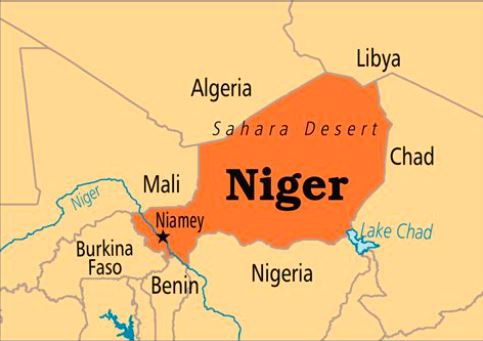
Map of Niger
– Mutual defence pact –
The charter signed on Saturday binds the signatories to assist one another — including militarily — in the event of an attack on any one of them.
“Any attack on the sovereignty and territorial integrity of one or more contracting parties shall be considered as an aggression against the other parties and shall give rise to a duty of assistance… including the use of armed force to restore and ensure security“, it states.
It also binds the three countries to work to prevent or settle armed rebellions.
Yesterday saw new turns in the situation in Niger with the airspace closure, and the rebuffing of the west’s puppet organizations that are the AU, ECOWAS, and the UN by Niger. One thing is for sure, everyone is watching carefully, and no one wants a regional spillover; after all, there are a lot of presidents installed to serve foreign interests in many bordering African countries, and many are starting to sweat. As a side note, the U.S., along with France has about 1,500 troops in Niger and Germany with about 100 (and even Italy) use facilities in that country to “combat jihadi groups” (that the West created to destabilize the entire region). The US with Secretary of State Antony Blinken said that Wagner (and thus Russia) is misleading the people of Niger… he told the BBC’s Focus on Africa programme, “I think what happened, and what continues to happen in Niger was not instigated by Russia or by Wagner, but… they tried to take advantage of it. … Every single place that this Wagner group has gone, death, destruction and exploitation have followed,” said Mr Blinken. “Insecurity has gone up, not down“. And where the US has gone there has not been insecurity, death, or destruction? It is like the pot calling the kettle black! US Acting Deputy Secretary of State Victoria Nuland flew to Niamey on Monday but was denied permission to meet with current president Abdourahamane Tchiani, coup leader, or with former president Bazoum, who is in detention. Instead, she spoke for two hours with other army officers. “These conversations were extremely frank and at times quite difficult because, again, we’re pushing for a negotiated solution. … They are quite firm in their view of how they want to proceed, and it does not comport with the Constitution of Niger,” Nuland told reporters. So when it serves the West’s interests, the constitution of a country is a valid piece of paper, but when it does not like in Ivory Coast in 2010, it is just toilet paper?
… Despite the international pressure, [Niger] coup leaders have seemed unwilling to back down, and on Sunday night, they closed Niger’s airspace until further notice, citing the threat of military intervention.
“In the face of the threat of intervention that is becoming more apparent … Nigerien airspace is closed effective from today,” a junta representative said in a statement on national television on Sunday evening [when Africans fight for their freedoms, they are called junta; but when in other countries people fight for their people’s freedoms, they are called patriots] .
He said there had been a pre-deployment of forces in two central African countries in preparation for an intervention, but did not give details. “Niger’s armed forces and all our defence and security forces, backed by the unfailing support of our people, are ready to defend the integrity of our territory,” the representative said.
The coup leaders warned any attempt to violate Niger’s airspace would face “an energetic and instant response”.
Ecowas defence officials agreed a possible military action plan, including when and where to strike, if Bazoum was not released and reinstated by the Sunday deadline.
On Monday, an Ecowas spokesperson, Emos Lungu, said the bloc would hold an extraordinary summit to discuss Niger on Thursday at the organisation’s headquarters in Abuja.
However, the bloc’s unity has been shattered by support for the coup leaders from the ruling juntas in Mali and Burkina Faso, both [sanctioned] members of Ecowas, and a pledge to come to Niger’s defence if necessary.
Flag of Burkina Faso
The Malian army said it would send a delegation to Niamey to show solidarity and a military plane from Burkina Faso was reported to have landed in the Niger capital at about 11.20am GMT.
The coup, the seventh in west and central Africa in three years, has rocked the Sahel region, one of the poorest in the world. Given its uranium and oil riches and its pivotal role in a war with Islamist militants, Niger holds great importance for the US, Europe, China and Russia.
… Gen Dominique Trinquand, a former French military representative at the UN, said the junta was “totally isolated” [yeah right! so why is the West afraid of this seemingly “isolated” force?].
He added: “Nigeria, which supplies 70% of Niger’s electricity, has cut the supply. All aid has been cut while Niger is one of the poorest countries in the world.”
On Sunday, Paris announced it was suspending its €482m (£416m) development aid programme to neighbouring Burkina Faso, which – along with Mali – has expressed its support for the junta. [And Burkina Faso told Paris to shove it!]
Last week Niger revoked military cooperation agreements with France, which has between 1,000 and 1,500 troops in the country.
It is no secret that 14 African countries today are still under the French colonial tax (The 11 Components of the French Colonial Tax in Africa), and that every year, France takes home upwards of 500 billion dollars (Africa is funding Europe!) from its currency imposed upon those countries. After all, France has no gold mines on its soil but yet is the 4th world producer of gold, gold coming from Mali, while Mali is among the world’s poorest countries on the planet. It is also no secret that Mali has been trying to free itself from this colonial tax (The French Colonial Tax at the Heart of Mali-France Tensions), and has been working tirelessly to revoke at least 8 of the 11 rules. With the unrest in Burkina Faso brought by the Jihadists from the north who were well protected by the French army brought in to protect Burkinabe interests, but who instead have created further unrest in the area, it is no surprise that Burkina Faso has joined forces with Mali, and now Guinea, to create a strategic axis which will focus on military and trade agreements between the 3 countries. Although we do not particularly trust the Guinean leader, we applaud the union between the two brothers Mali and Burkina Faso, faced with sanctions from the puppet organization that is ECOWAS. We also applaud this ‘federation’ which will give Mali and Burkina Faso access to the sea via Guinea, thus opening up these land-locked territories to further trade. Enjoy excerpts below from the People’s Dispatch; check out also the write-up on AfricaNews.
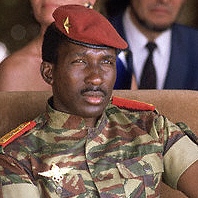
Like Thomas Sankara said, “La patrie ou la mort, nous vaincrons!”
====
Burkina Faso
The three West African countries, all of whom have recently undergone military takeovers amid rising public anger against France, have agreed to a Bamako-Conakry -Ouagadougou axis, with enhanced cooperation on matters ranging from trade to the fight against insecurity.
As France is getting ready to withdraw its troops from Burkina Faso by the end of the month, signs of a possible realignment in the region are emerging with a tripartite meeting between the foreign ministers of Burkina Faso, Mali, and Guinea—Olivia Ragnaghnewendé, Morissanda Kouyate, and Abdoulaye Diop—held in Burkina Faso’s capital Ouagadougou on February 8 and 9.
The leaders discussed a range of issues, “in particular the success of the transition processes leading to a return to a peaceful and secure constitutional order,” and, importantly, the “revitalization of the Bamako-Conakry-Ouagadougou axis” to make it a “strategic and priority area” on matters including trade and economic exchanges, mining, transport, roads and railway links, and the “fight against insecurity.”
…
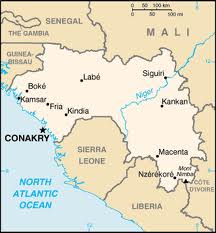
Guinea-Conakry
The communique issued following last week’s tripartite meeting condemned the “mechanical imposition of sanctions which often fail to take into account the deep and complex causes of political change,” adding that these measures “affected populations already battered by insecurity and political instability,” “undermine sub-regional and African solidarity,” and “deprive ECOWAS and the AU of the contribution of the three countries needed to meet their major challenges.”
While calling for “technical, financial, concrete, and consistent support” for security efforts and the return to a normal constitutional order, the three countries have agreed to “pool their efforts and undertake joint initiatives for the lifting of the suspension measures and other restrictions.”
A great light has joined the stars. His Majesty, Jean Paul Yitamben, King of the Batcheu people, in Cameroon, has changed dimensions, and now graduated to be an ancestor to guide our paths. A great Economist, Teacher, Historian, Father, Brother, Husband, Friend, has moved on. Like Behanzin, before and many other kings, he devoted his life to the service of his community and his people. The fight has changed! Local kings are no longer deported, but kingdoms and cultures are still fragmented, crushed under the load of ‘fake’ modernism assisted by “administrations” (excrescence of colonialism) which are at the service of foreign forces to continue the work of the annihilation and/or spoliation of the African identity.
Descendant of great kings before him, Jean Paul Yitamben was an avid historian and a perfectionist who tirelessly sought perfection in everything he did. Meticulous to a letter, he did not tolerate half-done work. With his wife, world-renowned social entrepreneur, Gisele Yitamben, he worked tirelessly to empower women in micro-finance, less-privileged youth to find jobs in our tough local economies, and more importantly he affected the lives of countless others outside of his own village, community, city, and beyond. The aborted Kugwe village Palm oil and indigenous development project in the North West Region of Cameroon is a clear example.
Le soleil / The sun
Yitamben was very methodical. He had so many great projects! He worked to bring solar power to his village, sent local village women to be trained in India on how to become solar engineers at a time when it was not yet common. He sent others to Australia and Denmark, and was the first in the area to organize the ‘quinzaine’: two weeks of sports competitions to encourage local pride, and distribute prizes to the winners, encouraging children to strive in education; awarding scholarships to youths, and prizes to mothers and grandmothers. He was ahead of his time, in sub-Saharan Africa where millions of people have low access to electricity, firewood and charcoal are the main source of energy for cooking meals, representing three quarters of total energy demand; Yitamben brought in improved households (foyers améliorés) which are more efficient and better for environmental protection. He brought in international collaborators because he sought a great place for his village and his people. Let us build on Yitamben’s strength!
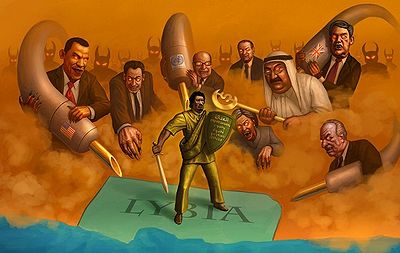
Libya, the Prey of the West
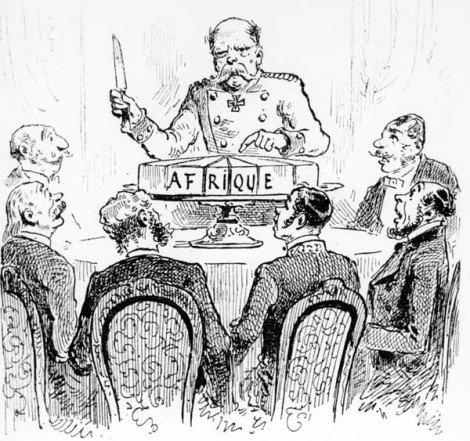
His biggest fight was that of his village. See, colonization did not stop in 1884, or in 1960 with the advent of pseudo-independences, it is well and alive and waxing on even stronger than before. The fight is not open, but like in Libya in 2011 or Mali today, the goal is still to fragment, to divide and conquer; to break into thousand pieces and loot local wealth while crushing the spirits of the indigenous populations. The overall objective is still the destruction of local initiatives to take the land and resources; it has not changed.
The fight at the level of King Yitamben’s village is an ample microcosm of what happens at the national or continental level in Africa: when a land is rich, or when the enemy covets the area, he promotes in-fighting among brothers (Ethiopia – Eritrea, Sudan – South Sudan), division over boundaries (Cameroon – Nigeria over Bakassi, Tanzania – Malawi over Lake Nyasa/Malawi), and division over resources (DRC – Rwanda).
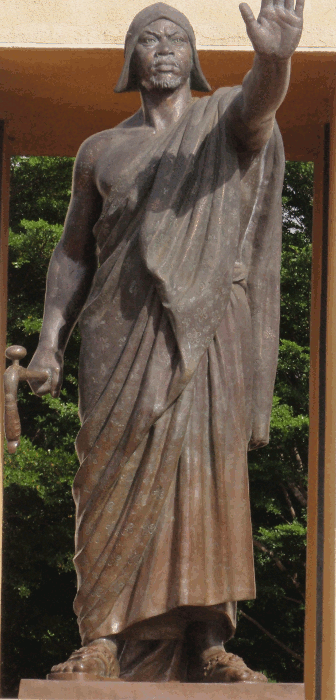
Behanzin, king of Dahomey
Remember that in the time of Behanzin, after his deportation, the tactic used was to install Agoli-Agbo as a puppet King; one who was not chosen by the traditions of the land, but by Europeans to help in weakening and eradicating traditions, and promoting divisions (Côte d’Ivoire where Alassane Ouattara was installed by French war tanks in 2011).
Flash news…
The fights that occurred over 100 years ago in Dahomey kingdom, or other parts of Africa, are still ongoing, albeit on a smaller scale (and big scale as well). Villages are divided, fragmented, and local institutions weakened. The governments which, in most African countries do not serve the locals but foreign forces, are complicit in the destruction of African traditions and institutions. Yitamben believed that it was possible to change the tides of time, by at least awakening his own people against division. He fought tirelessly for unity, and against division; adamantly refusing the fragmentation orchestrated by some of his people helped by a complicit administration with colonial instincts. He could not understand how his people could let themselves be used to destroy their very own land. He was a force to reckon with. He had a titanic strength; but it is a difficult fight.
Proud warrior, you have placed the bricks on its foundation, and the task will be completed. You tirelessly gave yourself for it. The fight continues. O great warrior! Your legacy lives on!
When we have lost a leader, we need to look forward, and build for future generations.Yitamben had a strong presence, was so confident, and so generous in sharing his time, resources, and knowledge.
So long brother, father, husband, friend, … May your seeds bear lots of fruits. I will remember your laughter, your big smile, your intelligence, your fight for perfection, and above all your teachings. I feel so privileged to have had you in my life, and received your teachings. You showed us the way. Now we have to carry on your light.
Yesterday, the West African bloc ECOWAS has lifted the economic and financial sanctions against Mali’s military government after the promise that Mali will hold elections in February 2024. The move has been celebrated by many Malians who have been struggling under the restrictions and the global rise in fuel and food costs. As many applaud the lifting of sanctions, it is important to analyze why ECOWAS might have changed its mind: a) the countries in the West African block were not aware of how much weight Mali had in the region and the impact to their economies, and were all suffering from the Mali embargo, and thus are scramming to have Mali rejoin its ranks; b) With sanctions lifted, it will be easier for terrorists groups (armed by foreign forces) to travel back into the country easily, as there will be less control; c) a few days ago, the Spanish minister threatened Mali with a NATO intervention to protect European interests in Mali, which he later denied; d) France just moved its troops to neighboring Niger (another puppet). How convenient that the sanctions are lifted a few days after this minister’s outburst, and right before France’s troops move to Niger. Thus, knowing that ECOWAS is France’s puppet in the region, the lifting of sanctions is rather something to be skeptical of, and distrust entirely. No one should fall for this ECOWAS turncoat tactic… Mali should keep its guard high, and we should all pray and fight for the freedom of Mali and Africa as a whole!
On Monday May 2, 2022, Mali rescinded the defense treaties linking it to France. Remember that, as part of the colonial tax forced upon the Malian people by France (and all other 14 past French colonies in Africa), there is one rule which links Mali to France via defense agreements where France is supposed to help Mali in case of external attacks. As we have seen, France has not held its part of the bargain, instead funding and letting jihadists proliferate on the Malian territory and committing abuses against the local populations. Thus, the government of Mali decided to break off from its defense accords with former colonial ruler France, condemning “flagrant violations” of its national sovereignty by the French troops there. “For some time now, the government of the Republic of Mali notes with regret a profound deterioration in military cooperation with France,” spokesman Colonel Abdoulaye Maiga said in a televised statement.
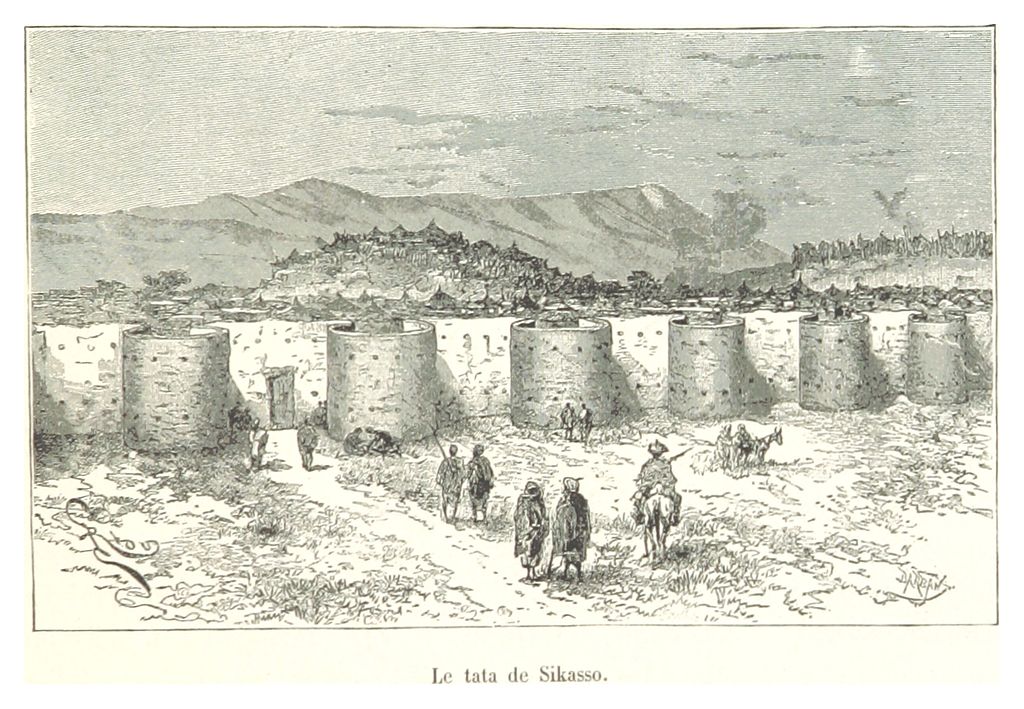
The tata of Sikasso, illustration by Édouard Riou published in Du Niger au golfe de Guinée, Hachette, 1892, by L.G Binger, p. 95
What might have further exacerbated the already tense relationship might have been the finding, about two weeks ago, of a mass grave near an army base which had been occupied by French forces. Although France has denounced these accusations, given the history of France abuses in Mali, and the region, it is hard not to believe. We all remember the French capture of the Tata of Sikasso on May 1, 1898 with Colonel Audéoud‘s troops and the destruction and desecration that followed. Even though it has been over a century, French abuses in Africa are numerous, from the genocide in Cameroon, Algeria, Madagascar, and countless other places.
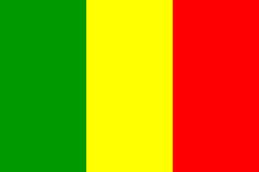
Flag of Mali
The decision to rescind the French defense agreements is an awesome decision, and it is about time! The remaining 14 countries still held under the rule of France via the colonial tax should rise up to say NO!… stand up as one man to say NO MORE!… ENOUGH is ENOUGH! … and stand alongside Mali.
#6. Right for France to pre-deploy troops and intervene military in the country to defend its interests
Under something called “Defense Agreements” attached to the Colonial Pact, France had the legal right to intervene militarily in the African countries, andalso to station troops permanently in bases and military facilities in those countries, run entirely by the French….
France just confirmed that it will withdraw its troops from Mali, 10 years after starting the fight against insurgency in the region. They will most likely go park their troops in neighboring countries like Niger, Burkina Faso, Mauritania? Who knows?… but we know that France has not spoken its last word… it is impossible for them to let go of the gold (after all, they are the world’s 4th producer of gold), uranium, diamonds, bauxite, of Mali just like that. Below are excerpts from an article from RFI.
====
French flag
France and its allies in its anti-jihadist operations in Mali have announced announced they will begin withdrawing troops after nearly a decade fighting a jihadist insurgency in the country.
“The political, operational and legal conditions are no longer met to effectively continue their current military engagement in the fight against terrorism in Mali,” [maybe France and its allies can no longer loot in peace] said a joint statement signed by France and European and African allies, announcing a “coordinated withdrawal” of French, European and Canadian forces. The decision applies to both the Barkhane counter-terrorism force in the Sahel and the 14-member European Takuba force that France had been trying to get off the ground.
France deployed troops against jihadists in Mali in 2013, but the insurgency was never fully put down [because the insurgents were funded by none other than…]. Some 2,400French soldiers are currently in the country as part of the Barkhane and Takuba operations. Relations between France and Mali have deteriorated after the military junta went back on an agreement to organize elections in February, and instead proposed holding on to power until 2025 [Let the Malian people decide their own destiny].
Flag of Mali
France and other countries have also accused Mali of using the services of the Wagner Russian mercenary group, which they say is incompatible with their mission [This is against rule #10 of the colonial tax France is imposing African countries, which state that no African country should have other military partners other than France unless authorized by France – The French Colonial Tax at the Heart of Mali-France Tensions].
… The countries [the allied forces] will continue “joint action against terrorism in the Sahel region, including in Niger and in the Gulf of Guinea” [oh, oh, Africa is in trouble!].
French President Emmanuel Macron said that Niger had agreed to host European forces fighting Islamist militants in the Sahel [does Niger really have a choice?… remember The 11 Components of the French Colonial Tax in Africa? plus the Niger president is a French puppet].
He also said the remaining forces would provide further assistance for countries in the Gulf of Guinea [let’s invent new troubles everywhere so we can loot in peace, and not pay a dime to the local populations]. “These states are increasingly exposed to efforts by terrorist groups to implant themselves in their territory,” Macron told a press conference in Paris Thursday, shortly before traveling to Brussels for a two-day EU-Africa summit.
Le partage de l’Afrique a la Conference de Berlin de 1884
There are a total of 25,000 foreign troops currently deployed in the Sahel region, including the UN peacekeeping mission MINUSMA established in 2013 and an EU military training mission, the EUTM Mali, along with the Barkhane operation and the Takuba forces [Despite all these forces deployed, insurgencies still manage to flourish?… I wonder why? maybe because the insurgent is paid by … the ‘savior’?]. …
ColonelAssimi Goïta,the president of Mali, recently addressed his people, the Malian people. I was moved by his humility, and depth. We should all aspire to do our part, and support our leaders, and more importantly remember that change starts with each one of us. If we want change, we each have to lend a hand, because it starts with us. We don’t have to wish for martyrs, but start one brick at a time. We are grateful forAssimi Goïtawho is trying to bring back dignity to the Malian people, and pray that he can reach his goal, this goal which is ours, and blesses the entire African continent. We pray for him, and countless Malians, and citizens who are standing up. This is a fight for our freedom, our humanity, our dignity… Enjoy! The original is onAfrik-plus.Translated to English by Dr. Y.,Afrolegends.com
=====
Flag of Mali
“I am a mortal, I am not perfect. I am aware of that. History will judge me one day, but in the meantime I just ask for your support. I did not choose this destiny. It imposed itself to me. God knows what He is doing.
I will go all the way but if I die before reaching our ideal, continue the project without me and lay the groundwork for change with my blood and my flesh.
















 If death marries me on the way to this ideal, do not mourn me.
 African Heritage