Mali uses AI to Teach School Children in Bambara

Artificial Intelligence (Source: IBTimes.co.uk)

As AI tools become ubiquitous, many African countries are taking advantage to improve their education, economy, and much more. One such country is Mali where AI tools have been used to teach school children in the local languages. In parenthesis, this is happening while some African countries like Nigeria are moving away from teaching local languages in the curriculum; this is quite sad. Here, we are raising our hats to educators in Mali who are using AI to teach kids how to learn and write in local languages that they already speak at home with friends and family. The Education ministry is using the services of RobotsMali which has produced more than a hundred stories in Bambara, the most widely spoken local language.

Excerpts below are from Africanews. Enjoy!

=====

Flag of Mali
Flag of Mali

Since Mali adopted a new constitution in 2023, the country has 13 official languages. Although French is no longer part of that list, the language of the former coloniser is still present everywhere, including in classrooms.

Malian authorities hope artificial intelligence can change that by helping students learn to read and write in local languages they already speak with friends and family.

To achieve this goal, the Education ministry has called on RobotsMali. This AI company has produced more than a hundred stories in Bambara, the most widely spoken language in the country, for students to read in schools.

It helps me speak better with my friends. All of this is good,” said 13-year-old pupil Clarisse Yasségué Togo. At school, we only speak French.”

AI programmes like ChatGPT and Leonardo are used to write, translate and illustrate the stories.

Since the stories are also illustrated, it teaches [students] to make the connections between words and their meaning very quickly,” said RobotsMali Mamadou Dembele.

The organisation hopes to provide a solution to the lack of books in Malian languages.

Bambara is our language. We should prioritise it,” said 17-year-old student Fatoumata Sacko.

Mali Recovers over a Billion $ for its Miners

Map of Mali 

Imagine being able to recover money from multinationals? Imagine putting the well-being of your people so much at the forefront that you are not afraid of uncovering or exposing corruption or injustice, and of taking on major world multinationals! This is what the Malian government has just done, and as a result has uncovered a billion dollar in arrears! Remember how Pascal Lissouba, the former president of the Republic of Congo, admitted that the Congolese government had no idea how much oil Elf (now Total Energies) was pumping out of its soil, and that they were at the mercy of whatever the company wanted to pay them, which was pennies; when he tried to renegotiate contracts or find better partners, he was deposed by Denis Sassou Nguesso, the Western puppet. Remember Jean Bedel Bokassa of the Central African Republic who admitted that he had no visibility on the amount of diamonds or uranium that French and Swiss companies were extracting from his country. Now, imagine being in your sovereign state, i.e. no Western puppet at your helm, the well-being of your people at the forefront?

AES Logo

Mali (and the other countries of the AES) has been working tirelessly on nationalizing their resources, and renegotiating correctly contracts with multinationals that are extracting their resources. Thus, such an exercise is fruitful in the sense that now, they can audit accounts, and compensate or fight for better compensation for their people better. Today, it was announced that Mali has recovered over a billion dollar in arrears from mining companies! Isn’t this a beautiful Christmas /end of year present? This also makes us pray further for the safety of such governments who place the restoration of their people’s dignity and well-being at the forefront of their efforts. Now, more than ever, they will be the target of the foreign corporations and bandits! Now, more than ever, they need each of us to stand in solidarity with them!

Excerpts below are from Africanews.

=====

Mali has recovered more than a billion dollars in arrears from mining companies after a sweeping audit, its finance minister, Alousséni Sanou, said on Tuesday.

It’s one of the country’s biggest ever clawbacks from its lucrative mining sector.

The military-led government launched an audit of the sector in early 2023 and uncovered massive shortfalls for the state. That paved the way for a new mining code that raises royalties, boosts the state’s ownership in mining companies and scraps stability clauses.

A recovery commission was set up after an audit flagged financial irregularities and shortfalls for the state estimated at between half a billion and a billion dollars.

The Importance of the Timbuktu’s Manuscripts and their Return

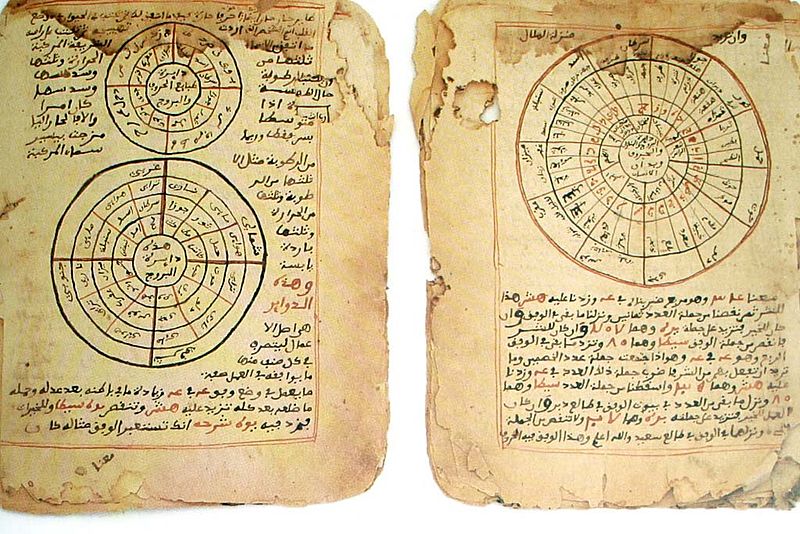
Manuscripts a Tombouctou (Mali) montrant de l'astronomie et mathematique
Manuscripts a Tombouctou (Mali) montrant de l’astronomie et mathematique

The Timbuktu’s Manuscripts are Returning Home to their rightful owners, after over 10 years away. It is so beautiful that the families who own these multi-centennial parts of African history get to have them back as it is not only part of their heritage, but ours also, and we are thankful for them to have protected throughout the centuries.

At the Ahmed Baba Institute in Bamako, people have been actively working on digitalizing all the manuscripts for humanity’s sake. These challenge the eurocentric views that “Africans have not entered enough in history” as the former French president Sarkozy said, even though many scholars from around the world used to travel to Timbuktu to find the best teachers. Through these manuscripts, we discover brilliant scholars, doctors, lawmakers, astronomers, mathematicians, geologists, and much more. After all, Timbuktu, was one of the world’s first and oldest university.

Excerpts below are from Africanews, and check out the Google Arts & Culture (Timbuktu Manuscripts now Available OnlineThe Lost Libraries of Timbuktu).

=====

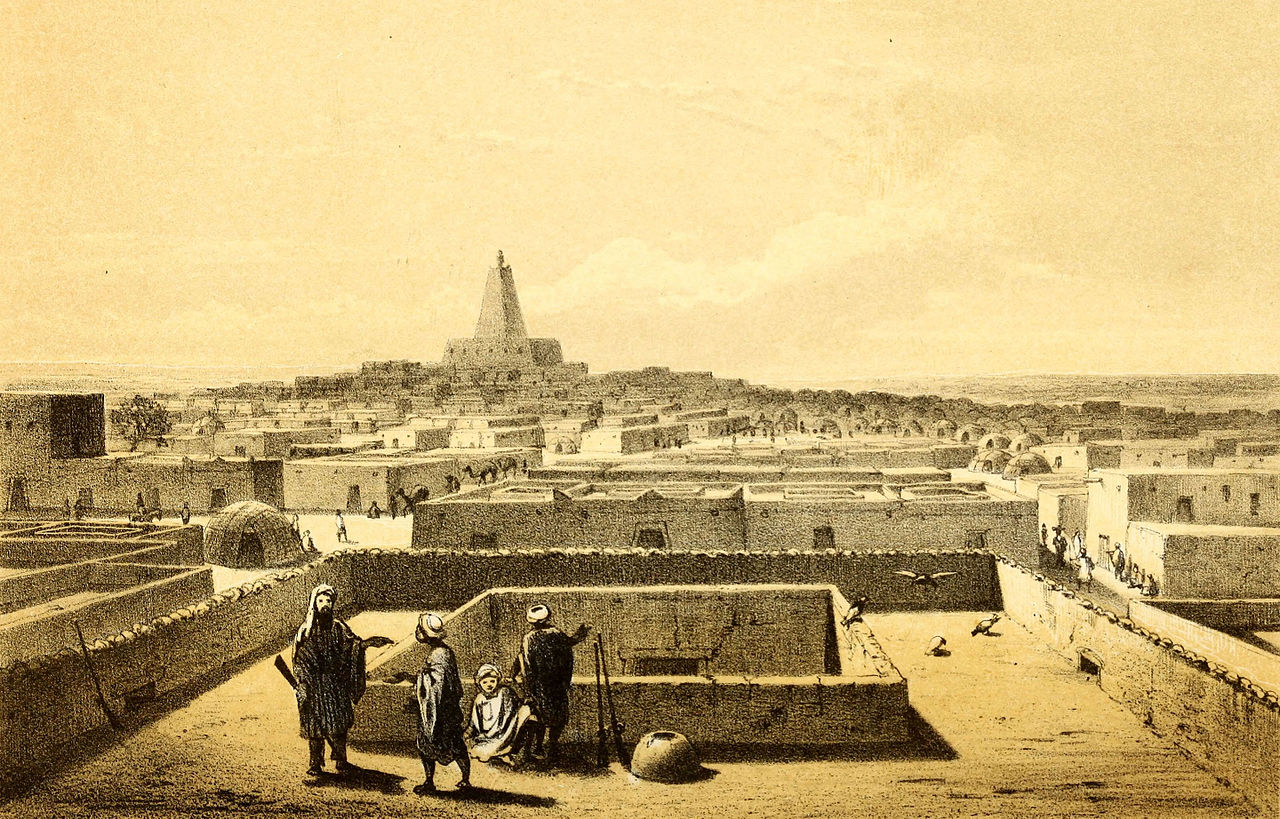
Timbuktu from a terrace by Heinrich Barth 1858

Among the manuscripts are medical texts, legal rulings, letters, astronomical notes and chronicles of West African empires.

In some pages, scholars debate whether smoking tobacco was moral or forbidden.

In others, officials urge reducing dowries so poorer men could marry.

Marginal notes record earthquakes and local events long forgotten elsewhere.

Sane Chirfi Alpha is the founding member of SAVAMA DCI, which is a local nonprofit organisation dedicated to the safeguarding, preservation, and promotion of the ancient Timbuktu manuscripts. He says the collection reveals a depth of scholarship that challenges assumptions about the region’s past.

According to old documents, there were doctors here in Timbuktu who performed surgery to treat cataracts. The same manuscript also says that a doctor from Timbuktu saved the French throne. The crown prince was sick, and French doctors could not cure him. It was the doctor from Timbuktu who cured him.”

…  One important tradition still documented in many manuscripts is the chain of teaching, where scholars recorded who taught whom through generations.

Dr Mohamed Diagayaté, general director of the Ahmed Baba Institute says: “When a student finishes studying with a scholar, that scholar gives him a certificate saying he has taught him a subject, which the student has mastered. The certificate also says that the student learned it from a certain scholar, and that this scholar learned it from another scholar, going right back to the person who wrote the original document.

Timbuktu’s Manuscripts are Returning Home

Map of Mali with its capital Bamako

Last week, the Malian government started returning the famous Timbuktu’s manuscripts home to Timbuktu after over 10 years away. As you remember, we prayed for the manuscripts to be kept safe, as Timbuktu was under Attacks by ‘Muslim fundamentalists’Timbuktu Manuscripts now Available Online. You know the AES is working hard, when it is safe for the Timbuktu manuscripts to return home after over 10 years away! This is a testimony to the hard work of the Malian troops, its people, and its government. The Malian people have shown that an African country can protect itself, recover its territory, and free its own people. Yes… there has been strong collaborations with Russia, and their neighboring brothers of Burkina Faso and Niger, and the formation of the Alliance of the Etats du Sahel (AES). Mali did what France and all its allies could not do with their multiple operations, operation Barkhane, Operation Serval, Task Force Takuba, etc, … wait they were not really there to free the country from terrorism, but rather to finance/protect terrorism, divide the country, so as to be free to do their business. We are proud of Mali, and pray that these manuscripts remain safe as they have been for centuries, in the hands of their very own people.

Excerpts below are from Africanews.

=====

Manuscripts a Tombouctou (Mali) montrant de l'astronomie et mathematique
Manuscripts a Tombouctou (Mali) montrant de l’astronomie et mathematique

The Malian military government on Monday started returning home the historic manuscripts of Timbuktu, which were spirited out of their fabled northern city when it was occupied by al-Qaida-linked militants more than a decade ago.

Islamic radicals destroyed more than 4,000 manuscripts, some dating back to the 13th century, after they seized Timbuktu in 2012, according to the findings of a United Nations expert mission. They also destroyed nine mausoleums and a mosque’s door — all but one of the buildings on the UNESCO World Heritage list.

The majority of the documents dating back to the 13th century — more than 27,000 — were saved by the devotion of the Timbuktu library’s Malian custodians, who carried them out of the occupied city in rice sacks, on donkey carts, by motorcycle, by boat and four-wheel drive vehicles.

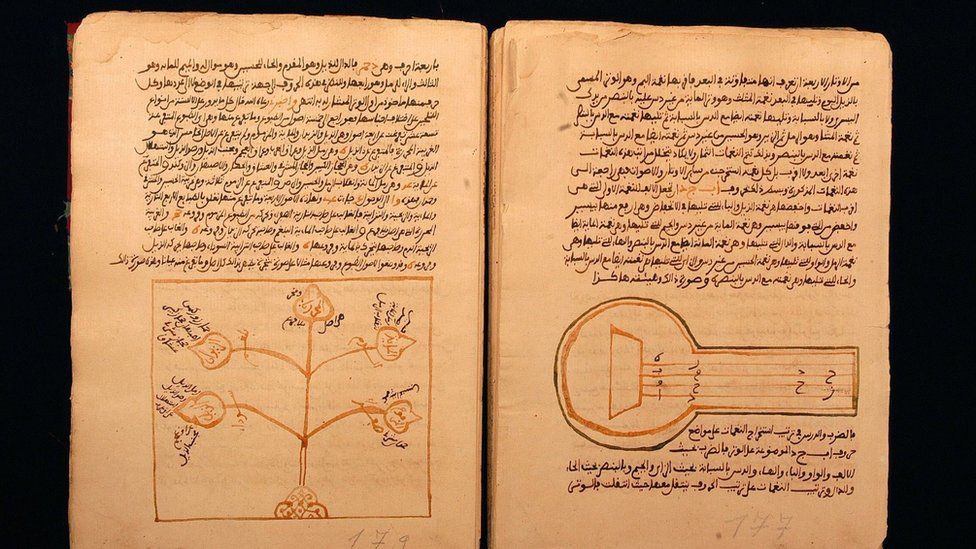
Manuscript of Timbuktu (Google Arts and Culture)

… About 706 kilometers (439 miles) from Bamako, Timbuktu sits on the edge of the Sahara desert and has a dry climate. For years, the local municipal and religious authorities have asked for the return of the manuscripts. Diahara Touré, Timbuktu’s deputy mayor, said the famous documents are important to the local people as they “reflect our civilization and spiritual and intellectual heritage.”

… In February, the military government made a commitment to return the manuscripts, according to Bouréma Kansaye, the Malian Minister of Higher Education. He described them as as a “legacy that bears witness to the intellectual greatness and crossroads of civilization” of the city of Timbuktu — “a bridge between the past and the future.”

We now have a responsibility to protect, digitize, study, and promote these treasures so that they continue to enlighten Mali, Africa, and the world,” Kansaye said during Monday’s return ceremony.

General Assimi Goita Wins Vote of Confidence from His People to stay in Power

General Assimi Goita

We have previously spoken about the Trap of Democracy in Africa, and the double standards of the ‘International Community’ when it comes to the application of this word: a person who serves the West to the detriment of his country is deemed a democrat; however, someone who serves the interests of his people and not the West is deemed a tyrant, a dictator, a junta leader, etc.

Thus, it is no surprise that the mainstream media (MSM) has not applauded the vote of confidence which was recently granted to General Assimi Goïta of Mali by his people last week [Assimi Goïta Speaks to the Malian People: No Sacrifice is too Big for this Country]. Why? Because he does not serve their interests. The MSM has been lauding someone like Oligui Nguema of Gabon who traded his military fatigues to win elections by over 90% (talk about democracy!), because he does not disturb their system; however Goïta is not serving them, and he has even dared to liberate Kidal in the north of the country, where the French army and MINUSMA could not or chose not to [Mali Forces Succeed in Kidal where France and Allies could not!].

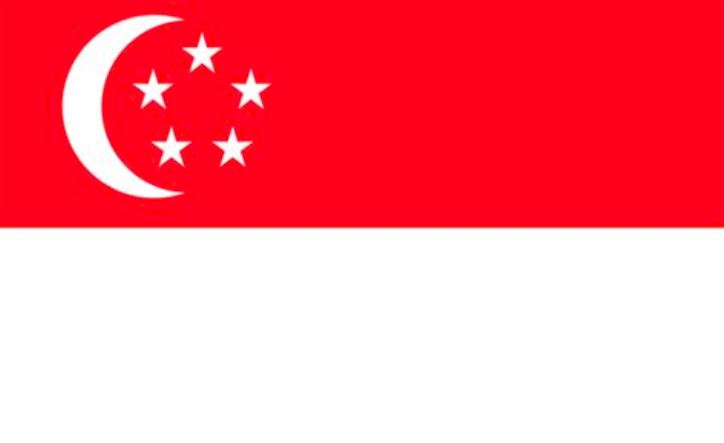
Flag of Singapore

Singapore is known as an example of progress and development in the world. Do you know that Lee Kuan Yew ruled as prime minister for over 30 years, and was in the government in some shape or form for over 50 years? Have you ever heard Singaporeans complain about him, or talk about democracy?

Last week, General Assimi Goita was given 5 years by the people of Mali. Excerpts below are from the very biased article by BBC.

=====

Map of Mali with its capital Bamako

Mali’s military leader Gen Assimi Goïta has won the backing of key political allies to be declared president for the next five years.

The 41-year-old, who has seized power twice, was named transitional president after his last coup in 2021. At the time he promised to hold elections the following year – but has since reneged, in a blow to efforts to restore multi-party rule in the West African state.

A national conference organised by the regime – but boycotted by leading opposition parties – has now recommended naming Gen Goïta president until 2030.

He has not yet commented on the recommendation, but the conference was seen as an attempt to legitimise his bid to remain in power.

Over the weekend, an opposition leader, Mohamed Salia Touré [backed by the West], told the AFP news agency that suppressing the multi-party system would be a “historic error”.

Flag of Mali
Flag of Mali

The conference also recommended suspending anything to do with elections until there was peace in the country [rightfully so… how can there be elections when the country is at war or when the territory is divided? – Gbagbo of Cote d’Ivoire can tell you that, that is a sham], according to a document seen by AFP. The military government has been trying to quell jihadist violence unleashed by groups linked with the Islamic State (IS) and al-Qaeda.

Since taking power, the junta leader has formed an alliance with coup leaders in neighbouring Burkina Faso and Niger, pivoting the region towards Russia after drastically reducing ties with former colonial power France.

Gen Goïta has also withdrawn Mali from the regional grouping Ecowas over its demands to restore democratic rule. Burkina Faso and Niger have also left the grouping.

Mali wins $160m in Gold Mining Dispute

Flag of Mali
Flag of Mali

An Australian mining company, Resolute Mining, has agreed to pay Mali’s government $160 millions to settle a tax dispute. The company was operating in Mali and had significant back taxes it was refusing to pay. As we have seen before, many of these multinationals operate in many African countries, particularly French-speaking ones, without paying any taxes to local governments. This is an ongoing issue in many countries, where the multinationals operate freely, and pay taxes in their home countries, thus giving almost nothing to local governments and as we saw in the case of Niger, paying almost nothing for the resources. The Malian government arrested the British boss of Resolute Mining, Terry Holohan, and his 2 collaborators for 10 days at the end of which Holohan agreed to pay $80 millions immediately, and the remainder over some time. The Western media are in uproar about this, stating that Malians have used blackmail, and unorthodox methods. Quick question: What happens in Western countries, when someone does not pay taxes? Just ask Lauryn Hill or Wesley Snipes or Robert T. Brockman, to name a few … they will tell you that they ended up in jail! So why should it be different in Africa? Why is it okay for these multinationals to operate in our countries with carte blanche? Should they not be held to the same standards?

Excerpts below are from the BBC.

======

Map of Mali with its capital Bamako

An Australian mining company, Resolute Mining, says it will pay Mali’s military government $160m (£126m) to settle a tax dispute, after the company’s British boss and two other staff were unexpectedly detained 10 days ago.

Reports say Terry Holohan and his colleagues were arrested while travelling to the capital city, Bamako, … Resolute, which owns a gold mine in Mali, said on Sunday it would pay $80m immediately from existing cash reserves, and the rest in the coming months.

Mali is one of Africa’s top gold producers. 

Part of the conditions for their release were that they must sign the memorandum of understanding and complete the initial payment, …

Since taking power in a coup in 2021, Mali’s junta has sought to reconfigure its political and trade relationships with international partners.

Last year, President Col Assimi Goïta signed into law a new mining code increasing the maximum stake for state and local investors from 20% to 35%.

Niger, Mali, and Burkina Faso sign New Pact at the First Summit of the AES

Flag of Niger

Mali, Niger, and Burkina Faso’s leaders met on July 6, 2024 in Niamey, Niger, as part of the first summit of the Alliance des Etats du Sahel (AES – Alliance of the Sahel States). During the summit, the three leaders signed a confederation treaty aimed at strengthening the links between the three nations in terms of defence, and other aspects such as the economy, infrastructures, and more. They reinforced their mutual defence pact. This is a pivotal moment whih marks a new era, and we rejoice for Mali, Niger and Burkina Faso, and the whole of Africa.

Below are excerpts from Al-Jazeera.

=====

Flag of Mali
Flag of Mali

The military leaders of Burkina Faso, Mali and Niger have hailed a newly signed treaty as a step “towards greater integration” between the three countries, in the latest showing of their shift away from traditional regional and Western allies.

During a summit in the Nigerien capital of Niamey on Saturday, the three leaders signed a confederation treaty that aims to strengthen a mutual defence pact announced last year, the Alliance of Sahel States (AES).

The signing capped the first joint summit of the leaders – Niger’s General Abdourahmane Tchiani, Burkina Faso’s Captain Ibrahim Traore, and Mali’s Colonel Assimi Goita – since they came to power in successive coups in their bordering West African nations.

… Speaking at the summit on Saturday, Tchiani called the 50-year-old ECOWAS “a threat to our states”.

… “We are going to create an AES of the peoples, instead of an ECOWAS whose directives and instructions are dictated to it by powers that are foreign to Africa,” Tchiani said.

Flag of Burkina Faso

Burkina Faso’s Traore also accused foreign powers of seeking to exploit the countries. The three nations have regularly accused former colonial ruler France of meddling in ECOWAS.

Westerners consider that we belong to them and our wealth also belongs to them. They think that they are the ones who must continue to tell us what is good for our states,” he said.

This era is gone forever. Our resources will remain for us and our population’s.”

… For his part, Mali’s Goita said the strengthened relationship means an “attack on one of us will be an attack on all the other members”.

… The Niamey summit also came a day before the United States is set to complete its withdrawal from a key base in Niger, underscoring how the new military leaders have redrawn security relations that had defined the region in recent years.

… French troops completed their withdrawal from Mali in 2022, and they left Niger and Burkina Faso last year.

Meanwhile, US Air Force Major General Kenneth Ekman said earlier this week that about 1,000 military personnel would complete their withdrawal from Niger’s Air Base 101 by Sunday.

The US is also in the process of leaving a separate, $100m drone base near Agadez in central Niger, which officials have described as essential to gathering intelligence about armed groups in the region.

Africans, let us not Fall in the Trap of Democracy!

We have been reflecting on a word which has been used around the world to destabilize countries: the word “democracy.” This word has been used to impose treacherous regimes and sanctions upon “weaker” countries. By “weaker,” we basically mean those that used to be called “third-world” countries. The “global” world we are getting marched towards does not apply to all; there still needs to be some uniqueness which applies to local issues, needs, cultures, and people.

Libya, the Prey of the West

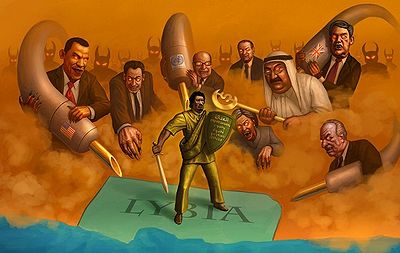
Over a decade ago, we wrote the article “Africans and the Trap of Democracy,” when NATO forces were bombing Libya. Reading it, almost every single word is still relevant today and can be applied to situations in so many countries on the African continent and beyond. Back then, we were shocked that so many Africans were applauding the actions of NATO using the word “democracy” … we hope that they can see what the destabilization of Libya has done to the rest of Africa, and that in reality the word “democracy” is used to fool Africans into hating those who actually work for Africa’s survival and its real independence. Libya under Khadafi was a prosperous country; Singapore, in Asia, under Lee Kuan Yew became one of the most successful economies in the world. There are so many dictatorships in Africa disguised under the name democracies where there are elections every few years and which are praised by the West because they serve their interests in Africa. Let us NOT fall into this trap called “democracy” in Mali, Niger, or Burkina Faso. Instead let us support our brothers of the Alliance of the Sahel (AES), and acknowledge that the continent with the first constitution in the world born in the Empire of Mali, the Kourougan Fouga, cannot learn about ways to govern itself from foreigners. The answer is within!

Enjoy! Africans and the Trap of Democracy

====

With the bombing of the presidential residence in Cote d’Ivoire by French forces for over a week, followed by the arrest of president Laurent Gbagbo, with the current intense bombing of Libya by NATO for the past 6 months, I cannot help but try to answer some of the same justifications used by Africans to approve the bombings by foreign troops on their neighbors’ countries, and ultimately on African soil. Any African who claimed and accepted that Cote d’Ivoire should be bombed by the French, shame on you! Any African who thought that the bombing of Libya was correct… shame on you! Any African who uses the same stupid phrase used by the West to abuse us: “… well Gbagbo had his day, he was in power for 10 years!… or Kadhafi was there 42 years!” Well my friend… Shame on you! Should democracy be imposed using bombs? Should democracy be imposed using warplanes, and Apache helicopters? Is it democracy to bomb the people you plan to help? Is it democracy to deliberately bomb civilian targets, hospitals, state televisions, homes, etc… to, like NATO said “protect civilians”? Was there not a peaceful solution? Was it so hard to re-count the votes in Cote d’Ivoire? Was it so hard to organize elections as Kadhafi asked? Why bomb? Why bomb? Why bomb?…

… I have not seen anywhere that the definition of democracy was “government imposed by external forces, for external forces, to crush the people of a country!” I am tired of this stupid debate the media-lies (CNN, BBC, France24, etc) always bring and which Africans always fall to: “this one is a democrat, and the other one is a dictator.” Please stop bothering people with the same rhetoric, and stop bothering people with your pseudo-democracies where nobody has the right to say anything. Frankly every other year when elections come around, don’t you ever wonder how come with all the bright politicians coming out of top schools, how come we always end up with only 2 (and somehow the worst of all)?

Mali, Burkina Faso, and Niger all leave the ECOWAS

Map of Mali with its capital Bamako

The authorities of Mali, Burkina Faso, and Niger have announced simultaneously on 28 January 2024, their decision “in complete sovereignty on the immediate withdrawal” from the regional economic bloc that is the Economic Community of West African States (ECOWAS). Mali, Burkina Faso, and Niger stated, ECOWAS “under the influence of foreign powers, betraying its founding principles, has become a threat to its member states and its population.” The three countries have accused the regional bloc of failing to support their fight against “terrorism and insecurity,” while imposing “illegal, illegitimate, inhumane, and irresponsible sanctions.” All three countries were founding members of ECOWAS over 50 years ago.

Burkina Faso
Burkina Faso

In reality, this comes as no surprise as it is the normal evolution of the state of things. After the coup in their respective countries, the ECOWAS has suffocated these countries by suspending all three countries and imposing heavy sanctions on Mali and Niger that have only served to exacerbate the populations’ sentiments that it is a puppet organization serving foreign interests. Niger even tried to amend the situations by inviting ECOWAS representatives to the country last week, but only the member from Togo showed up. Why should anybody remain a member of an organization that punishes the populations? Are they trying to pressurize the three landlocked countries? It is sad that we, Africans, have organizations that only work to serve the interests of others. It should not even be allowed for coastal countries to use sea access to landlocked ones as a pressure point! That is totally inhumane!

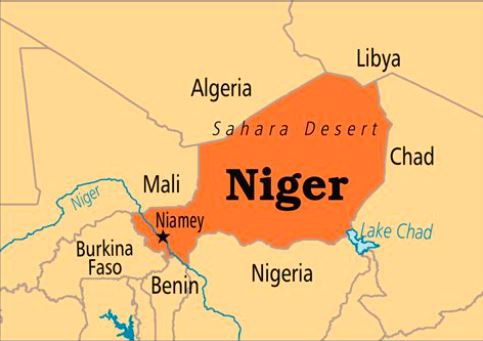
Map of Niger

We all joined these organizations thinking that they would serve common African goals…. unfortunately, under external orders, they instead impose heavy sanctions on sister states. It is about time that we, Africans, unite around the cause of Burkina Faso, Mali, and Niger, to free our continent. Their fight should be our fight, as they are fighting for our freedom, particularly that of Francophone Africa. Since the coup in Niger and rupture with France, Niger’s economy has been doing better even with all the sanctions, than since independence. Does that not tell us something? No wonder, all the European generals have been having meetings in West Africa in recent weeks, and even the American Secretary of State Anthony Blinken was in Cote d’Ivoire just a few days ago, while the populations are focused on the African Cup of Nations. We should not forget that now is the New Scramble for Africa, and Africans should not allow history to repeat itself!

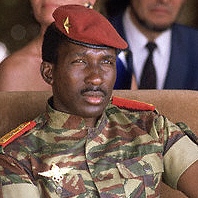
Thomas Sankara
Thomas Sankara a Ouagadougou

And of course, the Western media predict all doom to these countries. Freedom is not cheap, but it is best to be free of one’s destiny than being a slave at the mercy of someone else… Like Thomas Sankara said, “… the slave who is not capable of assuming his rebellion does not deserve that we feel sorry for himself. This slave will respond only to his misfortune if he is deluding himself about the suspect condescension of a master who claims to free him. Only struggle liberates …” [«… l’esclave qui n’est pas capable d’assumer sa révolte ne mérite pas que l’on s’apitoie sur son sort. Cet esclave répondra seul de son malheur s’il se fait des illusions sur la condescendance suspecte d’un maître qui prétend l’affranchir. Seule la lutte libère »] Discours de Sankara à l’ONU le 4 octobre 1984 (texte intégral) 

Mali and Niger end Long-Standing Tax Treaties with France

Map of Mali with its capital Bamako

At the beginning of the month, Mali and Niger jointly put an end to two long-standing tax treaties with France. We know that French companies in Mali or Niger (and in other of the zone Franc countries) do not pay taxes in the African countries, but rather back in France, even though the generated revenues come 100% from the host African country. Imagine the economic losses for these countries? In most of these countries, the French companies will extract, say in the case of mining, the resources, without as much as building a single road or hospital for the local populations. One can thus understand the logic behind Mali and Niger governments’ actions. Some news media (mostly western ones) claim that now Malians or Nigeriens leaving in France will be subject to double taxation… but how many billion-euros generating Malian or Nigerien companies are there in France? The answer is ZERO! There goes that pointless argument about a few (granted there are a few) Malian citizens in France having to pay taxes, while Orano (old Areva) makes billions in Niger without paying taxes to the Niger government! Such an unfair treaty really needed to go!!!

Excerpts below are from BNN.

====

Map of Niger

In a significant shift in fiscal and diplomatic relations, Mali and Niger have taken a stand against France by revoking two long-standing tax cooperation treaties. Dating back to 1972, these agreements were initially crafted to circumvent double taxation, fostering mutual assistance in tax matters.

The decision, outlined in a joint statement from the governments of Mali and Niger, hinged on France’s ‘persistent hostile attitude’ towards both nations and the ‘unbalanced character’ of the agreements. These treaties, according to the statement, have led to substantial financial deficits for both West African countries.

This move signals a potential reconfiguration of the international tax landscape and geopolitical alignments in the region, particularly between these nations and France. The revocation of these treaties also depicts a wider discontent with France’s influence in West African affairs.

Niger’s junta has also scrapped two key military agreements with the European Union aimed at combating violence in Africa’s Sahel region. Moreover, Mali, Burkina Faso, and Niger have withdrawn from the G5 anti-jihadist force, further intensifying the region’s security concerns.