“The Immortals” by Franklin Boukaka

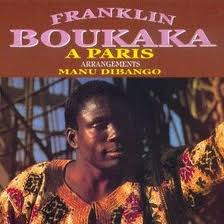
Franklin Boukaka
Franklin Boukaka

Let’s do a trip down memory lane. Several years ago we published a post on the song Les Immortels” / “The Immortals written and composed by the late Congolese singer Franklin Boukaka. The song honored the great Moroccan leader Mehdi Ben Barka, African resistants, and world revolutionaries. For those who do not know or remember Franklin Boukaka, you have probably heard his song “Aye Africa” which has been repeated by so many singers on the continent (one of my favorite renditions is the one by the group Bisso na Bisso). Franklin Boukaka was a freedom fighter, a poet, composer, activist, and fought for the independence of Africa both politically and in all his songs. He was ahead of his time, and a new patriot. So sad that he was murdered during the coup that deposed Ange Diawara during the night of 23-24 February 1972. He was clearly a threat to many.
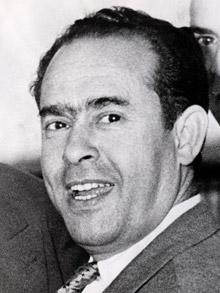
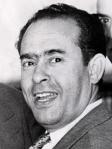
Mehdi Ben Barka
Mehdi Ben Barka

As the title says it all, The Immortals honors our great leaders of the past, those who fought for our liberties, and who have become martyrs. They are now immortal. The song was so popular in those days that it was sung in schools. No wonder Boukaka was murdered for this. Please find below, the English version. Enjoy!

« The Immortals » by Franklin Boukaka

Africa mobimba e ……… The whole of Africa
Tokangi maboko e …….. crossed her arms
Tozali kotala e …….. We observed powerless
Bana basili na kokendeThe loss of her children
Bana basili na kotekama eThe traffic of her children
Na banguna a ……………… near ennemies
Tolati mokuya ata maloba teSilent, we have carried the black veil of mourning
Congo na bana Africa baleliCongo and Africa burst into tears
(2X)
Oh O Mehdi Ben BarkaOh ! Mehdi Ben Barka
Mehdi nzela na yo ya bato nyonsoMehdi, your way is that of all humanity
Mehdi nzela na yo ya LumumbaMehdi, your way is that of Lumumba
Mehdi nzela na yo ya Che GuevaraMehdi, your way is that of Che Guevara
Mehdi nzela na yo ya Malcolm XMehdi, your way is that of Malcolm X
Mehdi nzela na yo ya Um NyobéMehdi, your way is that of Um Nyobé
Mehdi nzela na yo ya Felix MoumiéMehdi, your way is that of Felix Moumié
Mehdi nzela na yo ya Nguyen Van ChoiMehdi, your way is that of Nguyen Van Choi
Mehdi nzela na yo ya TsorokiMehdi, your way is that of Tsoroki
Mehdi nzela na yo ya Camilo CienFuegosMehdi, your way is that of Camilo CienFuegos
Mehdi nzela na yo ya Hoji Ya HendaMehdi, your way is that of Hoji Ya Henda
Mehdi nzela na yo ya Camilo TorresMehdi, your way is that of Camilo Torres
Mehdi nzela na yo ya Abdel KaderMehdi, your way is that of Abdel Kader
Mehdi nzela na yo ya CoulibalyMehdi, your way is that of Coulibaly
Mehdi nzela na yo ya André MatsouaMehdi, your way is that of André Matsoua
Mehdi nzela na yo ya Simon KibanguMehdi, your way is that of Simon Kibangu
Mehdi nzela na yo ya Albert LuthuliMehdi, your way is that of Albert Luthuli
Mehdi nzela na yo ya BogandaMehdi, your way is that of Boganda
Oh ya Tiers-mondeOh ! Third world
Oh ya libération ya ba peupleOh ! that of the liberation of the people

Words: An old man, whom I consider always young, said to me one day : « My son, all men
should die one day ; but not all deaths have the same meaning »

Mehdi Ben Barka (XXX)

Mehdi Ben Barka: Moroccan Light, African Leader, and World Revolutionary

Mehdi Ben Barka
Mehdi Ben Barka

After “Les Immortels” by Franklin Boukaka, it is only normal that I would talk about Mehdi Ben Barka himself, and why he brought so much hope to people in Morocco, Africa, and the entire world.  Yes, his work encompassed all the oppressed people of the globe.

Mehdi Ben Barka was a Moroccan politician born in January of 1920 in Rabat, Morocco.  Although from a middle class background, Ben Barka was among the first to attend the French school (which was mostly for rich people), as he was always the best and brightest in his class.  He was the first Moroccan to receive a degree in mathematics in an official French school in 1950.  He then taught mathematics in a local Lycée (high school), and at the Royal College, where young Hassan II was one of his students.  Working in parallel, Mehdi got involved in politics, and worked to challenge the French “Protectorate” on Morocco.  In 1943, he got involved in the creation of the National Istiqlal Party.  In 1955, Mehdi took part in negociations which culminated with the return of Sultan Mohammed V, who had been exiled by the French authorities to Madagascar.  In 1956, Ben Barka’s other negociations culminated with the end of the French protectorate on Morocco.  From 1956 to 1959, Mehdi Ben Barka was president of the consultative assembly of Morocco.  In 1959, Mehdi broke off from the National Istiqlal Party after clashes with conservative opponents, and found l’Union Nationale des Forces Populaires – National Union of Popular Forces (UNPF).

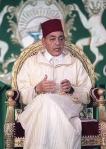
King Hassan II
King Hassan II

The future King Hassan II, then chief of the army, wanting to inherit his father’s trone as soon as possible, called for repression against subversion, against any opposition in the land.  This forced Ben Barka to go on exile in Paris, as Ben Barka was King Hassan II’s principal opponent.  After King Mohammed V’s death in 1961, Hassan II ascended to the throne, and claimed to want to make peace with his main opponent.  Ben Barka returned from exile in May 1962.  On 16 November 1962, Mehdi escaped an attack on his life (car accident, where his car was forced into a ravine by a police car), which had been fomented by the services of General Mohamed Oufkir and colonel Ahmed Dlimi.  In June of 1963, Ben Barka was accused of plotting against the monarchy, and once again forced into exile; this was plot by King Hassan II, to dissolve the UNFP, the main opposition to his reign.  On 22 November 1963, Ben Barka is sentenced to death in absentia, for conspiracy and attempt to assassinate the king.  Some think that this was also caused by Ben Barka’s calling upon Moroccan soldiers to refuse to fight Algeria in the 1963 Sand War.  Ben Barka first went on exile in Algiers, Algeria, where he met with Che Guevara, Amilcar Cabral, and Malcolm X.  Then he went to Cairo, Rome, Geneva (where he escaped several attacks on his life), and Havana, trying to unite the revolutionary movements of the Third World for the Tricontinental Conference to be held in January 1966 in Havana.  As the leader of the Tricontinental, Ben Barka was seen as a major figure in the Third World movement, and supported revolutionary, and anti-colonial actions in various states, thus provoking the anger of the United States and France.  Just before his death, he was preparing the first Tricontinental Conference scheduled to take place in Havana, Cuba, from 3 -13 January 1966.

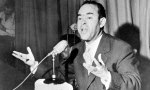
Mehdi Ben Barka during an address

On October 29, 1965, Mehdi Ben Barka was abducted (“disappeared”)  in Paris by French police officers.  He was never to be seen again.  On Dec. 29, 1975, Time magazine published an article called “The Murder of Mehdi Ben Barka”, stating that three Moroccan agents were responsible for the death of Ben Barka, one of them former Interior Minister Mohammed Oufkir.  Speculation persists as to CIA involvement.  French intelligence agents and the Israeli Mossad were also involved, according to the article.  Many believe that the abduction and removal of Mehdi Ben Barka on that cold day of October 29, 1965, was to give a blow to the impetus of the Tricontinental Conference,which was going to have effects on liberation movements across the globe, and thus hurt imperialist powers (US, France, UK, Portugal, Spain…).

Indeed Mehdi Ben Barka was a true hero, some refer to him as the Moroccan Che Guevara…  To many, he was hope itself… His charisma, and his work went beyond Morocco’s borders and blessed the entire globe, countries which were oppressed by imperialist powers and which over 50 years later are still suffering from neo-colonialism, and ferocious capitalism/imperialism.  You can read more on how the French government is still stalling on the “Ben Barka affair” at the Guardian, and check out this interview of Bachir Ben Barka, Mehdi’s son, who was aged 15 at the time of his father’s abduction.  Watch this really good documentary below which details the life of Mehdi Ben Barka.  50 years after his disappearance, the “Ben Barka affair” still remains an open dossier.  One can only sing, like Franklin Boukaka, ‘Mehdi nzela na yo na bato nyonso’ … Mehdi your work is that of humanity! So long brother, your work and vision will keep guiding us. ‘Oh O Mehdi Ben Barka, Mehdi nzela na yo na bato nyonso.’