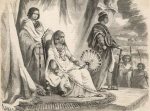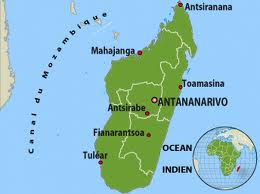
Why the name: Antananarivo?

Madagascar
Madagascar

Ever wondered about the meaning of the name Antananarivo, the capital of Madagascar? Like: why does the ‘na‘ repeat itself twice (nana)? or whether this ‘nana‘ could mean mother or father or grandmother or grandfather as in many African languages, or ‘girl‘ in French? or could the ‘rivo‘ have something to do with river? or have you simply wondered why such a long name for a capital city?
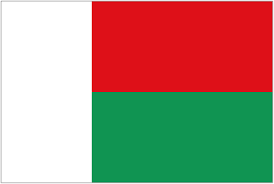
Flag of Madagascar
Flag of Madagascar

Well, I have often wondered about Antananarivo because of the way its name falls from my mouth as if I was in a hurry, and then being rushed to say it quickly so as not to stumble. I have also wondered about its name, because it reminds me of the beauty of its country, Madagascar, the big island. Moreover, numerous neighborhoods in Cameroon have been renamed after the country because of its beauty and also I imagine, by respect for its people’s struggle for independence which was similar for the people of Cameroon.
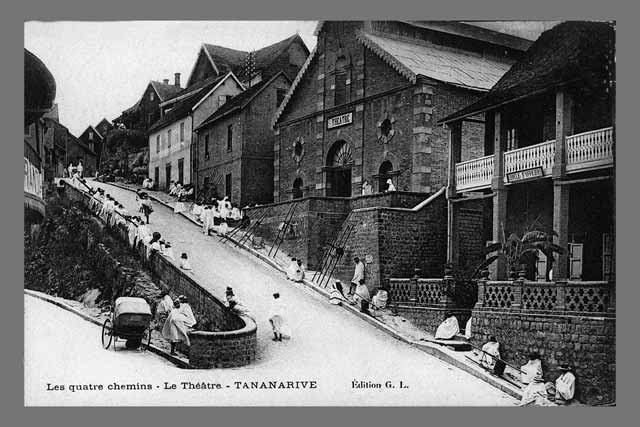
Antananarivo in 1905

The name Antananarivo means “the City of Thousand” with an meaning ‘to‘ or ‘at‘, tanan meaning ‘city‘, and (a)rivo meaning ‘thousand‘. Some think the ‘thousand’ is in reference to ‘thousand hills‘ or ‘thousand soldiers‘ in reference to the important royal Merina guard. In reality, Antananarivo was the site of a town called Analamanga, meaning ‘Blue Forest‘ in Malagasy. Analamanga was founded by the Vazimba people, the island’s first occupants. When King Andrianjaka of the Merina people moved into the area between 1610 and 1625, he deployed a garrison of 1,000 soldiers to successfully capture the city and guard the site. Declaring it his capital, Andrianjaka built a rova (fortified royal dwelling) that expanded to become the royal palaces of the Kingdom of Imerina. The site maintained its name Analamanga until it was renamed almost fifty years later by King Andriamasinavalona as Antananarivo, “City of the Thousand“, in honor of King Andrianjaka’s soldiers. People of Madagascar affectionately call it “Tana“, the city, and its named was frenchified during colonial time into Tananarive.
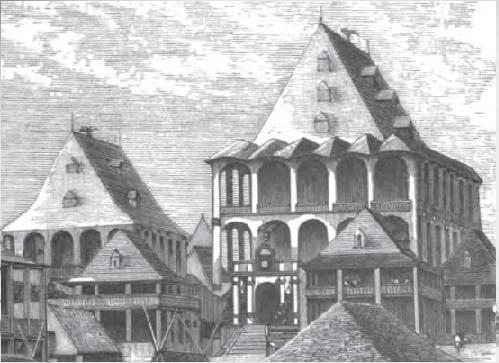
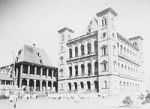
Manjakamiadana, the Royal compound built for Queen Ranavalona I

The city was first built as a fortress by the Merina Kings at the beginning of the 17th century, who made it the capital of the united Kingdom of Imerina in 1794. The community grew rapidly under the Merina Kings, and particularly under King Radama I whose control ultimately extended over a major part of the island, leading him to be considered the King of Madagascar by European diplomats, with Antananarivo as the island’s capital. Antananarivo remained the island’s capital after Madagascar was colonized by the French in 1897 , after the French military invaded Antananarivo on September 1894 causing major casualties amongst the Malagasy people, and causing queen Ranavalona III to surrender. Claiming the island as a colony, the French administration retained Antananarivo as its capital and transcribed its name as Tananarive. Antananarivo remained the capital of Madagascar after independence in 1960.
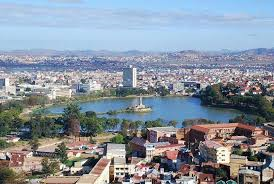
Antananarivo (Wikipedia)
Antananarivo today (Wikipedia)

Today, Antananarivo is a vibrant city full of life, culture, and immense history. The city’s skyline is dominated by the rova of Antananarivo, which was destroyed in a 1995 fire but is under reconstruction. The nearby Andafiavaratra Palace was the home of 19th century Prime Minister Rainilaiarivony and currently contains a museum featuring historic artifacts of the Kingdom of Imerina. Downhill from the palaces is Andohalo square, where Merina kings and queens delivered speeches to the public.  Tsimbazaza Zoo displays many of the island’s unique animal species and a complete skeleton of the now-extinct elephant bird. Other historic buildings include the Ambatondrafandrana tribunal where Ranavalona I dispensed judgement, the second residence of Rainilaiarivony with its indigenous medicinal plant garden, the recently renovated Soarano railroad station, four late 19th century memorial churches built to commemorate early Malagasy Christian martyrs, the tomb of Prime Minister Rainiharo, and the early 20th century pavilions of the Analakely market. Enjoy the video below, and if you are ever in Madagascar, please do visit the beautiful Tana, the capital of the great Merina Kings, named to celebrate a thousand courageous soldiers and the beautiful hills of the central highlands.


Queen Ranavalona I: Defending Madagascar against European Invasion

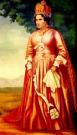
Queen Ranavalona I
Queen Ranavalona I

Today I will be talking about a great queen of Madagascar, Queen Ranavalona I who fought against French and British expansionism in Madagascar, and strongly believed in autarky (self-sufficiency).

Born by the name of Mavo (or Ramavo) around 1788, Ranavalona I will later be named Rabodonandrianampoinimerina (which means the smart grand-daughter of Andrianampoinimerina) in reverence to her uncle, the King Andrianampoinimerina.  She became Queen of Madagascar after the death of her husband Radama I and was coronated on 12 August 1829.  She was also designated by the title Ranavalo-Manjaka I (« Reigning Ranavalona »).  She reigned over the Kingdom of Madagascar from 1828 to 1861.

Ranavalona I followed in the footsteps of her predecessors, with the territorial expansion of her kingdom, and led several expeditions to pacify conquered territories such as the meridional Menabe, the Boina, and the north-east regions of the island (Madagascar).  Fervent nationalist, she fought against foreign influence, including that of Christian missionaries.  During her reign, the power of some castes increased, like that of the andriana or the royal family, or that of the military chiefs, the hova.

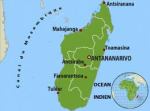
Madagascar
Madagascar

Ranavalona’s 33-year reign was distinguished by an ongoing struggle to preserve the political and cultural sovereignty of Madagascar in the face of increasing European influence and competing French and English bids for domination over the island.  In the beginning of her reign, Ranavalona I tried to continue the work of modernization started by her predecessor.  Very soon, she faced the hostility of the French, who in 1829, attacked different points on the oriental coast of the island.  This unexpected aggression sharpened the queen’s distrust of European ambitions; especially since the British missionaries installed at the heart of the island since 1820 were converting many.  Fearing the loss of the independence of her country, she denounced the anglo-malagasy treaty of 1820, and asked the British to give up on the religious extension in her country, and to focus only on the educational works she wanted for her people.  However, the British refused, and in 1835, she had them expelled from the island.  To counter-balance the European influence on the island, the monarchy created contacts between the ports of Majunga, and Zanzibar.

Manjakamiadana, the Royal compound built for Queen Ranavalona I
Manjakamiadana,encased in stone under the orders of Ranavalona II

Ranavalona I then hired the services of Jean Laborde who accomplished quite a lot of modern upgrades, the most important of these will be providing Madagascar with a metallurgic and chemical industry.  He also built the queen a new residence known as the Manjakamiadana, which became the largest structure on the Rova grounds, the royal compound in Antananarivo.  The residence was made entirely from wood and bore features of a traditional andriana home, including a central pillar (andry) to support the roof.  The palace would eventually be encased in stone in 1867 by James Cameron of the London Missionary Society during the reign of Ranavalona II. The original wooden palace of Ranavalona I and virtually all other structures of the historic Rova compound were destroyed in a 1995 fire, leaving only the stone shell to mark where her palace had once stood.  Renovation is on the way.

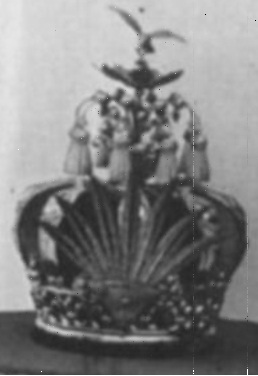
Royal Crown of Madagascar as worn by King Radama II, Ranavalona I's successor (ca 1862)
Royal Crown of Madagascar as worn by King Radama II, Ranavalona I’s successor (ca 1862)

Ranavalona pursued a policy of autarky (self-sufficiency) and isolationism, diminishing economic and political ties with European powers, repelling a French attack on the coastal town of Foulpointe, and taking vigorous measures to eradicate the small but growing Malagasy Christian movement initiated under Radama I by members of the London Missionary Society.  She made heavy use of the traditional practice of fanompoana (forced labor in lieu of tax payments in money or goods) to complete public works projects and build a standing army of between 20,000 and 30,000 Merina soldiers, whom she deployed to pacify outlying regions of the island and further expand her realm.

Subsequently, to try to eradicate Christianity among her subjects, as she believed (and rightfully so) that this was a means of infiltration of the colonial ambitions of Europeans on the island, she had converts (considered as traitors) run off.  As she declared in 1849: « Miala amiko ka mba ialako, mahafoy ahy ka mba foiko ! » (« they [christians] have denied me [ as a living symbol of their homeland], therefore I deny them as well; they have rejected me, I reject them! »).

Ranavalona I on the throne

She said in a letter addressed to the Europeans: “To all Europeans, British and French, in recognition for the good you have done to my country by teaching European wisdom and knowledge, I would like to express my thanks.  … You can keep following your customs. Have no fear for I have no intention of modifying your habits.  But if I see some of my subjects trying to change the rules established by the twelve great kings, my ancestors, I will not possibly consent: because I will not allow men to come and change anything to all the ideas I have received from my ancestors, which I had accepted without shame or fear.  You are free to teach my people science and wisdom, but when it comes to touching our ancestors’ customs, it is a vain work, which I will fully oppose….”

Ranavalona I continued the works of Andrianampoinimerina and Radama I.  In her country, she is seen as a great sovereign, true symbol of patriotic and national pride.  However for Europeans, she has been described as a tyrant… but like her so many great African kings and queens defending their country against foreign invasion/colonization have been portrayed as cruel, and ignorant.  Faced with the contempt of Christian converts, she proudly stated: ”ny fomban-drazako tsy mba mahamenatra ahy na mampatahotra ahy!” (“I do not feel any shame or fear about my ancestors’ customs”).  Enjoy this great video, and honor one of Africa’s earlier nationalist and independentist: Queen Ranavalona I.