Speech from Andrianampoinimerina, the First King of the Unified Merina Kingdom

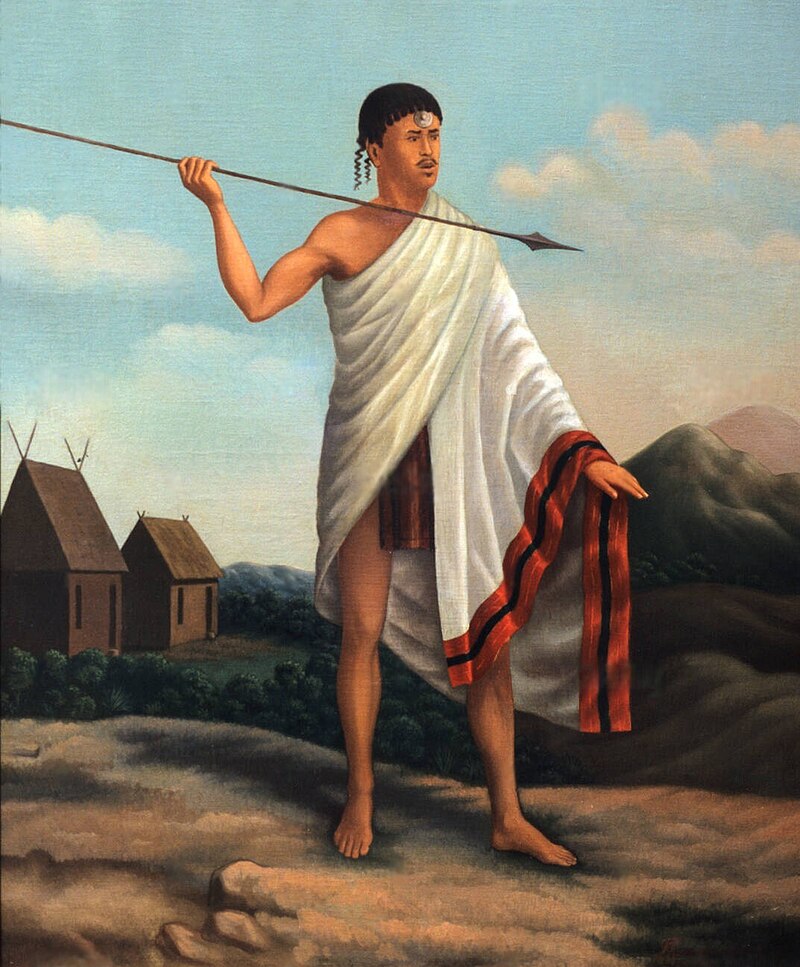
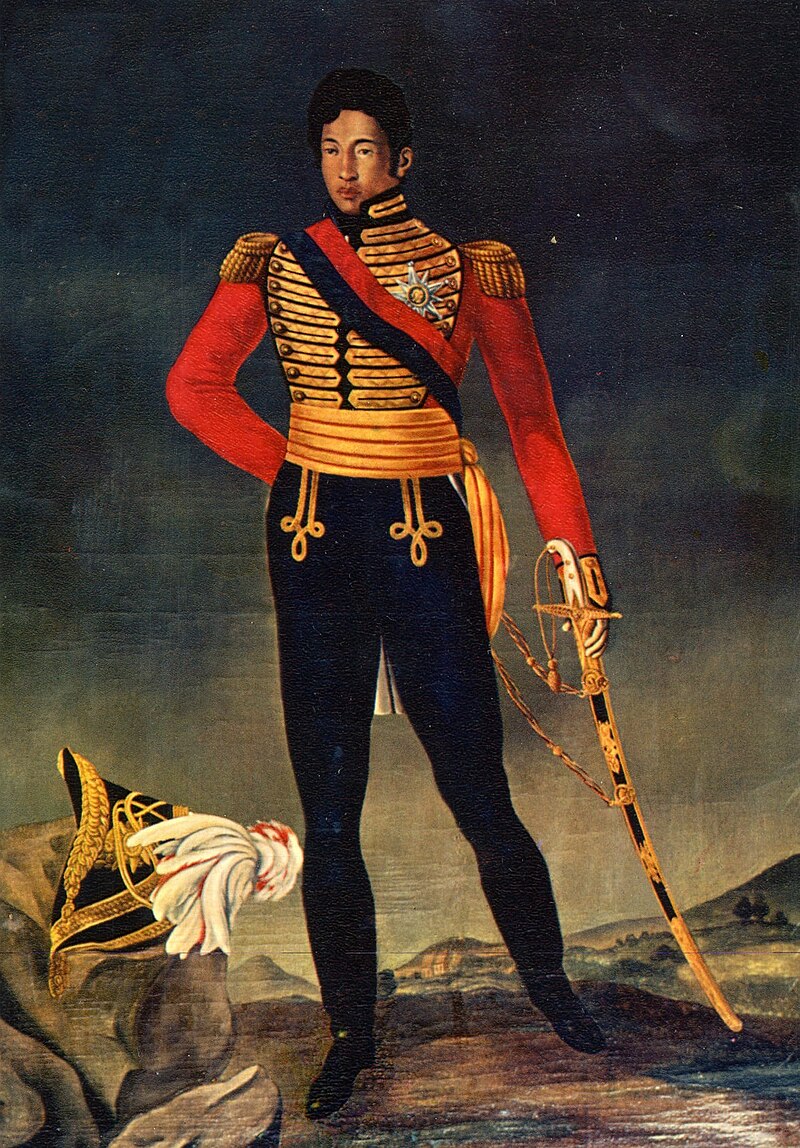
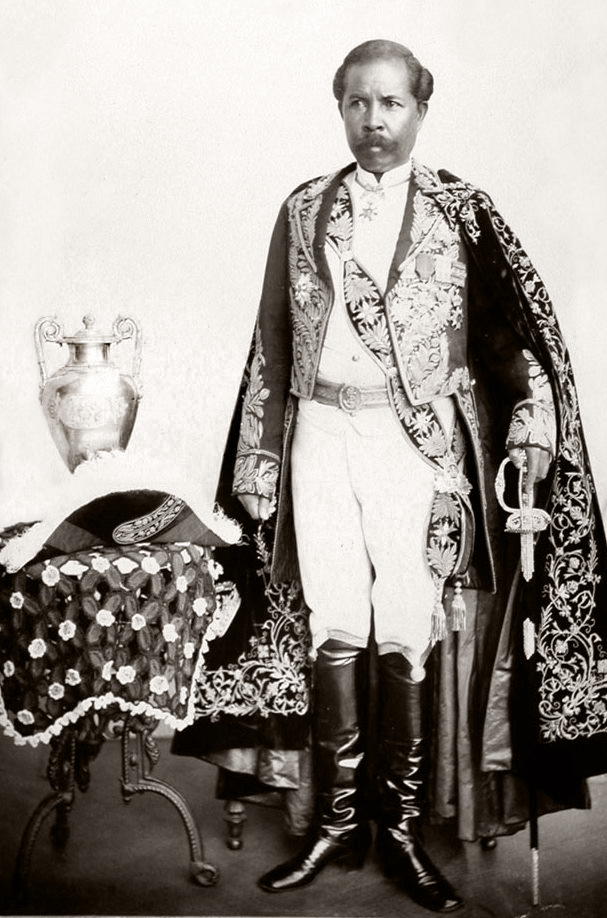
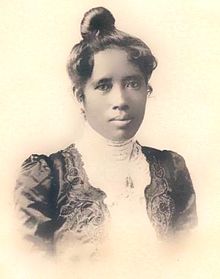
Andrianampoinimerina, portrait painted around 1905 by Ramanankirahina

As we learned, Andrianampoinimerina is known as the first Ruler of the Kingdom of Imerina in Madagascar, the one who unified the Merina people of Central Madagascar. His reign was marked by the reunification of the Imerina after 77 years of civil war, and he also led the subsequent expansion of his kingdom to nearby territories, thereby initiating the unification of Madagascar under Merina rule. His legacy was followed by his son Radama I who successfully continued it, unifying 2/3 of the great island under his rule.

Tantara ny Andriana

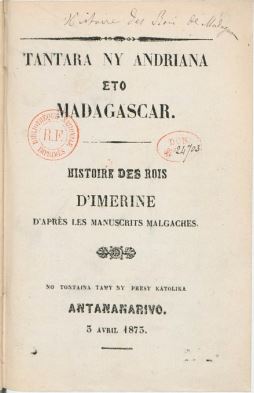
Below is an excerpt of Andrianampoinimerina’s speech, taken from the Tantára ny Andriána, edition 1968. It is an immense collection of the oral traditions of Madagascar collected by R.P. Callet, a Jesuit priest from 1868 to 1881. The book is in Malagasy. A French translation was published in 4 volumes by the Malagasy Academy from 1935 to 1958. The numbers at the head of each excerpt indicate the page numbers of the original. 

=====

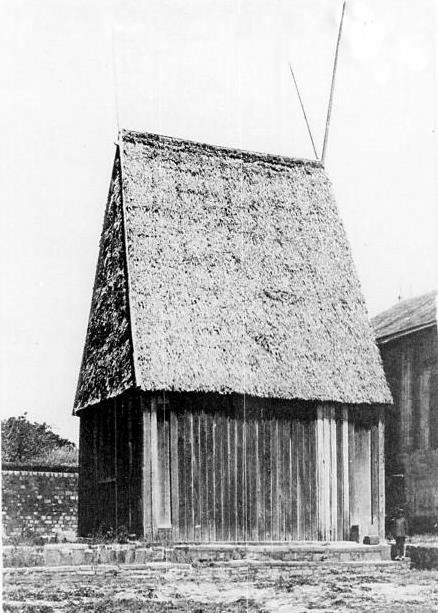
One of King Andrianampoinimerina’s residences within the Rova of Antananarivo, Madagascar

Excerpts from Andrianampoinimerina’s Speech

708.« I see the different castes: all belong to me and all have my affection, he said, and I will unite you; I will make of Imerina a guinea fowl of a single color.»

728.« This is what I will tell you, O Merina: the country and the kingdom are mine; I will share the land with you… to allow you to live… I will give a rice field to each man; I will see to it that all the Ambaniandros1 have the same belly. »

731.« Here is the forest: I make it the great undivided heritage, the means of subsistence for orphans, for single women, for all the unfortunate… whoever goes there, do not prevent them: all will be able to take and act as they please. »

757.« The men guilty of these crimes, even if they were great figures, even if they were caste leaders, even if they were my relatives…, I will put them to death; I will reduce their women and children to slavery and I will confiscate their property… The Merina, my subjects, are like a lámba without inside or back, like the circular and uniform edges of a pot. »

Radama I (c. 1810 – 1828)

802.« There is no other enemy to my kingdom than famine, because one cannot, when hungry, think of the State: the great, then, seek to devour the small, and the small to steal… If there are people who do not work, I invite you, oh my subjects, to cultivate their lands… you will take the harvests, but will give them back their land when they are determined to work it. »

1054.(Excerpt from his recommendations before his death) « O my friends, let Radama be for you a young gosling to whom you will bring what you have conquered… Do not present him with unfaithful reports, do not deceive him. For the King has no parents; he has no brothers; those who obey his instructions and who trust in his laws are his parents… »

1056.«  … and I declare to you too, O Radama, that Imerina is now unified and that the sea will be the limit of your rice field. »

1 « People in the daylight », synonym of Merina

Ceremony for the Return of King Toera’s Skull

Flag of Madagascar

Today, September 2, 2025, the three Sakalava skulls with one believed to be that of King Toera, were welcomed in the capital Antananarivo (France Returns the Skull of Beheaded King of the Sakalava People of Madagascar). They were draped in the Malagasy flag, welcomed by several members of the Sakalava royal family including Prince Georges Harea Kamamy great-grandson of King Toera, great delegations of Sakalava elders in traditional robes, as well as the Madagascar President. The remains were then transported to Antananarivo’s Mausoleum, Mausoleum of Avaratr’Ambohitsaina, then onward to Belo Tsiribihina near King Toera’s homeland. The Malagasy President said, “Dans ce lieu historique, nous célébrons les martyrs de la patrie qui ont combattu le colonialisme. Nous renforçons dans le coeur des descendants la mémoire de ceux qui ont lutté pour la patrie. Ils ne mourront jamais dans nos coeurs.” (In this historic place, we celebrate the martyrs of the homeland who fought against colonialism. We strengthen in the hearts of our descendants the memory of those who fought for the homeland. They will never die in our hearts.).

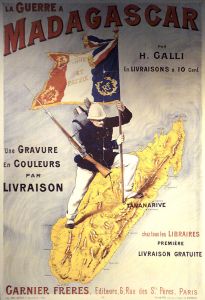
Gravure of France implanting a protectorate in Madagascar 1897

The remains will now begin a 4-day journey of tributes before being returned to their descendants, on their way to their final resting place in the royal village of Ambiky in the Menabe region. As Prince Kamamy said, once the skulls are returned to them, they will conduct their own rites.

One caveat, which we had previously eluded to, is, no genetic testing has conclusively established the identity of any of these skulls to be that of King Toera! The joint scientific committee, France-Madagascar, could only confirm that the three skulls came from the Sakalava people. Could they even confirm which Sakalava group, North or South? Does it matter? However, the customary rites conducted by a traditional Sakalava intermediary affirmed that one skull belonged to the monarch. Then the French Culture Minister Rachida Dati, said, “scientifically, it is permissible to assume that one of these skulls is his, without absolute certainty.”

Thus, the question remains, why now? Remember, that the first formal request for the return started by Toera’s descendants dates back to 2003, and there have been over 20 years of appeals!

France Returns the Skull of Beheaded King of the Sakalava People of Madagascar

Flag of Madagascar

It would seem that no matter what we do, there are certain things that always prove us right. Isn’t it amazing that just over 2 weeks after admitting to the murder of Cameroonians for almost 30 years in one of the most repressive wars of independence on the continent, France, whose presidents dash out acknowledgments without apologies, that same France just returned the skull of King Toera of Madagascar 127 years after it was taken? King Toera was a Sakalava King on the Great Island of Madagascar, who opposed the French occupation and colonization; he paid for that with his life, getting executed by French troops in 1897. Our article would not be complete without asking fundamental questions: why did they take King Toera’s skull? It is no secret that the Malagasy people, like the Bamileke people of Cameroon, and many other groups in Africa, venerate their ancestors – was this a pervert, occult, way of maintaining dominance over them? Why return it now, after 127 years? Is it even the real skull of King Toera? In the era of 3-D printing, and given that these same European museums which have amassed so much money over the years from admissions to see these stolen treasures have repeated under some weird laws or arguments that they cannot return the loot to the victims, what makes us now think that they will part from the skull of the King of the Sakalava people of Madagascar? How would we, Africans, tell if it is even the real deal?  And now they say that it is the French government, from the goodness of its heart (under a 2023 restitution law) which has decided to repatriate the skull, forgetting to tell everyone that the government of Madagascar has been asking for years for repatriation! Oh perverted humanity that displays the remains of human beings for viewership! This reminds us of the story of Sarah Baartman: The Black Venus, where it took South African presidents Nelson Mandela and Thabo Mbeki begging for her remains to finally be returned from that same France! 

Excerpts below are from CNN.

=====

Gravure of France implanting a protectorate in Madagascar 1897

France has returned three skulls to Madagascar more than a century after they were taken, including one believed to be that of a 19th-century Malagasy king who was beheaded by French troops.

The repatriation of the skulls to the island nation off the southeastern coast of Africa marks the first time France has implemented a 2023 law enabling the return of human remains to a country for funeral purposes.

France conquered the kingdoms of the Sakalava people in western Madagascar in the 1890s and integrated the Sakalava into a newly formed French colony. One of the three Sakalava skulls returned to Madagascar, which gained independence from France in 1960, is presumed to be that of King Toera. … He was executed by French troops in 1897. The other two skulls belonged to two generals who fought with the king …

… “I welcome the return of these three skulls, including that of King Toera of the Sakalava people, an origin shared by nearly a third of the Malagasy population,” Fetra Rakotondrasoava, permanent secretary of Madagascar’s Ministry of Culture, who co-chaired the Malagasy-French Committee of Researchers working on the identification of the skulls, told CNN on Wednesday.

Madagascar
Madagascar

This is not only the repatriation of human remains, but the return of a part of our history and memory,” he said, adding: “We will now be able to honor these remains as they should be. This moment carries significance for the Malagasy people and for all nations engaged in the restitution of their heritage.”

Madagascar’s Communication and Culture Minister, Volamiranty Donna Mara, said at the ceremony that the human remains, including that of “our great, indeed very great, King Toera,” are “not mere objects in a collection” but the link, “invisible and indelible, which binds our present to our past.”

Their absence, for more than a century, 128 years, has been an open wound at the heart of the Great Island (Madagascar), and especially for the Sakalava community of Menabe,” she continued.

World Tiniest Reptile found in Madagascar

Madagascar
Madagascar

There has been a discovery of possibly the world’s tiniest reptile in Madagascar, the grande Ile. It is a Seed-sized chameleon, which scientists have tagged the nano-chameleon, named Brookesia nana (who gives these sort of names? – the Brookesia is probably derived from one of the scientist’s name), whose body is only 13.5 mm long. Excerpts below are from the Guardian. Enjoy!

====

Scientists say they have discovered a sunflower-seed-sized subspecies of chameleon that may well be the smallest reptile on Earth.

Two of the miniature lizards, one male and one female, were discovered by a German-Madagascan expedition team in northern Madagascar.

The male Brookesia nana, or nano-chameleon, has a body that is only 13.5 mm (0.53 inches) long, making it the smallest of all the roughly 11,500 known species of reptiles, the Bavarian State Collection of Zoology in Munich said. Its total length from nose to tail is just under 22 mm (0.87 inch).

The female nano-chameleon is significantly larger, with an overall length of 29 mm, the research institute said, adding that the scientists were unable to find further specimens of the new subspecies “despite great effort”.

Queen Ranavalona III’s Belongings Returning Home to Madagascar

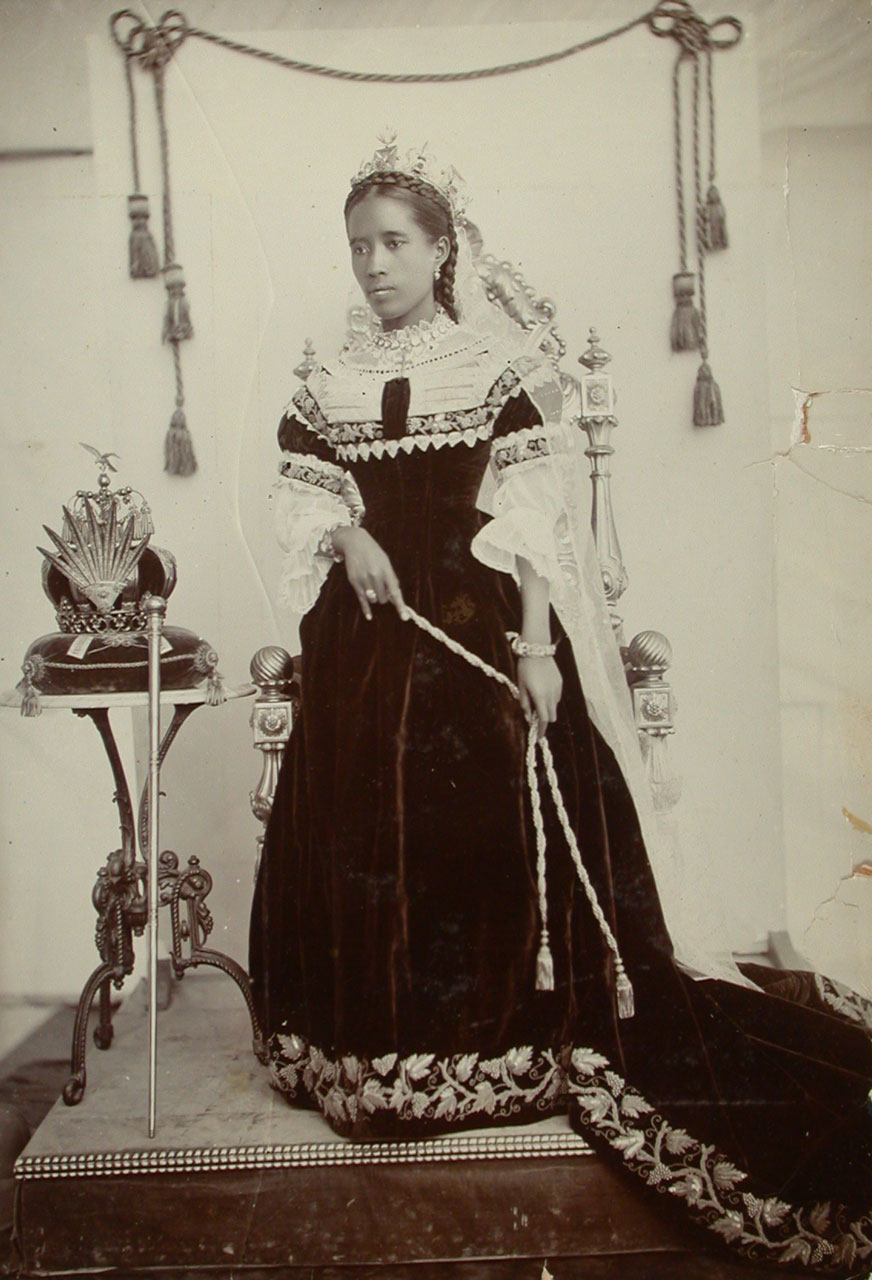
Queen Ranavalona III in full regalia, standing beside a throne table on which are the Royal crown and sceptre, ca 1890 – 1895

Last December, there was an auction in England of Queen Ranavalona III, the Last Monarch of the Kingdom of Madagascar photographs, letters, and fashion belongings. These were collected by Clara Herbert, who worked for the Madagascan royal family from the late 1890s to the 1920s, and were passed down through her family, and ended up in the attic of a house in Surrey. Auctioneer Kerry Taylor pieced together Ranavalona’s story from the box of photographs, postcards, souvenirs, receipts and diaries and sold them on auction. The government of Madagascar was able to purchase a lot of it. I was quite moved because this is part of the history and pride of Madagascar, and I am glad the government of Madagascar worked to have it returned. Enjoy! Excerpts below are from an article from The Guardian.

======

An archive of fashion, photographs and letters telling the remarkable story of the last queen of Madagascar will return home after it was bought at auction by the island’s government.

The jumble of ephemera, along with an ornate 19th-century dress, all relates to the life of Queen Ranavalona III, who was dethroned by the French and exiled to Algiers.

Queen Ranavalona III of Madagascar

… The president of Madagascar, Andry Rajoelina, said: “Madagascar attaches great importance to the acquisition of these royal items as part of the reappropriation of Malagasy national history and cultural heritage. They will be installed in the newly reopened, restored Queen’s palace, where they will be displayed to the general public.

… Taylor [the auctioneer] said she was delighted the archive was heading to Madagascar. … “The queen and princess were separated during their lifetimes from their people and it gives me enormous satisfaction to know that this collection will soon be on its way home where it will be fully appreciated, admired and cared for in perpetuity.”

Queen Ranavalona III, the Last Monarch of the Kingdom of Madagascar

Queen Ranavalona III of Madagascar

Today we will talk about the last queen of the Kingdom of Madagascar, Queen Ranavalona III. She reigned from July 30, 1883 to February 28, 1897. Like many African kings and queens of the late 1800s and early 1900, she was deposed by the European colonizer, in this case the French, and sent into exile first on the island of Reunion, and then later in Algeria (just like the King of Dahomey, Béhanzin) where she died, never to see her native Madagascar again.

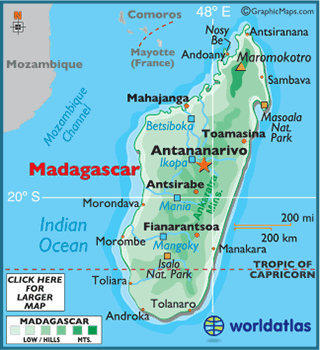
Map of modern-day Madagascar

Who was Ranavalona III? Well, as her name goes, she was the third Malagasy queen with the name Ranavalona. She became queen after the death of her grand-aunt, queen Ranavalona II. Ranavalona III was born Princess Razafindrahety in 1861. She was raised as a protestant, and taught by instructors from the London Missionary Society. Upon completion of her education, she married nobleman Ratrimo, but he died under suspicious circumstances in May 1883, just 2 months after Queen Ranavalona II’s passing. Rumor had it that the prime minister Rainilaiarivony had poisoned her husband, Ratrimo so as not to relinquish power. The young princess then ascended the throne of Madagascar at the tender age of 22, on July 13, 1883. It is said that she was chosen over her older sister, Rasendranoro, because of her conciliatory nature which the prime minister and other members of the Andriana looked for.

Prime Minister Rainilaiarivony of Madagascar

At the time of Ranavalona III’s ascension, Madagascar was navigating a shift from absolute rule (power in the hands of the king/queen) to constitutional monarchy. Under the new system, true authority was vested in the prime minister: in this case, Rainilaiarivony, who secured his grasp on power by marrying the newly crowned—and recently widowed—queen. In accordance with tradition, Rainilaiarivony had previously wed both of Ranavalona III’s predecessors, Ranavalona II and Rasoherina. Lucky man, wouldn’t you think? One man married to 3 successive queens! Probably the only one in history (this will be the story for another day)! Rainilaiarivony largely oversaw the day-to-day governance of the kingdom and managed its foreign affairs.

Illustration of France implanting its protectorate on Madagascar

As a queen, Ranavalona III inherited a kingdom which was assaulted by the French who wanted her country to be part of their protectorate. Throughout her reign, she tried to strengthen trade and diplomatic relations with the United States and Great Britain, in an effort to keep the French at bay. In 1886, the queen solicited U.S. intervention to help protect Madagascar from the French but was ignored. She, like many kings and queens of Africa back then, was probably not aware of the scramble for Africa, and the Berlin Conference (Selection from the 1885 Berlin Conference Final Act, The Berlin Conference 1884 – 1885 – Final Act (Continuation)), where Europeans allocated areas of the continent to themselves. She was forced to sign a treaty that gave France a certain control of Madagascar in order to prevent war, but the French wanted full control over Madagascar and did not back down. Ranavalona III successfully kept the French at bay until 1896 when the French declared Madagascar as their colony. Repeat French attacks on coastal port towns and an assault on the capital city of Antananarivo ultimately led to the capture of the royal palace in 1895, ending the sovereignty and political autonomy of the century-old kingdom (French Colonial Treaty in Madagascar : 18 January 1896).

Queen Ranavalona III

The newly installed French colonial government promptly exiled prime minister Rainilaiarivony to Algiers, Algeria. Ranavalona and her court were initially permitted to remain in Madagascar as symbolic figureheads, but the outbreak of a popular resistance movement – the menalamba rebellion – and discovery of anti-French political intrigues at court led the French to exile the queen to the island of Réunion on February 27, 1897.

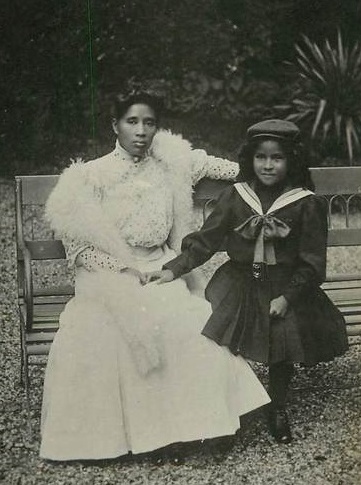
Queen Ranavalona III with her grandniece Marie-Louise ca 1905 in exile in Algiers, Algeria

Rainilaiarivony died that same year in Algiers, and shortly thereafter Ranavalona was relocated to a villa in Algiers, along with several members of her family. Despite Ranavalona’s repeated requests, she was never permitted to return home to Madagascar. Like many African kings and queens, she was deported (Deportation of African Heads of States). She died of an embolism at her villa in Algiers on May 3, 1917 at the age of 55. Her remains were buried in Algiers but were disinterred 21 years later and shipped to Madagascar, where they were placed within the tomb of Queen Rasoherina on the grounds of the Rova of Antananarivo (Rova de Manjakamiadana). you remember Queen Ranavalona III, remember that she was a queen who fought against the foreign invasion to the best of her ability, but above all remember that all she wanted was the independence of her people and culture.

Vanillanomics or the Economy surrounding Vanilla

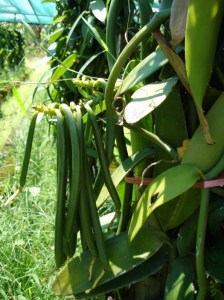
Vanilla1
Vanilla

The term Vanillanomics is not from me, but from the article below on Bloomberg. I just wanted to let you in on the Vanilla trade, and more. Sad to note that these very rich regions, i.e. rich in vanilla are always in the most remote, poorest, and inaccessible areas of the country. This is the same throughout Africa, whether you are talking about the cobalt of DRC which is lifted from its mines by special planes bypassing the national airports, or the cocoa of Côte d’Ivoire, or the diamonds of Sierra Leone, or even the coffee of Cameroon… and much more. Enjoy! The full article can be found on Bloomberg Business Week.

=====

First, we needed a 4×4 of some sort, along with a driver willing to chance roads that are sometimes passable, sometimes not. The man we found struck us as the quietly skeptical sort, but after a few hundred rutted kilometers, any hesitations he’d been suppressing hardened into emphatic certainties. “The only people who drive on this road,” he told our photographer and me, via our translator, “are people who want to kill their cars.” Yet he gamely pushed ever deeper into Madagascar’s tropical north, until our mud road descended a hill and was swallowed by a wide river. It was the end of the line for the driver. He seemed relieved.

Madagascar
Madagascar

Somewhere on the other side of that water, dozens of farmers would soon converge upon a regional vanilla market in the village of Tanambao Betsivakiny. Growers would negotiate with buyers working on behalf of exporters and international flavoring companies, and together everyone would hash out a collective, per-kilogram price for the crop. Most buyers would pay cash on the spot, and the farmers would hand over several tons of green, freshly harvested vanilla beans.

Those humble beans, whose essence is associated with all that’s bland and unexciting, have somehow metamorphosed, butterfly-style, into the most flamboyantly mercurial commodity on the planet. In the past two decades, cured vanilla beans have been known to fetch almost $600 per kilogram one week, then $20 or so the next. Northeastern Madagascar is the world’s largest producer of natural vanilla, so every boom and every bust slams this region like a tropical storm. When prices peak, cash floods the villages. When prices fall, it drains away.

Madagascar_Vanilla
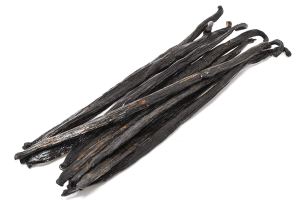
Vanilla bean

Madagascar was largely integrated into global trade centuries ago. The island is bigger than France, with cultural traditions that vary by region, unique biological treasures, and a developing tourism economy. The capital, Antananarivo, is full of laborers, lawyers, bureaucrats, bankers, artists, entrepreneurs, intellectuals—everything a 21st century city of 1.5 million needs. Yet Madagascar is also one of the poorest countries on the planet. You see and feel its disparities most sharply in its more remote pockets, including in the vanilla-growing region of the northeast. The extreme isolation of those communities, their dominance over the international supply, the dramatic changes they undergo during price swings—all of it has turned this part of the country into a semicontained observation lab that exposes both the genius and the insanity of globalized commerce. …

French Colonial Treaty in Madagascar : 18 January 1896

Madagascar
Madagascar

The treaty below with the Queen of Madagascar marked the full possession of Madagascar by France. It also marked the end of the Kingdom of Madagascar, or Merina Kingdom, officially known as Kingdom of Imerina. In essence, Ranavalona III, the last monarch of the Kingdom of Madagascar, tried to stave off the French colonization of her land by strengthening trade and diplomatic relations with the United States and Great Britain throughout her reign; however, French attacks on coastal port towns and an assault on the capital city of Antananarivo ultimately led to the capture of the royal palace in 1895, ending the sovereignty and political autonomy of the century-old kingdom. France officially annexed Madagascar on January 1, 1896.

As you read the treaty below, you could see the beginning of the schemes for the FCFA and the 11 Components of the French Colonial Tax in Africa we talked about a while back. Note that Madagascar was banned from dealing directly economically with foreign powers: everything had to go through France… isn’t this a predecessor to the FCFA?

=====

Ranavalona_III_of_Madagascar
Queen Ranavalona III of Madagascar

H.E. the Queen of Madagascar, after reading the declaration of possession of the Island of Madagascar by the government of the French Republic, declares to accept the following conditions below:

Article I

The government of the French Republic will be represented to the Queen of Madagascar by a Resident General.

Article II

The government of the French Republic will represent Madagascar in all external relations.

The resident general will be in charge of relations with the agents from foreign powers. Matters of interest to foreigners pertaining to Madagascar will be dealt with by through him.

The diplomatic and consular agents of France in foreign countries will be in charge of the protection of Malagasy subjects and interests.

Article III

The government of the French Republic reserves the right to maintain in Madagascar the military forces necessary for its authority.

Article IV

Ranavalona III conceded defeat to the French in Sept 1895
Ranavalona III conceded defeat to the French in September 1895

The Resident General will control the internal administration of the Island.

H.E. the Queen of Madagascar commits herself to proceed to the reforms that the French government will judge useful for the economic development and the progress of civilization.

Article V

The government of H.E. the Queen of Madagascar is prohibited from contracting any loan without the authorization of the government of the French Republic.

Antananarivo, January 19, 1896

Hoy Ranavalomanjaka III

Mpanjakany Madagascar

Vanilla: Madagascar’s Gold

Albius_5
Vanilla

I really enjoyed last week’s The Guardian’s Photojournal on vanilla trade in Madagascar. I did not know that so much was involved in getting that marvelous spice that I often add to my cakes. As a flashback, the process of pollination of vanilla was invented by a 12 years old Black slave from the island of Bourbon (Réunion): Edmond Albius.  His technique allowed for the pollinating of the vanilla orchids quickly and profitably.  Albius’s technique revolutionized the cultivation of vanilla and made it possible to profitably grow vanilla beans away from their native Mexico. Today, vanilla is the world’s most popular flavor, and surging demand has recently made the spice more expensive than silver; its aroma finds its way into cakes, perfumes, and all delicacies around the globe.

Albius_6
Bottle of Vanilla

This Guardian’s photojournal focuses on the people working the plantations of vanilla and hustling it in  Sambava, Madagascar, dubbed the Vanilla Capital of the world. Today, three quarters of the global vanilla crop is produced in this region, with 2,000 tons being exported from there. The photojournal shows the vanilla hustlers like never before. Despite the expense, vanilla is highly valued for its flavor. So, as you enjoy your vanilla ice cream, or add its delectable aroma into your cakes, or enjoy it in perfumes or aromatherapy, remember the island of Madagascar, and its vanilla hustlers.  Enjoy The Guardian’s Photojournal on vanilla trade!

Why the name: Antananarivo?

Madagascar
Madagascar

Ever wondered about the meaning of the name Antananarivo, the capital of Madagascar? Like: why does the ‘na‘ repeat itself twice (nana)? or whether this ‘nana‘ could mean mother or father or grandmother or grandfather as in many African languages, or ‘girl‘ in French? or could the ‘rivo‘ have something to do with river? or have you simply wondered why such a long name for a capital city?

Flag of Madagascar
Flag of Madagascar

Well, I have often wondered about Antananarivo because of the way its name falls from my mouth as if I was in a hurry, and then being rushed to say it quickly so as not to stumble. I have also wondered about its name, because it reminds me of the beauty of its country, Madagascar, the big island. Moreover, numerous neighborhoods in Cameroon have been renamed after the country because of its beauty and also I imagine, by respect for its people’s struggle for independence which was similar for the people of Cameroon.

Antananarivo in 1905

The name Antananarivo means “the City of Thousand” with an meaning ‘to‘ or ‘at‘, tanan meaning ‘city‘, and (a)rivo meaning ‘thousand‘. Some think the ‘thousand’ is in reference to ‘thousand hills‘ or ‘thousand soldiers‘ in reference to the important royal Merina guard. In reality, Antananarivo was the site of a town called Analamanga, meaning ‘Blue Forest‘ in Malagasy. Analamanga was founded by the Vazimba people, the island’s first occupants. When King Andrianjaka of the Merina people moved into the area between 1610 and 1625, he deployed a garrison of 1,000 soldiers to successfully capture the city and guard the site. Declaring it his capital, Andrianjaka built a rova (fortified royal dwelling) that expanded to become the royal palaces of the Kingdom of Imerina. The site maintained its name Analamanga until it was renamed almost fifty years later by King Andriamasinavalona as Antananarivo, “City of the Thousand“, in honor of King Andrianjaka’s soldiers. People of Madagascar affectionately call it “Tana“, the city, and its named was frenchified during colonial time into Tananarive.

Manjakamiadana, the Royal compound built for Queen Ranavalona I

The city was first built as a fortress by the Merina Kings at the beginning of the 17th century, who made it the capital of the united Kingdom of Imerina in 1794. The community grew rapidly under the Merina Kings, and particularly under King Radama I whose control ultimately extended over a major part of the island, leading him to be considered the King of Madagascar by European diplomats, with Antananarivo as the island’s capital. Antananarivo remained the island’s capital after Madagascar was colonized by the French in 1897 , after the French military invaded Antananarivo on September 1894 causing major casualties amongst the Malagasy people, and causing queen Ranavalona III to surrender. Claiming the island as a colony, the French administration retained Antananarivo as its capital and transcribed its name as Tananarive. Antananarivo remained the capital of Madagascar after independence in 1960.

Antananarivo (Wikipedia)
Antananarivo today (Wikipedia)

Today, Antananarivo is a vibrant city full of life, culture, and immense history. The city’s skyline is dominated by the rova of Antananarivo, which was destroyed in a 1995 fire but is under reconstruction. The nearby Andafiavaratra Palace was the home of 19th century Prime Minister Rainilaiarivony and currently contains a museum featuring historic artifacts of the Kingdom of Imerina. Downhill from the palaces is Andohalo square, where Merina kings and queens delivered speeches to the public.  Tsimbazaza Zoo displays many of the island’s unique animal species and a complete skeleton of the now-extinct elephant bird. Other historic buildings include the Ambatondrafandrana tribunal where Ranavalona I dispensed judgement, the second residence of Rainilaiarivony with its indigenous medicinal plant garden, the recently renovated Soarano railroad station, four late 19th century memorial churches built to commemorate early Malagasy Christian martyrs, the tomb of Prime Minister Rainiharo, and the early 20th century pavilions of the Analakely market. Enjoy the video below, and if you are ever in Madagascar, please do visit the beautiful Tana, the capital of the great Merina Kings, named to celebrate a thousand courageous soldiers and the beautiful hills of the central highlands.

https://www.youtube.com/watch?v=ijm5Xg34Ps4