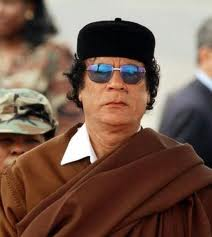
Libya under Muammar Gaddafi

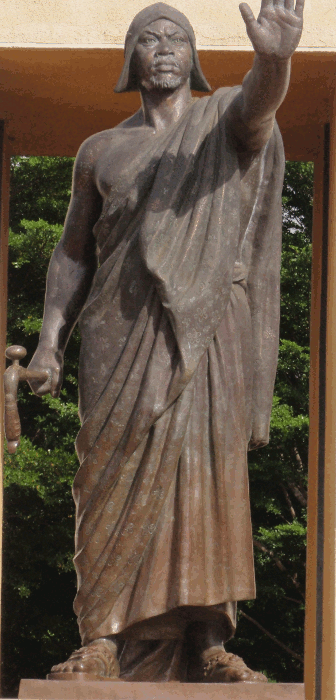
Muammar Gaddafi (Mouammar Kadhafi)

I would like to share some points about life in Libya under the Guide of the Libyan Revolution Muammar Gaddafi, from an African perspective, not the trash published by the Western media.  Western Media Lies in LibyaNATO’s debacle in LibyaTruth Dispatch: Update on Libya. He was not a saint, but he loved his country deeply and Africa as a whole, and was fighting for our freedom and dignity as human beings!

Libya had significant reserves of crude oil and the discovery of oil changed its socio-economic landscape. Before Gaddafi, Libya had less control on the oil industry as most of the companies involved in oil exploration activities were foreign, but a few years after Gaddafi took control of the government of Libya, his administration nationalized the oil Industry which had a marked impact on the economy and development. Under Gaddafi’s leadership, Libyans enjoyed an exceptional standard of living, financed by oil revenues that were equitably redistributed.
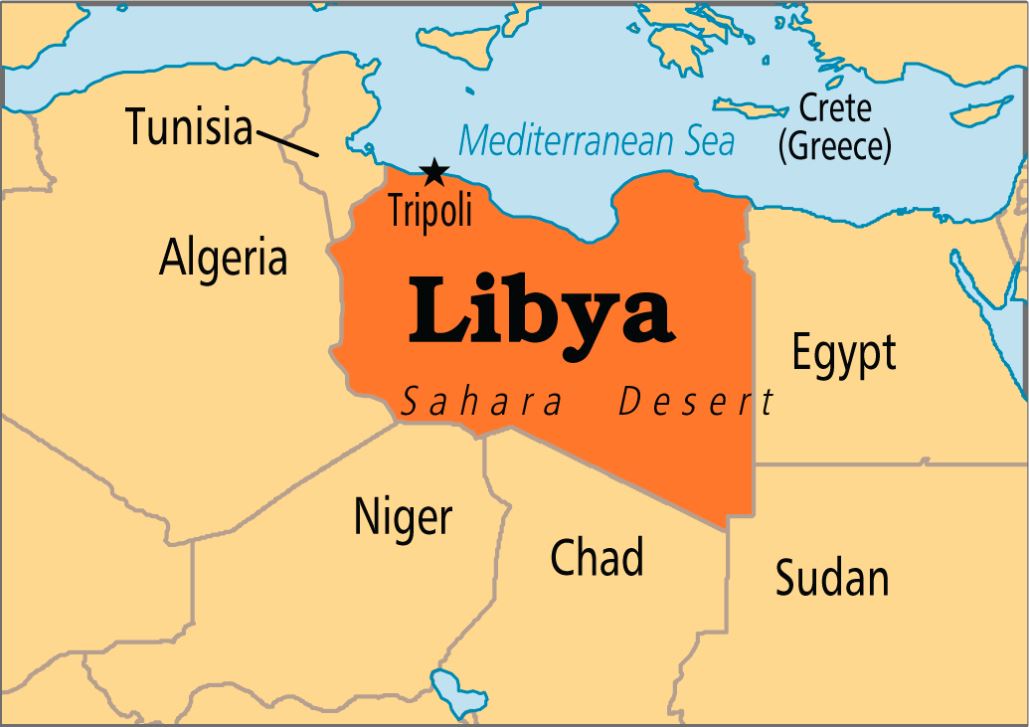
Map of Libya

Thanks to a bold management of oil wealth, Gaddafi transformed his desert country into a model of social and economic development, offering its citizens unparalleled benefits on the continent, and in the world (Norway is now applying his doctrines – just under a different name). While the West often portrays him as a dictator, we want to tell you about the life of Libyans under Gaddafi, and the benefits to the whole of Africa.

Below are the main benefits enjoyed by citizens (source Eurafrica, translated by Dr.Y, Afrolegends.com):

Free education for all: Access to education, from primary school to university, was entirely free. Before Gaddafi, only 20% of Libyans were literate; under his rule, this rate rose to 83%. A quarter of the population held a university degree, a record in Africa.

Free medical care: Hospitals provided free care, and the number of doctors quadrupled in a decade. Diseases like malaria were eradicated, and tuberculosis declined sharply.

Affordable electricity: Although sometimes described as free, electricity was so heavily subsidized that its cost was negligible for households.

Housing, a fundamental right: Gaddafi considered housing an inalienable human right. Massive programs were implemented to build affordable housing, and citizens could obtain interest-free loans to buy their homes. No homelessness like in the streets of some of American and European capitals!

Support for young couples: Newlyweds received financial assistance of approximately $50,000 to acquire a home and start their family life.

Support for mothers: Every woman giving birth received a bonus of $5,000 to support her family.

Car subsidies: The state covered 50% of the price of cars, making mobility accessible to all. Gasoline at a ridiculously low price: With a liter of gasoline costing only $0.14, Libyans enjoyed some of the cheapest fuel in the world.

Affordable basic necessities: Essential goods were subsidized to ensure access for all.

Support for agriculture: Aspiring farmers received land, equipment, seeds, and livestock free of charge to start their farms.

Assistance for unemployed graduates: Unemployed young graduates received an allowance equivalent to the average salary for their profession until they found a job.

Education and healthcare abroad: If local infrastructure was insufficient, the state financed studies or medical treatment abroad, providing a monthly allowance of $2,300 for housing and transportation.

Oil revenue redistribution: A portion of oil revenues was reinvested in social programs, ensuring rare economic stability.

Libya was a debt-free economy and Gaddafi had a pan-African vision. With reserves of $150 billion and no external debt, Gaddafi’s Libya was an anomaly: an African country free from the clutches of international financial institutions like the IMF. This economic independence allowed Gaddafi to dream big. His ambitious project, the Great Man-Made River, transported millions of cubic meters of water across the desert, transforming arid lands into fertile fields. Nicknamed the “eighth wonder of the world,” this irrigation network symbolized his ambition to make Libya self-sufficient.

Gaddafi went even further: he wanted to unite Africa. By proposing a gold dinar to replace the dollar in African trade, he sought to free the continent from Western powers. This project, combined with his support for the African Union, made him a threat to the global order.

Saif al-Islam Gaddafi Brutally Murdered or How not to Trust an Enemy

Muammar Gaddafi (Mouammar Kadhafi)

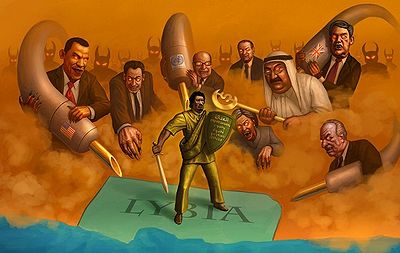
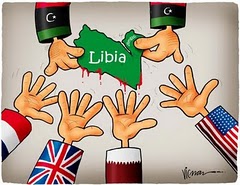
This is a sad day! Saif al-Islam Gaddafi, son of the Libyan Guide Muammar Gaddafi (Kadhafi) has been brutally murdered in his house in Libya! I don’t know if this year we are going to get bad news every third day of the month, but so far, it has rained! At the height of the NATO attacks on Libya in 2011, we were there in prayers, and words, writing to tell all about the injustices that were being perpetrated against the Libyan people. The mainstream media lied, and of course Barack Obama, Hillary Clinton, Nicolas Sarkozy and the rest of NATO launched a vicious attack on the Libyan people under the false pretense that Gaddafi was killing his own people, a people he loved so dearly. The lies were blatant, the attacks horrendous, and they destroyed Libya, thus destabilizing the whole of Africa. We can still hear HRC cackle as she described the killing of the Libyan Guide. Western Media Lies in LibyaNATO’s debacle in LibyaTruth Dispatch: Update on Libya.

Libya, the Prey of the West

Saif al-Islam was one of Gaddafi’s sons. He was brilliant, and a part of his father’s inner circle, at some point performing public relations and diplomatic roles on his behalf; he publicly turned down his father’s offer of the country’s second highest post and held no official government position. He studied at the London School of Economics, and wanted to bring modernism to his country. In 2005, he was awarded a “Young Global Leader” title by the World Economic Forum, and in January 2011WEF founder Klaus Schwab personally invited Gaddafi to attend the annual WEF Forum in Davos. Young Gaddafi was tricked by the western glitter, and worked to lift the embargo on his country. He was instrumental in negotiations that led to Libya‘s abandoning its weapons of mass destruction program in 2002–2003, the country’s protection against western arms. He arranged several important business deals on behalf of the Libyan regime in the period of rapprochement that followed. He was viewed as a reformer, and openly criticized the regime, probably listening to western advisors.  Muammar Gaddafi did great things for Libya: it was one of the few countries in the world without debt, and with gold reserves. Living in a desert and constantly faced with lack of water, The Guide had even made water sprout in the desert digging deep, enabling amazing engineering feats such as the Great Man Made River Project, the world’s largest irrigation project once known as the 8th wonder of the world. Moreover, Muammar was helping other African countries free themselves, and was about to have the gold dinar to free African countries from the treacherous FCFA. Who in their right mind wouldn’t want the world to see that? Young Saif probably wanted to world to see the beauty his country was.

Map of Libya

Saif had schooled in Europe, in one of the best schools of the world, and likely wanted Libya to be accepted, and probably fell for the oldest Western trick in the book, that of “Democracy” Africans and the Trap of Democracy. He forgot that Westerners never forget! He forgot that once an enemy, always an enemy. He convinced his dad to open up to the west, to their measures, agree to their demands, etc. The Guide even financed Sarkozy’s campaign and election as president of France; he was in turn received like a king in Paris, just to be destroyed by that same Sarkozy (Former French President, Nicolas Sarkozy, gets 5-year Sentence for Corruption Linked to Libya). Once Saif saw the vicious Western attacks on his country in 2011, he understood that the enemy was trying to destroy Libya, and fought against NATO forces, but by then it was too late, as the enemy had weakened their defenses with all the negotiations.

The destruction of Libya: the cake

After the murder of The Guide, Saif was taken into custody, tortured for years, and later on freed. However, how can a child who has seen his country at its height, and then seen it broken to pieces, his family and people killed and scattered to the winds by the West, sit still? If you are that child, how can you live with yourself, knowing that your country’s downfall might have come from you trusting the enemy, or falling for their treacherous claims? He was still a menace for the West and they had to eliminate him!

The lesson is clear! If you have been enslaved by someone and hated, do not for a second forget and think that they would love you one day. It is important to know that the West never forgets… they keep track… (even after 100 years, they do not forget) and it is imperative for us to keep track and never forget! We live in a global world, so one needs business partners, but do not for an instant believe that someone who has pillaged your country, raped your sisters, destroyed your lives, would one day when you have freed yourself from their choke-hold, forget that they had crushed you once, or become your friends. Evil never becomes good!

Former French President, Nicolas Sarkozy, gets 5-year Sentence for Corruption Linked to Libya

Nicolas Sarkozy battu

This Thursday, September 25, 2025, the former French President Nicolas Sarkozy was given a 5-year jail sentence after being found guilty of criminal conspiracy in a case related to millions of euros of illicit funds from the late Libyan leader Colonel Muammar Gaddafi. The Paris criminal court acquitted him of all other charges, including passive corruption, and illegal campaign financing. It is the first time a former French president has received a prison sentence; he has also been given a €100,000 fine.

Nicolas Sarkozy, by Zapiro (source Grigrinews.com)

It is no secret that Sarkozy was at the helm of the destruction of Gaddafi, and Libya as a whole. This man, whose campaign and election was funded by Gaddafi!!! I repeat, Nicolas Sarkozy became president thanks to Gaddafi and Libya! This man deserves a lifetime in jail; not even sure if that will be enough to dry the tears of the Libyan people. Why? By his acts of extreme jealousy, destruction, and hate of goodness, he, and his NATO cronies destroyed Libya for generations to come, and not only Libya, but destabilized the whole of Africa with it. It is not a joke… and he gets only 5 years? 5 years for destroying, killing, destabilizing an entire population, and de facto a whole continent? He deserves life if not the other option that we all know!

Excerpts below are from Al-Jazeera

=====

Muammar Gaddafi

Former French President Nicolas Sarkozy was found guilty on Thursday of criminal conspiracy following a trial in which he was accused of accepting millions of euros in illegal payments from the late Libyan ruler, Muammar Gaddafi, between 2005 and 2007. The Paris Criminal Court sentenced him to five years in prison: it is the first time a former French president has received a prison sentence.

Sarkozy, 70, was found not guilty of other charges, including illegal campaign financing and passive corruption. Sarkozy has always denied all the charges [of course]. He claims the charges against him were politically motivated by Gaddafi’s inner circle in revenge for his backing of the antigovernment uprising in Libya in 2011.

The destruction of Libya: the cake

… In his latest trial, which began in January this year, French prosecutors claimed that when he was interior minister, Sarkozy made a corrupt agreement to support Gaddafi’s government on the international stage in return for financing worth millions of euros to help pay for his presidential campaign. The agreement was alleged to have been carried out via a network of Libyan spies, a convicted terrorist, arms dealers and millions of euros shipped to Paris in suitcases.

… Besides Sarkozy, there were 11 other defendants, including the late French-Lebanese businessman Ziad Takieddine; Claude Gueant, a former close aide of Sarkozy; Eric Woerth, Sarkozy’s former head of campaign financing; and Brice Hortefeux, a former minister.

Libya, the Prey of the West

… The judge stated there was no evidence that Sarkozy struck a deal with Gaddafi or that funds sent from Libya ended up in Sarkozy’s campaign [so there were funds], even though the timing aligned and the money’s routes were “very opaque. However, she found Sarkozy guilty of criminal conspiracy for allowing close aides to contact Libyan individuals in an attempt to secure campaign financing.

The allegations first came to light in 2011 when a Libyan news agency reported that the Gaddafi government had provided financing to Sarkozy’s 2007 election campaign. In 2014, news channel France 24 reported that Gaddafi had said, “Sarkozy is mentally deficient … It’s thanks to me that he became president … We gave him the funds that allowed him to win,” during a recorded interview with another French broadcaster, France 3 TV.

Map of Libya

… The same year, Gaddafi’s son, Saif al-Islam Gaddafi, told Euronews that Gaddafi’s government had provided campaign funding to Sarkozy. He said: “The first thing we ask of this clown is that he return the money to the Libyan people, but he let us down.”

In 2012, Mediapart, a French online news outlet, published a note reportedly from the Libyan secret services from December 2006. The note allegedly mentioned Gaddafi’s agreement to provide Sarkozy with 50 million euros ($52m at current exchange rates) for campaign financing. Sarkozy claimed the document was fake [of course].

… In 2007, Sarkozy welcomed Gaddafi to the Elysee Palace in Paris. But when pro-democracy protests erupted during the Arab Spring in 2011, Sarkozy was among the first Western leaders to advocate for military intervention in Libya. Gaddafi was killed by opposition forces supported by NATO in 2011, ending his four-decade rule.

Africans, let us not Fall in the Trap of Democracy!

We have been reflecting on a word which has been used around the world to destabilize countries: the word “democracy.” This word has been used to impose treacherous regimes and sanctions upon “weaker” countries. By “weaker,” we basically mean those that used to be called “third-world” countries. The “global” world we are getting marched towards does not apply to all; there still needs to be some uniqueness which applies to local issues, needs, cultures, and people.

Libya, the Prey of the West

Over a decade ago, we wrote the article “Africans and the Trap of Democracy,” when NATO forces were bombing Libya. Reading it, almost every single word is still relevant today and can be applied to situations in so many countries on the African continent and beyond. Back then, we were shocked that so many Africans were applauding the actions of NATO using the word “democracy” … we hope that they can see what the destabilization of Libya has done to the rest of Africa, and that in reality the word “democracy” is used to fool Africans into hating those who actually work for Africa’s survival and its real independence. Libya under Khadafi was a prosperous country; Singapore, in Asia, under Lee Kuan Yew became one of the most successful economies in the world. There are so many dictatorships in Africa disguised under the name democracies where there are elections every few years and which are praised by the West because they serve their interests in Africa. Let us NOT fall into this trap called “democracy” in Mali, Niger, or Burkina Faso. Instead let us support our brothers of the Alliance of the Sahel (AES), and acknowledge that the continent with the first constitution in the world born in the Empire of Mali, the Kourougan Fouga, cannot learn about ways to govern itself from foreigners. The answer is within!

Enjoy! Africans and the Trap of Democracy

====

With the bombing of the presidential residence in Cote d’Ivoire by French forces for over a week, followed by the arrest of president Laurent Gbagbo, with the current intense bombing of Libya by NATO for the past 6 months, I cannot help but try to answer some of the same justifications used by Africans to approve the bombings by foreign troops on their neighbors’ countries, and ultimately on African soil. Any African who claimed and accepted that Cote d’Ivoire should be bombed by the French, shame on you! Any African who thought that the bombing of Libya was correct… shame on you! Any African who uses the same stupid phrase used by the West to abuse us: “… well Gbagbo had his day, he was in power for 10 years!… or Kadhafi was there 42 years!” Well my friend… Shame on you! Should democracy be imposed using bombs? Should democracy be imposed using warplanes, and Apache helicopters? Is it democracy to bomb the people you plan to help? Is it democracy to deliberately bomb civilian targets, hospitals, state televisions, homes, etc… to, like NATO said “protect civilians”? Was there not a peaceful solution? Was it so hard to re-count the votes in Cote d’Ivoire? Was it so hard to organize elections as Kadhafi asked? Why bomb? Why bomb? Why bomb?…

… I have not seen anywhere that the definition of democracy was “government imposed by external forces, for external forces, to crush the people of a country!” I am tired of this stupid debate the media-lies (CNN, BBC, France24, etc) always bring and which Africans always fall to: “this one is a democrat, and the other one is a dictator.” Please stop bothering people with the same rhetoric, and stop bothering people with your pseudo-democracies where nobody has the right to say anything. Frankly every other year when elections come around, don’t you ever wonder how come with all the bright politicians coming out of top schools, how come we always end up with only 2 (and somehow the worst of all)?

Unrest in Sudan

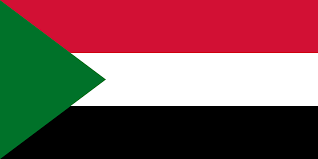
Flag of Sudan

A few weeks ago, we talked about The New Scramble for Africa. Our hearts go out to our brothers and sisters in Sudan as unrest rises in the country. Those who think that this is a “simple” feud between two generals, or two “brothers” as portrayed in the news, must look deeper. Why are US troops getting deployed there? In the early 2000s, people around the globe were bombarded non-stop with information about the genocide in Darfur and “slavery” in Sudan; we were all told that Northern Sudanese were “white” who treated poorly their Southern Sudanese brothers who were “Black” which is a very simplistic and exaggerated way of looking at Sudan (remember Libya and Slavery: Sheep without a Shepherd in recent years?). Hollywood stars such as George Clooney came out in numbers claiming to care about the plight of the Black man, and saying that the Black people of Darfur Sudan were enslaved by their lighter skinned Sudanese brothers.To all who know the tactic of divide-and-conquer, and know social conflicts in Africa, we are always manipulated into thinking that every conflict in Africa is about this tribe vs. that tribe, this group vs. group; thus neighbors become enemies, when in reality, it is a diamond mine or oil field coveted by external forces which is at the core of the issue (Northern Mozambique today). The conflict in Sudan led to the split of Sudan, which was then Africa’s largest country, into Sudan with capital in Khartoum, and South Sudan with capital in Juba. Many forget that the southern part of then-Sudan was rich in oil fields, and that this split diminished Sudan’s oil output to the detriment of the newly created South Sudan (in passing, wasn’t the Pope in South Sudan in February? The Pope Visits the Democratic Republic of Congo and South Sudan), thus putting a big dint on Sudan’s partnerships with China (Sudan was providing more than 10% of China’s oil needs and a Chinese presence on the horn of Africa). After the split, the world’s attention which was on Darfur moved on, Darfur which was supposedly the goal of Western interventions was never resolved, but South Sudan with the oil fields was detached from Sudan.

The New Scramble for Africa (Source: Source: Dr Jack & Curtis for City Press, National Institute African Studies (NIAS))

The cold war between the West and the East took place mostly in other countries like Angola, Mozambique, Congo, Afghanistan, Nicaragua in Africa, Asia, Latin America with many coups d’état and conflicts around the globe. Similarly today, the new kind of war has started yet again, but this time, it is on African soil with The New Scramble for Africa as the world moves toward energy-“conscious” policies.

How do we, Africans, stop from having our lands be a theater for others’ wars? How can we independently make learned decisions for our people without being dragged in others’ conflict?

So long Proud Warrior: Jean Paul Yitamben and the Microcosm of Africa’s Fragmentation

A great light

A great light has joined the stars. His Majesty, Jean Paul Yitamben, King of the Batcheu people, in Cameroon, has changed dimensions, and now graduated to be an ancestor to guide our paths. A great Economist, Teacher, Historian, Father, Brother, Husband, Friend, has moved on. Like Behanzin, before and many other kings, he devoted his life to the service of his community and his people. The fight has changed! Local kings are no longer deported, but kingdoms and cultures are still fragmented, crushed under the load of ‘fake’ modernism assisted by “administrations” (excrescence of colonialism) which are at the service of foreign forces to continue the work of the annihilation and/or spoliation of the African identity.  

Descendant of great kings before him, Jean Paul Yitamben was an avid historian and a perfectionist who tirelessly sought perfection in everything he did. Meticulous to a letter, he did not tolerate half-done work. With his wife, world-renowned social entrepreneur, Gisele Yitamben, he worked tirelessly to empower women in micro-finance, less-privileged youth to find jobs in our tough local economies, and more importantly he affected the lives of countless others outside of his own village, community, city, and beyond. The aborted Kugwe village Palm oil and indigenous development project in the North West Region of Cameroon is a clear example.

Le soleil / The sun

Yitamben was very methodical. He had so many great projects! He worked to bring solar power to his village, sent local village women to be trained in India on how to become solar engineers at a time when it was not yet common. He sent others to Australia and Denmark, and was the first in the area to organize the ‘quinzaine’: two weeks of sports competitions to encourage local pride, and distribute prizes to the winners, encouraging children to strive in education; awarding scholarships to youths, and prizes to mothers and grandmothers. He was ahead of his time, in sub-Saharan Africa where millions of people have low access to electricity, firewood and charcoal are the main source of energy for cooking meals, representing three quarters of total energy demand; Yitamben brought in improved households (foyers améliorés) which are more efficient and better for environmental protection. He brought in international collaborators because he sought a great place for his village and his people. Let us build on Yitamben’s strength!

Libya, the Prey of the West

His biggest fight was that of his village. See, colonization did not stop in 1884, or in 1960 with the advent of pseudo-independences, it is well and alive and waxing on even stronger than before. The fight is not open, but like in Libya in 2011 or Mali today, the goal is still to fragment, to divide and conquer; to break into thousand pieces and loot local wealth while crushing the spirits of the indigenous populations. The overall objective is still the destruction of local initiatives to take the land and resources; it has not changed.

The fight at the level of King Yitamben’s village is an ample microcosm of what happens at the national or continental level in Africa: when a land is rich, or when the enemy covets the area, he promotes in-fighting among brothers (Ethiopia – Eritrea, Sudan – South Sudan), division over boundaries (Cameroon – Nigeria over Bakassi, Tanzania – Malawi over Lake Nyasa/Malawi), and division over resources (DRC – Rwanda).

Behanzin, king of Dahomey

Remember that in the time of Behanzin, after his deportation, the tactic used was to install Agoli-Agbo as a puppet King; one who was not chosen by the traditions of the land, but by Europeans to help in weakening and eradicating traditions, and promoting divisions (Côte d’Ivoire where Alassane Ouattara was installed by French war tanks in 2011).

Flash news…

The fights that occurred over 100 years ago in Dahomey kingdom, or other parts of Africa, are still ongoing, albeit on a smaller scale (and big scale as well). Villages are divided, fragmented, and local institutions weakened. The governments which, in most African countries do not serve the locals but foreign forces, are complicit in the destruction of African traditions and institutions. Yitamben believed that it was possible to change the tides of time, by at least awakening his own people against division. He fought tirelessly for unity, and against division; adamantly refusing the fragmentation orchestrated by some of his people helped by a complicit administration with colonial instincts. He could not understand how his people could let themselves be used to destroy their very own land. He was a force to reckon with. He had a titanic strength; but it is a difficult fight.

Proud warrior, you have placed the bricks on its foundation, and the task will be completed. You tirelessly gave yourself for it. The fight continues. O great warrior! Your legacy lives on!

When we have lost a leader, we need to look forward, and build for future generations. Yitamben had a strong presence, was so confident, and so generous in sharing his time, resources, and knowledge. 

So long brother, father, husband, friend, … May your seeds bear lots of fruits. I will remember your laughter, your big smile, your intelligence, your fight for perfection, and above all your teachings. I feel so privileged to have had you in my life, and received your teachings. You showed us the way. Now we have to carry on your light.

May the Ancestors receive and cherish you.

Libya and Slavery: Sheep without a Shepherd

Slavery_capture
Slave capture

For several weeks now, we have seen many people scream loud about the enslavement of Black people in Libya. I have seen Claudy Siar, whom I love, stand up outraged about the treatment of Black people in Libya, yet, I did not see him outraged when Libya was being bombed by NATO; I did not see him this outraged when migrants drowned in the Mediterranean Sea; I have not seen him outraged because MartiniqueGuadeloupe (where his family is from), and French Guiana, have been deprived of independence and are still Overseas territories of France today. I saw Samuel Eto’o and other footballers come out outraged, yet… I never saw Eto’o outraged that there are no roads to go to his village in Cameroon, I never saw him outraged that international companies exploit huge plantations in Cameroon without paying taxes (was he outraged when Lapiro de Mbanga was imprisoned for asking those companies to pay some little taxes?). I never saw these big footballers outraged that African youths are unemployed largely due to their presidents working hand-in-hand with European interests. Faure Gnassingbé, president of Togo even raised his voice against the enslavement of Africans in Libya, and was outraged! Are you serious, when he inherited the throne, presidency of Togo, after 38 years of Gnassingbé Eyadéma, his father’s reign? Alpha Blondy never said a word when Côte d’Ivoire was being bombed by France in 2011, yet today he opens his mouth for Libya, and wants the migrants to take up arms! Seriously?

Libya, the Prey of the West

I do not understand why we always act like sheep without a shepherd! Back in the middle of the 2000s, we were served with the genocide in Darfur, when Hollywood stars such as George Clooney came out in numbers claiming to care about the plight of the Black man, and saying that the Black people of Darfur Sudan were enslaved by their lighter skinned Sudanese brothers. This led to the creation of South Sudan, and Darfur, well… nothing happened in Darfur… so it had all been a scheme to split Sudan into 2, and take away its rich southern oil fields from the nation itself!

Children begging
Children begging

Do you think that African youths, if they had jobs in their countries, will not stay home? Do you think that if the FCFA was not this tax imposed on African countries (The 11 Components of the French Colonial Tax in Africa), they will not be developed? This outrage I hear should not be taken out on Libyans who had no say when their country was bombed by the Coalition that is NATO, but rather against our presidents who continue to stay in the FCFA zone (FCFA: France’s Colonial Tax on Africa), who continue to give at least 50% of our economies to France! France gets $500 Billions every year from 14 countries in Africa just from the currency, plus of course the free uranium of Niger, the free gold of Mali, the free plantations of Cameroon, the free cocoa of Côte d’Ivoire, etc. This has to stop! Our outrage cannot be taken out on Libyans, but rather on NATO, and now more than ever on those puppets that we call our presidents, who serve the interests of the Hexagon. Get out of the FCFA zone, and create jobs! Stop importing pencils, pens, and food, when you can grow and make your own and become sustainable economies to serve your youths! Africa is the continent with the youngest population, and with so many resources, and thus so much to develop! Africa is the future!

500 Fcfa_BEAO
500 Fcfa_BEAO

Yesterday, I heard a talk by Robert Bourgi who was the adviser to so many African presidents, good servants of Imperialist forces: MobutuOmar Bongo, etc; and he said that, what Africans were asking for was governmental alternance, i.e. election of new presidents. NO, we do not need new presidents who are just puppets of the West like Macky Sall or Alassane Ouattara who will sign off our future to the IMF and World Bank. We need a definite change, we want to be in charge of our economic destiny; we want to have our own currency, we do not want to pay a colonial tax when our forefathers died in WWI and WWII to liberate the French and the whole of Europe, when our ancestors were taken into slavery by Europeans to the Americas where their sweat was used to build Western economies. We want economic freedom to decide on our own terms whether we live or die. We will rather be poor with our own currency, than be a happy slave with a fake currency pegged to the Bank of Paris, which used to take 85% of our revenues and now takes 50%. All the same, We have had enough! So our outrage should not be at our Libyan brothers, because we do know that our true Libyan brothers will never do that, Khadafi fought for us Africans to be free from imperialist forces, but to our presidents, to our elites, who refuse to free us, who refuse to stand up and seize the moment! We, the people, want freedom, economic freedom! No More FCFA!

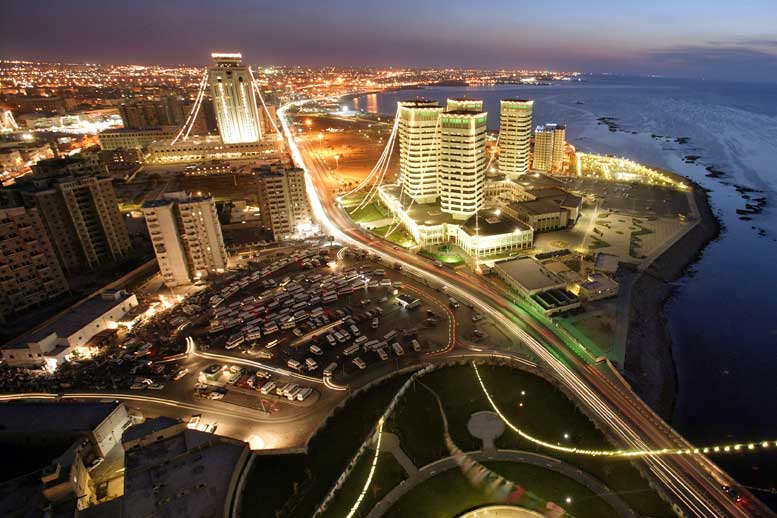
Why the name: Tripoli?

Tripoli, capital of Libya (Source: scoopempire.com)

I always wondered why the capital of Libya was named Tripoli.  The name did not sound so ‘Arabic’ or ‘Berber’ to me… and I always thought that maybe the name had some Italian origin, since Libya was once part of the Roman empire, and later in the 19th/20th centuries an Italian colony.

Tripoli, or Tarabulus in Arabic, is known as Tripoli-of-the-West, to distinguish it from its ancient Phoenician sister city of Tripoli in Lebanon which means Levantine Tripoli or Tripoli of the East.  Tripoli, Libya, is affectionately called the Mermaid of the Mediterranean (arusat-el-bahr: bride of the sea) describing its turquoise waters and its whitewashed buildings.  In reality, Tripoli is a Greek name which means “Three Cities(Tria for three, Polis for city) in reference to the Libyan province of Tripolitaine encompassing the three cities of Oea (modern-day Tripoli), Leptis Magna, and Sabratha.

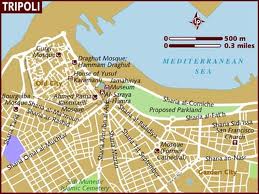
Map of Tripoli
Map of Tripoli

Tripoli is located in the north west of the country.  It extends to the edges of the desert, on a rocky piece of land jutting out into the Mediterranean sea, forming a bay.  Tripoli was founded in the 7th century BC, by the Phoenicians, who gave it the Libyco-Berber name Oea (or Wy’t), probably built upon a native Berber town.  The Phoenicians were probably attracted to the site by its natural harbor, flanked on the western shore by the small, easily defensible peninsula, on which they established their colony.  The city was then taken by the rulers of Cyrenaica (a Greek colony on the North African shore, east of Tripoli, halfway to Egypt), although the Carthaginians later wrested it from the Greeks.  Around the 2nd century BC, Tripoli belonged to the Romans, who included it in their province of Africa, and gave it the name of Regio Syrtica.  Around the beginning of the 3rd century AD, it became known as the Regio Tripolitana, meaning “region of the three cities“, namely Oea, Sabratha and Leptis Magna.  It was later raised to the rank of a separate province by Septimius Severus, who was a native of Leptis Magna. Tripoli was later conquered by Muslim dynasties around the 8th century AD; it was temporarily part of the Berber Almohad empire and of the Hafsids kingdom.  Tripoli was included in the Ottoman Empire between the 16th and 19th centuries AD.

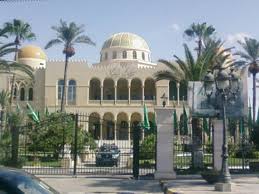
Jamahiriya Museum in Tripoli (Source: Tripadvisor.com)

With a population over 1.68 million (census before the 2011 NATO attacks on Libya) Tripoli is the largest city, the principal port, and the biggest industrial and commercial city of Libya.  It is the heart of government and that of the prestigious university of Tripoli.  Due to its long historical importance, Tripoli has a lot of archaelogical sites.  Many of these sites (which were already derelict) were bombed by the NATO forces during their intervention in Libya 2011 against the government of Muammar Gaddafi.

True, the city today is very far from its splendid and beautiful self.  Tripoli is healing its wounds today, which may take years or decades to heal, but I thought you would enjoy watching this 2010 video of Tripoli, the Mermaid of the Mediterranean!

‘No More’ by Kelvin Karani

Children begging
Children begging

I was talking to a friend the other day about the suffering in Cote d’Ivoire and Libya, and my friend said “hush, we should be grateful that this is not happening in our country.”  I was dumbfounded, as I was thinking, how could somebody just rejoice for their lot, instead of helping the others? instead of doing something?  the least we can do is talk about it, cry, do something, not just watch and rejoice about our silly existence which could go down in flames in a day as in Cote d’Ivoire or Libya which were under fire from France and NATO (the mighty armies of the world) for their oil, cocoa, and gold. Then I found this really good poem by Kelvin Karani, talking about the things we all see in Africa, the things that hurt, and the things that tire. Enjoy “No More.”

=======

No more
Taking of silly slogans
Of change from the corrupt politicians
We need statesmen and stateswomen
People who see beyond elections

No more
Sitting back as others suffer
Saying that we are blessed
Happy that we are not in pain
In common bond united
We’ll rise or fall as a people

No more
Taking the aid of Aids
Which makes sick and
In perpetual need.

No more
Class divisions in Africa
Imperialism of whatever nature
White evils or black ones either
For time has come
For Africa, my Africa-our Africa
To dust herself and move on
Undeterred, unhindered
To show the rest of the world
What humanity truly is.

 Kelvin Karani

Francafrique: Raison d’Etat

After the joke of elections held in Egypt this past month, and with all the turmoil in Libya, Mali, and Côte d’Ivoire, I thought it will be best to watch this great documentary by Patrick Benquet which stirred thoughts across French Africa since December 16, 2010, date of its official diffusion.  It tells you all about the tricks, and machiavelism of France (Africa’s policeman) in Africa, and of course the effect of the cold war on African leaders and countries. Enjoy the first part titled the Francafrique Reason of State (Raison d’Etat) and share with others! It is important to know!