Who / What did We Celebrate in Africa in 2025 ?

We celebrated quite a few achievements in 2025 in Africa. Please find below a few that brought joy across the continent.

  1. AES Logo

    In January, our brothers of the Alliance des Etats du Sahel (AES) signed a joined military agreement. Last week in December, they held the second AES summit where they announced the creation of a radio, television, bank, and completion and progress on many more initiatives. The AES created a Joint Military Force. President Ibrahim Traoré of Burkina Faso succeeds to President Assimi Goïta of Mali for one year at the head of the confederation. We also salute the love shown by the brothers of Niger under President Tchiani who traveled over 1,400 km to bring fuel from Niamey to Bamako which has been under blockade by the terrorists. African Fraternity on Display in the AES.

  2. In March, the Burkinabe film “Katanga, the danse of the scorpions” won the Golden Stallion of Yennenga (Etalon d’or de Yennenga) at 2025 edition of FESPACO, one of Africa’s biggest film festivals. “Katanga, La Danse des Scorpions” by Dani Kouyaté, and FESPACO 2025: Burkina Faso Wins its First Golden Stallion in 28 years!
  3. In March also, archaeologists published in the journal Nature their discovery of the earliest known bone tools, showing evidence of their use 5 million years ago. These bone tools were found in the Olduvai Gorge, in Tanzania. The tools were carved on elephant and hippopotamus bones. Bone Tools found in Tanzania dated 1.5 million years ago.
  4. Angelique Kidjo

    In June, Franco-Beninese artist Angelique Kidjo became the First African Singer to get a Star on the Hollywood Walk of Fame. Over the years, she has won 5 Grammy awards and nominated 15 times. With a career spanning over 4 decades, she has been trained by some of Africa’s greats, and has sung and collaborated with some of the greats of the world.

  5. In June, Mali Launched a State Gold Refinery, Zimbabwe banned exports of lithium, while Cote d’Ivoire announced the discovery of large gold deposits on its territory, in the north, near the border with Burkina Faso. This month, Niger took control of its uranium, thus giving the country a true say in its development.
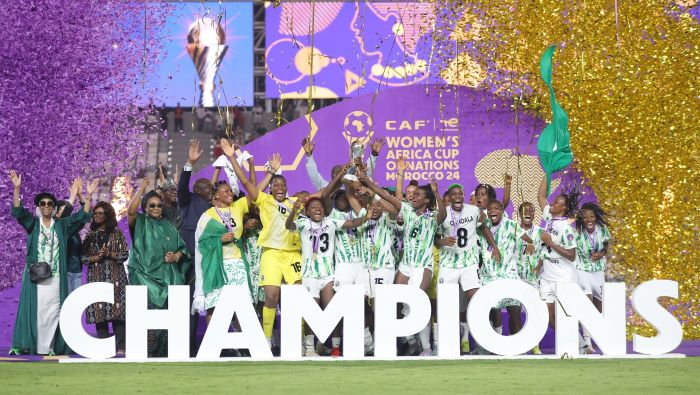
  6. Super Falcons defeat the Atlas Lionesses to win 10th title and become WAFCON 2024 winner (Source: BusinessDay.ng)

    At the end of July, the Nigerian Super Falcons, the Female national soccer team of Nigeria, won the Women’s African Cup of Nation (WAFCON). The Super Falcons of Nigeria defeated The Atlas Lionesses of Morocco to win the 2024 Women’s Africa Cup of Nations (WAFCON) in Morocco. Similarly, the D’Tigress, Nigerian Women’s Basketball team won their 7th African Cup, by defeating Mali at  FIBA Women’s AfroBasket Championship in Cote d’Ivoire. Now, we hope that these ladies will make it very far at their respective World Cups and make the continent proud.

  7. Mali recovered over a billion dollar from gold companies to reinvest and give back to their populations. These are the kind of gestures that unnerve the West. Mali Recovers over a Billion $ for its Miners. What a beautiful end-of-year present to the populations!
  8. Botswana’s 4×400 relay team celebrating their gold medal (Source: Reuters/Eloisa Lopez)

    Africans shone at the 2025 Tokyo World Athletics Championships, including Botswana which cemented its place in the athletic world by winning the country and continent’s first ever gold in 4 x 400 m relay in the men’s discipline. On Sunday, Botswana’s team of Lee Bhekempilo Eppie, Letsile Tebogo, Bayapo Ndori and Busang Collen Kebinatshipi edged out the United States, the winners of the last 10 world titles, in a rain-drenched race, while South Africa took third position. Africans are starting to be present in the sprint discipline and we are proud of their hard work.

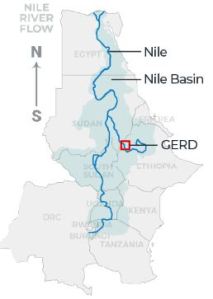
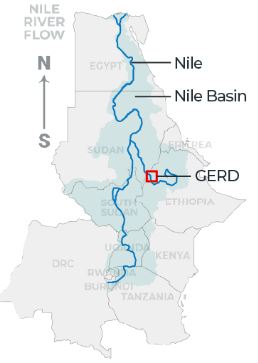
  9. Map of the Nile River flow and the location of Grand Ethiopian Renaissance Dam (GERD) in Africa

    This year saw the inauguration of the Great Ethiopian Renaissance Dam (GERD) in September. The dam has been almost entirely domestically funded through bonds and donations of the hard working populationsThe GERD has also united Ethiopian citizens across ethnic and political divides. Inauguration of the Great Ethiopian Renaissance Dam (GERD).

  10. The Timbuktu’s manuscripts have returned home after being hosted for almost a decade in Bamako. These are treasures that have been protected for centuries by local families, and they had had to move them because of the insurgency of western-funded terrorists’ attacks which had divided the country. Continuing on the artifacts subject, Great Britain and South Africa handed back Ghanaian royal artifacts. While France returned the skull of Beheaded King Toera of the Sakalava People of Madagascar 127 years after it was taken; one caveat, no genetic testing has conclusively established the identity of any of these skulls to be that of King Toera!
  11. Flag of Namibia

    Namibia made history as the only country in the world where Women hold Key Positions: women make up 57% of the government! Namibia has done what no other country in the world has ever done: the country has a female president Netumbo Nandi-Ndaitwah, vice-president Lucia Witbooi, speaker of the national assembly Saara Kuugongelwa-Amadhila, and secretary general of the ruling party. To the naysayers out there, remember that most of Africa has matriarchal traditions; thus it makes sense that it would be first.

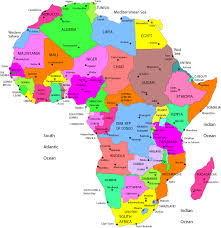
  12. Map of Africa

    This past November, African countries, assembled in Algiers, united to pass a resolution to have colonial era crimes recognized – it’s about time, and let’s hope it works, and that their union keeps up. This comes up as tensions between Algeria and France intensify, culminating with Algeria passing a bill last week requesting that France atone for its 130 years of occupation; France called it a blow to dialogue. African Countries are uniting to pass a Resolution to have Colonial Era Crimes Recognized.

  13. Meta bowed to Nigeria and paid up for privacy infraction. This is a first, and usually multinationals tend to do whatever in our countries… we applaud the judgment, and hope that this signals to those companies to start treating Africans like humans, with some measure of respect. Meta Bows to Nigeria and Pays for Privacy Infraction.
Ceremony for the Return of King Toera’s Skull

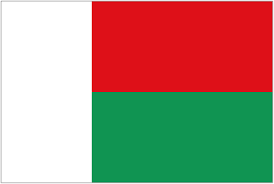
Flag of Madagascar

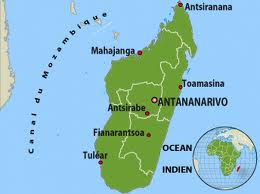
Today, September 2, 2025, the three Sakalava skulls with one believed to be that of King Toera, were welcomed in the capital Antananarivo (France Returns the Skull of Beheaded King of the Sakalava People of Madagascar). They were draped in the Malagasy flag, welcomed by several members of the Sakalava royal family including Prince Georges Harea Kamamy great-grandson of King Toera, great delegations of Sakalava elders in traditional robes, as well as the Madagascar President. The remains were then transported to Antananarivo’s Mausoleum, Mausoleum of Avaratr’Ambohitsaina, then onward to Belo Tsiribihina near King Toera’s homeland. The Malagasy President said, “Dans ce lieu historique, nous célébrons les martyrs de la patrie qui ont combattu le colonialisme. Nous renforçons dans le coeur des descendants la mémoire de ceux qui ont lutté pour la patrie. Ils ne mourront jamais dans nos coeurs.” (In this historic place, we celebrate the martyrs of the homeland who fought against colonialism. We strengthen in the hearts of our descendants the memory of those who fought for the homeland. They will never die in our hearts.).

Gravure of France implanting a protectorate in Madagascar 1897

The remains will now begin a 4-day journey of tributes before being returned to their descendants, on their way to their final resting place in the royal village of Ambiky in the Menabe region. As Prince Kamamy said, once the skulls are returned to them, they will conduct their own rites.

One caveat, which we had previously eluded to, is, no genetic testing has conclusively established the identity of any of these skulls to be that of King Toera! The joint scientific committee, France-Madagascar, could only confirm that the three skulls came from the Sakalava people. Could they even confirm which Sakalava group, North or South? Does it matter? However, the customary rites conducted by a traditional Sakalava intermediary affirmed that one skull belonged to the monarch. Then the French Culture Minister Rachida Dati, said, “scientifically, it is permissible to assume that one of these skulls is his, without absolute certainty.”

Thus, the question remains, why now? Remember, that the first formal request for the return started by Toera’s descendants dates back to 2003, and there have been over 20 years of appeals!

France Returns the Skull of Beheaded King of the Sakalava People of Madagascar

Flag of Madagascar

It would seem that no matter what we do, there are certain things that always prove us right. Isn’t it amazing that just over 2 weeks after admitting to the murder of Cameroonians for almost 30 years in one of the most repressive wars of independence on the continent, France, whose presidents dash out acknowledgments without apologies, that same France just returned the skull of King Toera of Madagascar 127 years after it was taken? King Toera was a Sakalava King on the Great Island of Madagascar, who opposed the French occupation and colonization; he paid for that with his life, getting executed by French troops in 1897. Our article would not be complete without asking fundamental questions: why did they take King Toera’s skull? It is no secret that the Malagasy people, like the Bamileke people of Cameroon, and many other groups in Africa, venerate their ancestors – was this a pervert, occult, way of maintaining dominance over them? Why return it now, after 127 years? Is it even the real skull of King Toera? In the era of 3-D printing, and given that these same European museums which have amassed so much money over the years from admissions to see these stolen treasures have repeated under some weird laws or arguments that they cannot return the loot to the victims, what makes us now think that they will part from the skull of the King of the Sakalava people of Madagascar? How would we, Africans, tell if it is even the real deal?  And now they say that it is the French government, from the goodness of its heart (under a 2023 restitution law) which has decided to repatriate the skull, forgetting to tell everyone that the government of Madagascar has been asking for years for repatriation! Oh perverted humanity that displays the remains of human beings for viewership! This reminds us of the story of Sarah Baartman: The Black Venus, where it took South African presidents Nelson Mandela and Thabo Mbeki begging for her remains to finally be returned from that same France! 

Excerpts below are from CNN.

=====

Gravure of France implanting a protectorate in Madagascar 1897

France has returned three skulls to Madagascar more than a century after they were taken, including one believed to be that of a 19th-century Malagasy king who was beheaded by French troops.

The repatriation of the skulls to the island nation off the southeastern coast of Africa marks the first time France has implemented a 2023 law enabling the return of human remains to a country for funeral purposes.

France conquered the kingdoms of the Sakalava people in western Madagascar in the 1890s and integrated the Sakalava into a newly formed French colony. One of the three Sakalava skulls returned to Madagascar, which gained independence from France in 1960, is presumed to be that of King Toera. … He was executed by French troops in 1897. The other two skulls belonged to two generals who fought with the king …

… “I welcome the return of these three skulls, including that of King Toera of the Sakalava people, an origin shared by nearly a third of the Malagasy population,” Fetra Rakotondrasoava, permanent secretary of Madagascar’s Ministry of Culture, who co-chaired the Malagasy-French Committee of Researchers working on the identification of the skulls, told CNN on Wednesday.

Madagascar
Madagascar

This is not only the repatriation of human remains, but the return of a part of our history and memory,” he said, adding: “We will now be able to honor these remains as they should be. This moment carries significance for the Malagasy people and for all nations engaged in the restitution of their heritage.”

Madagascar’s Communication and Culture Minister, Volamiranty Donna Mara, said at the ceremony that the human remains, including that of “our great, indeed very great, King Toera,” are “not mere objects in a collection” but the link, “invisible and indelible, which binds our present to our past.”

Their absence, for more than a century, 128 years, has been an open wound at the heart of the Great Island (Madagascar), and especially for the Sakalava community of Menabe,” she continued.