Raila Odinga in His Own Words

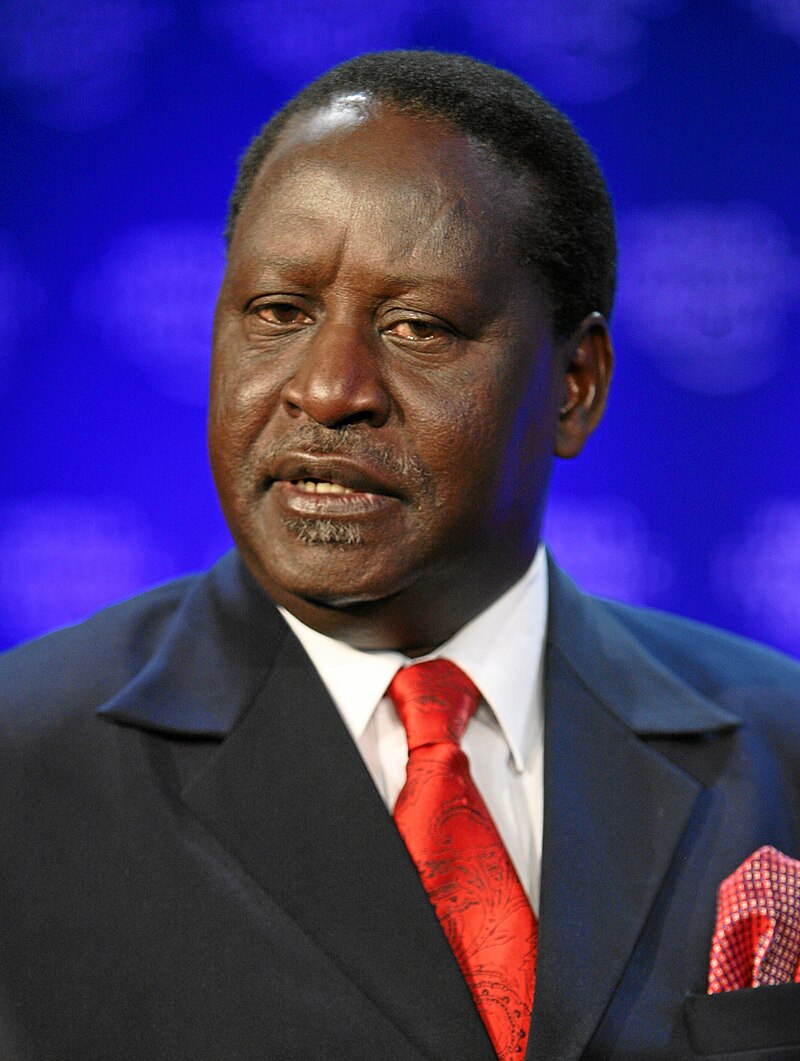
Raila Odinga (Source: World Economic Forum)

As we celebrate the life of this great fighter for Kenyan democracy, we will remember him by his own words. Below are a few… Let Odinga’s political legacy continue. Let’s never give up the fight for our freedom; it may take a long time, but never give up!

======

On how the treatment of those who fought for the freedom of Kenya and the Mau Mau uprising : The men and women who paid the ultimate price so that we may live in freedom only had the nasty reward of being called bandits and terrorists when the war was over.

On the Mau Mau revolution: I can feel the pain of the Mau Mau and other freedom fighters. They must have concluded that life is cruel and worthless and that Kenya has no place for heroes.
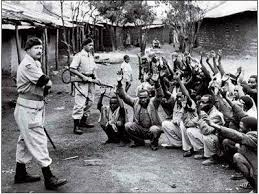
Under British guns, during the Mau Mau rebellion in Kenya
Under British guns, during the Mau Mau rebellion in Kenya in the 1950s

On education: Regardless of what you hear, the successes and failures you see, it still pays to work hard and play by the rules. Success is a lie when founded on shortcuts and deals negotiated in smoke-filled rooms.

On choosing the best people to govern the country : The security of the country must be in the hands of the best men and women for the job.

On his lifelong struggle against corruption and for the betterment of Kenya : I don’t fight individuals, I fight systems.

As a reminder of his time as a political detainee in the 1980s : Freedom is never given freely; it is won through struggle.

Flag of Kenya

During the 2002 transition that saw the end of the KANU-rule, There comes a time when the nation is more important than an individual.

On winning elections, after his third attempt in 2013 : Three times I have run for president, two times I have won, and I have been robbed two times.

On the state of Kenya and African leadership : At independence, Kenya’s economy matched South Korea’s. Forty five years later, Korea is forty times larger. The mediocrity of leadership is Africa’s greatest curse.

On elections : You cannot have free and fair elections when one party controls and monopolizes the instruments of power.

His dream for Kenya, stated during his 2022 presidential campaign : My dream is a Kenya where no child goes to bed hungry.

So Long to Raila Odinga, Fighter to the End for Kenyan Democracy

Raila Odinga (Source: World Economic Forum)

It is with sadness that we heard about the news of Raila Odinga‘s passing yesterday, on October 15th. It makes one wonder if, when one fights for the true freedom of Africa, one dies without ever getting in power? or killed in power for their principles? Is one just supposed to accompany democracy?

Raila Odinga has been a dominant unavoidable force in Kenyan politics for the past 30 years, and even longer, given that his father, Jaramogi Oginga Odinga, was the first vice-president of Kenya alongside Jomo Kenyatta, Kenya’s first president. Thus, Raila Odinga has been a baobab in Kenya’s political scene, who has always fought for the freedom and democracy in Kenya. Out of the past 5 elections, 1997, 2007, 2013, 2017, and 2022, he has always contested, has come second, and even narrowly won to the point that there have always been disputes which have gone as far as civil unrest as in 2007, when Odinga contested elections against Mwai Kibaki, which led to the biggest crisis in Kenya’s history resulting in 1200 deaths and about 600,000 people forced to flee their homes. The crisis was resolved in a peace brokering by UN Kofi Annan which saw Kibaki emerge as president and Odinga as the nation’s prime minister. After the 2017 elections, he was vindicated by Kenya’s highest court after the 2017 elections when the court annulled Uhuru Kenyatta‘s victory and ordered fresh polls; however, Odinga boycotted the run citing frauds. 

Flag of Kenya

Odinga always found a way to put peace ahead of his own person, and reconciled with the incumbent; his love for Kenyans made it hard for him to stay angry or be selfish; he always placed Kenya first. He was affectionately called “Baba” (Father), “Agwambo” (Act of God), and “Tinga” (Tractor) – drawn from his party’s symbol during the 1997 elections. He was a former political prisoner, and holds the record for being Kenya’s longest serving detainee. He was detained twice from 1982 to 1988, and 1989 to 1991 when he fought against the one-party rule of Daniel Arap Moi

Mr. Oginga Odinga, a distinguished African leader of the Kenya Colony was one on a short visit to India in March, 1953, giving a broadcast talk at the New Delhi Station of All India Radio, during his visit to the Station.

Initially, Odinga, a native of Kisumu, a city on the shores of Lake Victoria, studied engineering in East Germany before returning home in the 1970s where he taught at the University of Nairobi and started a range of successful businesses. He found his way into politics when he was linked to a failed coup against Arap Moi in 1982; accused of treason, and though the charges were later dropped, he spent most of the decade in and out of jail.

To many, he is known as the founding father of Kenya’s multiparty democracy, a master strategist, and a great mobilizer, bringing in together huge crowds and people of all walks of life. To many, Odinga had been under political persecution for his strength, and his wish for a better Kenya. After fighting for so many years, being so close all the time, with one’s victories getting stolen, how does one reconcile it in the end? Are the Western puppets always the winners, while the strong-willed true lovers of their people always second? 

So long Baba Odinga! Thank you for your love, for your great political acumen, and for your strength, never giving up over the years. You have been and remain an example for our struggle for the freedom and betterment of Africa; we will never give up and like you, never back down!!!

Raila Odinga on President John Magufuli

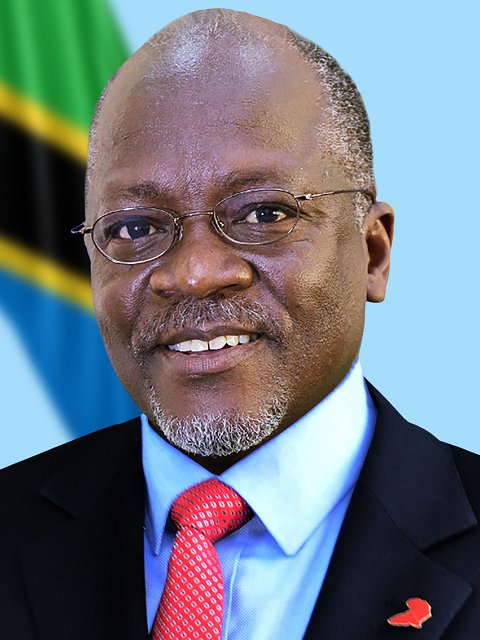
President John Magufuli of Tanzania

The former prime minister of Kenya, Raila Odinga, said of Dr. John Pombe Magufuli, “He was determined to put Tanzania ahead in the region and Africa through industrialisation. … His primary business was Tanzania. Outside Tanzania, his other business was Africa. He … embraced some of the founding President Mwalimu Julius Kambarage Nyerere’s ideals on patriotism, nationalism and self-reliance for his country. In about six-years, he went farther than Mwalimu Nyerere in trying to economically empower his people. While Mwalimu Nyerere embraced internationalism and had a broader view of the world and Tanzania’s place in it, Dr Magufuli was a super nationalist … Where Mwalimu Nyerere was a constant voice on the global stage, especially for Africa and the Third World, Dr Magulfuli reserved his voice and energy for Tanzania…. Dr Magufuli was, however, overly successful in transforming Tanzania in just about six years. He transformed Tanzania’s highways, ports, created Rapid Bus Transit to decongest Dar es Salaam and delivered SGR at a competitive rate, all because of a crackdown on corruption. Despite all these, Dr Magufuli’s … pushed hard the idea that success comes from hard work. In Tanzania today, people report to offices very early and they do not just sit there, they work. … May Dr Magufuli fare well in the next world.” [Raila Odinga, former Prime minister of Kenya in MarketWatch.com]

Elections in Kenya: a Great Win for Democracy on the Continent

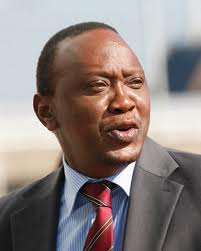
Uhuru Kenyatta, Kenya's fourth president
Uhuru Kenyatta, Kenya’s new president

I had to talk about the recent elections (last week) in Kenya.  They were peaceful, classy, and above all democratic (i.e. the choice was made by the people, for the people).  In only one round, Uhuru Kenyatta defeated the ‘machine’-chosen guy, i.e. Raila Odinga (Obama’s cousin).  It was such an important victory for Kenya.  Kenyans actually worked very hard not to have a repeat of 2007-2008 violence, and succeeded.  It was a true example of perseverance on the part of Kenyans who realized that they were making their choice, not the west… and it did not matter that their chosen candidate had been summoned to the International Criminal Court (ICC) in the Hague, because they had chosen him.  I am proud of the Kenyans for showing such class in the election of Kenyatta.  As usual, the poor loser Odinga wants to take Kenya to brink of demolition (as in 2007-2008, by making it about tribes) by filing at the Supreme court, but it would not matter, because the people have spoken! Long live Kenya!

He said “Today, we celebrate the triumph of democracy, the triumph of peace, the triumph of nationhood. Despite the misgivings of many in the world, we demonstrated a level of political maturity that surpassed expectations.”

Check out the Daily Nation, Standard Media, The Star on the victory of Uhuru Kenyatta and the road ahead.

Wangari Maathai, first African Woman Nobel Peace Prize Laureate

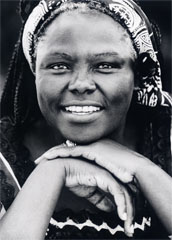
Wangari Maathai
Wangari Maathai

I once took a class in environmental and social changes, where I studied the work of Dr. Wangari Maathai.  Her boldness and her stand for truth made her a great role model for many African women, and Africans in general.  She was bold! “Wangari Maathai was known to speak truth to power,” said John Githongo, an anticorruption campaigner in Kenya who was forced into exile for years for his own outspoken views.  “She blazed a trail in whatever she did, whether it was in the environment, politics, whatever.”  Indeed, Wangari Maathai was one of the most widely respected women on the continent, where she played many roles: environmentalist, politician, feminist, professor, human rights advocate, and head of the Green Belt Movement which she started in 1977. She was scoffed at by the Kenyan Forestry department who thought that uneducated women could not fight the desert.  She told them ‘We need millions of trees and you foresters are too few, you’ll never produce them. So you need to make everyone foresters.’ I call the women of the Green Belt Movement foresters without diplomas.

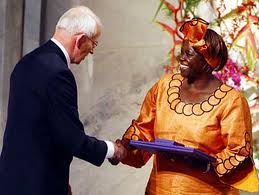
Wangari Maathai receiving the Nobel Peace Prize

As a star student after high school, she won a scholarship to study biology in Kansas (US), and went on for a Masters of Science at the University of Pittsburgh, and later a doctorate degree in veterinary anatomy at the University of Nairobi where she later taught and became chair of the department in the 1970s.  Wangari’s work started with the Green Belt Movement with the mission of planting trees across Kenya to fight erosion, stop desertification, create firewood for fuel, provide jobs for women, and empower the women of Kenya.  According to the United Nations’ data, her organization has planted over 45 million trees in Kenya, helped 900,000 women, and inspired similar projects in other African countries.  “Wangari Maathai was a force of nature,” said Achim Steiner, the executive director of the United Nations’ environmental program.  He likened her to Africa’s ubiquitous acacia trees, “strong in character and able to survive sometimes the harshest of conditions.

Maathai planting a tree

Her work was illustrated in one of my secondary school English textbook.  The government of Arap Moi was trying to build a skyscraper in one of Nairobi’s only parks, and she brought women who protested until the government abandoned the project.  She was beaten by police until she faintedWangari was not one to back down from her beliefsShe would go to jail for what she believed in.  For instance, her husband divorced her because he said she was too strong-minded for a woman.  When she lost her case in court, she criticized the judge and told him her mind, and was thus thrown to jail.

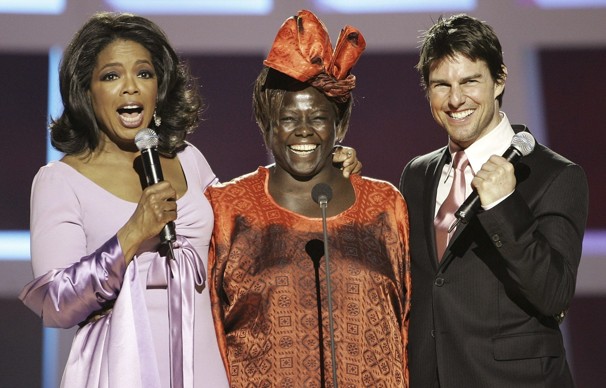
Oprah Winfrey and Tom Cruise congratulating Wangari Maathai on her Nobel Peace Prize

In presenting her with the Peace Prize, the Nobel committee hailed her for taking “a holistic approach to sustainable development that embraces democracy, human rights and women’s rights in particular” and for serving “as inspiration for many in the fight for democratic rights.”  Wangari Maathai has received many honorary degrees, including an honorary doctorate from the University of Pittsburg, her alma mater.  Check out articles by the BBC, CNN, her Interview on NPR, and the Huffington Post whose article is entitled “Wangari Maathai and the Real Work of Hope .”  Don’t forget to click also on the The Green Belt Movement website, and the movie “Taking Root: The Vision of Wangari Maathai.”   She once said that ‘we should all be hummingbirds‘: doers, and not spectators, even in the face of great challenges; do the best you canGoodbye Wangari, your work is not over, for Africa has been blessed with millions of Wangari Maathais who will continue your outstanding work.