
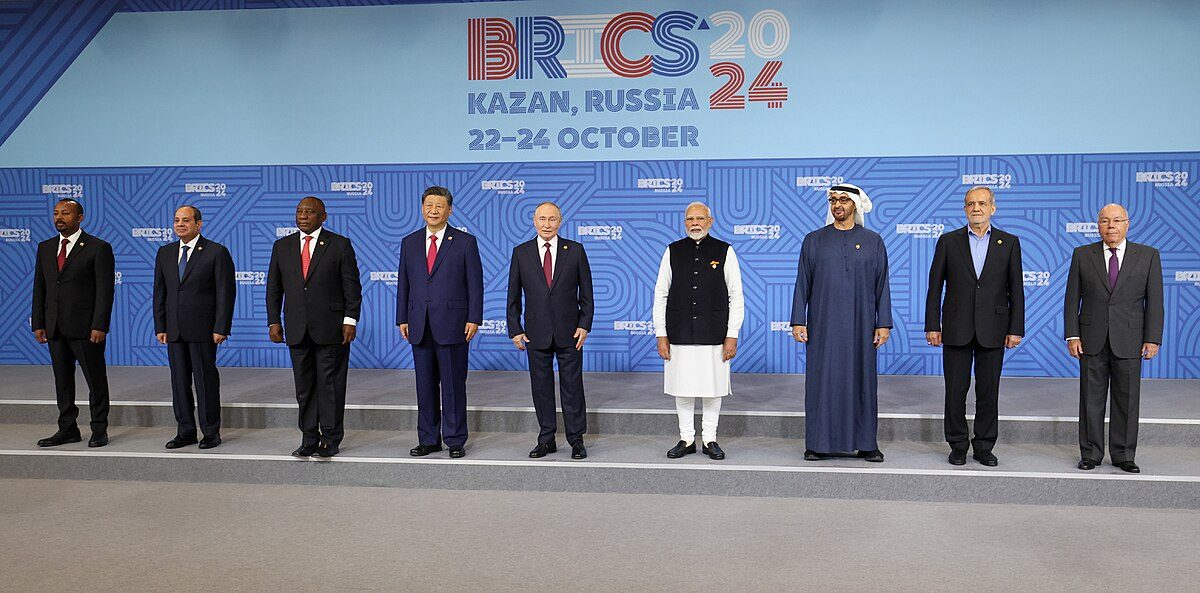
Last week, Vladimir Putin of Russia hosted the 16th edition of the annual BRICS summit which took place from October 22-24 in the city of Kazan in Russia. This was the largest gathering of world leaders in Russia in decades. The aim of the alliance is to foster a more equitable and inclusive global order, challenging the economic and political monopoly of the West.
BRICS stands for Brazil, Russia, India, China and South Africa. The group started in 2006, and Brazil, Russia, India and China convened for the first BRIC summit in 2009. South Africa joined a year later, in 2010.
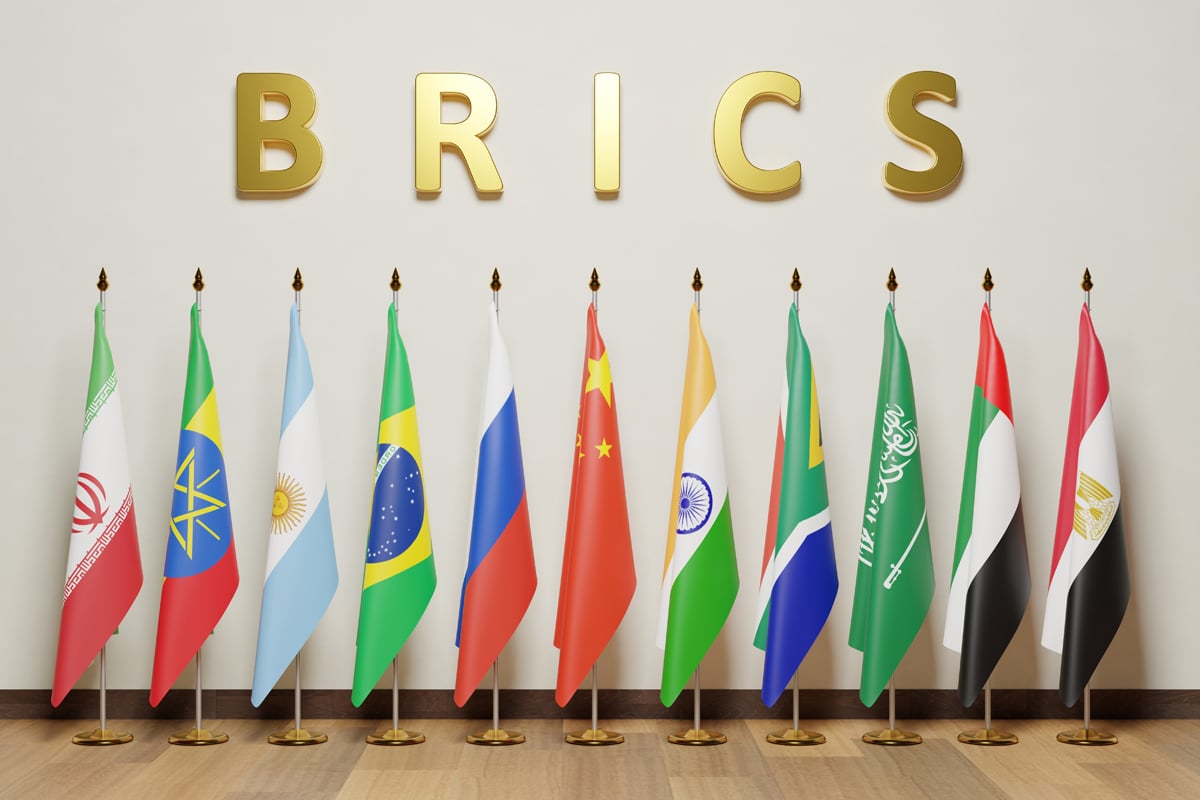
In 2023, BRICS extended invitations to include Egypt, Ethiopia, Iran, Saudi Arabia and the United Arab Emirates after these countries applied for membership. Saudi Arabia has yet to formally join, but the others have.
Presidents of many countries in the world were present at the meeting, and even the UN Secretary General Antonio Guterres was in attendance. BRICS’ evolution from an economic concept to a geopolitical force has been remarkable. The expanded members now collectively represent 44.3 % of the world’s population, 29.5 % of the land mass, and 30.8 % of the global gross domestic product (GDP) (49.7 % of global GDP in purchasing power parity, or PPP, terms).
We will highlight below the key takeaways of the BRICS summit for Africa. There were a lot of takeaways in general, but our focus will be on Africa. Our wish is that African representatives could, when attending these summits, join as ‘ONE’ and not several. At the recent China-Africa meeting which took place in September 4 – 6, 2024, some African countries asked for more debt, like Kenya, while others asked for balanced trade, technology transfer, investment in manufacturing to boost job creation, like South Africa. This will create imbalanced partnerships which will be a disadvantage for neighboring African countries and then affect Africa as a whole later (this will be a subject for another day).
Key Takeaways for Africa
- As pointed out above, Egypt and Ethiopia joined as new BRICS members, while Nigeria and Algeria participated as partner countries.
- De-dollarization: this is a global shift which has occurred mildly before, but more significantly since the start of the Ukraine conflict which saw Europe and the US impose sanctions on Russia in hope of asphyxiating Russia, but which instead forced Russia to deal in local currencies and other leaders such as China and India to do likewise. This shift is more important for African countries, particularly the ones which are still part of the FCFA (that slave currency) block.
- Energy and Technology partnerships between Russia, China and African countries to enhance energy projects and digital infrastructure.
- Economic collaboration with the New Development Bank (NDB) which aims to fund infrastructure projects across Africa, offering an alternative to the shark Western financial institutions.
- Balanced diplomacy: for too long, Africans have had only one way of thinking with the Western world. Now with the BRICS, Africans hope for a more balanced relationships to benefit and ensure sustainable development for our nations.

 African Heritage