What are American Troops doing in Nigeria ?

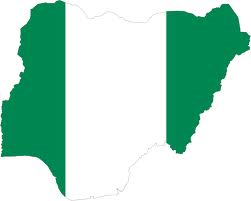
Flag and map of Nigeria

Last week, the Nigerian government announced the presence of US troops on its soil. American troops were deployed for, they say, “intelligence support and training, not combat operations.” Nigerian Defense Minister Christopher Musa addressed the “partnership.” This deployment is said to strengthen counter-terrorism cooperation. The AFRICOM commander, General Dagvin Anderson, claimed that the deployment was made at Nigeria’s request to focus strictly on intelligence assistance! In the background, it is said that this is to protect Christians.

How can they talk about anti-terrorism fight, when they are the ones funding these terrorist organizations? It is no secret that almost all facade terrorists organizations were created by Western secret services. It is no secret, that Bin Ladden was once a CIA operative, and we all know who funded ISIS (the US)! They have thus created chaos in Africa to destabilize the continent, and pillage freely resources.
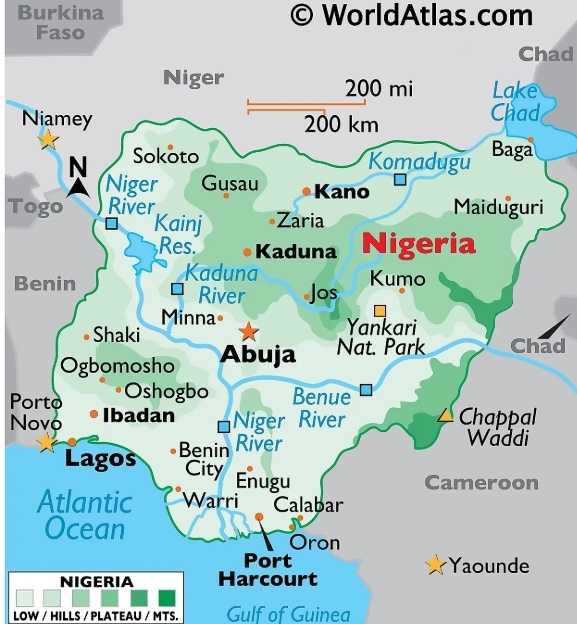
Map of Nigeria (Source: WorldAtlas.com)

How can they talk about the protection of Christians? After watching the video of the Nigerian pastor who called for the Trump administration to intervene in Nigeria, a few things stand out: he says (paraphrasing) “the UN, I know you see me; US senate, I know you are watching me; special council to Trump, Please tell him to save our lives.” Before that event, how many knew this pastor? He has never had popularity like TB Joshua… so how can he have the special ears of the US government? We saw that the December 25 US strikes in Nigeria were not in the area filled with Christians but rather one filled with Muslims in the northwest part, near the border with Niger!

Is it a coincidence that this US deployment occurs just a few days after the failed attempt in Niger? On January 29, gunfire and explosions occurred at the Niamey international airport against President Tchiani of Niger? Is it a coincidence that this happens just a few weeks, barely a month, after the failed attempt against President Ibrahim Traore of Burkina Faso (Another Coup Attempt Against the President of Burkina Faso, Ibrahim Traoré)?

Is it a coincidence that this happens a few days after the Chinese mining giant Zijin bought several gold mines in Mali and other places? It is no secret that the US are trying to stop or level the Chinese, and to a certain extent Russian, expansion in Africa. We have always said that the meteoric global rise in gold prices is coming, in part, from the AES claiming back the control of their mines! We all know, since ancestral times with Emperor Kankan Musa, that Mali is one of the global key players in the gold industry… that’s how France could get their ranking as 4th in the global gold production.
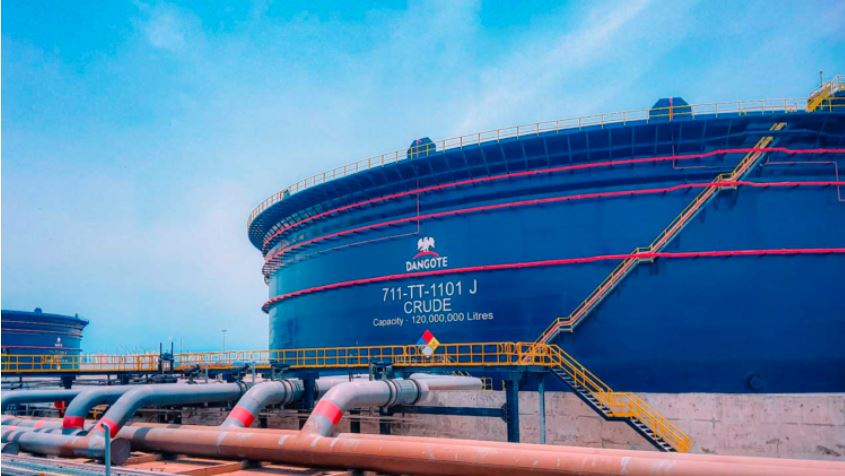
Dangote Refinery (Source: Leadership.ng)

It is also no secret that Aliko Dangote, Africa’s richest man, has built the biggest oil refining complex in Africa which has driven local fuel production and reduced import dependence. Africa’s richest man has built one of the world’s largest oil refineries. Who does not remember the long lines at the pump in Nigeria, when Nigeria is an oil producer? This is a total game changer for Africans, and disrupts the business of these Western companies which were re-selling our oil back to us, as polluted fuel!

Thus, it is clear why American troops were sent to Nigeria: for control! Like I have said for years, there is a new scramble for Africa, and we are watching it happen right now! Remember how the cold war happened between the United States and the Soviet Union in other countries by proxy? Angola is a clear example, where the West and the East (USSR) were fighting or rather supporting both sides. Back then, it was a fight to stop Soviet expansion in the world… Today, it is a fight to stop Chinese expansion and keep Western domination in the world … Nothing has changed!

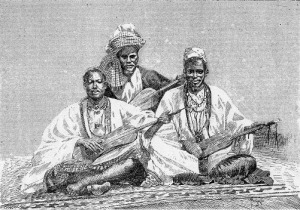
The Griot, the Preserver of African Traditions

Senegal_Wolof griot 1890
Wolof griot in Senegal, c 1890

Africa has a strong, deep, and rich oral tradition. In many countries across West Africa, this tradition is often preserved by the griots, who are historians, storytellers, praise singers, poets, and/or musicians. Often, the griot is the preserver of the history of a family, a clan, and sometimes of the nation. This is done by narrating how the family/clan/tribe/nation was founded and its outstanding achievements. In essence, the griot is a repository of the oral tradition, and is often seen as a societal leader due to his or her traditional position as advisor to kings and leaders.  The griot’s praises centers around the leader of the clan, of the tribe, and of the nation. Thus, great kings throughout history had griots: Sundiata KeitaKankan Musa, and many others.

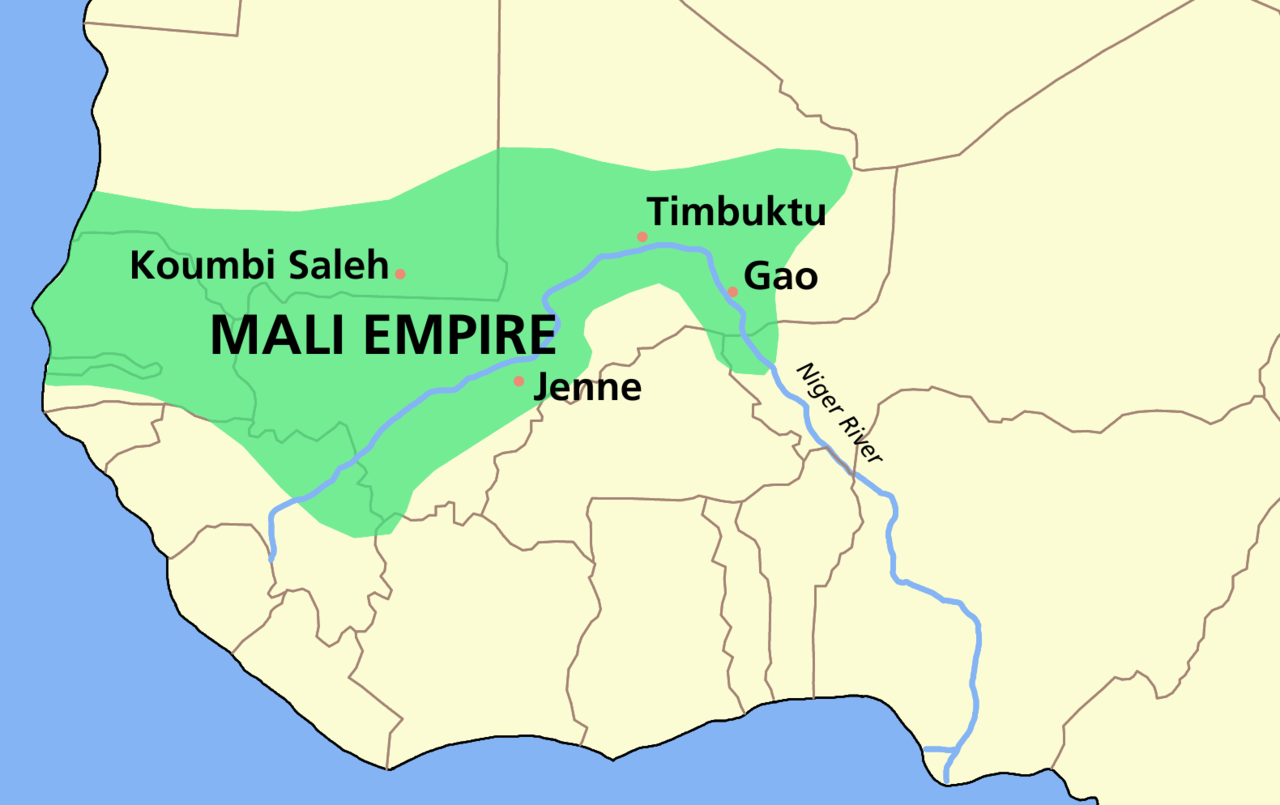
The Mali Empire (Malinke Empire), at its height in the middle of the 14th century, extended from central Africa (today’s Chad and Niger) to West Africa (today’s Mali and Senegal). The empire was founded by Sundiata Keita, whose exploits remain celebrated in Mali today. In the Epic of Sundiata, King Naré Maghann Konaté offered his son Sundiata a griot, Balla Fasséké, to advise him in his reign. Balla Fasséké is considered the founder of the Kouyaté line of griots that exists to this day.

MALI_empire
Mali Empire (Wikipedia)

Each aristocratic family of griots accompanied a higher-ranked family of warrior-kings or emperors, called jatigi. Moreover, most villages and prominent clans also had their own griot, who told tales of births, deaths, marriages, battles, hunts, affairs, and hundreds of other things.

The Cameroonian author Francis Bebey writes about the griot in his book African Music, A People’s Art (Lawrence Hill Books): “The West African griot … knows everything that is going on… He is a living archive of the people’s traditions… The virtuoso talents of the griots command universal admiration. This virtuosity is the culmination of long years of study and hard work under the tuition of a teacher who is often a father or uncle. The profession is by no means a male prerogative. There are many women griots whose talents as singers and musicians are equally remarkable.

Mali_Griots of Sambala king of Medina Fula people 1890
Griots of Sambala with the King of Medina (Fula people of Mali) c.1890

In Mande society, the jeli was an historian, advisor, arbitrator, praise singer (patronage), and storyteller. Essentially, these musicians were walking history books, preserving their ancient stories and traditions through song. Their inherited tradition was passed down through generations. Their name, jeli, means “blood” in Mandinka language. They were said to have deep connections to spiritual, social, or political powers as music is associated as such. Speech is said to have power as it can recreate history and relationships.

Youssou NDour_1
Youssou N’Dour (Source: fanart.tv)

In addition to being singers and social commentators, griots are often skilled musicians. Their instruments include the kora, the khalam (also spelled xalam), the goje (called n’ko in the Mandinka language), the balafon and the ngoni.

Griots can be found throughout Africa and bear different names from country to country. A world-renowned singer and grammy award winner descending from a family of griots is Senegalese singer, Youssou N’Dour. Below is the trailer to the movie Griot. Enjoy!

Kankan Musa: The Richest Man in World History

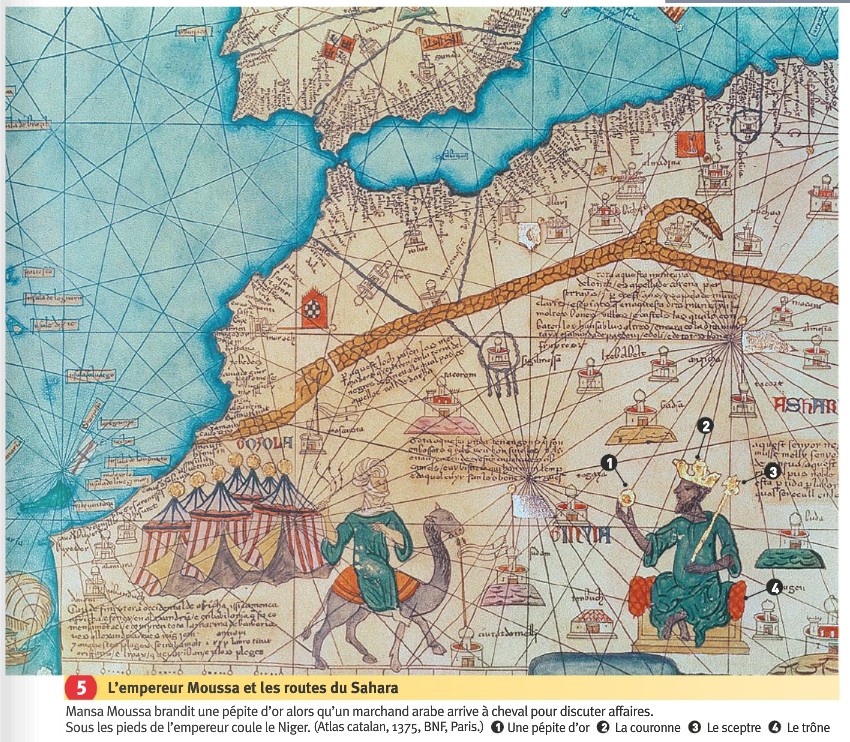
Kankan Musa (Source: Atlas Catalan, 1375)

Today, I would like to talk about the richest man planet earth has ever seen… yes, you heard me right, the richest man whose fortune was estimated to be over 400 billion dollars, or 310 billion euros. Did you guess who that was ? If you thought Bill Gates, I am sorry to disappoint you. It is the great Emperor of Mali, Kankan Musa, also written Kankan Moussa, or Mansa Musa, or Mansa Moussa, or Kankou Moussa.

Kankan Musa was the tenth Mansa, King of Kings, or Emperor of the great Empire of Mali from 1312 to 1337. At the time of Musa’s accession to the throne, the Empire of Mali consisted of territories which had belonged to the Empire of Ghana and Melle, and surrounding areas.

Emperor Kankan Musa
Emperor Kankan Musa

His name, Kankan Musa or Kanga Musa meant « Musa, son of Kankou Hamidou », in reference to his mother (In those days, the Mandinka people were a matriarcal society). Kankan Musa is often referred to, in literature, as Mali-koy Kankan Musa, Gonga Musa, and Lion of Mali. He had lots of titles, including Emir of Melle, Lord of the Mines of Wangara, Conqueror of Ghanata, Fouta Djallon (also written Futa Jallon), and at least a dozen other areas.

Empire of Mali (Wikipedia)

He took the Empire of Mali to its peak, from the Fouta Djallon to Agadez (in northern Niger), including the ancient Ghana, and Songhai Empires. He established diplomatic relationships with Portugal, Morocco, Tunisia, and Egypt. His reign corresponds to the golden era of the Malian Empire.

Assemblée constitutive de l'empire du Mandé (Source: Wikipedia.fr)
Assemblée constitutive de l’empire du Mandé (Source: Wikipedia.fr)

Kankan Musa’s pilgrimage to Mecca made him popular in North Africa, and in the Middle East. Musa made his pilgrimage to Mecca in 1324, with a procession of 60,000 men, 12,000 servants who each carried four pounds of gold bars, heralds dressed in silks who bore gold staffs, organized horses and handled bags. Also in the train, were 80 camels, which carried between 50 and 300 pounds of gold dust each (Gold was the currency in Mali). He gave away gold to the poor along his route. Musa not only gave gold to the cities he passed on his way to Mecca, including Cairo and Medina, but he also traded gold for souvenirs. Moreover, he would also build a new mosque every Friday in any city he so happened to pass by. Musa’s journey was documented by several eyewitnesses along his route, who were in awe of his wealth and extensive procession, and records exist in a variety of sources, including journals, oral accounts and histories. Musa’s visit with the Mamluk sultan Al-Nasir Muhammad of Egypt in July 1324 is well-recorded.

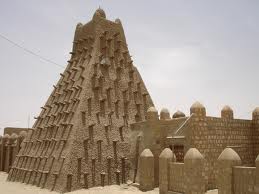
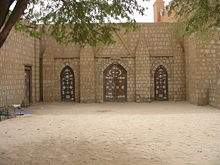
Sankore Mosque in Timbuktu

Musa’s generosity, however, inadvertently devastated the economy of the region. In the cities of Cairo, Medina and Mecca, the sudden influx of gold devalued the metal for the next decade. Prices on goods and wares greatly inflated. To rectify the gold market, Musa borrowed all the gold he could carry from money-lenders in Cairo, at high interest. This is the only time recorded in history that one man directly controlled the price of gold in the Mediterranean. Imagine a single man controlling the economy of not only one country, but of an entire region!

Sankore University in Timbuktu

Mansa Musa was a great builder. He had several mosques and madrasas built in Timbuktu and Gao. The most important of its constructions is the University of Sankore. In Niani, his capital, he built an Audience Hall, a building communicating directly with the royal palace through an interior door.  It was “an admirable Monument” surmounted by a dome, adorned with arabesques of striking colours. The windows of the upper floor were plated with wood and framed with silver, while those of a lower floor were plated with wood, framed in gold. This palace no longer exists. Like the Great Mosque, the Hall was built in cut stone. The Italian art and architecture scholar Sergio Domian said: “At the height of its power, Mali had at least 400 cities, and the interior of the Niger Delta was very densely populated.” Can you imagine that? In this day and age, how many countries in this world can boast 400 densely populated cities? Yet, the Mali of Kankan Musa claimed it all.

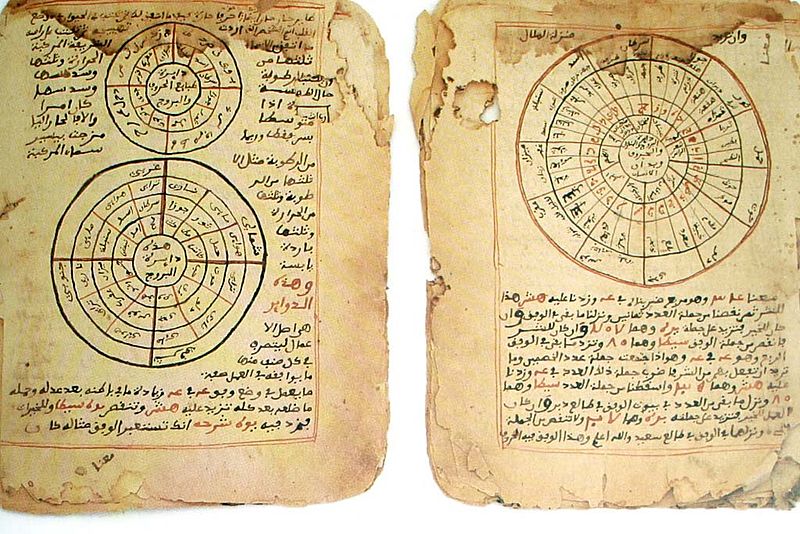
Manuscripts a Tombouctou (Mali) montrant de l'astronomie et mathematique
Manuscripts a Tombouctou (Mali) montrant de l’astronomie et mathematique

At the end of his life, in 1332 or 1337, the Empire of Mali limits were from the Atlantic Ocean to the Eastern shores of the Niger River, and to the forests of Taghaza in the middle of the Sahara. Kankan Musa was not only a rich man who gave to all, built mosques, and great places of worship, he was also a just conqueror, and a great builder. He took the Empire Mali to its peak, and made it the talk of places as far as the Middle East and Europe. Many Europeans and Middle Easterns would send delegations of architects, merchants, writers, astronomers, mathematicians and teachers, to study in his great university at Timbuktu. So next time someone asks you who was the richest man on planet earth, remember to tell them that before Bill Gates, there was Kankan Musa!