Cameroon – History Repeats Itself ?

Flag of Cameroon

Africans, it is so important to know our history, so as to be better equipped so it does not repeat itself again and again and again. I would like to publish here the words of the Cameroonian filmmaker Jean-Pierre Bekolo, who highlights the fact that history is repeating itself in Cameroon. Although many may not totally agree with him, the similarities between the events of 1955 and 2025 are numerous. In 1955 in Cameroon, the Union of the People of Cameroon (UPC) of Um Nyobe (Ruben Um Nyobé: Fighting for the independence of Cameroon), was shut down as it was fighting for the total independence of Kamerun. In reality, Cameroon never got its independence as the then colonial regime and later the puppet government killed the independence movement, and Cameroon’s freedom was confiscated. Today, the same thing is happening again: the main candidate who represents a change, whatever it is, a new chapter in the life of the country (the current leader has been in power for 43 years now, and was in the high levels of power – minister and prime minister – 20 years before that) has been blocked from participating in the upcoming elections by some “magic” trick. The 12 October 2025 elections will go on without him even though he has a major support of the population, and this is starting to look like a carbon copy of the events of 1955. Truth be told, Cameroon, like many Francophone African countries never got its independence. Thus, maybe the real battle is to break the chains of bondage, and resume the fight our forefathers started? Let’s have Millions of African Leaders: Be the Leader You Want to Have!

The excerpts below is from Actu Cameroun based on Jean-Pierre Bekolo Facebook’s post. Enjoy!

=====
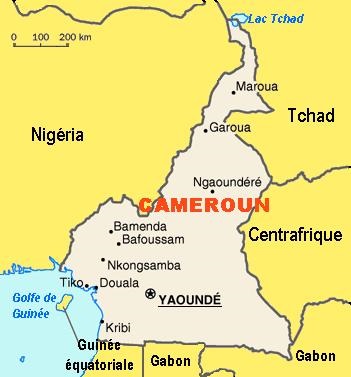
Map of Cameroon, with the capital Yaoundé

“Is it possible to compare what happened in 1955 in Cameroon with what we are experiencing today? Yes, we can say—with all the caution required for such a historical comparison—that the Cameroon of 2025 resembles, in many ways, that of 1955. If we need our history, it is not to complain, but to move forward. However, in Cameroon, history has not freed us: it has chained us. The events we are experiencing today, and which we will experience until October 12, could well be an almost exact repetition of a drama already played out during the colonial era—and never closed.

… It’s 1955. Two camps are facing off. On one side, those who want Cameroon to belong to its children. On the other, a colonial power that gives nothing away without repression. And between the two: collaborators, opportunists, wheeler-dealers, those who know where the truth lies but hope for crumbs. These don’t really believe in the system, but they find it to their advantage. They don’t support the regime out of conviction, but out of comfort, cowardice, or calculation. They know exactly what needs to be done for this country to change—but they prefer to wait for their appointment, their per diem, their prestigious position. They are the same people Fanon described: local elites who serve domination without bearing its name, intellectuals who rent from the established order, journalists of silence. In 1955, the colonial power identified two targets to be destroyed: the radicals, who must be killed, and the moderates, who must be bought or neutralized. Any voice in favor of an independent Cameroon is then a threat. We must divide, oppose, buy, crush…

… In May 1955, while Cameroon is still officially under French rule, the Union of the People of Cameroon (UPC) embodies a strong desire for independence. Its vision is clear: to build a free, sovereign nation, free from colonial rule and compromise. But this ambition is perceived as subversive. On May 20, 1955, the colonial government banned the UPC. In the following days, many cities go up in flames: Douala, Yaoundé, Ebolowa… The repression is brutal. It marks the beginning of what is now called the war of liberation, with its trail of violence, clandestinity, and sacrifices. Um Nyobè and his comrades are forced to flee, then to engage in armed struggle. In July 1955, the official ban on the UPC is confirmed. The nationalist movement is criminalized, the 1956 elections take place without it, and the independence project carried by the Cameroonian people is confiscated.”

Cameroon – Where Self-Hate is used to Keep a Country in Bondage

Flag of Cameroon

It is no secret that the political climate in Cameroon is like an open wound for sore eyes. The Cameroonian regime which has been in place for the past 43 years, and since independence given that the current leader Paul Biya had been in positions of power 20 years prior, is known for being addicted to magic tricks and forgery! The regime’s latest magic trick has been to eliminate the best candidate, Maurice Kamto, by a wave of a wand, or rather a pen, a virtual pen. Over the past two weeks, we have seen a high minister of the nation erase the strongest candidate’s name on the election website, and produce a candidate out of nowhere, and then cement the whole with the stamp of the regime’s judicial arm that is the Constitutional Court this past Monday; all of this crowned by the silence of that double-sided international community (IC) which is always partisan in the face of Cameroonian pain (Cameroon and the Double Standard of the ‘International Community’). What is shocking in Cameroon is not really that a system is trying to maintain itself, but that the population has turned on its highest fighter and defender in bouts of apathy, and hate, hate of itself! I hear people spew insults and hate against those who ask the populations to fight for their freedom, and for their strongest defender of the hour, Maurice Kamto. Yes, Cameroon is a repressive dictatorship, which the IC still calls a democracy, but it is not a crime to dream and wish for a better country! It is actually a divine right!

I have been trying to find words… but Jean-Pierre Bekolo described this weird Cameroonian behavior better in Actu Cameroun. Excerpts below are from Actu Cameroun. Enjoy!

======

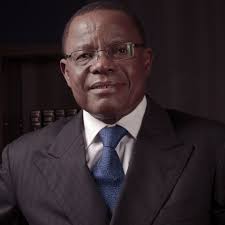
Maurice Kamto

For Jean-Pierre Bekolo, “Kamto is disturbing because at a time when everyone was accepting the established order, he spoke where we were silent, dreamed where we survived, proposed where we suffered. He is the slap of reality for those who had become accustomed to looking the other way. So we hate him. Not for what he did, but for what he awakens. Because in a dictatorship, the worst enemy is not the one who destroys, but the one who reminds us that everything could be different.”

… Kamto didn’t steal. Kamto didn’t kill. Kamto didn’t insult. Kamto didn’t call for war. He just wanted to be president. And for that, Maurice Kamto was imprisoned, insulted, demonized, humiliated, and censored. Why would many of his own fellow citizens rejoice in his suffering?

… This is a more serious, more deeply rooted phenomenon: a toxic, collective hatred against anyone who dares to stand up in a country where you are taught from childhood to walk bent over.

In a normal society, one can debate, oppose, and propose. In a normal society, wanting to lead one’s country is a civic act. But in some dictatorships, like the one that still haunts Cameroon under the spectral shadow of Paul Biya, wanting to be president is seen as a crime of lèse-majesté, madness, an insult to the order of things.

… Kamto is certainly not perfect; he even has many flaws, but no more than Paul Biya’s regime.

The most worrying thing is that this hatred against Kamto is a symptom of the regime’s success. It no longer rules solely through the police, the army, or fear. It rules from within people. It has colonized their minds. It has succeeded in making the people themselves insult the one who speaks in their name. It has turned society against its own sentinels. The system has entered our bodies.

It’s no longer just the government that represses—it’s society that self-censors, that self-punishes, that self-expels its own hopes. And this mechanism is much more sustainable than brute repression.

Tonight, Kamto may or may not be rejected by the Constitutional Council [he has been rejected], but the hatred against him, which is in fact hatred against ourselves, will remain, and that’s what must be stopped. Dreaming is not provocation.

Kamto is not hated for having acted badly if we compare his actions to those of the current system; we want him neutralized for having dared to imagine another outcome, another policy, another ethic, another way of being Cameroonian. He dared to disagree without fleeing, to protest without violence, to oppose without hatred. And this is what makes him unbearable in the eyes of a system that only knows how to operate in the shadows, contempt, and fear.

In all this, it is not Kamto who is to be pitied. It is Cameroon. A Cameroon that celebrates the punishment of those who want to love it differently. A Cameroon that rejoices when those who dare to hope are repressed. A Cameroon that laughs at the suffering of those who refuse to remain silent

….

FESPACO 2019: 50-year Anniversary of the African Film Festival

FESPACO 2019_1
FESPACO 2019 (featuring Maimouna N’Diaye – 2015 winner of Best Actress in a leading role)

2019 marks the 50th year anniversary of the FESPACO.  As a reminder, the FESPACO (Festival Panafricain du cinema et de la television de Ouagadougou) is the Panafrican Film and Television Festival of Ouagadougou, and is the largest African film festival, held biennally in Ouagadougou, the capital of  Burkina Faso. First established in 1969, and boasting some of Africa’s greatest writers and filmmakers (like Ousmane Sembene), the FESPACO offers a chance for African filmmakers and professionals to showcase their work, exchange ideas, and meet other filmmakers, and sponsors. Filmmakers from around the continent come together in Ouagadougou which is transformed into the Hollywood or the Cannes of the continent for this 8-day celebration. This year’s FESPACO ran from February 23 to March 2nd.

Golden Stallion of Yennenga
The Golden Stallion of Yennenga

To mark the 50th-year edition, a particular focus was set on reflecting on the collective memory and future of the pan-African cinema. Films from 16 African countries were vying for the Golden Stallion of Yennenga, a prize named after the story of a 12th century beautiful princess who is considered the mother of the Mossi people, Princess Yennenga.

The Golden Stallion of Yennenga 2019 was awarded to the movie “The Mercy of the Jungle” directed by Joel Karekezi of Rwanda. “The Mercy of the Jungle” shows the arduous road trip taken by foot of two soldiers lost in the jungle during the time of the Democratic Republic of Congo wars. It beat out 19 other candidates to get the Golden Stallion of Yennenga.  Marc Zinga, a Belgian, also took best actor for his role in “The Mercy of the Jungle.”

Rwanda_Joel Karekezi FESPACO 2019
Joel Karekezi, winner of the 2019 Golden Stallion of Yennenga (Fraternite Matin)

Second prize went to “Karma”, a drama by Egyptian director Khaled Youssef, while third place was awarded to Tunisian Ben Hohmound, who directed “Fatwa”, another drama.

This year also, women have complained about the fact that in 50 years, not a single woman has won the top prize at FESPACO. This highlights a problem of gender equality for film directors. South African actress Xolile Tshabalala, who featured in “Miraculous Weapons”, directed by Jean-Pierre Bekolo, a Cameroonian asked, “can it be that in 50 years, there hasn’t been a single woman capable of telling a great story to win the Fespaco?” Burkinabe director Apolline Traore said that any award had to be earned, not considered a token gesture, but admitted that there is a problem in gender equality for directors. “There’s no equality for the craft of a woman director, not just in Africa, but in the world,” she said.  Traore won a special prize on Friday for her film, “Desrances”.