

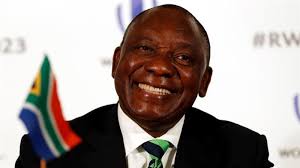
Today, President Cyril Ramaphosa has been sworn into office for a second term at the helm of South Africa. He remains in office even though his party, the African National Congress (ANC) party of South Africa, the party that brought the end of the apartheid regime, lost its parliamentary majority in a historic election on June 1, that puts South Africa on a new political path for the first time since the end of the apartheid system of white minority rule 30 years ago. The ANC won just over 40% of the votes cast, short of the majority; the Democratic Alliance (DA) won 22% of the votes coming in second; Jacob Zuma’s uMkhonto we Sizwe (MK) party came in third with 15% of the vote, while Julius Malema’s Economic Freedom Fighters (EFF) came in fourth with 9.5%. The ANC’s historic 30-year loss in South Africa and its subsequent unusual, for lack of a better word, coalition with the Democratic Alliance brings us exactly to try to understand its loss, and ask the fundamental question of why such an alliance? The strong performance by Zuma’s MK took many by surprise as it took the third place that many thought would go to Malema’s EFF. There is also speculation that MK took votes directly from the ANC, due in part to the bitter enmity between former president Zuma and current president Ramaphosa.
At the end of the elections, the leaders of the different parties shared: “The way to rescue South Africa is to break the ANC’s majority and we have done that,” said John Steenhuisen, the leader of the main opposition DA party. Julius Malema, the leader of the EFF opposition party, said that the ANC’s “entitlement of being the sole dominant party” was over. The MK Party said one of their conditions for any coalition or agreement with ANC was that Ramaphosa is removed as ANC leader and president. The ANC chose to keep Ramaphosa as president, and make an alliance with the DA.
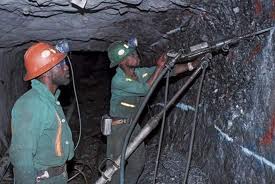
The reasons for the ANC’s loss (among many others): 1) South Africa has widespread poverty and extremely high levels of unemployment, and the ANC has struggled to raise the standard of living for millions ; 2) persistent lopsided economic inequalities, which still affects the black majority ; 3) rampant corruption ; 4) a lack of public service delivery, particularly in poorer areas ; 5) the frequent power cuts, where intermittent outages have been a near-constant for almost 2 years now; which highlights also the poor shape of infrastructures; 6) the soaring crime rate, with 130 murders and 80 rapes documented every single day in the last quarter of 2023. Above all, the fundamental problem of the ANC is that, at the end of the apartheid regime in 1994, when agreements between both sides were signed, the ANC got the political power, but not the economic; however, the economic power funds the politics and real change.
The ANC has now made an alliance with the DA which is perceived as a mostly white, middle-class party that doesn’t care about the poor which are mostly Black. It will not be an easy pill to swallow for the majority of Black South Africans who remember the suffering under the white-rule apartheid era to welcome the return of white figures to senior political positions (perhaps even the vice presidency?). With this new power-sharing agreement, the two parties would have to get over their past antagonism, particularly the DA’s longstanding and consistent criticism of ANC “corruption”. The free-market DA, is ideologically at odds with the ANC’s social welfare traditions, and seen by many as catering to the interests of the white minority. On paper, the two political opponents have agreed to a common agenda of fixing the country’s infrastructure, providing basic services such as water and power, and creating jobs. Moreover, the DA has been the most critical opposition party for years and doesn’t share the ANC’s pro-Russia and pro-China foreign policy. Next year, South Africa will take over the presidency of the Group of 20 industrialized and emerging-market nations. Will this alliance cause issues for the BRICS (Brazil – Russia – India – China – South Africa)?
To Jacob Zuma and many, this is an “unholy” alliance. Will he be proven wrong or right? To others, this alliance marks the end of the ANC, and the beginning of a very rocky period, which will usher back a system similar to pre-1994 era. What do you think ? To others still, this alliance breaks the monolithic landscape of South African politics, and hopefully ushers a ‘real’ change that will address the issues of South Africans. What will it be? Only time will tell!







 African Heritage