Today, Oliver Mtukudzi, one of Zimbabwe’s most renowned musicians, has changed his plane of existence. He passed away to join his ancestors, after over a four-decade career. He, like Bra Hugh, Hugh Masekela, was a giant of African music, particularly Afro-Jazz. Just like Bra Hugh, he passed away on the same day, a year later.
To his fans he was affectionately known as Tuku. With his deep voice, he came to prominence in the 1970s as one of the voices of the revolution fighting white-minority rule.
The singer and guitarist mixed several different styles to create his own distinctive Afro-jazz sound, known to his fans as “Tuku Music“.
In 2018, Mtukudzi spoke to Eyewitness News about why he chose to stay in the music business: “My music is about touching the hearts… never mind how old. If a baby is born today, she/he must be able to relate to my music.”
I live you here with one of my favorite from Tuku: Neria.
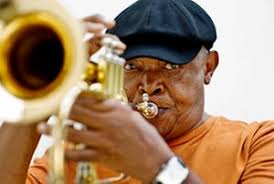
The trumpetist Hugh Masekela… no more “Strawberries” for me… but I still love dancing to the sound of the “The Boy is doing it!“. His genius, spirit and music remain with us. So Long to Africa’s Jazz Maestro: Hugh Masekela
We said goodbye to the name ‘Swaziland‘ for the country Swaziland, and welcomed Eswatini, officially known as the Kingdom of Eswatini.
The world said goodbye to Aretha Franklin, the African American singer, who reveled us with ‘I say a little prayer for you‘, ‘Respect‘, and so many other hit tubes.
Over 200 people lost their lives when a ferry capsized on Lake Victoria, in Tanzania. This marked the second-most deadliest ferry disaster in Tanzania.
Bra Hugh was involved in African heritage restoration. He gave a talk at the TEDx about African culture, and restoration. So I am leaving you here with his TEDx talk. He used to say, ” I’ve got to where am in life not because of something I brought to the world but through something I found – the wealth of African culture.” Enjoy!
This past Sunday, Hugh Masekela was honoured with a musical tribute at the University of Johannesburg (UJ)’s Soweto Campus. Various musicians performed at this final public tribute to the legendary artist, activist and composer.
Waiting for Rain (for Hugh Masekela) by Niyi Osundare
Your trumpet pumps the wind into a bold, metallic roar; the universe throbs in awe a worsted thunder whines in a blue corner of the sky
Waiting, waiting for the Rain
…
Memory hides in your song in the sepia folds of a tune which remembers its tongue in the throat which bakes the bread for our common feast
…
The Nile’s long-limbed gallop the limpid lyric of the Limp, the Limp, the Limpopo the Kukuruku’s tall whisper in the ears of the Kilimanjaro the sun never sets in the empire of your song your garland a forest of flowers and dappled murmurs
…
Niyi Osundare (from Pages from the Book of the Sun: New & Selected Poems, 2002, pp. 42-43
As a child, my mother had all of Hugh Masekela‘s CDs, and so I grew up listening to his music. A few years back, I was fortunate enough to attend one of his concerts when he was on tour in the US. As his colleague and friend Yvonne Chaka Chaka said in the interview below, Masekela was very down to earth. After his concert, he came out, and greeted us… so I queued up and even got a chance to talk to him! Imagine that! I talked to the great Hugh Masekela! His enthusiasm was contagious! I particularly loved what he could do with his trumpet and his voice: simply amazing! Some of my favorite tracks were ‘Chileshe,’ ‘Strawberries‘ (not sure why, maybe because of the children’s chorus or the fact that as a child I could taste those juicy strawberries), ‘Coal Train (Stimela),’ ‘Khawuleza,’ ‘ The Boyz doin’ it‘, and countless others. Maybe it was his voice, slightly cracked and full of power, or the magic that came out of his trumpet, or the mix of African sounds,… all of it combined made Hugh Masekela, a genius African Jazz Trumpeter and musician.
Ramopolo Hugh Masekela was born on April 4, 1939, in Witbank, South Africa, a coal-mining town near Johannesburg. His father, Thomas Selema Masekela, was a health inspector and noted sculptor; his mother, Pauline Bowers Masekela, was a social worker. From a young age, he developed an early affinity to music, and was encouraged by his mentors to further the study of it. During an early trip to the US, he met Louis Armstrong, who offered his band a gift: a trumpet.
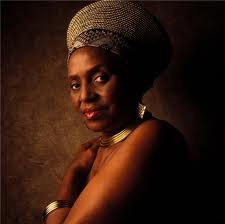
A true African beauty: Mama Africa, Miriam Makeba
Hugh Masekela was not just a musician, but he was also a political activist who fought against that hateful system called apartheid. Throughout his career, he performed with great names such as Jimi Hendrix, Janis Joplin, Otis Redding, and collaborated with Harry Belafonte, Herb Alpert, Bob Marley, Fela Kuti, Paul Simon — and his ex-wife, Miriam Makeba. For almost 30 years, “Bra Hugh,” as he was fondly known, was exiled from his native country.
And almost despite himself — as he struggled for decades with copious drug and alcohol abuse — Masekela became a leading international voice against apartheid. In that sense,Masekela was like the prodigal son, whom God greatly loved, and who despite the drugs, was redeemed and even founded an organization, the Musicians and Artists Assistance Program of South Africa, to help South Africans artists battle substance abuse.
He sought solace on his home continent. “For me, songs come like a tidal wave,” he said. “At this low point, for some reason, the tidal wave that whooshed in on me came all the way from the other side of the Atlantic: from Africa, from home.” Indeed, when one listens to songs like ‘Khawuleza’full of energy, one does feel the tidal wave!
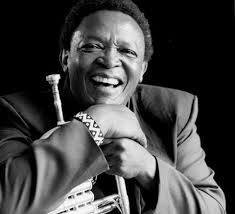
Hugh Masekela
Now Bra Hugh has taken his tidal wave and trumpet to the angels, who will be rocking to the sounds of ‘Chileshe‘ in heaven. I can clearly say that Hugh Masekela was one of the greatest, if not the greatest African Trumpeter of all. The New York Times published a very good article on him, the NPR as well, and the Guardian did a beautiful photo-Journal article on him: Hugh Masekela: life and career of the jazz trumpeter – in pictures. I live you with another great African singer, Yvonne Chaka Chaka, tribute to Bra Hugh. Enjoy!





 African Heritage