

This month, African authors made great wins and firsts: they won the most important literary awards in French literature: the Goncourt prize, which was awarded to Kamel Daoud for his third novel titled «Houris», and the Renaudot prize awarded to Gaël Faye pour «Jacaranda». These two books focus on some of the dark periods in the histories of Algeria in one, and Rwanda in the 1990s.

Algeria writer and journalist Kamel Daoud wrote the novel Houris about Algeria’s 1990 civil war. The novel has been banned in his home country of Algeria. In 1994, he entered journalism working for the French daily newspaper Quotidien d’Oran, where he wrote a popular column “Raïna Raïkoum” (Our Opinion, Your Opinion). In parallel, he started writing novels, publishing his first one in 2013, The Meursault, Investigation, a retelling of Albert Camus‘ famous novel The Stranger, which tells the story from the standpoint of the previously nameless Arab victim killed by Meursault; this first novel won the 2015 Goncourt first novel prize, the 2014 Prix François-Mauriac and the 2014 Prix des cinq continents de la Francophonie. The current book, Houris is a story which focuses on themes such as religion, freedom and identity; the Algerian government sees it as a political gesture amid the current heightened tensions between Algeria and France. A couple of days ago, a woman in Algeria, Saada Arbane accused Daoud of using her personal story without her consent in the award winning novel Houris; thus, she is suing him. Like the heroine of the book, she survived one of the massacres, and had her throat cut in an Islamic attack that wiped out her family. She uses a tube to talk, and was in 2015 one of the patient of Daoud’s wife, psychiatrist Aicha Dahdouh. She said that many details in the heroine’s life – “her speaking tube, her scars, her tattoos, her hairdresser” – came directly from her confidences to Ms. Dahdouh during sessions. Are these accusations founded? What will happen to this year’s Goncourt novel?
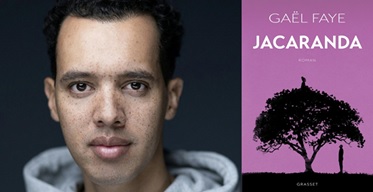
The winner of the Renaudot prize this year is Gaël Faye for his second novel “Jacaranda” which centers around the dark years of Rwanda. Gaël Faye, is a Franco-Rwandan author, French by his father and Rwandan by his mother, who used to be a London financier, before quitting and returning to live in Rwanda to focus on music, and whose first novel Petit Pays (Small Country) set in Burundi won, among others, the Goncourt prize in 2016. This time, his comeback novel Jacaranda is set in Rwanda, as a powerful narrative exploring the effects of the 1994 genocide and impacts on current and future generations and the need to the keep the memory. The story encompasses 4 generations, and tells the terrible story of this country which slowly emerges from darkness to light.

 African Heritage