
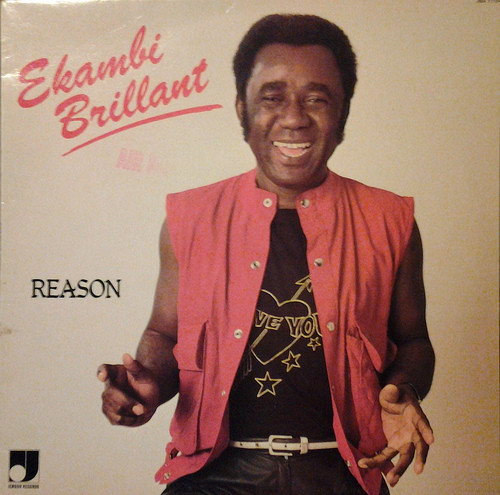
Ekambi Brillant was without doubt one of Cameroon’s greatest artists and one of the great African musicians. Originally from Dibombari, a village close to Douala, Brillant spent his youth with his maternal grandparents in Jebale, a suburban island of Douala. Per the words of Cameroonian author Elolongue Epanya Yondo, Jebale is known as the “emerald island, flamboyant jewel” on the Wouri estuary; no wonder, it served as the inspiration to a young Ekambi! His passion for music was born from ancestral roots and from watching and listening to fishermen singing on their way back home from the sea.

In 1962, Brillant was admitted to the 6th grade in the prestigious Lycée Général Leclerc (General-Leclerc High School) of Yaoundé. It was there, under the careful attention of Mr. Daniel Zane, his French music teacher, that he learned to play music, particularly the guitar. In 1971, at the age of 23, he stopped his studies and moved to Douala, where he joined the band The Crack’s as a guitarist. He applied for and won the music contest launched by the Office of French Broadcasting Television (ORTF), judged by some of the continent’s great musical personalities such as Manu Dibango and Francis Bebey. Thanks to this prize, he was able to release his first 45 rpm record, Jonguèlè la Ndolo, which sold 20,000 copies.
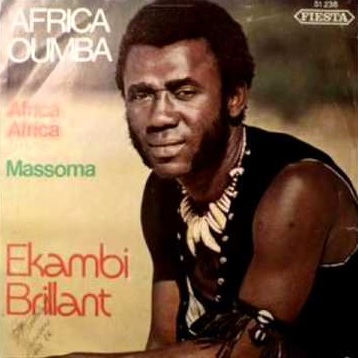
In 1972, he flew to France, where, with the support of Jean Dikoto Mandengue, a Cameroonian bassist, he produced and released his second 45 rpm record with Phonogram. The album was a major success and sold 25,000 copies. As stated before, Ekambi Brillant’s love for his country, his people, and music can be felt in every single note!
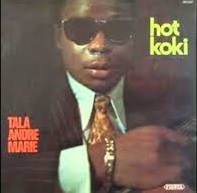
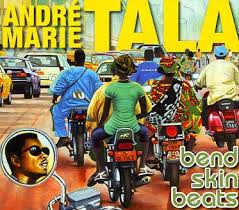
In 1975, he ended his deal with Phonogram and began a collaboration with Slim Pezin, with whom he released the album Africa Oumba, which included the major hit song “Elongui.” The song became an incredible source of inspiration for several other artists, both African and European, including the Greek singer Demis Roussos, who sang it as “L.O.V.E. Got a Hold of Me.” Roussos’ version used the exact melody of Ekambi Brillant’s original makossa hit, but he never acknowledged Ekambi Brillant—not even with a tribute. It was only later that African fans (including yours truly) loudly affirmed that this was Brillant’s original work. In the past, African compositions have often been adapted/plagiarized without formal credit, especially when entering European or American markets. Roussos earned millions from Ekambi’s song, without giving him a penny. This is reminiscent of Andre Marie Tala, Cameroon’s Blind Musical Virtuoso, and his song Hot Koki which was plagiarized by James Brown, or more recently Shakira with “Waka Waka (This Time for Africa)” “adapting” the “Zamina mina (Zangaléwa)” song and claiming in an interview to have gotten inspiration while walking on a beach. The album Africa Oumba reached a record of about 4 million sales (diamond disk). Further collaborations with Slim Pezin as producer yielded titles such as Soul Castel and Musunguédi. In 1976, Ekambi Brillant formed his band known as The Ebis (Ekambi Brillant Show).
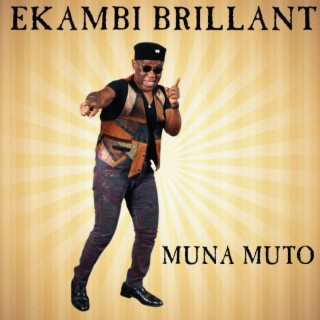
Over the course of his career, Brillant released nearly 20 albums. Brillant passed away on 12 December 2022 in Douala at the age of 74, after a battle with a long-term illness. Unfortunately, like many in Cameroon, he was a brilliant soul who barely received the recognition his genius deserved. He was from a generation of outstanding Cameroonian artists.
Ekambi Brillant remained an inspiration to generations of artists, propelling several careers and guiding many musicians—both Cameroonian, such as Marthe Zambo, Valery Lobe, and Alhaji Touré, and African, such as Cella Stella and Angelique Kidjo. He was so advanced, brilliant, and inspired … going through his music portfolio is filled with great sounds and a great source of inspiration. Cameroonians should get inspired from his work and celebrate his genius.
.



 African Heritage