Reclaiming African History : Bimbia, a Hidden Slave Fort on the Coasts of Cameroon

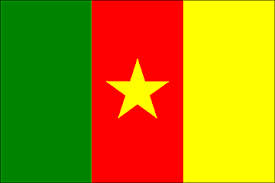
Flag of Cameroon

A few years ago, a colleague of mine visited Antigua, and when he came back, he told me that during his tour of the island, his guide told him that most of the island was peopled by descendants of slaves who all came from Cameroon. I was stunned, as at the time, I did not know of a slave fort in Cameroon, and how could an entire island in the Caribbean be filled with descendants from Cameroon? This was when I started digging, and a few years later, Pr. Lisa Marie Aubrey’s research came out which validated the whole story.
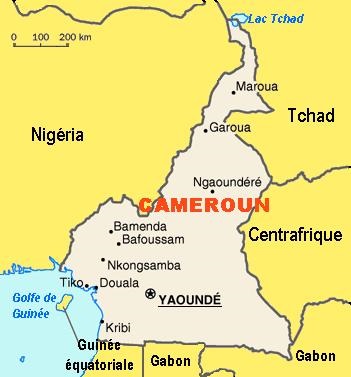
Map of Cameroon, with the capital Yaoundé

Today, we will talk about a slave fort whose existence was not even known until the 2000s, yet, it is said that at least 10% of all African slaves taken to the new world must have passed through its “gates”. This slave fort is Bimbia, in Cameroon. It is listed nowhere in Cameroonian history books, and even in African books. Even today, children learning about the slave trade in Cameroon, do not know about Bimbia. There is indeed a great silence about the existence of slave forts in the crook of the Gulf of Guinea whether in Nigeria, Cameroon, or Gabon.

Welcome Sign to the Bimbia Site, in Bimbia, Cameroon

Located in the South West region of Cameroon, Bimbia is a small village about 5 km from the seaside city of Limbe, on the hills surrounding the city center. It is strategically located on the Gulf of Guinea, in the nook of its elbow, east of the Bight of Biafra, between Rio del Rey and Cameroons River (as the Wouri river was known back then). The site was only re-discovered in 1987 during the earthworks on the church dedicated to the memory of Alfred Saker church, and is now classified as a national heritage of Cameroon.

Vestiges of the slave fort at Bimbia

What brought Bimbia back from its oblivion? Most likely the fact that since Ancestry DNA has gained in popularity over the years, many African American actors, producers, politicians, such Spike Lee, Quincy Jones, Eddie Murphy, Blair Underwood, Chris Tucker, Condoleeza Rice, Oprah Winfrey, or Brazilian Regina Ribeiro, and more have found their origins in Cameroon. This was surprising, and led to more research to find out where their ancestors could have come from, given the absence of information on slave forts in the region.

Ruins of the slave prison in Bimbia

According to Pr. Lisa Marie Aubrey of Arizona State University who published her study in 2014, thousands of Africans were taken from the slave fort of Bimbia, similar to Gorée in Senegal, or more. From her research, she found out that at least 166 slave ships left the coasts of Cameroon. Bimbia is not the only slave fort found in the country, Rio del Rey near the Bakassi peninsula and Cameroons Town (Douala) are the others. From the ships inventoried, 9 left the territory in 1600, 98 in 1700, and 59 in 1800. 15 left from Bimbia, 9 from Rio del Rey, and 32 from the Wouri River.

The slaves who arrived in Bimbia from hinterland came from everywhere, but the majority came from the Grassfields, the Bamileke region, Northwest, Noun, Mbam, Tikar region, and even as far north as the Hausa region.

Ruins of where the slaves were fed, the manger, at Bimbia

For anyone visiting today, the road to Bimbia from Limbe is a tough road, sometimes impracticable during the rainy season; the site is hidden in a deep and lush green forest, with huge bamboos around. As a matter of fact, the slaves who ran away used this hostile environment with treacherous ravines, hills, and volcanic rocks to hide, to their advantage.

Bimbia was considered such a good location for the ships traveling the coast because of Nicholls Island whose south coast constitutes a deep sea port with at least 6 m depth, thus allowing ships to accost easily with no fear of crashing. Nicholls Island is located 300 m away from Bimbia which is on the continent; thus providing slavers with a perfect path to the continent for slaves. Once the slavers had gotten slaves from Bimbia, they could also make transit on the nearby island of Fernando Po (Bioko – where Malabo, the capital of Equatorial Guinea is located). Thus, slaves were brought from the hinterland, and kept in Bimbia, while awaiting the arrival of the slave ships; once the slave ship arrived, the slaves were taken from Bimbia to nearby Nicholls Island 300 m away, from where they were then moved into the ships to far away destinations never to see their continent again.

Nicholls Island, viewed from Bimbia

For today’s visitor, there are still vestiges that testify of Bimbia’s dark history: brick columns, rusty chains hooked on the falling walls, iron chunks here and there, bells, and the manger where the slaves were fed..

Although Bimbia has now entered the national heritage of Cameroon, it has not yet become as popular a destination as it should, like Goree, Elmina Castle, Cape Coast and others. This may be more due to the lack of organization in the overall tourism of the country, bad governance, and also the accessibility to the place. This is a call to more historians, particularly Cameroonian and African historians to restore the story of Bimbia and many of the other hidden slave forts of West and Central Africa.

Reclaiming African History: Gorée and the Slave Trade in Senegal

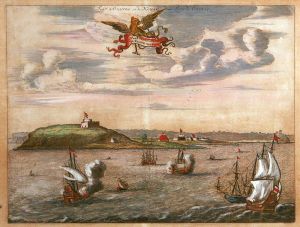
Goree_Le_fort_d'Orange_et_de_Nassau_à_l'île_de_Gorée_17th century
Goree Island: Fort of Nassau and Orange, 17th century (Wikipedia)

Today I will be talking about the island of Gorée, in Senegal. Located less than 4 km from the city of Dakar, Gorée island offers a sure route for ships. Since the 15th century, it has been the center of rivalries between diverse European nations which used it for slave trading. Locally known as “Beer” or “Ber” or “Bir” in Wolof, it was first named “La Palma” by Portuguese in 1444, with some ancient maps also showing the name “Beseguiche” for it. The Dutch navy named it “Goede Reede” or “Good Harbor” in 1588. In 1677, the island was occupied by the French.

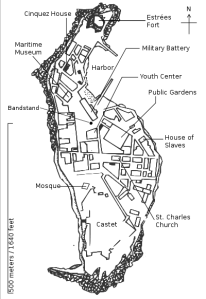
Goree_Map_of_Goree
Map of Goree (Wikipedia)

Before I dive further into the atrocities of human trading on the island, I would like to address ideas circulated by some stating that the island of Gorée was never really used for slave trading and that slave trading had been done in Saint Louis in the north or south in Gambia. These claims were so outrageous that the Senegalese government sponsored an international conference on the history of the island, and researched and found original archives from the French Port of Nantes showing that between 1763 and 1775 alone, one port had traded more than 103,000 slaves from Gorée; this thus shows that Gorée was indeed at the epicenter of slave trading, and stating otherwise is an attempt at falsifying history. The first slaves were taken from Gorée in 1536, and the trade continued at least until 1848.

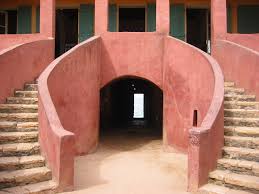
Goree1w
House of Slaves (Wikipedia)

Now back to the island itself. One of the most important if not the main stop on the island is the house of slaves. Of Reddish/pinkish color, this house was first built by the Dutch in 1776, and is the last standing slave house on the island. At the end of the 18th century, the island was a prosperous crossroad of merchants, soldiers, and administrators, with at its center slave trade. Today, it serves as a museum and a memorial to humanity. The upper part of the building like most slave houses was used by the Europeans who lived there; while the bottom part was used to house slaves packed on top of each other in humid, sordid, and disgusting rooms built for 15-20 people but housing sometimes over 100 people, while waiting to be taken to the Americas. On the bottom floor, there is a room used to pack young women among which the slave traders would come every night and choose those who will be used for their sexual pleasures; if any of these women were found pregnant from these traders’ visits, they were freed on the island or sent to Saint Louis. There were also rooms to house strong men, children, and women. There was also a dark tiny room where the most defiant ones were stacked on top of each other, and salty water was seeped through the walls to force dehydration and later death. The value of a man depended on his weight and muscles; the minimum weight was 60 kg. The value of a child depended on his/her denture, while that of a woman on her breasts.

Goree_Jeunes filles
Cell for young girls in the House of Slaves

The small size of the island made it easy for merchants to control their captives. The surrounding waters are so deep that any attempt at escaping would mean sure drowning. With a 5kg metal ball permanently attached to their feet or necks, a captured African who ever tried running away would surely drown in deep sea.

From the door of no return, the slaves were loaded onto ships which took them across the Atlantic. This was their last time on African soil.

Entire families were captured and brought to Gorée, but their destinations were seldom the same: the father could be shipped to America, while the Mother to Brazil, and the child to Haiti or the West indies. Separation was irrevocable.

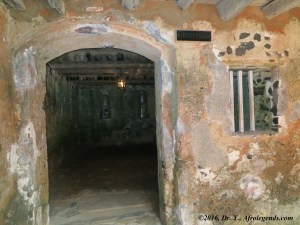
Goree_Cellule
Cell in the House of Slaves

Not too far from the house of slaves is the castle which was used as a warehouse for millions of captured slaves.

After the abolition of slavery in 1848, the island’s population declined, with many moving to Dakar. Since 1978, the island is a UNESCO World Heritage Site.

Today the island of Gorée is a memorial to all those who were separated from their loved ones, their lands, their society, their culture, uprooted and sold like cattle across the globe. It serves as a reminder of humanity’s ugly past, and what it is capable of for capital gain, hatred, and greed. Gorée is and should remain all of that, but also a true reminder to future generations that mankind should be loved, and a man’s life is precious, not to be sold like cattle. Attempts by some to absolve themselves from their ugly pasts should not stop those who were hurt from remembering, for celebrating the lives of those who perished, who were uprooted, and those who survived. Truth is truth whether beautiful or not, it is truth, and remembering is acknowledging all the good those who lost their lives, those who survived, gave to the world, because America will not be America without the Slaves’s lives and hard labor; Brazil will not be Brazil without the blood of those slaves; France will not be France, or Great Britain will not be Great Britain without the sweat and blood of African slaves. So Gorée is a reminder of all of that, and should be cherished for it.

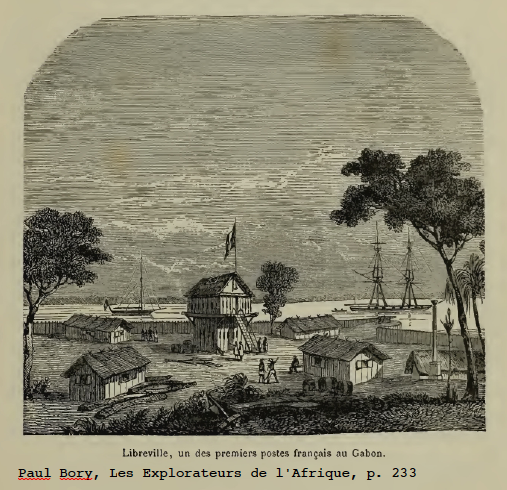
Libreville: Why the Name?

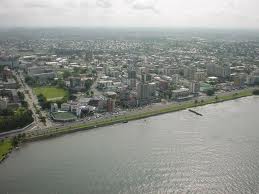
Libreville today
Libreville today, 2012

Two capitals in Africa share the same name: Freetown in Sierra Leone, and Libreville in Gabon; one in English, the other in French.  I always knew that Freetown was named the way it was because it was a city founded in 1792 by freed African American Slaves also called Nova Scotian who had fought on the side of the British during the American Revolutionary war.  The land was named Freetown as a land for freed slaves.

Libreville in 1846
Libreville in 1846

But why on earth is Libreville named free town?  Since, there were apparently no freed slaves returning from the colonies, or running away from slavery?  I recently found out that the story of Libreville is very similar to that of Freetown, as it does involve slaves!  Yes… that’s right!  In the old days, i.e. prior to French occupation (the French acquired land there in 1839), the area that is today Libreville was inhabited by the Mpongwé people since the 11th century.  In 1846, l’Elizia, a slave ship en route for Brazil, carrying slaves for sale was captured by the French navy near Loango, offshore from the Mbongwé’s kingdom.  260 negroes were thus freed and taken to the Island of Gorée in Senegal in 1846.  After an intervention from Paris, 30 – 50 of these slaves will return to Gabon, where the French governor Bouët-Willaumez will take advantage of this, and found Libreville (French for ‘free town’ or ‘free city’) in 1849, in close proximity to Fort d’Aumale, where the French navy was installed to “fight” against slavery.  The small town, Libreville, was then organized as a “French christian village” around 5 places: the Mpongwé’s place, the freedom place, the Bakélé place, the Pahué place, and the Bulu place, after the main tribes in the area at the time.