Word of Caution to Our Governments

Ibises and a crocodile

As the end of the year slowly drifts in, we would like to share a word of caution to our legal governments of the AES and all those fighting for the freedom of their people around the globe. The temptation is high to party, it is the end of the year after all, and there were awesome results throughout the year; we have worked hard and rightfully deserve a break. However, these loved governments, those who fight for the dignity of their people are in the target of the well-known predators who tend to use periods like these to strike. We can all remember the Christmas coups that have happened over the years! Just ask the late Henri Konan Bédié, president of Cote d’Ivoire, who was destituted by Robert Guéï on Christmas Eve 24 December 1999, in a coup which has entered the annals of history as the Christmas Eve’s coup. Guéï said that “Nous sommes venus balayer la maison” (we have come to sweep the house); he was himself swept out later on. We remember the Saint-Sylvestre coup d’état in the Central African Republic when army leader Jean-Bédel Bokassa and his military officers staged a coup against the government of President David Dacko. There are also coups that have happened in the early days of the new year. Even in Burkina Faso, there was the 1966 Upper Voltan coup d’état in Upper Volta (now Burkina Faso) which took place on 3 January when Sangoulé Lamizana overthrew Maurice Yaméogo. Or like the ones by Gnassingbé Eyadéma in Togo that took out Sylvanus Olympio on January 13, 1963, and then Nicolas Grunitzky on the same day 4 years later in 1967. The examples are countless.

After the stunt the Nigerian army pulled, flying into Burkina Faso after the so-called coup attempt against Patrice Talon at the beginning of the month, the countries of the AES should be on high alert. Our South American brothers should also be on high alert. We are not saying that coups d’état only take place at the end of the year, as there are no dates for coups, just clear opportunities and weaknesses that the enemy (who is always standing ready) exploits. We are just saying to remain on high alert! When you are doing good for your people, wherever you are, you stand for something that the enemy hates… Remain alert at all times! Don’t stop the good you are doing, but remain alert!

African Queens of Textiles: the Nana Benz of Togo

Wax Hollandais
Wax Hollandais

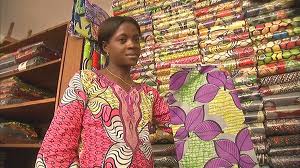
Growing up, I remember watching documentaries about the Nana Benz of Togo: these powerful ladies who ‘owned’ the country solely by selling textiles.  I also remember that my grandmother was (and still is) very fond of ‘Wax Hollandais‘, and how many women will go through hoops to have access to these pricey wax prints traveling to Togo or Ghana to acquire them.  They all loved to dress in these bright colors, with these bright and often lavish wax prints.

Well,… the Nana Benz of Togo, made their mark internationally by trading in wax printed cloth starting in the 1930’s and 1950’s, before independence.  They started from nothing to rise to be among the country’s richest.  They imported the fabric from Dutch companies based in Indonesia.  From there the material arrived on Togo’s shores and the women distributed it throughout West and Central Africa. They became known as Nana Benz because in the mid-50’s through 80’s they had made so much money that they were the only people who could afford Mercedes Benz cars, so much so that the government used to hire their Mercedes Benz for important guests and state functions. The phrase ‘Nana Benz’ came to symbolize the freedom, ingenuity, creativity, pride, achievement, success, and courage of these women. A woman did not become a Nana Benz through inheritance, or society’s choice, but through ingenuity, and struggle.

Nana Benz in the 1970s

The Nana Benz positioned Lomé, Togo’s capital, into a regional centre of textile distribution and dominated the trade in wax prints. Between 1976 and 1984, at least 40% of the commercial business in Togo which was in the informal sector, was in the hands of the Nana Benz. During the 1970’s, the scope of this trade in textile was so important that it exceeded Togo’s phosphate industry, the country’s primary source of revenue. The Nana Benz rose in wealth and power.  Although many were uneducated, they travelled abroad on business, and played a leading role in national politics under the one-party rule of the Rassemblement du Peuple Togolais (RPT). They rose in society’s echelons.  During his presidency, Gnassingbé Eyadéma, appointed them to high offices in the women’s wing of the RPT.  A leading Nana Benz, Madame A. Amedome, was appointed Minister of Social Welfare in 1977 even though she could not read or write.

A Nanette in Lome Market (Source: Arte TV)
A Nanette in Lomé Market (Source: Arte TV)

They sold the ‘wax hollandais’ made by the dutch, in particular by the dutch company VLISCO implanted in Togo since 1846 to sell textiles to Africans.  No offense, but implanted since 1846? Why are Togolese or Africans not making their own wax prints 150 years later? We love it… so we should make it too!  What were African textiles before then? was it mostly ‘bogolan‘-type of textile?  This should be the subject of another post.  In the meantime, let us celebrate the ingenuity of the Nana Benz.  Check out this photo-journal entitled The Nana Benz, An African Epopée by Bruno Zanzottera.  If you are ever in Lomé, make a stop at the market and buy the right fabric known as Vlisco that made the Nana Benz famous.  Listen to this song praising the Nana Benz by the Togolese singer King Mensah. Don’t forget to check out the documentary Reflets Sud on ‘le tissu pagne’, as well as the Togolese opera Madame Paradji ou la Reine des Nana Benz which describes to life of a powerful Nana Benz.

Sylvanus Olympio: Togo’s first president

Sylvanus Olympio
Sylvanus Olympio

Today I will be talking about Sylvanus Olympio, the first president of Togo, a small country in West Africa, which was once a German colony, and later became a French and British protectorate.  The story of Togo is a little bit like that of my country Cameroon which was once a German colony but was later divided between France and Great Britain as protectorates (this will be a story for another day).

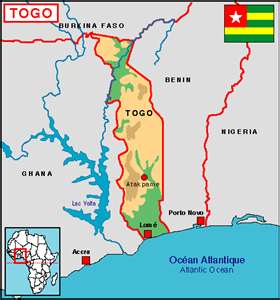
Sylvanus Olympio really embodies what the singer Tiken Jah Fakoly said in one of his songs “They [Europeans] divided the world among themselves, nothing amazes me anymore: part of the Mandinka empire found its way in the Wolof empire, part of the Mossi empire found its way in the Ghana empire, part of the Soussou empire found its way into the Mandinka empire and part of the Mandinka empire found its way into the Mossi’s empire …” what do I mean by this? Sylvanus Olympio was from Dahomey (current day Benin) of Afro-Brazilian ancestry, born in Kpando in actual Ghana, and became president of Togo!  How was this possible? well because of the balkanization of Africa or rather the scramble for Africa which took place at the Berlin Conference in 1884 where Europeans split Africa among themselves dividing entire empires, people, villages, nations.  One of these people were the Ewe people in West Africa who found themselves split among three countries: Gold Coast (Ghana), Togoland (Togo), and Dahomey (Benin).

Map of Togo
Map of Togo

Sylvanus Olympio believed that the Ewe people should be reunited under one flag…. unfortunately he could never come to agreement with Kwame Nkrumah, his Ghanaian counterpart, and other powers at play.  Olympio tried to unite and educate the people about their new nation, and the needs for development.  From what a Togolese friend of mine once said, he used to ride a bike from villages to villages talking to people in their languages and educating them about politics, development, and patriotism, at a time when there was no radio (1950s) in most places.

Togo -- A History
Togo — A History

Sylvanus Olympio barely had a chance to execute anything politically.  He was assassinated in a military coup in the US embassy compound in Lomé in 1963, two years after Togo’s independence and his investiture as president.  The presidential palace was just next to the US embassy in Lomé.  When Olympio heard gunshots, he sent his family to safety, and climbed the wall that separated him to the American embassy.  Once there, he knocked at the door of the embassy to seek refuge… Unfortunately, the embassy was closed.  Sylvanus hid in one of the cars in the American compound.  The American Ambassador comes back to the compound and finds Olympio in the car who explains everything; the ambassador claimed not to have the keys to open the door… and asked him to wait while he would go find the keys.  Rumors says that the American ambassador probably called his French counterpart who then contacted the gunmen and sent them to the American compound.  Sylvanus was found in the car, and gunned by Eyadéma, one of Africa’s worst dictators backed by the West.  The Time magazine wrote an article on that day entitled Togo: Death at the Gate; JFK also had a statement about his death.  The journalist, Alain Foka, of RFI did a piece on Olympio.

Many wonder what Togo would have become under someone with such love, brilliance, and vision for his country.  No one will ever know.  Please enjoy this rare footage of an interview of Sylvanus Olympio to NBC in the US.

Don’t forget to watch the second part.