France Delivers Classified Colonization Documents to Cameroon

French flag

It is no secret that France perpetrated a genocide in Cameroon in the years leading to independence and after, French President Acknowledges French Genocide in Cameroon. It is also no secret that France perpetrated a genocide in Algeria and Madagascar during the same periods (France Admits Murder of Algerians … A Step Forward?, In Madagascar, People remember one of the deadliest French colonial wars in history). Those were some of the bloodiest and deadliest French colonial wars in history, counting over at least a combined 2 million deaths, and countless injured, and displaced populations.

Ruben Um Nyobé
Ruben Um Nyobé, assassinated during the French genocide in Cameroon

Last week, France delivered classified files to a joint commission of historians from both France and Cameroon; this comes 2 years after France sped up access to Algeria War secret archives (why did it take so long?). The mixed multidisciplinary commission was created 6 months ago under the impulse of Cameroonian and French civil societies to focus on the role of France in Cameroon during the period ranging from 1945 to 1971. The commission is led by the French historian Karine Ramondy and the Cameroonian singer Blick Bassy. A big part of the work now is to collect all the information, 70+ year old information, and interviews from the remaining witnesses. Although we applaud this, and we look forward to this part of Cameroonian history being brought forward, we cannot help but wonder why the French government waited 70 years to declassify these documents? It is so reminiscent of King Philippe of Belgium’s Visit to the Democratic Republic of Congo (DRC) to, among other things, acknowledge the last surviving World War II Congolese veteran soldier who served for Belgium, 97 year-old Corporal Albert Kunyuku; or the story of the 9 tirailleurs Senegalais who at last are now allowed to receive their pension while living in Senegal after serving to free up France during World wars I and II (they are aged 85 to 96 years old); or the British Government which apologized for Mau Mau atrocities. Sadly, this happens when the last witnesses are on their deathbeds, or dead already. We hope to be proven wrong, but these acts feel like these governments think, “let’s open this now that there are no survivors to point out our faults, nobody to complain on the other side, no eyewitnesses left, and just gratitude for our candid opening of classified documents.” We, the descendants, and generations to come will not forget, and we will keep the memories of our ancestors alive.

Excerpts below are from AfricaNews.

===== 

UPC Leaders (L. to R.) front row: Castor Osende Afana, Abel Kingué, Ruben Um Nyobé, Felix Moumié, and Ernest Ouandié
UPC Leaders (L. to R.) front row: Castor Osende Afana, Abel Kingué, Ruben Um Nyobé, Felix Moumié, and Ernest Ouandié, all killed by France during the Cameroonian wars of independence

In a recent turn of events, Paris willingly delivered its classified files to a commission of historians from both countries charged by President Paul Biya of Cameroon and French President Emmanuel Macron to unveil the gruesome yet often ignored part of colonisation and decolonization process of the central African country, as it would seem colonial history remained a negligible component of French Identity.

This comes as one of many actions undertaken by French President Macron to prone a new relationship with Africa.

Since president Macron, was committed to it, Cameroonian researchers benefit from conditions of access to these files which are classified,” stated Mrs. Ramondy.

Decapitated Heads during the genocide in Cameroon

Comprised of 15 historians, the team, directed by Karine Ramondy, will work on France’s involvement in Cameroon in the repression of independence and opposition movements between 1945 and 1971.

Nevertheless, some historians, such as Boniface Mongo-Mboussa, conceptualize memory work as selective and belonging to the realm of enchantment as opposed to the truth of history which is undeniable and indelible.

Fossi Jacob and the French Genocide in Cameroon: Testimony

Cameroun_Chutes de la Metche_1Below is the testimony of one of Fossi Jacob ‘s daughters. If you ever get a chance, you should read “My Dad was Fossi Jacob: Itinerary of a martyr of the Cameroonian Independence” written by Fossi Jacob’s first son, Abraham Sighoko Fossi (“Papa s’appelait Fossi Jacob: Itinéraire d’un martyr de l’indépendance du Cameroun“). To learn more about France’s genocide in Cameroon, the books ‘Kamerun. La guerre cachee de la France en Afrique noire‘ (Kamerun. France’s Hidden War in Black Africa) and Mongo Beti ‘s ‘Main Basse sur le Cameroun, autopsie d’une décolonisation (Cruel hand on Cameroon, autopsy of a decolonization).

12 September should be commemorated in Cameroon in memory of Fossi Jacob, a man who, by his selfless act, saved countless lives, and in memory of all the victims of the French genocide.

Fossi Jacob: A Cameroonian Hero and France’s Genocide in Cameroon

Cameroun_Chutes de la Metche_1
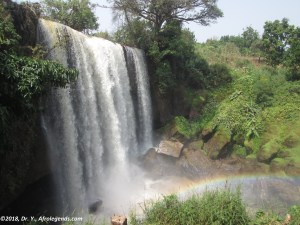
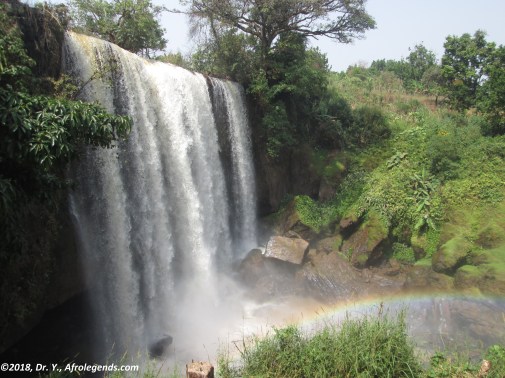
Chutes de la Metche (Metche Waterfalls)

I have to talk about Fossi Jacob, the Chutes de la Métché (The Metché Waterfalls), and the Bamiléké genocide perpetrated by France in Cameroon (French President Acknowledges French Genocide in Cameroon). Fossi Jacob is a hero, and should be celebrated throughout Cameroon. A monument should be erected at the Chutes de la Metché to celebrate his memory and those of countless others who lost their lives there, just outside Bafoussam on the way to Mbouda, in the Western province of Cameroon.

Cameroun_Chutes de la Metche_4.jpg
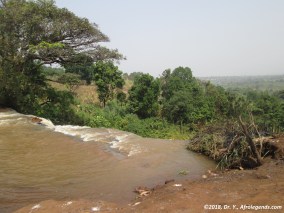
The top of the Chutes de la Metche

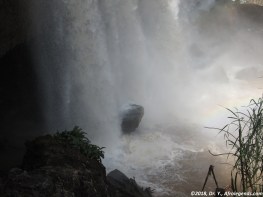
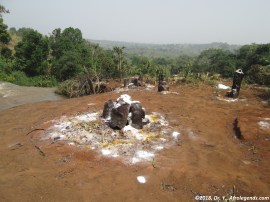
When I visited the Chutes de la Metché, I finally understood the magnitude of the entire thing. Picture this: you are forcefully pushed from a 20 m tall waterfalls, with giant sharp-edged volcanic boulders at its bottom; there is no way anybody thrown down those waterfalls can come out alive; either you die from the fall, or your head hits one of those giants sharp boulders. This is what French officials did to so-called ‘rebels’ between 1950 and 1970 in Cameroon; in reality, most of these ‘rebels’ were simple peasants. During my visit, I was speechless! It was like visiting Gorée island, or Elmina Castle, it felt so sinister, yet so beautiful! Sinister, because it was as if I could feel the souls of all those who had been pushed there. It was as if I could hear their screams, feel their pain! Beautiful because the paths were covered with salt and palm oil, and you could tell that this was a place of pilgrimage, a place where people came to commune with their ancestors, who disappeared there, without sepulchers.

Cameroun_Chutes de la Metche_3.jpg
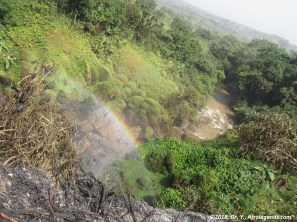
Chutes de la Metche, view from the top

Why should we celebrate Fossi Jacob? Jacob Fossi had been imprisoned like countless others in the prison of Bafoussam during the dark days of Cameroon; he was a member of the UPC. Every night, the French officers would fill trucks with ‘rebels’ (from accounts, at least 350 every night), and drive them to the edge of the Chutes de la Metché, where, with a gun in hand, they would push the ‘rebels’ one by one down the waterfalls. Those who did not die from the falls were shot!

Cameroun_Chutes de la Metche_5
Chutes de la Metche, at the bottom

On that fateful day of 12 September 1959, when it was Jacob Fossi‘s turn (he was second to last), he called for the French official and told him to get close and that he would tell him where all the other ‘rebels’ were hiding. He promised to tell him everything. When the French official came close, Fossi Jacob held onto him, and jumped with him into the waterfalls. They were killed instantly. This caused the French colonial government to stop taking people to the Chutes de la Metché to be killed. The story of Fossi Jacob is known because on that fateful day, Fo Sokoudjou, the actual King of Bamendjou, who was going to be the last one to be pushed down the fall was not pushed in because of Fossi’s courageous act. Lucky one! Imagine the many lives saved because of one man’s selfless act!

Chutes de la Metche_1
Salt and palm oil offerings to commemorate the ancestors at the Chutes de la Metche waterfalls

Today, the Chutes de la Metché has become a place of pilgrimage for countless people, particularly Bamiléké people. During that dark era of the history of Cameroon, many lost their sons, husbands, fathers, relatives, and this is the only place where they can come and pray to their ancestors. Salt and palm oil strew the path as people come to make offerings to commemorate their long-gone loved ones. A monument should be erected there to celebrate the courage of Fossi Jacob who, thanks to his actions, stopped the horrendous actions of the French colonial government in those waterfalls. The Chutes de la Metché should be a place of pilgrimage for all Cameroonians, and beyond!

Cameroun_Chutes de la Metche_1.jpg