France Delivers Classified Colonization Documents to Cameroon

French flag

It is no secret that France perpetrated a genocide in Cameroon in the years leading to independence and after, French President Acknowledges French Genocide in Cameroon. It is also no secret that France perpetrated a genocide in Algeria and Madagascar during the same periods (France Admits Murder of Algerians … A Step Forward?, In Madagascar, People remember one of the deadliest French colonial wars in history). Those were some of the bloodiest and deadliest French colonial wars in history, counting over at least a combined 2 million deaths, and countless injured, and displaced populations.

Ruben Um Nyobé
Ruben Um Nyobé, assassinated during the French genocide in Cameroon

Last week, France delivered classified files to a joint commission of historians from both France and Cameroon; this comes 2 years after France sped up access to Algeria War secret archives (why did it take so long?). The mixed multidisciplinary commission was created 6 months ago under the impulse of Cameroonian and French civil societies to focus on the role of France in Cameroon during the period ranging from 1945 to 1971. The commission is led by the French historian Karine Ramondy and the Cameroonian singer Blick Bassy. A big part of the work now is to collect all the information, 70+ year old information, and interviews from the remaining witnesses. Although we applaud this, and we look forward to this part of Cameroonian history being brought forward, we cannot help but wonder why the French government waited 70 years to declassify these documents? It is so reminiscent of King Philippe of Belgium’s Visit to the Democratic Republic of Congo (DRC) to, among other things, acknowledge the last surviving World War II Congolese veteran soldier who served for Belgium, 97 year-old Corporal Albert Kunyuku; or the story of the 9 tirailleurs Senegalais who at last are now allowed to receive their pension while living in Senegal after serving to free up France during World wars I and II (they are aged 85 to 96 years old); or the British Government which apologized for Mau Mau atrocities. Sadly, this happens when the last witnesses are on their deathbeds, or dead already. We hope to be proven wrong, but these acts feel like these governments think, “let’s open this now that there are no survivors to point out our faults, nobody to complain on the other side, no eyewitnesses left, and just gratitude for our candid opening of classified documents.” We, the descendants, and generations to come will not forget, and we will keep the memories of our ancestors alive.

Excerpts below are from AfricaNews.

===== 

UPC Leaders (L. to R.) front row: Castor Osende Afana, Abel Kingué, Ruben Um Nyobé, Felix Moumié, and Ernest Ouandié
UPC Leaders (L. to R.) front row: Castor Osende Afana, Abel Kingué, Ruben Um Nyobé, Felix Moumié, and Ernest Ouandié, all killed by France during the Cameroonian wars of independence

In a recent turn of events, Paris willingly delivered its classified files to a commission of historians from both countries charged by President Paul Biya of Cameroon and French President Emmanuel Macron to unveil the gruesome yet often ignored part of colonisation and decolonization process of the central African country, as it would seem colonial history remained a negligible component of French Identity.

This comes as one of many actions undertaken by French President Macron to prone a new relationship with Africa.

Since president Macron, was committed to it, Cameroonian researchers benefit from conditions of access to these files which are classified,” stated Mrs. Ramondy.

Decapitated Heads during the genocide in Cameroon

Comprised of 15 historians, the team, directed by Karine Ramondy, will work on France’s involvement in Cameroon in the repression of independence and opposition movements between 1945 and 1971.

Nevertheless, some historians, such as Boniface Mongo-Mboussa, conceptualize memory work as selective and belonging to the realm of enchantment as opposed to the truth of history which is undeniable and indelible.

France Admits Murder of Algerians … A Step Forward?

French flag

Last week, France admitted the abduction and murder of Algerians during the war of independence. The events that happened during those times have been described as a genocide committed by France in Algeria. Is Macron’s admission enough to patch the Franco-Algerian relationship? I don’t know why, but it sounds more like France wants to keep Algerian natural gas (largest natural gas producer in the world), and oil flowing while they have closed their economy due to pandemic, to keep getting those free billions from Africa. I know, I am a skeptic, but would you blame me when France conveniently waits for all survivors to die to admit the abduction and murder of Algerians? I acknowledge that it is a step, but does Macron expects us to clap? to hug him for it? I don’t know why these European presidents and kings think that admission of murder means apology [French President Acknowledges French Genocide in Cameroon, Belgian King Expresses ‘Deepest Regrets’ for Colonial Past in Congo, Namibia Rightfully Rejects 10 million Euros Compensation for Genocide]. Like I have said before, it’s like France just woke up and said, “Yes… I killed your fathers, mothers, brothers, sisters, children… I tortured them… I murdered your freedom fighters… Idisplaced your families… it is all true… so what? what would you do about it?” The arrogance! Where is the apology? Where is the compensation for years of trauma? Where is the reparation? Until there is a clear “I am sorry”, until there is a clear “here is what we will do to right the wrongs,” until there is a clear “correction and inclusion in the history textbooks, opening of all classified documents”…. until there is a clear “respect for those killed, and for those living today” until then, there will be no respect for arrogant presidents! Excerpts below are from the BBC. Please also check what was written about the event on RFI.

====

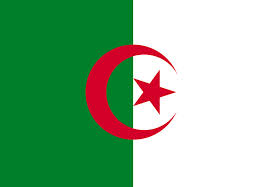
Flag of Algeria

France’s admission about the abduction and murder of Algerians during the war of independence is a big step but it is not enough, according to French historian Fabrice Riceputi.

It is a huge moment for the grandchildren of lawyer Ali Boumendjel, who were received by French President Emmanuel Macron to hear the truth about the assassination of their grandfather.

His widow Malika Boumendjel, who fought for decades for the truth about her husband’s disappearance rejecting the French official account of suicide, passed away last year aged 101 without hearing the acknowledgement she waited for all her life [isn’t it so convenient that France waits for survivors to die to “admit”?].

For Riceputi a rexamination of the French colonial rule in Algeria should not be restricted to “emblematic figures” such as Maurice Audin and Ali Boumendjel.

The French army in Algeria adopted since 1957 the technique of “forced disappearance” as a systematic method to crush the nationalists, according to Mr Riceputi.

It consisted of abducting, murdering and disposing of the body of any Algerian they suspect of having links with the FLN which led the war for independence.

There were tens of thousands in the capital city, Algiers and many more throughout the country, he says.

It was a “system designed to terrify the population” and silence dissidents and supporters of independence, the historian says.

It has also left dozens of thousands of families and generations of their descendants suffering decades of emotional and psychological trauma.

Mr Riceputi believes that the French authorities are avoiding the essence of the truth through these “selected” and “high-profile” admissions. …

The routine torture and murder of Algerian civilians by the French army during the seven-year war that some say claimed 1.5 million Algerian lives has been hushed up for decades.

Indeed, France has never even recognized the existence of a “war” in Algeria. Until 1999 they have always called it the “events” or “troubles” of Algiers. The atrocities committed by their army were described as “operations to maintain order”.