Celebrating the Centennial of Frantz Fanon’s Birth

Frantz Fanon
Frantz Fanon

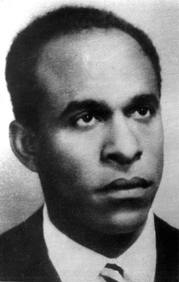
This year, we are celebrating the centennial of the birth of Frantz Fanon, the great revolutionary psychiatrist, philosopher, and anti-colonial French author from Martinique. His work explored the psychological effects of colonization and the struggles of decolonization, and inspired liberation movements across Africa, Latin America, the Caribbean, and even the United States. To date, his works,  Black Skin, White Masks (1952) and The Wretched of the Earth (1961) remain essential reading in postcolonial studies and political philosophy. He died quite young at the age of 36, but he left his imprints everywhere, particularly on the African continent, and in particularly Algeria where he lived and fought for the liberation of the Algerian people.
Lumumba detained
Lumumba detained

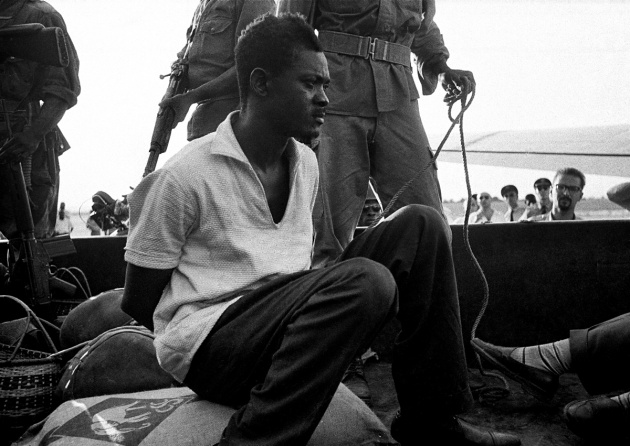
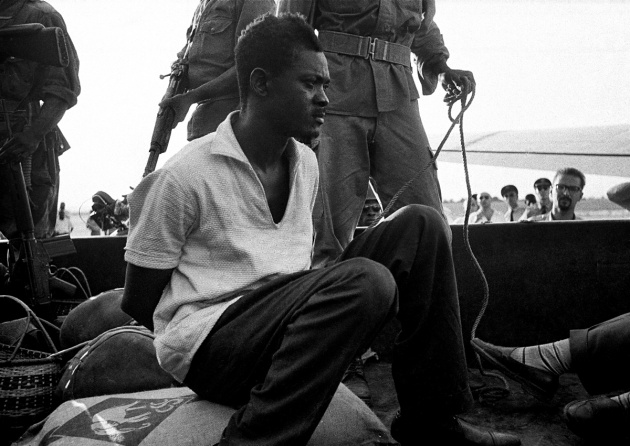
Fanon saw Congo, then Belgian Congo, clearly, as the center for pan-african solidarity, and believed that the assassination of its prime minister, Patrice Emery Lumumba, was a blow not just to Congo, but to the entire African liberation movement. When Lumumba was alive, he had invited Fanon to attend the inter-African Conference in 1960, thus showing his active engagement in Congo’s political future.   He wrote on Congo, Lumumba’s death: Could we (Africans) have acted differently? Like Amilcar Cabral, he warned of the presence of “traitors from within” seeing that the greatest threat to African independence was not just Western imperialism, but also African elites who had internalized colonial values and acted against their own people; like Moise Tshombe who played a great role in Lumumba’s demise.

Please join the Frantz Fanon Foundation in celebrating Fanon’s life and impacts on African liberation. There will be events throughout the year. Below are some excerpts from Fanon’s article, Lumumba’s death: Could we (Africans) have acted differently? For more, check it out. His words still ring true!

Patrice Lumumba

The great success of the enemies of Africa is to have corrupted the Africans themselves.  It is true that these Africans had vested interest in the murder of Lumumba.  Heads of puppet governments, in a fake independence, faced everyday by massive opposition from their peoples, it did not take long to convince themselves that the real independence of the Congo would put them personally at risk.

And first by Lumumba when he sought the intervention of the UN.  He should have never called on the United Nations.  The UN has never been able to properly solve problems brought to man’s consciousness by colonialism, and whenever it has intervened, it was to actually come to the aid of the colonial power to the oppressed country [see … think about MONUSCO].

In reality the UN is the legal card used by imperialist interests when brute force has failed.  The sharing, the mixed controlled joint committees, under guardianship are international means of torture to break the will of the people, cultivating anarchy, banditry and misery.

Lumumba’s fault was then initially to believe in the impartiality of the UN. He forgot that the UN, particularly in the current state, is only a reserve assembly established by the Greats to continue, between two armed conflicts, the “peaceful struggle” for the balkanization of the world.

Africans should remember this lesson.  If outside help is necessary to us, let us call on our friends.  Only they can truly and fully help us achieve our goals precisely because the friendship between us is a friendship of struggles. [The AES should remember this].

A Trip down Memory Lane : Lumumba’s death: Could we (Africans) have acted differently?

Patrice Lumumba

As always, ahead of June 30, the ‘independence’ day of the Democratic Republic of Congo (DRC), we write about  Patrice Emery Lumumba, the first Prime Minister of Congo. This time, we will take a trip down memory lane with the great article by the prominent anti-colonial thinker, activist and writer, Frantz Fanon, which was published earlier here on Afrolegends in French in 2011.  (You will find the original here).  In view of all the events occurring in Africa (The New Scramble for Africa, Creation of the AES and destabilization attempts) with the United Nations (UN) approval, I thought that this article, published in 1964, was so important that I had translated it into English for all to read! In the article, Fanon talks about the kind of Africans who betray their people, and the uselessness (to us, Africans) of the UN which only serves Western interests. The scenario is the same and has not changed over the past 6 decades: wherever the UN lands in a country, all of sudden there are troubles, tensions, massacres, (ONUCI, MINUSMA, MONUSCO, …), etc.  Enjoy… For the full article, check out: Lumumba’s death: Could we (Africans) have acted differently?

—————————————————

Frantz Fanon
Frantz Fanon

The great success of the enemies of Africa is to have corrupted the Africans themselves.  It is true that these Africans had vested interest in the murder of Lumumba.  Heads of puppet governments, in a fake independence, faced everyday by massive opposition from their peoples, it did not take long to convince themselves that the real independence of the Congo would put them personally at risk.  And there were other Africans, a little less puppet, but who get frightened when it comes to disengaging Africa from the West.  It seems as if these African Heads of State are still afraid to face Africa.  These, also, though less actively, but consciously, contributed to the deterioration of the situation in Congo.  Little by little, we were reaching the agreement in the West that there was a need to intervene in Congo, we could not let things evolve at this pace.

Gradually, the idea of a UN intervention was taking shape. So we can say today that two simultaneous errors were committed by Africans.

Patrice Lumumba
Patrice Lumumba

And first by Lumumba when he sought the intervention of the UN.  He should have never called on the United Nations.  The UN has never been able to properly solve problems brought to man’s consciousness by colonialism, and whenever it has intervened, it was to actually come to the aid of the colonial power to the oppressed country.  Look at Cameroon.  What kind of peace do the subjects of Mr. Ahidjo kept in check by a French expeditionary force, which most of the time, made ​​its debut in Algeria, enjoy?  The UN, however, controlled the autodetermination of Cameroon and the French government has set up a “Provisional Executive” there.

Look at Viet-Nam.  Look at Laos.

It is not true to say that the UN fail because the causes are too difficult.

Map of the Democratic Republic of Congo

In reality the UN is the legal card used by imperialist interests when brute force has failed.  The sharing, the mixed controlled joint committees, under guardianship are international means of torture to break the will of the people, cultivating anarchy, banditry and misery.

… Lumumba’s fault was then initially to believe in the impartiality of the UN. He forgot that the UN, particularly in the current state, is only a reserve assembly established by the Greats to continue, between two armed conflicts, the “peaceful struggle” for the balkanization of the world. …

Africans should remember this lesson.  If outside help is necessary to us, let us call on our friends.  Only they can truly and fully help us achieve our goals precisely because the friendship between us is a friendship of struggles.

… Our mistake, as Africans, is to have forgotten that the enemy never backs down sincerely.  He never understands.  He surrenders, but is not converted.

Our mistake is to have believed that the enemy had lost its militancy and its harmfulness.  If Lumumba disturbs, Lumumba should disappear.

Hesitation in commiting murder has never been a feature of imperialism.

Lumumba’s death: Could we (Africans) have acted differently?

Frantz Fanon
Frantz Fanon

This is a great article by Frantz Fanon, which I published earlier in French.  (You will find the original here).  In view of all the events occurring in Africa (bombing of Cote d’Ivoire and Libya) with the UN approval, I thought that this article, published in 1964, was so important that I had to translate it into english for all to read! Enjoy…

—————————————————

The great success of the enemies of Africa is to have corrupted the Africans themselves.  It is true that these Africans had vested interest in the murder of Lumumba.  Heads of puppet governments, in a fake independence, faced everyday by massive opposition from their peoples, it did not take long to convince themselves that the real independence of the Congo would put them personally at risk.  And there were other Africans, a little less puppet, but who get frightened when it comes to disengaging Africa from the West.  It seems as if these African Heads of State are still afraid to face Africa.  These, also, though less actively, but consciously, contributed to the deterioration of the situation in Congo.  Little by little, we were reaching the agreement in the West that there was a need to intervene in Congo, we could not let things evolve at this pace.

Gradually, the idea of a UN intervention was taking shape. So we can say today that two simultaneous errors were committed by Africans.

Patrice Lumumba
Patrice Lumumba

And first by Lumumba when he sought the intervention of the UN.  He should have never called on the United Nations.  The UN has never been able to properly solve problems brought to man’s consciousness by colonialism, and whenever it has intervened, it was to actually come to the aid of the colonial power to the oppressed country.  Look at Cameroon.  What kind of peace do the subjects of Mr. Ahidjo kept in check by a French expeditionary force, which most of the time, made ​​its debut in Algeria, enjoy?  The UN, however, controlled the autodetermination of Cameroon and the French government has set up a “Provisional Executive” there.

Look at Viet-Nam.  Look at Laos.

It is not true to say that the UN fail because the causes are too difficult.

In reality the UN is the legal card used by imperialist interests when brute force has failed.  The sharing, the mixed controlled joint committees, under guardianship are international means of torture to break the will of the people, cultivating anarchy, banditry and misery.

Continue reading “Lumumba’s death: Could we (Africans) have acted differently?”

La mort de Lumumba, l’Afrique aurait-elle pu faire autrement?

Patrice Lumumbe arrêté

L’article qui suit vient du site 2011, Année Frantz Fanon. La similarité entre la démise de Patrice Lumumba 50 ans plutot, et celle de Laurent Gbagbo aujourd’hui pousse a se poser beaucoup de questions. Ici le grand écrivain antillais Frantz Fanon, en 1960, fait une analyse de ce qui n’a pas marché, et ce que Lumumba et les Africains en général devraient faire. Quelle pertinence! et quelle réalité!

———————————————————–

Le grand succès des ennemis de l’Afrique, c’est d’avoir corrompu les Africains eux-mêmes.
Il est vrai que ces Africains étaient directement intéressés par le meurtre de Lumumba. Chefs de gouvernements fantoches, au sein d’une indépendance fantoche, confrontés jour après jour à une opposition massive de leurs peuples, ils n’ont pas été longs à se convaincre que l’indépendance réelle du Congo les mettrait personnellement en danger.  Et il y eut d’autres Africains, un peu moins fantoches, mais qui s’effraient dès qu’il est question de désengager l’Afrique de l’Occident. On dirait que ces Chefs d’État africains ont toujours peur de se trouver face à l’Afrique. Ceux-là aussi, moins activement, mais consciemment, ont contribué à la détérioration de la situation au Congo. Petit à petit, on se  mettait d’accord en Occident qu’il fallait intervenir au Congo, qu’on ne pouvait laisser les choses évoluer à ce rythme.
Petit à petit, l’idée d’une intervention de l’ONU prenait corps. Alors on peut dire aujourd’hui que deux erreurs simultanées ont été commises par les Africains.
Et d’abord par Lumumba quand il sollicita l’intervention de l’ONU.  Il ne fallait pas faire appel à l’ONU.  L’ONU n’a jamais été capable de régler valablement un seul des problèmes posés à la conscience de l’homme par le colonialisme, et chaque fois qu’elle est intervenue, c’était pour venir concrètement au secours de la puissance colonialiste du pays oppresseur. Voyez le Cameroun. De quelle paix jouissent les sujets de M. Ahidjo tenus en respect par un corps expéditionnaire français qui, la plupart du temps, a fait ses premières armes en Algérie ? L’ONU a cependant contrôlé l’autodétermination du Cameroun et le gouvernement français y a installé un “exécutif provisoire”.
Voyez le Viet-Nam.  Voyez le Laos.
Il n’est pas vrai de dire que l’ONU échoue parce que les causes sont difficiles.
En réalité l’ONU est la carte juridique qu’utilisent les intérêts impérialistes  quand la carte de la force brute a échoué. Les partages, les commissions mixtes contrôlées, les mises sous tutelle sont des moyens internationaux de torturer, de briser la volonté d’expression des peuples, de cultiver l’anarchie, le banditisme et la misère.
Car enfin, avant l’arrivée de l’ONU, il n’y avait pas de massacres au Congo.  Après les bruits hallucinants propagés à dessein à l’occasion du départ des Belges, on ne comptait qu’une dizaine de morts.  Mais depuis l’arrivée de l’ONU, on a pris l’habitude chaque matin d’apprendre que les Congolais s’entremassacraient.
On nous dit aujourd’hui que des provocations répétées furent montées par des Belges déguisés en soldats de l’Organisation des Nations Unies.  On nous révèle aujourd’hui que des fonctionnaires civils de l’ONU avaient en fait mis en place un nouveau gouvernement le troisième jour de l’investiture de Lumumba.  Alors on comprend beaucoup mieux ce que l’on a appelé la violence, la rigidité, la susceptibilité de Lumumba.
Tout montre en fait que Lumumba fut anormalement calme.
Les chefs de mission de l’ONU prenaient contact avec les ennemis de Lumumba et avec eux arrêtaient des décisions qui engageaient l’État du Congo.
Comment un chef de gouvernement doit-il réagir dans ce cas ? Le but recherché et atteint est le suivant : manifester l’absence d’autorité, prouver la carence de l’État. Donc motiver la mise sous séquestre du Congo.
Le tort de Lumumba a été alors dans un premier temps de croire en l’impartialité amicale de l’ONU.
Il oubliait singulièrement que l’ONU dans l’état actuel n’est qu’une assemblée de réserve, mise sur pied par les Grands, pour continuer entre deux conflits
armés la “lutte pacifique” pour le partage du monde.  Lire la suite …