Letsile Tebogo : “Africans can be Sprinters, too!”

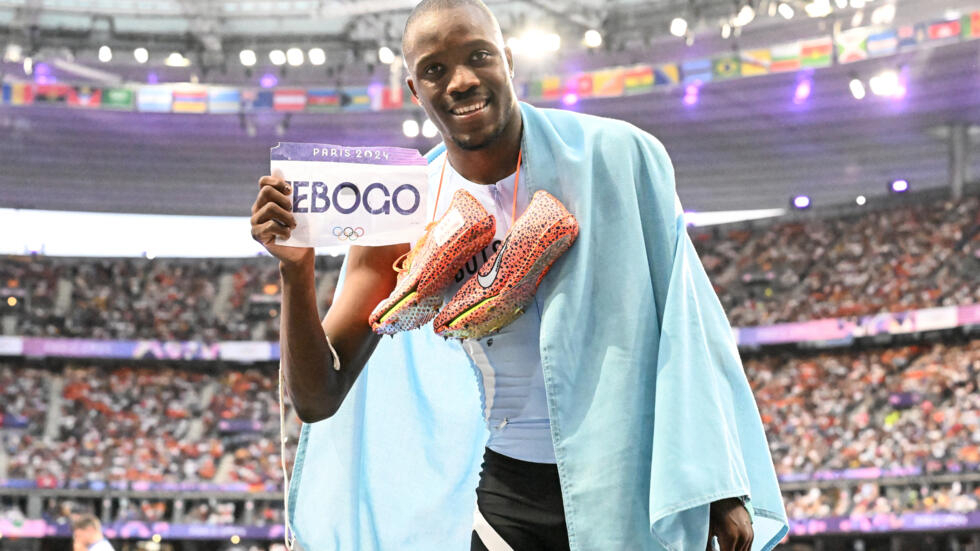
Letsile Tebogo after winning gold in 200m (Source: Onuaonline)

Since Frankie Fredericks of Namibia, who used to always win silver at the Olympics in the 1990s, no African has gotten close to the gold medal in the 100-200 m distances until Letsile Tebogo of Botswana who won the first African gold in the Men’s 200 m discipline ever, at the Paris 2024 Olympics. He also helped Botswana and an African country land silver in 4 x 400 m Men’s relay. By winning the gold medal at the Paris 2024 Olympics, Tebogo became the first Olympic gold medal winner from Botswana and the first runner from Africa to win the 200m final at the Olympic Games. He set a new African record by shaving off 0.04 seconds off his previous best to clock 19.46 s. “Africans can be sprinters, too,” he said in an interview to NBC Sports.
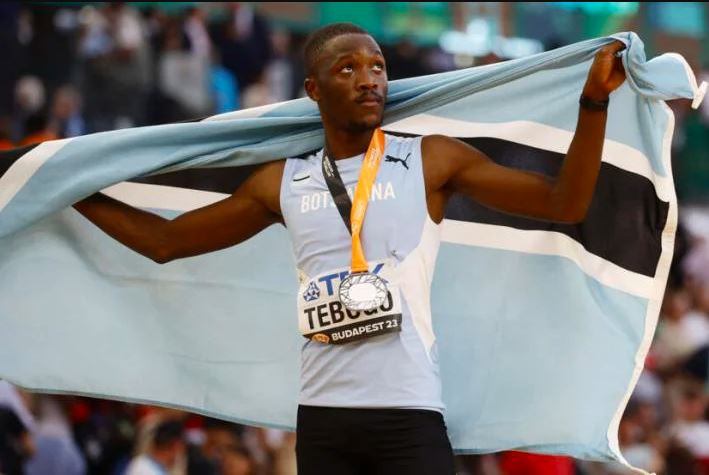
Letsile Tebogo (Source: SportNewsAfrica)

Tebogo started with a strong love for football (soccer). At the age of six, Tebogo was already a well-rounded footballer and sprinter. His teachers encouraged him to practice both sports, but injuries hampered his football career so he opted to focus solely on track. As he explained in an interview with Runblogrun.com., “I used to run past people and won medals. I also played football. Every time though I went to play football I was being benched.” “[This] made me frustrated…and prompted my decision to go back to athletics as I saw [that] I am able to put food on the table for my family from that,” added the runner whose single mother Seratiwa Tebogo struggled to raise him and his younger sibling. His mother, who was his pillar, passed away this past May and did not get to see her son achieve this great accomplishment, but there is no doubt that she would be very proud of her son. Tebogo dedicated his 200m gold medal win to her, and held up his shoe to the camera after the race, which featured his mother’s birthdate on it. He also painted her initials on his nails. … I’ve had such a huge blow that affected me deeply so I’m still trying to get the confidence back into the body. It’s not about injuries, it is all about my mum.” Reflecting on his Paris Olympic victory, Tebogo shared, “It was a truly memorable race. Heading into the final, my coach told me his job was done and the rest was up to me—to finish the race healthy, medal or not. I’m glad I could finish stronger than before, carrying the memory of my mother with every stride. She’s watching from above, and I know she’s proud. I chose not to mark the date of her death on my shoe because it’s too emotional.”
Flag of Botswana

He “didn’t take sprints seriously until 2019” when he raced his first major 100m in 10.68s and clocked 21.12s in the 200m. “For a while, I didn’t pay more attention to athletics until about 2018-2019 when I realized I could go professional with it,” Tebogo said. “The motivation to get into athletics was from watching the big guys like Isaac MakwalaKarabo Sibanda and Nijel Amos,” explained Tebogo. “However, I just really wanted some change in the country, so I had to do something different from the big guys, that’s why I opted to compete in the 100m and 200m.

Like so many track and field athletes in the sprint distances, he looks up to Usain Bolt, the fastest man in the world and 8-times Olympic champion, and dreams of running faster and faster. “It’s time for Africa to take charge over the sprints and every event,” he said in the interview with Runblogrun.com.

Since his Olympic triumphant victory in Paris, he has been taking charge by winning 2 other games so far. Keep an eye out for Tebogo tonight at the Diamond League event in Rome, Italy.

African Victories at the Paris 2024 Olympics

The Paris 2024 Olympics have just ended, and African athletes have shined in usual disciplines i.e. those where we are used to seeing them, but also on those never conquered before. They made us proud and served us joy, endurance, and passion. At these games, we also saw more Africans representing other countries European and even Asian and winning medals: Bahrain, Qatar, Japan, Netherlands, France, Spain, Portugal, Italy, Canada, US, … and winning for them as well. In essence, Africa shined a lot! For this article, our focus will be on African athletes representing the continent.

Faith Kipyegon (Source: StarConnectMedia)

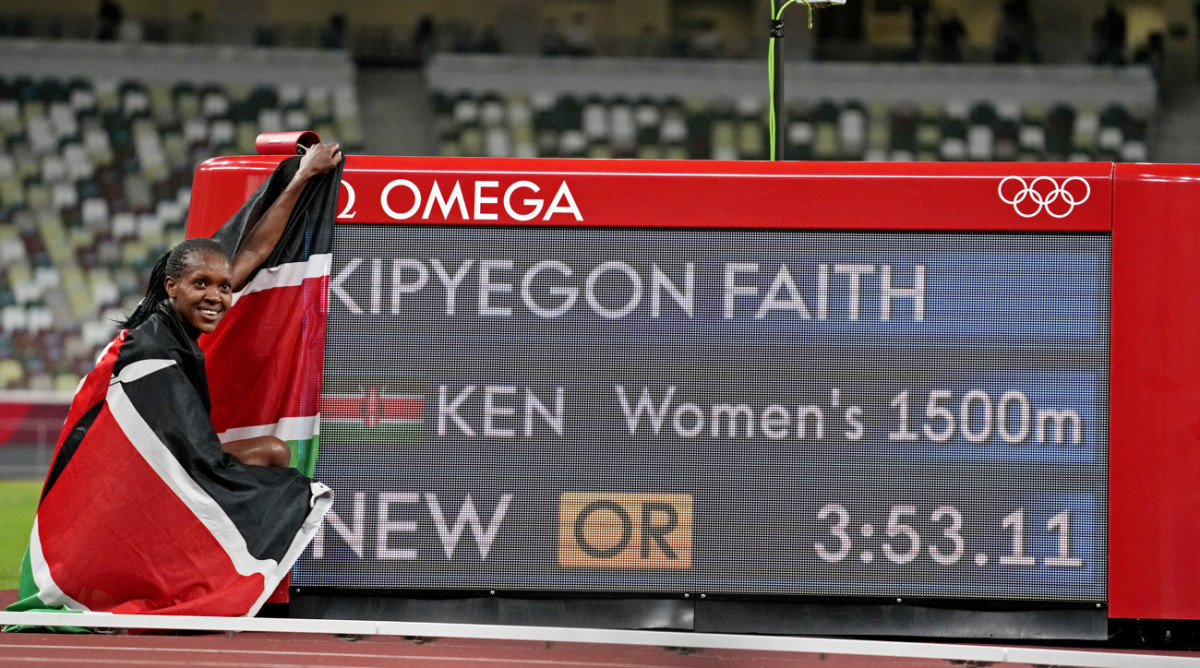
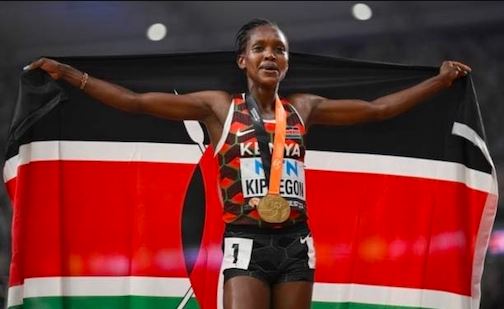
We had faith in our Kenyan sister Faith Kipyegon… and she delivered: Faith won her 3rd successive Olympic gold in the women’s 1500 m, making her the first African to ever win gold in the same event 3 times in a row. Last Monday, she had won silver in a very contested Women’s 5000 m at the Olympics, where she was first disqualified for track obstruction, and then reinstated as the silver medal winner after appeal by the Kenyan federation. Her compatriot Beatrice Chebet won the first Kenyan gold medal of these Olympics in the Women’s 5000 m, and proved unbeatable in the Women’s 10,000 m delivering gold there as well. Mary Moraa, Faith Cherotich, and Hellen Obiri all took home the bronze medal in the Women’s 800 m, Women’s 3000m steeplechase, and in the Women’s Marathon respectively. Emmanuel Wanyonyi won gold in the Men’s 800 m. Ronald Kwemoi won silver in the Men’s 5000 m, while Benson Kipruto and Abraham Kibiwot took home bronze in the Men’s Marathon and Men’s 3000m steeplechase respectively. In total, Kenya earned 11 olympic medals: 4 gold, 2 silver, and 5 bronzes.

Letsile Tebogo after winning gold in 200m (Source: Onuaonline)

We had our eyes on Letsile Tebogo who missed out on the 100m  podium, but earned the top most place in the Men’s 200 m thus giving Botswana and Africa as a whole its first ever gold medal in a 200 m. Since our brother Frankie Fredericks of Namibia who used to delight us, and always ended with silver, this is a very first. Tebogo also led the Botswana’s team to a silver medal in the Men’s 4x400m relay, again a first for any African country ever, letting the world know that Africans can no longer be discarded in these disciplines.

Joshua Cheptegei (Source: Dailyexpress.co.ug)

Before the Olympics, our Ugandan brother Joshua Cheptegei told us that this will be his last Olympics, and promised us magic. Cheptegei did not disappoint, he ran his heart out serving us a performance worthy of a novel, coming from behind to win gold in the Men’s 10,000 m, and landing Uganda its first gold at the games. Compatriot Peruth Chemutai won silver in the Women’s 3000m steeplechase.

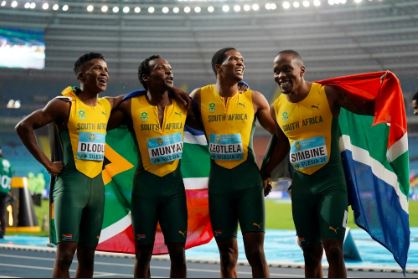
South African team after 4 x 100m Relay win (Source: dispatchlive.co.za)

In swimming, Tatjana Smith of South Africa made her country proud by winning gold and silver medals in the Women’s 200m and 100m breaststroke events; recall that Smith, born Schoenmaker, was the Tokyo 2020 Gold medalist in the 200m breaststroke category. South Africa also landed 2 bronze medals in rugby and mountain bike with Alan Hatherly. Although flag bearer Akani Simbine ended 4th in a highly contested Men’s 100 m track and field, Simbine and the rest of his team delivered us silver in the Men’s 4 x 100 m relay, again a first for South Africa, and for Africa as a whole in winning a medal in the discipline. Jo-Ane van Dyk delivered silver in the Women’s javelin throw.

Algeria took home 2 gold and 1 bronze medals, one gold from the controversial athlete Imane Khelif who is said to be a man competing in female boxing, and another gold from Kaylia Nemour in the Women’s Uneven bars in artistic gymnastics. Nemour‘s victory is a first for Africans in gymnastics. Djamel Sedjati took home the bronze medal in the Men’s 800 m.

Tamirat Tola wins Men’s Marathon at Paris 2024 Olympics (Source: afrik.com)

Tamirat Tola, who was just added to the Ethiopian Olympics’s team 2 weeks ago after his compatriot Sisay Lemma was injured, took home the gold medal in the Men’s Marathon, making Ethiopia and our legend Haile Gebrselassie who opened the marathon, proud. Berihu Aregawi won a silver medal for his participation in the Men’s 10,000 m. Tsige Duguma and Tigst Assefa both won silver in the Women’s 800 m, and the Women’s Marathon respectively.

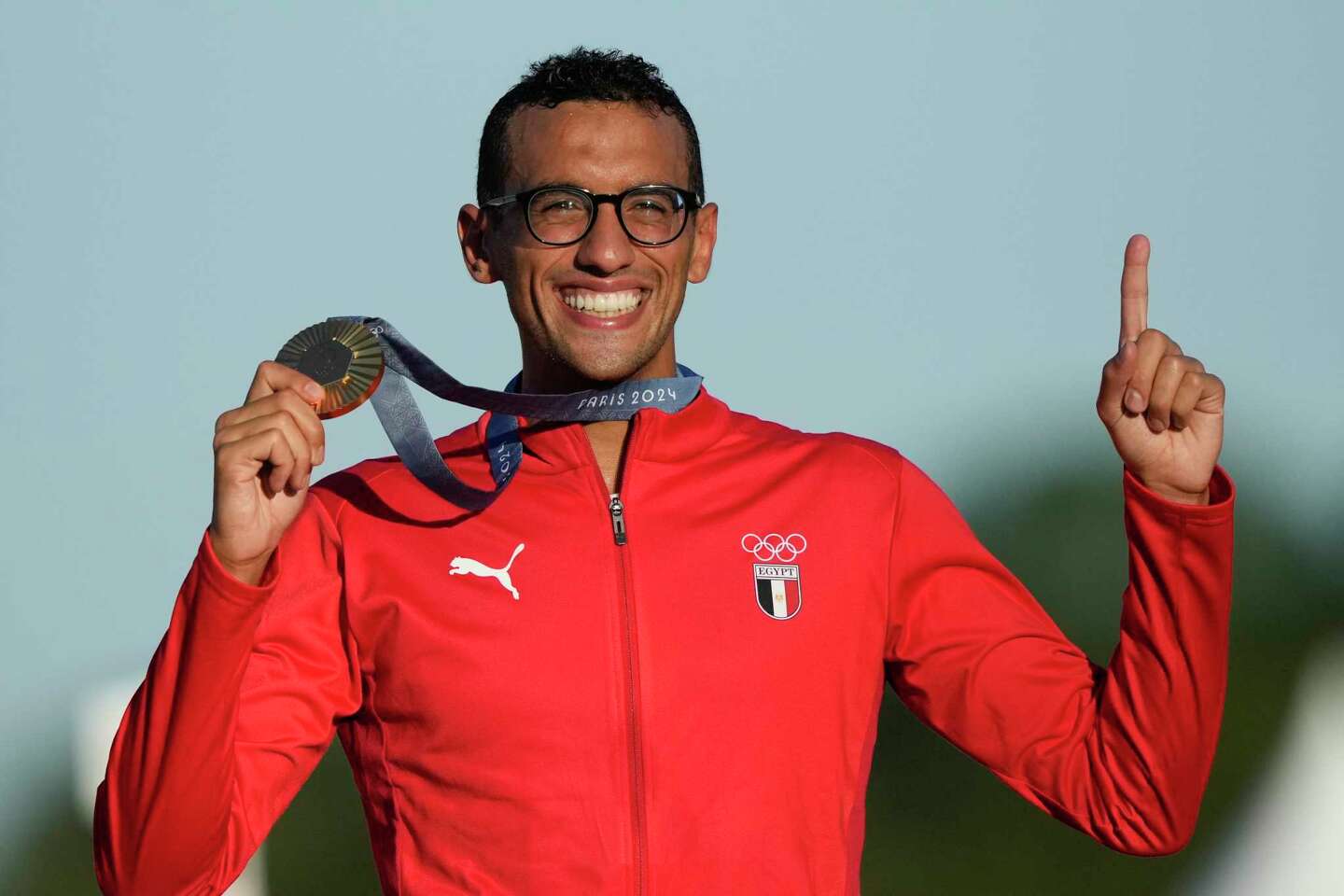
Ahmed Elgendy wins gold in the first ever modern pentathlon (Source: TheTelegraph.com)

Egypt won 3 medals: 1 gold in the Men’s Modern Pentathlon with Ahmed Elgendy, 1 silver in Women’s 81kg weightlifting with Sara Ahmed, and 1 bronze in fencing with the Men’s individual Epee with Mohamed Elsayed. Elgendy‘s gold is the first gold medal for Egypt at any olympics, and a first in the discipline for an African athlete; he also becomes the first person to win in this brand new discipline at the Olympics.

Morocco  delighted us when Soufiane El Bakkali won the gold medal in the Men’s 3000m steeplechase; and the Moroccan football (soccer) team, currently Africa’s highest ranked soccer team at number 4 (the senior men’s team) in the world’s ranking of football team, took home the bronze medal by defeating Egypt.

Tunisia reveled us with gold in Taekwondo in the Men’s 80 kg with Firas Katoussi, and bronze in the Men’s 58 kg with Mohamed Khalil Jendoubi. Fares Ferjani won silver in Fencing the Men’s Individual Sabre.

Our dear brother Cheikh Sallah Cisse of Ivory Coast did not disappoint by taking the bronze medal in Taekwondo for Ivory Coast, in the Men’s 80kg; Cisse had given Côte d’Ivoire its very first gold medal at the Rio 2016 Olympics.

Cabo Verde got its very first medal at the Olympic games through David de Pina who won bronze in the Men’s 51 kg Boxing.

Muzala Samukonga of Zambia wins Bronze in the Men’s 400m (Source: pulsesports.ng)

Zambian Muzala Samukonga won the bronze medal in the Men’s 400m. This may be Zambia’s first medal at the Olympics; if not, it is Zambia’s first medal in the discipline ever. And the Zambian team also came out 4th in the Men’s 4 x 100 m relay one step short of a place on the podium; this tells you the future that this Zambian team holds if it perseveres.

We cannot wait to see Africa at the Los Angeles Games in 2028!

African Wins at the Tokyo 2020 Olympics

Ahmed Hafnaoui of Tunisia winning the Gold during the 400m freestyle at the Tokyo 2020 (Source: ca.sports.yahoo.com)

This week more history has been made for Africa at the Olympics. Records have been broken and Africans have responded present with strength.

Tunisia, with Ahmed Hafnaoui offered the African continent its first medal of the games, by winning gold in the 400m freestyle swimming. Then, Mohamed Khalil Jendoubi won silver in the Men’s 58kg Taekwondo.

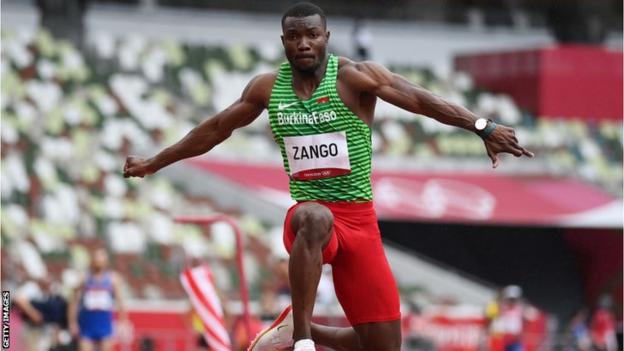
Hugues Fabrice Zango getting his triple jump (Source: bbc.co.uk)

Burkina Faso got its first ever medal since the creation of the Olympic games. Hugues Fabrice Zango won the bronze medal in the Men’s triple jump. It was really good to watch him, and I am proud for this son of the land of Thomas Sankara. Moreover, he won his medal, Burkina Faso’s medal on the 61st anniversary of the country’s independence (as you know most Francophone countries are not really independent from France because of the FCFA, but this is a story for another day).

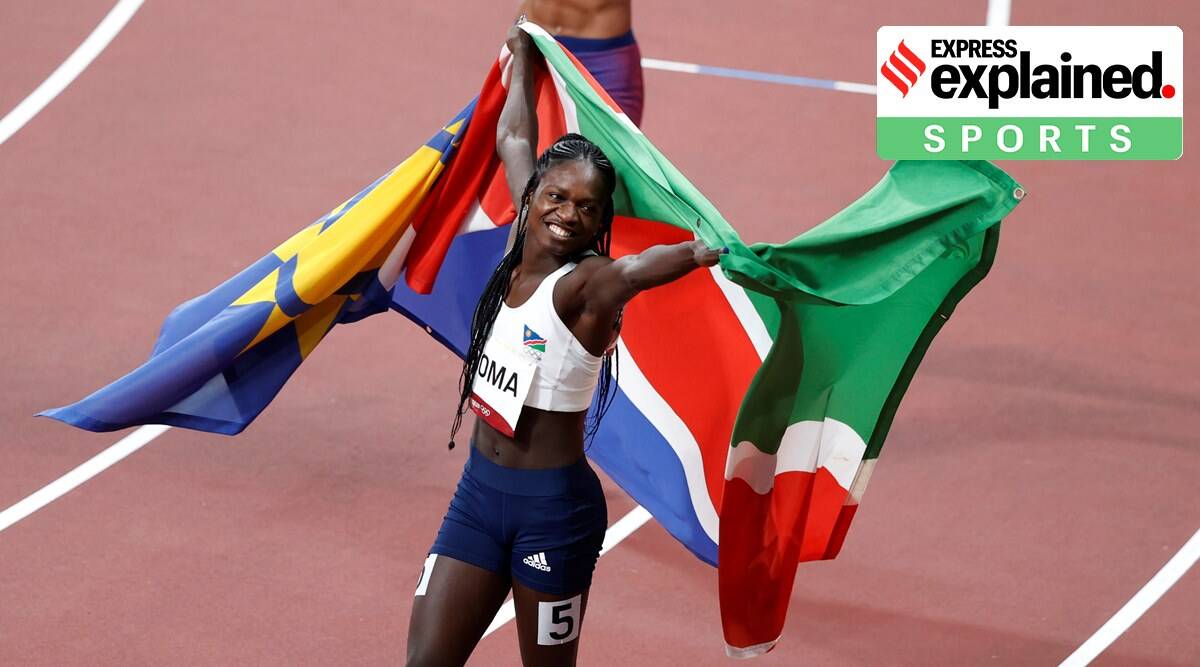
Namibia Christine Mboma came back from behind to win silver in the Women’s 200m in front of some of the world’s best. Now remember that Christine Mboma and her compatriot Beatrice Masilingi were barred from running their favorite distance, 400m, just a month ago, and had to all of sudden readjust to run 200m. They were declared ineligible for the longer race because of a genetic condition that raises their testosterone levels. South African Caster Semenya, a two-time Olympic champion in the 800m (2016 and 2012), is the most famous DSD (difference in sexual development) athlete who has been stopped from running in Tokyo. All three 800m medallists at the 2016 Rio Olympics – Semenya, Burundi’s silver medallist Francine Niyonsaba and Kenyan bronze winner Margaret Wambui – were DSD athletes… I am not sure I understand the whole issue, because for me, I wonder how one can be born female and then one day some organization tells them that they are not female. I find it hard to fathom. So let’s see what will happen. Mboma is the first Namibian female to win an olympic medal… she is following in the tracks of the great Namibian athlete Frankie Fredericks (Frankie Fredericks: Sprinting to the Finish for Namibia).

Christine Mboma of Namibia (Source: indianExpress)

Blessing Oborududu of Nigeria won Silver in the Women’s freestyle 68kg. Ese Brume did not disappoint and won Nigeria’s first medal of the Tokyo Olympic Games, taking bronze in the women’s long jump.

Ethiopia Selemon Barega gave Ethiopia its first Men’s 10,000m gold since Kenenisa Bekele in 2008. Lamecha Girma won silver in the Men’s 3000m steeplechase. Gudaf Tsegay won bronze in the Women’s 5000m race, while Letesenbet Gidey won the bronze medal in Women’s 10000m.

Uganda Joshua Cheptegei, the World champion and world record holder, ran a controlled race to take the men’s 5000m gold; last week, he had also won silver in the Men’s 10,000m. Jacob Kiplimo won the bronze medal in the Men’s 10,000m racePeruth Chemutai became the first Ugandan woman ever to win an Olympic gold medal on Wednesday – triumphing in the Women’s 3,000m steeplechase.

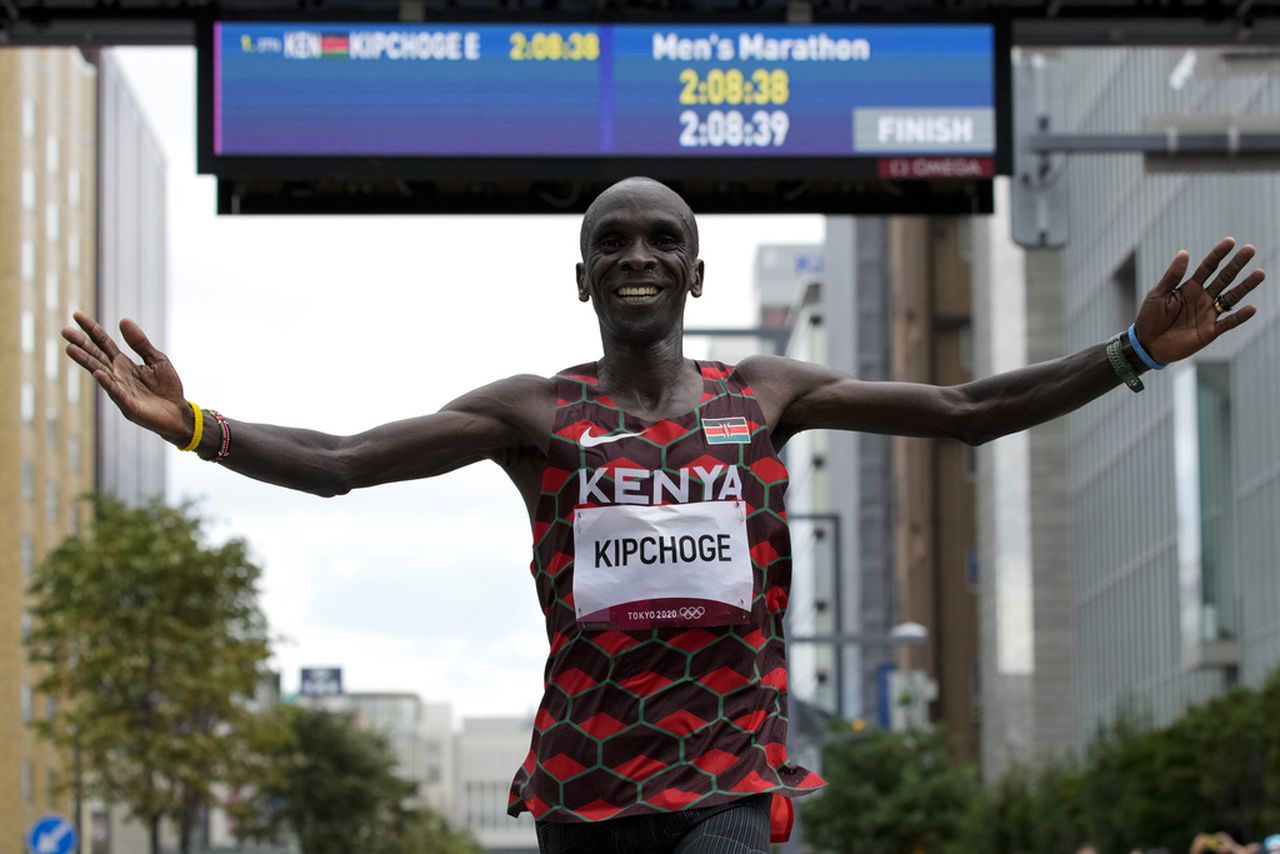
Eliud Kipchoge winning gold at the Men’s marathon (Source: OregonLive.com)

Kenya’s Faith Kipyegon, who had been training with legends like marathon world record holder Eliud Kipchoge thwarted World champion’s Sifan Hassan’s plans of winning a distance treble in Tokyo by retaining the women’s 1500m title by pulling ahead after the bell and winning gold. Her compatriot Peres Jepchirchir won the women’s marathon, defeating world record holder Brigid Kosgei  in the closing stages and winning in 2h27min20s, and Kosgei had to settle for silver. Hellen Obiri took home silver in Women’s 5,000m, while Hyvin Kiyeng won bronze in Women’s 3000m steeplechase. The men’s 800m gold went to Emmanuel Kipkurui Korir of Kenya, and his teammate Ferguson Rotich took silver. Timothy Cheruiyot took silver in the Men’s 1500m, while Compatriot Benjamin Kiven took bronze in the men’s 3000m steeplechase. Eliud Kipchoge successfully defended his olympic title at the marathon; he is only the 3rd person in the history of the games to win successive marathons.

South Africa’s Tatjana Schoenmaker won gold, and broke the Women’s 200m world record for breaststroke on Friday. This earned her a call from the President of South Africa, Cyril Ramaphosa, to congratulate her on her victory. Schoenmaker had previously won silver in the Women’s 100m breastrokes, while Bianca Buitendag took silver in surfing

Morocco’s Soufiane El Bakkali triumphed in the Olympic Men’s 3,000m steeplechase – ending Kenya’s 41-year unbeaten run on the distance.

Egypt’s Giana Farouk (Lotfy) won bronze in the Women’s kumite karate. Seif Eissa, Hedaya Malak, and Mohammed Elsayed Elsayed all won bronze medals in the Men’s 80kg taekwondo, Women’s 67kg taekwondo and Men’s 67kg Greco-Roman wrestling respectively.

Faith Kipyegon winning the 1500m (Source: si.com)

Ruth Gbagbi of Cote d’Ivoire won bronze in the Women’s 67kg Taekwondo. She had won Bronze also in Rio 2016. Ghana also took home bronze in the Men’s Feather (52-57kg) boxing with Samuel Takyi.

Lastly, Team Botswana (Isaac Makwala, Baboloki Thebe, Zibane Ngozi, Bayapo Ndori) surprised everyone by giving a beautiful performance and winning the bronze amidst some of the world’s bests in the Men’s 4x400m relay.

Overall, it was a good game… As we turn the page of the Tokyo 2020 Olympics which took place in 2021, we do hope that the Paris 2024 Olympics will be better for Africa, and that the world will be in a better place.

Frankie Fredericks: Sprinting to the Finish for Namibia

Frankie Fredericks raising the flag of Namibia

The athlete of the week is Frankie Fredericks: the handsome, good-looking, strong, fast, and powerful brother from Namibia.  Yep that’s right, Frankie Fredericks is one of those athletes I loved watching in the 1990s.  Always consistent, always strong, and everpresent, Frankie Fredericks was a force to reckon with.  How many silver medals has he gotten while contending the 100 m and 200 m at the Olympics?  4 Silver medals!  That’s right, an African with 4 silver olympic medals!  He has also won several gold medals at the World Championships, World Indoor Championships, All-Africa Games, and Commonwealth Games.  He is thus far Namibia’s only olympic medalist.

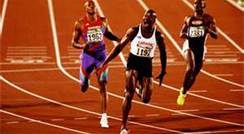
Frankie Fredericks coming 2nd to Donovan Bailey during the 100 m finale at the 1996 Atlanta Olympics

Born in Windhoek, Namibia’s capital, Frankie began running at the age of 13, and particularly loved football (soccer for Americans).  However, when he was awarded a scholarship to attend Brigham Young University, in the USA in 1987, he quickly moved his passion to track and field.  In 1991, as Namibia gained independence from South Africa, Frankie started officially compete for his country.  At the Barcelona Olympics in 1992, Frankie Fredericks won 2 silver medals in 100 m and 200m, giving Namibia its very first olympic medal.  In 1996 at the Atlanta Olympics, Frankie again won 2 silver medals coming 2nd to Donovan Bailey in the 100m, and 2nd to Michael Johnson in the 200 m.  Due to injuries, Frankie was absent at Sydney Olympics in 2000, and Namibia dearly missed him there.  He raced the 200m at the Athens Olympics in 2004, and came out 4th, and finally retired at the end of that year at the age of 37 (Imagine a 37 year-old sprinter coming 4th at the olympics, running against young folks like Shawn Crawford, Justin Gatlin, and Bernard Williams).  At the beginning of that run in Athens, Frankie was given a standing ovation that lasted few minutes, and at the end, he said “It is quite emotional, … I always wanted to go out with a medal, but sometimes in life you don’t get everything you want.” Frankie has run the 100 m under 10 s more consistently than most athletes (he is ranked 4th behind Ato Boldon of Trinidad & TobagoMaurice Greene of the US, and Asafa Powell of Jamaica).

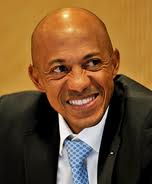
Frankie Fredericks
Frankie Fredericks

Off track, Frankie has a computer science degree and a masters of business administration, and he has created the Frank Fredericks Foundation to foster young Namibian athletes. In 2004, he was  elected by fellow athletes to serve on the board of the International Olympic Committee. Please check out the tribute to Frankie Fredericks given by International Association of Athletics Federations IAAF athletics.

The personable and wildly popular Fredericks spent the greater part of a decade-and-a-half at the pinnacle of his craft, a record for longevity nearly unprecedented in the sprints.  What was always fun about watching Frankie run was his consistency: Frankie was constant on the distance, and a very reliable athlete, training hard to represent his country and continent at the highest level.  I am sure most people had never heard of the country Namibia, but when Frankie was running, the whole world could hear and feel Namibia rising!