Who / What did We Celebrate in Africa in 2025 ?

We celebrated quite a few achievements in 2025 in Africa. Please find below a few that brought joy across the continent.

  1. AES Logo

    In January, our brothers of the Alliance des Etats du Sahel (AES) signed a joined military agreement. Last week in December, they held the second AES summit where they announced the creation of a radio, television, bank, and completion and progress on many more initiatives. The AES created a Joint Military Force. President Ibrahim Traoré of Burkina Faso succeeds to President Assimi Goïta of Mali for one year at the head of the confederation. We also salute the love shown by the brothers of Niger under President Tchiani who traveled over 1,400 km to bring fuel from Niamey to Bamako which has been under blockade by the terrorists. African Fraternity on Display in the AES.

  2. In March, the Burkinabe film “Katanga, the danse of the scorpions” won the Golden Stallion of Yennenga (Etalon d’or de Yennenga) at 2025 edition of FESPACO, one of Africa’s biggest film festivals. “Katanga, La Danse des Scorpions” by Dani Kouyaté, and FESPACO 2025: Burkina Faso Wins its First Golden Stallion in 28 years!
  3. In March also, archaeologists published in the journal Nature their discovery of the earliest known bone tools, showing evidence of their use 5 million years ago. These bone tools were found in the Olduvai Gorge, in Tanzania. The tools were carved on elephant and hippopotamus bones. Bone Tools found in Tanzania dated 1.5 million years ago.
  4. Angelique Kidjo

    In June, Franco-Beninese artist Angelique Kidjo became the First African Singer to get a Star on the Hollywood Walk of Fame. Over the years, she has won 5 Grammy awards and nominated 15 times. With a career spanning over 4 decades, she has been trained by some of Africa’s greats, and has sung and collaborated with some of the greats of the world.

  5. In June, Mali Launched a State Gold Refinery, Zimbabwe banned exports of lithium, while Cote d’Ivoire announced the discovery of large gold deposits on its territory, in the north, near the border with Burkina Faso. This month, Niger took control of its uranium, thus giving the country a true say in its development.
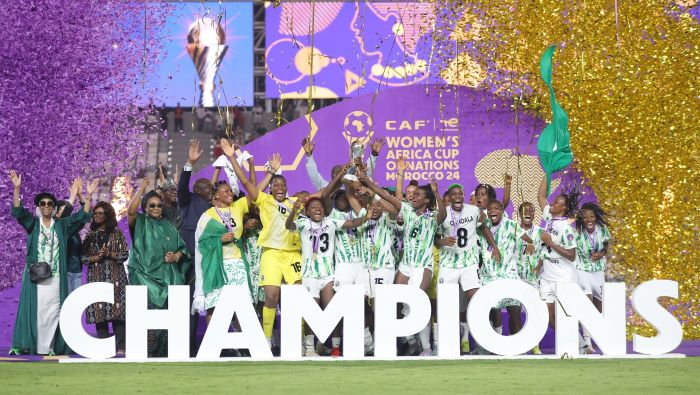
  6. Super Falcons defeat the Atlas Lionesses to win 10th title and become WAFCON 2024 winner (Source: BusinessDay.ng)

    At the end of July, the Nigerian Super Falcons, the Female national soccer team of Nigeria, won the Women’s African Cup of Nation (WAFCON). The Super Falcons of Nigeria defeated The Atlas Lionesses of Morocco to win the 2024 Women’s Africa Cup of Nations (WAFCON) in Morocco. Similarly, the D’Tigress, Nigerian Women’s Basketball team won their 7th African Cup, by defeating Mali at  FIBA Women’s AfroBasket Championship in Cote d’Ivoire. Now, we hope that these ladies will make it very far at their respective World Cups and make the continent proud.

  7. Mali recovered over a billion dollar from gold companies to reinvest and give back to their populations. These are the kind of gestures that unnerve the West. Mali Recovers over a Billion $ for its Miners. What a beautiful end-of-year present to the populations!
  8. Botswana’s 4×400 relay team celebrating their gold medal (Source: Reuters/Eloisa Lopez)

    Africans shone at the 2025 Tokyo World Athletics Championships, including Botswana which cemented its place in the athletic world by winning the country and continent’s first ever gold in 4 x 400 m relay in the men’s discipline. On Sunday, Botswana’s team of Lee Bhekempilo Eppie, Letsile Tebogo, Bayapo Ndori and Busang Collen Kebinatshipi edged out the United States, the winners of the last 10 world titles, in a rain-drenched race, while South Africa took third position. Africans are starting to be present in the sprint discipline and we are proud of their hard work.

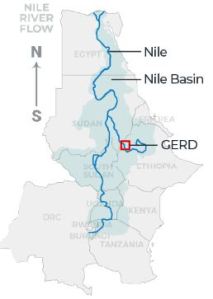
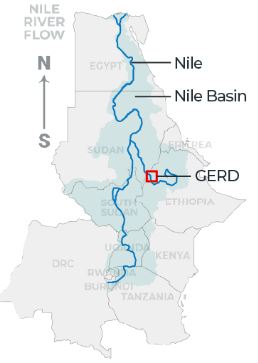
  9. Map of the Nile River flow and the location of Grand Ethiopian Renaissance Dam (GERD) in Africa

    This year saw the inauguration of the Great Ethiopian Renaissance Dam (GERD) in September. The dam has been almost entirely domestically funded through bonds and donations of the hard working populationsThe GERD has also united Ethiopian citizens across ethnic and political divides. Inauguration of the Great Ethiopian Renaissance Dam (GERD).

  10. The Timbuktu’s manuscripts have returned home after being hosted for almost a decade in Bamako. These are treasures that have been protected for centuries by local families, and they had had to move them because of the insurgency of western-funded terrorists’ attacks which had divided the country. Continuing on the artifacts subject, Great Britain and South Africa handed back Ghanaian royal artifacts. While France returned the skull of Beheaded King Toera of the Sakalava People of Madagascar 127 years after it was taken; one caveat, no genetic testing has conclusively established the identity of any of these skulls to be that of King Toera!
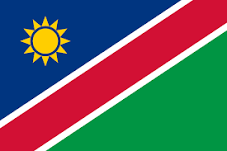
  11. Flag of Namibia

    Namibia made history as the only country in the world where Women hold Key Positions: women make up 57% of the government! Namibia has done what no other country in the world has ever done: the country has a female president Netumbo Nandi-Ndaitwah, vice-president Lucia Witbooi, speaker of the national assembly Saara Kuugongelwa-Amadhila, and secretary general of the ruling party. To the naysayers out there, remember that most of Africa has matriarchal traditions; thus it makes sense that it would be first.

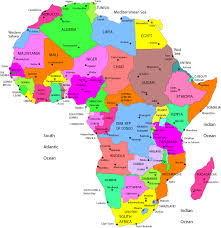
  12. Map of Africa

    This past November, African countries, assembled in Algiers, united to pass a resolution to have colonial era crimes recognized – it’s about time, and let’s hope it works, and that their union keeps up. This comes up as tensions between Algeria and France intensify, culminating with Algeria passing a bill last week requesting that France atone for its 130 years of occupation; France called it a blow to dialogue. African Countries are uniting to pass a Resolution to have Colonial Era Crimes Recognized.

  13. Meta bowed to Nigeria and paid up for privacy infraction. This is a first, and usually multinationals tend to do whatever in our countries… we applaud the judgment, and hope that this signals to those companies to start treating Africans like humans, with some measure of respect. Meta Bows to Nigeria and Pays for Privacy Infraction.
Ethiopia and Somalia Historic Treaty

Flag of Ethiopia

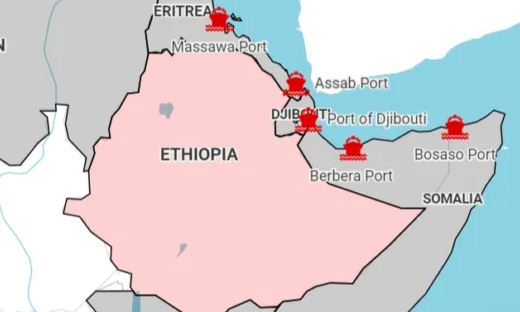
With a population of over 100 million inhabitants, Ethiopia is the largest landlocked country in the world. Sea access is not just a common question, but is an existential issue for the country. On January 1, 2024, Ethiopia announced an agreement signed with Somaliland (way to announce the colors of the new year) to lease the port of Berbera in Somaliland, on the Red Sea, and a 20-km stretch of Red Sea coastline for 20 years, Ethiopia – Somaliland Agreement: Will Sea Access lead to Conflict in the Horn of Africa? The agreement made countries in the entire Horn of Africa sweat pools in fear of war, even though those same countries, Ethiopia’s coastal neighbors, Djibouti, Eritrea, and Somalia all rejected its pleas for direct access to a port on the Red Sea. African countries are always ready and eager to lease their lands, ports, airports, railways (Lobito), for a specific duration to European or Chinese or even South African companies, why is it so hard to do the same for fellow African neighbors? Somalia’s president was particularly vocal, calling the Ethiopia-Somaliland agreement an act of agression, saying that the agreement implied that Ethiopia was recognizing Somaliland (which has seceded from Somalia) as an independent state. 

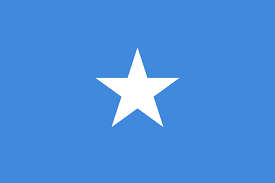
Flag of Somalia

Last week, a historic agreement was signed between Ethiopia and Somalia, under the patronage of Turkey. It centered around, 1) resolving misunderstandings, with both countries committing to resolve issues in upcoming months; 2) cooperation and dialogue to ensure mutual prosperity (should this even be a question among neighbors?); 3) access to the sea for Ethiopia, which Somalia agreed to facilitate under its sovereign authority; 4) both countries will begin technical talks to iron details no later than the end of February 2025, aiming to complete them within 4 months with Turkey’s assistance if needed.

Map of the region with the different countries involved and ports (Source: Medium.com)

We applaud the historic agreement, and can only breathe a sigh of relief for a year which has been tough in the Horn of Africa with war intensifying in neighboring Sudan. However, the agreement still seems a bit vague as to the fundamental issue of whether Ethiopia will use the port of Berbera in Somaliland or whether another port (perhaps in Somalia) will be used instead.

Under the United Nations Convention on the Law of the Sea (UNCLOS), specifically Part X of the convention addresses the rights of landlocked states to access the sea and freedom of transit. Sea access should not be used as a carrot and a stick as it is an existential issue for these countries. Part X ensures that landlocked countries have the right to access the sea for the purpose of exercising their rights, including freedom of the high seas. Nobody has heard of European countries blocking Switzerland, Austria, Hungary, or Slovakia from sea access. However, we saw ECOWAS countries try that during the year, particularly Benin which even went as far as blocking the Niger pipeline which goes through its territory until China gave Benin a reminder (want to bet that it was not a gentle one?) that it was not right.  

For more information on this agreement brokered by Turkey between Ethiopia and Somalia, check out the articles on DW and The Economist

Ethiopia – Somaliland Agreement: Will Sea Access lead to Conflict in the Horn of Africa?

Flag of Ethiopia

Last October, Ethiopian prime minister Abiy Ahmed declared that having sea access was an existential issue for Ethiopia, which is the largest most populous landlocked country in the world with over 100 million inhabitants. Everyone started fearing, because since Abiy’s arrival, Ethiopia has been in conflict internally in Tigray and Oromia. Everyone started fearing for a renewed conflict with Eritrea, after the peace treaty signed between both nations on 9 July 2018 which formally ended the Eritrean–Ethiopian border conflict. The worries stemmed from the fact that Ethiopia lost its sea access when Eritrea seceded in 1993. The conflict between Ethiopia and Eritrea is like the conflict between China and Taiwan… except it takes on an existential nature in the case of Ethiopia which is landlocked because of it. So when Prime Minister Abiy made his announcement in October, everyone on the horn of Africa started sweating. Ethiopia begged its coastal neighbors, but Djibouti, Eritrea, and Somalia all rejected its pleas for direct access to a port on the Red Sea.

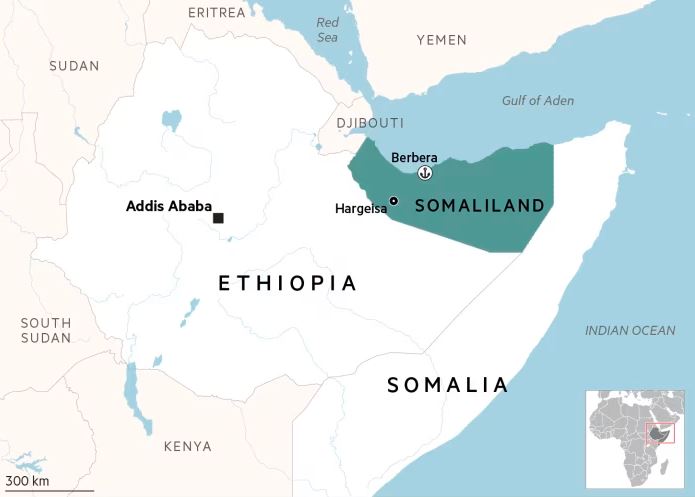
Map of the sub-region with Somaliland and its port of Berbera highlighted (Source: Financial Times)

On January 1, 2024, Ethiopia announced an agreement signed with Somaliland to lease the port of Berbera on the Red Sea, and a 20-km stretch of Red Sea coastline for 20 years, in exchange Somaliland will receive shares in its neighbor’s flagship carrier, Ethiopian Airlines, Africa’s most successful airline – and eventual recognition as an independent state. Prime Minister Abiy’s office said the agreement would “pave the way to realize the aspiration of Ethiopia to secure access to the sea.Somaliland’s foreign ministry said in a statement that the “historic agreement ensures Ethiopia’s access to the sea for their naval forces, reciprocated by formal recognition of the Republic of Somaliland, marking this as a significant diplomatic milestone for our country.” This agreement paves the way for Ethiopia to establish a commercial and military presence on the coast. I breathed a sigh of relief… which I had to take back the following day when Somalia’s President Hassan Sheikh Mohamud called the Ethiopia-Somaliland agreement an act of agression! He sees it as such, because the agreement would seem to imply that Ethiopia will recognize Somaliland as an independent state. Somaliland seceded from Somalia more than 30 years ago, but is not recognized by the African Union (AU) or the UN as an independent state. Quickly, both the US and the African Union have backed the territorial integrity of Somalia and urged all parties to cool tensions. 

Flag of Somalia

Ethiopia and Somalia are two states with a lengthy history of military conflict and animosity. Now, the president of Somalia is campaigning up and down the horn of Africa and has gotten the support of Egypt (remember that Egypt is mad at Ethiopia for building the Grand Ethiopian Renaissance Dam on the Nile and getting its proper share of the Nile’s waters – story for another day), Turkey, the puppet organization that is the AU, the European Union (EU), and the US. He stepped up the rhetoric by saying: “We will defend our country, we will defend it by all means necessary and seek the support of any ally willing to help us.” and called on youths “to prepare for the defense of our country“.

Map of the region with the different countries involved and ports (Source: Medium.com)

In my simple views, given Ethiopia’s large population, economic weight, and regional cloud (Ethiopia is now a member of the BRICS), any neighboring coastal state would benefit from working with it and developing agreements that will allow the use of its ports; it should be a win-win situation! Thus, it would seem careless for Somalia to want to start war, when all that could be done is get an agreement from Ethiopia to pay Somalia instead or split the proceeds from Somaliland… Ethiopia is definitely not getting access to the port of Berbera for free! Why is Somalia seeing a war threat from Ethiopia and not Somaliland… their issue is with Somaliland, why not deal with that? Neighboring Sudan has been at war since the middle of last year. Conflict would further destabilize the entire region, which is so close to the strategic Gulf of Aden on the Red Sea, one of the world’s largest shipping routes. Could this be a way for the Somalian president to justify his poor internal politics, by diverting his people’s attention towards war? These African countries are always ready and eager to lease their lands, ports, airports, for a specific duration to European or Chinese or even South African companies, why is it so hard to do the same for fellow African neighbors?

To learn more, read this article from the Conversation, Medium, or Modern Diplomacy. Dear reader, do you think this is the beginning of yet another conflict in the Horn of Africa? Do you think this will further play into the New Scramble for Africa?

“Ethiopia Shall Rise” by Kwame Nkrumah

Nkrumah's sculpture at the Kwame Nkrumah Mausoleum in Accra
Nkrumah’s sculpture at the Kwame Nkrumah Mausoleum in Accra

President Kwame Nkrumah, the great, and first president of Ghana once wrote a poem on Ethiopia. Kwame Nkrumah was the mind behind the creation of the Organisation of African Unity (Organisation de l’Union Africaine) which has become the African Union (Union Africaine). He believed in the unity of Africa, not just economic, but in the cooperation within the different states, and their independence. So here is his poem entitled ‘Ethiopia shall rise‘. Remember that Ethiopia is the only African country which was never colonized by Europeans, and as such is the siege of the African Union. Here is his entire speech followed by his poem. In reality, in his eyes, Ethiopia symbolizes the whole of Africa, and his wish is for Africa to rise again! Enjoy!

=========

Addis Ababa, May 25, 1963
YOUR; IMPERIAL MAJESTY, MR. CHAIRMAN, YOUR EXCELLENCIES BROTHERS AND FRIENDS,

Ethiopia_flag
Flag of Ethiopia

We have come to the end of a historic and momentous Conference. The decisions we have taken here have made African Unity a reality and we can see clearly a Union Government of Africa in the horizon.

This is the goal which we set ourselves when we struggled in our separate States for Independence. It is also the compelling force which brought us together in Addis Ababa.

As I have said over and over again, the independence of our separate State is meaningless, unless the whole of Africa becomes free and united.

chains
broken chains

The resolutions we have made here are a symbol of our determination to become united and to remain united in an African Community with common aspirations and common objectives. Freedom Fighters in all parts of our Continent can now be assured that they are not alone in their struggle. The whole weight and power of a united Africa is behind them.

After centuries of colonial exploitation and domination, Africa has been re- born. We have discovered our common identity, a force with which we can re-assert our African personality.

Menelik_II_ethiopia
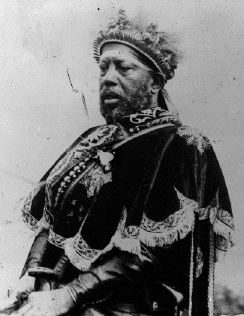
Emperor Menelik II, of Ethiopia

We shall from now on think, plan and work together for the progress and development of our great Continent. In this way, we shall eliminate completely the handicaps, set-backs and humiliation we have suffered under colonialism and imperialism.

We should be happy that at long last, by the adoption of this Charter, we have seen the end of the various groupings and regional blocs. It only remains for me, Your Majesty, on behalf of my colleagues to convey to the Government and people of Ethiopia especially to His Imperial Majesty, my sincere expression of gratitude for a happy and memorable stay in Addis Ababa.

The ancient Greeks identified Ethiopia with the Black Race. I would therefore like to leave with you a little poem on this:


Ethiopia shall rise

Ethiopia, Africa’s bright gem
Set high among the verdant hills
That gave birth to the unfailing
Waters of the Nile
Ethiopia shall rise
Ethiopia, land of the wise;
Ethiopia, bold cradle of Africa’s ancient rule
And fertile school
Of our African culture;
Ethiopia, the wise
Shall rise
And remould with us the full figure
Of Africa’s hopes
And destiny.

Kwame Nkrumah

The Treaty of Wuchale: African Victory over European Expansionism

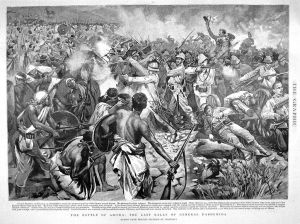
In March 1896, a well-disciplined and massive Ethiopian army did the unthinkable—it routed an invading Italian force and brought Italy’s war of conquest in Africa to an end. In an age of relentless European expansion, Ethiopia had successfully defended its independence and cast doubt upon an unshakable certainty of the age—that sooner or later all Africans would fall under the rule of Europeans. The battle of Adwa marked Ethiopia’s victory against Italian colonization. It all started with the treaty of Wuchale. The short documentary below gives you an idea about it. This indeed was the biggest, the only, African defeat of European expansionism and ugly scramble for Africa. Enjoy!

Treaty of Wuchale: The Treaty which led to European Colonialism’s Defeat in Africa

Battle_of_adwa2
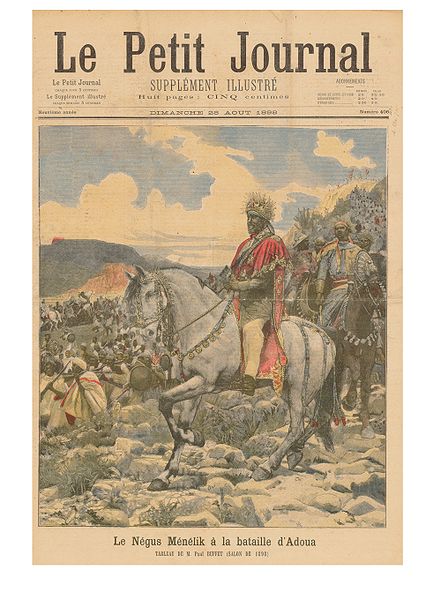
Edition of the Petit Journal of August 1896 titled: “Negus Menelik II at the Battle of Adwa”

In Africa, Ethiopia is the only country which was never colonized by a European power. This was the result of the famous Battle of Adwa on March 1, 1896, which marked the Ethiopian victory against Italian colonialism. The Battle of Adwa against Italy arose from the deceitful 1889 Treaty of Wuchale between the Ethiopian Empire and Italy, a treaty whose article 17 had two different meanings in Amharic and Italian versions: The Amharic version recognized the sovereignty of Ethiopia and its relationship with Italy as just a diplomatic partnership, while the Italian version made Ethiopia Italy’s protectorate The moment that discrepancy/trickery was uncovered, Empress Taytu Betul was the first to agitate Emperor Menelik II and other men to stand up for liberty, and dignity against Italian aggression. I am publishing here the Treaty of Wuchale. Special thanks to the Horn Affairs website for publishing the English version in its entirety. Some claim that Article 3 actually paved the way for Italians to claim Ethiopian lands (Eritrea). Well, here is the document of one of those treacherous treaties signed or rather forced upon Africans by European powers. Thank goodness for Taytu Betul, Menelik II, and their team of loyal and intelligent ministers and interpreters. I have attached the pdf version too.

===============

Treaty of friendship and trade between the kingdom of Italy and the Empire of Ethiopia (Treaty of Wuchale)

ethiopia
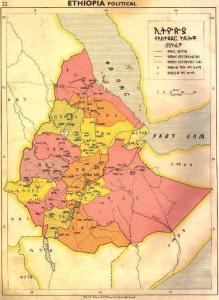
Map of Ethiopia before 1911

His Majesty King Umberto I of Italy and Menelik His Majesty The King of Kings of Ethiopia, in order to make meaningful and lasting peace between the two Kingdoms of Italy and Ethiopia have agreed to conclude a treaty of friendship and commerce .

And His Majesty the King of Italy having delegated as his representative, Count Pietro Antonelli, Commander of the Crown of Italy, Knight SS. Maurice and Lazarus, his extraordinary posted by His Majesty the King Menelik, whose full powers were found in good and due form, and His Majesty the King Menelik concluded in his name as King of Kings of Ethiopia, agreed and concludes the following Articles:

Article 1. There will be perpetual peace and friendship between His Majesty the King of Italy and His Majesty the King of Kings of Ethiopia and between their respective heirs, successors, servants and protected populations.

Article 2. Each Contracting Party shall be represented by a diplomatic agent accredited to I’altra and may appoint consuls, agents and consular officers in the other.
Such officials shall enjoy all the privileges and immunities according to the customs of the European governments.

Map of Eritrea
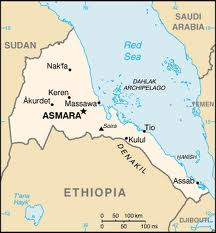
Map of Eritrea

Article 3. To remove any ambiguity about the limits of the territories over which the two Contracting Parties shall exercise sovereign rights, a special commission composed of two delegates and two Ethiopians will draw on Italian soil with special signals a permanent boundary line whose strongholds are established as below:
a) the line of the plateau will mark the Ethiopian-Italian border;
b) from the region Arafali Hala, Sagan and Asmara are villages in the Italian border;
c) Adi and Adi Nefas Joannes Bogos will be on the side of the Italian border;
d) by Adi Joannes a straight line extended from east to west will mark the border between Italy and Ethiopia.

Article 4. The monastery of Debra Bizen with all their possessions will remain the property of the Ethiopian government but will never use it for military purposes.

Article 5. The caravans from or to Massawa to Ethiopian territory pay on one single law of the customs entry of 8 per cent on the value of the goods.

Menelik_II_ethiopia
Emperor Menelik II, of Ethiopia

Article 6. The trade of arms and ammunition from or through Massawa to Ethiopia will be free for the only King of Kings of Ethiopia.
Whenever they want to get the passage of such kinds will make regular application to the Italian authorities, bearing the royal seal.
The wagons with load of weapons and ammunition will travel under the protection and cover of Italian soldiers until alconfine Ethiopia.

Article 7. The subjects of each of the two Contracting Parties will be free to enter, travel, go out with their merchandise and effects in the other country and will enjoy greater protection of the Government and its employees.
And, therefore, strictly forbidden to people on both sides armed contractors to meet many or few and pass their borders in order to impose itself on people and groped by force to provide food and livestock.

Article 8. The Italians in Ethiopia and Ethiopians in Italy or Italian possessions can buy or sell, take or lease and in any other manner dispose of their property no less than the natives.

Article 9. And fully guaranteed in both states the option for other subjects to practice their religion.

Article 10. Any disputes or quarrels between the Italians in Ethiopia will be defined by the Italian in Massawa or his delegate.
The fights between Italians and Ethiopians will be defined by the Italian in Massawa or his delegate and a delegate of the Ethiopian.

Taytu_Betul5
Empress Taytu Betul of Ethiopia

Article 11. Dying in an Italian in Ethiopia or an Ethiopian in Italian territory, the local authorities were carefully kept all his property and held at the disposal of government to which the deceased belonged.

Article 12. In any event, circumstance or for any Italians accused of a crime will be judged by the Italian.
That is why the Ethiopian authorities shall immediately deliver to the  Italians in Massawa accused of having committed a crime.
They also accused the Ethiopians of crime committed on Italian soil will be judged by the Ethiopian.

Article 13. His Majesty the King of Italy and His Majesty the King of Kings of Ethiopia is obliged to deliver criminals who may have become refugees, to escape punishment by the rulers of one on the other domains.

Article 14. The slave trade was against the principles of the Christian religion, His Majesty the King of Kings of Ethiopia is committed to prevent it with all his power, so that no caravan of slaves can cross its member.

Article 15. This Treaty shall be valid throughout the Ethiopian Empire.

Article 16. While in the present Treaty, after five years from the date of signature, one of two High Contracting Parties may wish to introduce some modifications to do so, but he must prevent the other a year earlier, while remaining firm and every single concession on territory.

Battle_of_adwa6
The Battle of Adwa, 1896

Article 17. His Majesty the King of Kings of Ethiopia can [1] use the Government of His Majesty the King of Italy for all treatments that did business with other powers or governments.

Article 18. If His Majesty the King of Kings of Ethiopia intends to grant special privileges to nationals of third state to establish businesses and industries in Ethiopia, will always be given, under equal conditions, preference to the Italians.

Article 19. This treaty being drafted in Italian and Amharic and the two versions agree with each other perfectly, both texts shall be deemed official, and will in every respect equal faith.

Article 20. This Treaty shall be ratified.

In witness whereof, Count Pietro Antonelli on behalf of His Majesty the King of Italy, His Majesty the King of King Menelik of Ethiopia, in his own name, signed and affixed their seal to this Treaty, at the camp Uccialli of 25 miazia 1881 corresponding to May 2, 1889.

Imperial Seal of Ethiopia
For His Majesty the King of Italy Pietro Antonelli

Ratification of MS, Monza, September 29, 1889

****************

[1] Article 17 has an obligatory sense in the Italian language version of the Treaty.

Lake Tana: Lake of Ethiopian Emperors’ Remains

Map of Ethiopia
Map of Ethiopia

This week, I will be talking about the great civilization of the Solomonic era in Ethiopia and particularly Lake Tana.  But what does a lake have to do with civilization? Well, lake Tana is Ethiopia’s largest lake and is also the source of the Blue Nile.  There are several islands on the lake: the Portuguese missionary Manuel de Almeida in the 17th century counted about 21 of which 8 had monasteries on them; today some count 45 of which 19 have monasteries dated from the 14th and 17th centuries on them.   So what does it have to do with civilization?
Well, the sepulchers and remains of many emperors (14th-17th centuries), treasures of the Ethiopian church, as well as ancient manuscripts are kept on some of the most isolated islands of Lake Tana (Ura Kidane Mehret, Narga Selassie, Kebran Gabriel, Daga Estifanos, Medhane Alem of Rema, Kota Maryam, Mertola Maryam, etc)!  It is being said that Frumentius, who introduced Christianity to Ethiopia, is buried on Tana Cherqos.  The body of Yekuno Amlak rests in the monastery of St. Stephen on Daga island. Emperors Dawit I, Zara Yaqob, Za Dengel and Fasilides, also lay on Daga island.

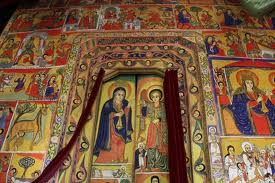
Mural at Uda Kidane Mihret

Lake Tana was already known by Ptolemee in the 2nd century BC, which he called Pseboe or ‘hollow swamps‘ (marais creux en francais).  It was very important in the 14th through the 17th centuries, as it played a key role in maintaining the Christian faith, and the rise of the Solomonic dynasty and the Christian Abyssinian empire. During the Solomonic dynasty, building churches and monasteries was emphasized, just like building pyramids in Egypt was emphasized by pharaohs.  Many crown jewels, treasures and precious manuscripts were stored on islands on Lake Tana.  The oldest of these forty churches from the Solomonic era was built in the 14th century.  The architecture reflects its era: the use of round shapes in the building technique.  Each monastery/church consists of three main rooms or areas: the inner sanctuary, the inner ambulatory, and the outer ambulatory.  The outside walls of the sanctuary are covered with magnificent colorful paintings reflecting that era.  Seven of these churches (and the most accessible) have been chosen by the UNESCO campaign for renovation.

Around the 16th century, lake Tana became an important trade center for travellers who were coming to the famous market of Bahir Dar by foot or tankwa (reed boats made out of papyrus).   Lake Tana was an important stop linking the north to the south of Ethiopia.

To learn more, go to the UNESCO World Heritage’s website, as well as the Selamta website whose emphasis is on Ethiopia’s lakes, Ethiopia travel, and check out pictures of the lake and other places in Ethiopia.  Enjoy this great video… of a lake full of ancient treasures!