There was a lot to celebrate in Africa this year. Below are just a few:
Alliance des Etats du Sahel (AES) (Source: Alliance-sahel.org)
In January, Mali, Burkina Faso, and Niger left the ECOWAS creating a major seismic shift in the organization. Mali, Burkina Faso, and Niger all leave the ECOWAS. This came as no surprise given that the coup to topple puppet governments in their respective countries, the ECOWAS had suffocated these countries by suspending all three countries and imposing heavy sanctions on Mali and Niger that exacerbated the populations’ sentiments that it is a puppet organization serving foreign interests. Niger even tried to amend the situations by inviting ECOWAS representatives to the country, but only the member from Togo showed up. Why should anybody remain in an organization that punishes its member populations?
In January, Ghanaian artifacts were returned home for the first time in 150 years, on a “loan”. Ghana Artefacts “Return” Home 150 years later … on Loan. It is a disappointment that African governments can only get “loans” for what is dutifully theirs from those institutions which have amassed millions over the year from the exhibition of stolen African artefacts.
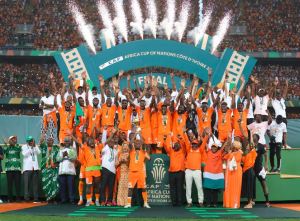
The Elephants are winners of the Africa Cup of Nations 2023 (Source: CAFonline.com)
In February, the Elephants of Cote d’Ivoire gave us a thrill from being redeemed in the knockout stage with 2 defeats (among which a 4-0 loss against Equatorial Guinea) that left them open to elimination, and a redemption that came from being one of the four best 3rd-placed team, a coach sacking, and a coach change, to lift the trophy of the Africa Cup of Nations. It was a real “Coup du Marteau” (Tam Sir, we are talking about your special song!) The Ivorians added to their previous Nations Cup wins of 1992 and 2015 (Côte d’Ivoire wins the 2015 Africa Cup of Nations) and became the first tournament hosts to triumph since Egypt lifted the trophy in 2006. CAN 2023: the Elephants of Côte d’Ivoire are the New Champions
Bassirou Diomaye Faye (Source: Seneweb.net)
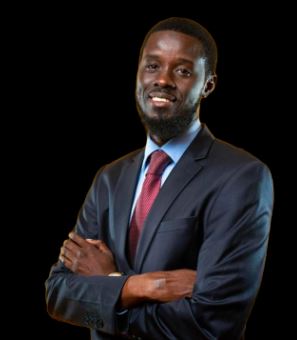
In March, Bassirou Diomaye Faye was elected president of Senegal, making him the youngest African president at 44. This was a joyous moment for the Senegalese people who stood to have their democratic system and constitution upheld. Faye is very unconventional, as the youngest with no political background (he was previously a tax officer), he is also the first Senegalese president to openly have two wives. With his friend and Prime Minister Ousmane Sonko, we hope for better governance for Senegal. Senegal Presidential Elections: Bassirou Diomaye Faye is set to be the next president. Either way, the Senegalese have demonstrated once again, that although their democracy is young, it is not to be messed with!
Map of Niger
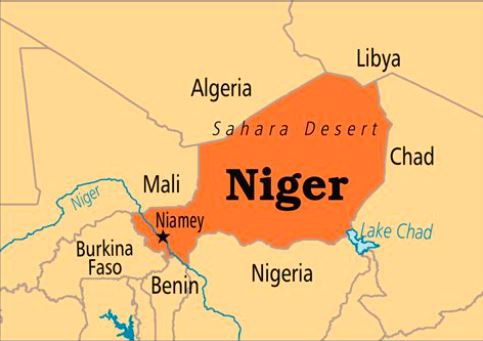
In mid-March, Niger suspended military “cooperation” with the USA, with immediate effect. Operating from years of condescending treatments of those deemed inferior, particularly of Africans, the Americans had decided to dictate their will, like the French before, to Niger people and deny their sovereign rights to choose their own partnerships in their fight against terrorism. The spokesman of Niger’s government, Colonel Amadou Abdramane, exposed the fact that the military “cooperation” with the US was not even a real one, i.e. the US had installed their largest drone base in Africa, and possibly in the world, in Niger via a verbal agreement only, and the Niger people had to pay for the American base in their country, while the Americans never raised a hand to help Niger fight against terrorist attacks that were maiming their citizens [Bye Bye to French Troops in Niger, France set to Withdraw Troops and Ambassador from Niger]. Niger suspends military “cooperation” with the US, effective immediately.
Alliance des Etats du Sahel (source: linfodusahel.com)
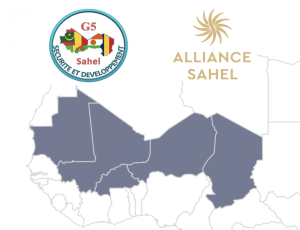
Mali, Niger, and Burkina Faso’s leaders met on July 6, 2024 in Niamey, Niger, as part of the first summit of the Alliance des Etats du Sahel (AES – Alliance of the Sahel States). During the summit, the three leaders signed a confederation treaty aimed at strengthening the links between the three nations in terms of defence, and other aspects such as the economy, infrastructures, and more. They reinforced their mutual defence pact.
Right before the Paris Olympics, brother Biniam Girmay of Eritrea made history by becoming the first African to win a stage at the Tour de France, and two more stage victories which helped him capture the green jersey for the highest points scorer – a first for anyone from the continent.
Faith Kipyegon winning historic 3rd gold medal at the Paris 2024 Olympics (source: Kelly Ayodi for Olympics Kenya – EastleighVoice.co.ke)
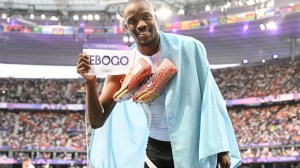
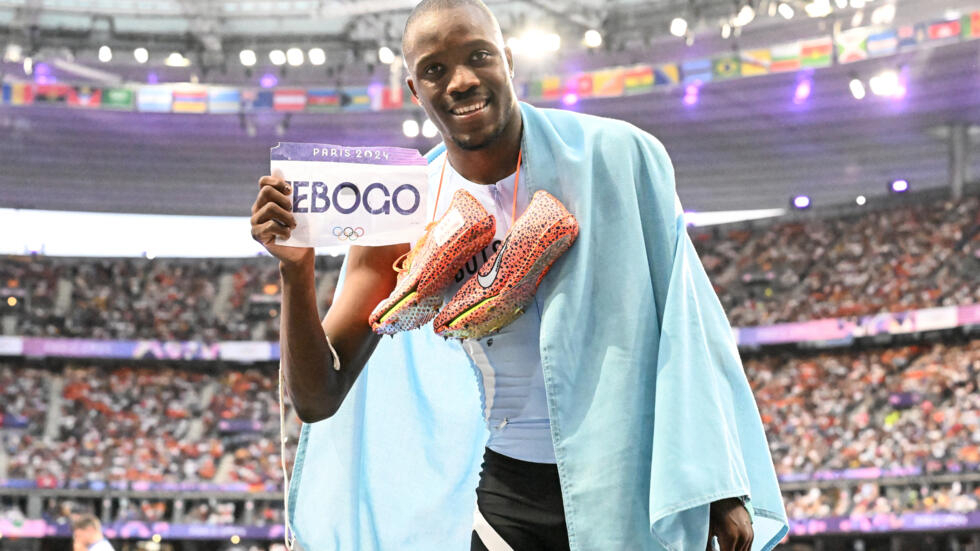
The Paris 2024 Olympics ended with a strong show from African athletes who shined in various disciplines, and represented many countries including outside of Africa. They made us proud and served us joy, endurance, and passion. We will list just a few. We had a lot of firsts, like our Kenyan sister Faith Kipyegon who won her 3rd successive Olympic gold in the women’s1500 m, making her the first African athlete to ever win gold in the same event 3 times in a row. Our brother Letsile Tebogo of Botswana earned the top most place in the Men’s 200 m thus giving Botswana and Africa as a whole its first ever olympic gold medal in the 200 m; Tebogo also led the Botswana’s team to a silver medal in the
Letsile Tebogo after winning gold in 200m (Source: Onuaonline)Men’s 4x400m relay, again a first for any African country ever. Ugandan brother JoshuaCheptegei delivered on his promise for his last Olympics to be memorable by winning gold in the Men’s 10,000 m, and landing Uganda its first gold at the games. Tatjana Smith of South Africa made her country proud by winning gold and silver medals in the Women’s 200m and 100m breaststroke events. Akani Simbine and South African track team delivered us silver in the Men’s 4 x 100 m relay, again a first for South Africa, and for Africa as a whole. Kaylia Nemour gave Algeria and Africa its very first victory ever in gymnastics with a gold in the Women’s Uneven bars in artistic gymnastics. Tamirat Tola, who was just added to the Ethiopian Olympics’s team 2 weeks prior, took home the gold medal in the Men’s Marathon. AhmedElgendy won the first gold medal for Egypt at any Olympics, becoming the first African and person to win in the new discipline of Men’s Modern Pentathlon. Cabo Verde got its very first medal at the Olympic games through David de Pina who won bronze in the Men’s 51 kg Boxing. Zambian Muzala Samukonga won the bronze medal in the Men’s 400m, giving his country its very first Olympic medal.
Aliko Dangote, Africa’s richest man, has built one of the world’s largest oil refineries in Nigeria, Africa. The refinery opened its doors last year, and in May shipped out its first boat of refined jet fuel to the Netherlands. Since then, the refinery has gotten into agreements with the Nigerian governments and neighboring ones as well.
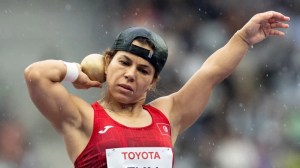
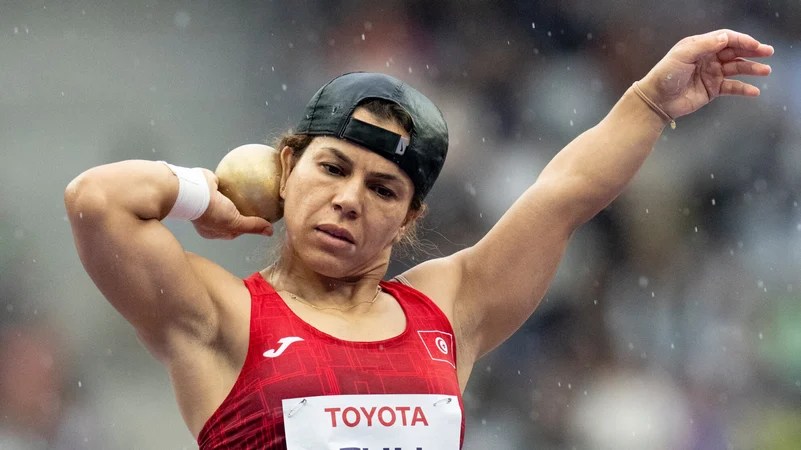
Paris Paralympics 2024 (Source: https://www.paralympic.org/paris-2024)Africa shone at the Paralympics, winning 64 medals, with Morocco getting the most medals with 15 medals, but Algeria topped the continent’s medal table thanks to its 6 gold medals vs. 3 gold for Morocco. Most medals were won in para-athletics and para-powerlifting disciplines. Veteran RaouaTlili of Tunisia cemented her place as a legend in the F41 discus throw and shot put, winning 2 gold medals this year, giving her a total of 8 gold medals for her country, having competed in each Olympics since
Raoua Tlili (Source: Outlook India)
Beijing 2008. Nigeria’s Mariam Eniola Bolaji became the first African to win an Olympic or Paralympic medal in Badminton. Yovanni Philippe gave Mauritius its first medal ever by securing a bronze medal in the men’s T20 400m; while Annaba native, Brahim Guendouz won gold in para-canoeing’s KL3 class over 200m, giving Algeria its first ever medal in a discipline outside of para-athletics, para-judo, and para-powerlifting.
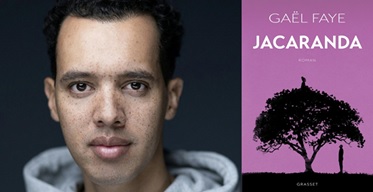
Gael Faye and his book Jacaranda
African authors made great wins and firsts: they won the most important literary awards in French literature: the Goncourt prize, which was awarded to Kamel Daoud for his third novel titled «Houris», and the Renaudot prize awarded to Gaël Faye for «Jacaranda». Daoud’s novel is currently in a controversy. Africans win the Goncourt and Renaudot 2024 Literary Prizes.
AndakiaA Senegalese startup, Andakia, has just introduced the very first African AI: AWA. AWA is a Wolof-speaking artificial intelligence system; it is the brainchild of Alioune Badara Mbengue. In an interview to TRT Afrika, Mbengue said, “AWA is the first AI that understands and speaks perfect Wolof. Our vision is to extend AWA to other African languages, enabling Africa to become a leader in digital innovation and ensure technological sovereignty tailored to its needs.” Users need to simply engage in a spoken exchange with the AI interface in Wolof, seeking general information or asking it to perform tasks such as ordering a taxi, ordering a meal, or carrying out financial and other transactions. This is revolutionary as it addresses the needs of the population. We applaud the amazing work of our brother and his team, and truly the sky is the limit.
We cannot repeat it enough! All eyes are on Niger, particularly after ECOWAS decided to follow Ouattara who urged for a military intervention, and brought in the African Union with Moussa Faki who authorized the use of military in Niger.
ECOWAS Logo
Can we really be surprised by Ouattara who was installed in Côte d’Ivoire by France’s canons and military joined with the UN? After the ECOWAS meeting last week, Côte d’Ivoire’s president, Alassane Ouattara, said his country would take part in the military operation, along with Nigeria and Benin. “Ivory Coast will provide a battalion and has made all the financial arrangements … We are determined to install Bazoum [prior Niger president and France’s puppet] in his position. Our objective is peace and stability in the sub-region,” Ouattara said on state television. The ECOWAS bloc decided last Friday to deploy a “standby force” aimed at restoring constitutional order in Niger after its Sunday deadline to reinstate ousted President Mohamed Bazoum expired. To this, Niger responded by recalling its diplomatic envoy to Côte d’Ivoire.
The African Union (AU) has called for an urgent intervention in Niger to reinstate President Mohamed Bazoum to power. In a statement issued in support of resolutions by ECOWAS, AU Commission Chairperson Moussa Faki (another puppet) said the international community must act to stop an anti-constitutional change in Niger. “The Chairperson calls on the entire international community to unite efforts to save the moral and physical integrity of President Mohamed Bazoum,” Faki’s office said on Friday.
Flag and map of Nigeria
Isn’t it crazy that the AU does not think that the embargo on medical supplies to the whole country of Niger is a problem? Isn’t it surprising that the AU has no voice when it comes to defending Africans from foreign interventions on African soil, but is always on the wrong side of history against Africans?
Now, the newly appointed Niger’s prime minister is in Chad for peace talks. Northern Nigeria’s religious and political leaders are also making considerable efforts for a peaceful resolution of the situation. Similarly, the religious leaders of Togo have asked for a removal of all ECOWAS sanctions against Niger which will then allow for more peaceful talks. Religious and political leaders of Benin and Togo have warned their presidents against any military interventions in Niger, interventions that serve the West. That is why Ouattara had to call on the African Union (AU) trying to find mercenaries from other African countries (not neighboring ones – ECOWAS region) who would not feel so strongly against an intervention in Niger, or have brotherly links that extend beyond borders with the people of Niger.
Flag of Niger
On Sunday night, Niger’s rulers declared they had gathered sufficient evidence to prosecute Bazoum for “high treason and undermining internal and external security“. After all, wasn’t Bazoum working for the West against Niger’s interests? Who knows what sort of back-door deals he made? Then today, Jihadist armed groups have ambushed and attacked a detachment of Niger’s military killing at least 17 Niger soldiers and injuring 20 others near the border with Mali, the country’s Ministry of Defence said.
The situation is very fluid and tense, and requires our entire attention and prayers. Without Niger, France might not have enough electricity this winter (and this will have nothing to do with Ukraine or climate change). Losing Niger is not quite a possibility for France or the West in the region. Niger will be the 4th country in the region and it might not be seen as a good.
Please read the article from the Christian Science Monitor which summarizes the situation well. It ends with, “The putschists’ aim will be to get France and Ecowas to move towards recognizing their de facto regime,” says Mr. Vallet. “[But] France and Ecowas will need to figure out how they can support the Bazoum loyalists if the putschists remain in power and manage to get them reintegrated in any future political process. … This is going to be the condition for their future relationship.” What this article and many fail to recognize is that the era of empty negotiations, or of half governments like France did in Cote d’Ivoire for many years (with Marcoussis I & II, Ouaga, etc) where a legitimate government was forced to share power with military rebels is long gone, as this later led to an un-governable situation and then France installing its puppet Ouattara while bombing the presidential palace… We are no longer negotiating for half territories… we will no longer sit back and negotiate and give away inches upon inches of our territories to satisfy the West.
Yesterday, the West African bloc ECOWAS has lifted the economic and financial sanctions against Mali’s military government after the promise that Mali will hold elections in February 2024. The move has been celebrated by many Malians who have been struggling under the restrictions and the global rise in fuel and food costs. As many applaud the lifting of sanctions, it is important to analyze why ECOWAS might have changed its mind: a) the countries in the West African block were not aware of how much weight Mali had in the region and the impact to their economies, and were all suffering from the Mali embargo, and thus are scramming to have Mali rejoin its ranks; b) With sanctions lifted, it will be easier for terrorists groups (armed by foreign forces) to travel back into the country easily, as there will be less control; c) a few days ago, the Spanish minister threatened Mali with a NATO intervention to protect European interests in Mali, which he later denied; d) France just moved its troops to neighboring Niger (another puppet). How convenient that the sanctions are lifted a few days after this minister’s outburst, and right before France’s troops move to Niger. Thus, knowing that ECOWAS is France’s puppet in the region, the lifting of sanctions is rather something to be skeptical of, and distrust entirely. No one should fall for this ECOWAS turncoat tactic… Mali should keep its guard high, and we should all pray and fight for the freedom of Mali and Africa as a whole!
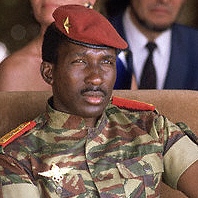
The trial to find Thomas Sankara‘s murderers (Who killed Thomas Sankara? The Trial starts in Burkina Faso) has been halted because of last week’s coup in Burkina Faso which saw the removal of president Roch Kaboré (2022 Burkinabé coup d’état). This adds to the fragility of the entire region, where the métropole (France) is impoverishing and destroying the countries it claims to be helping. As always, the ghostly/nonsensical organization that is ECOWAS (CEDEAO) with its nonsensical rules that only favor the old colonial powers came out with some ‘sanctions’. Below are excerpts from the article on ABC News.
====
Flag of Burkina Faso
OUAGADOUGOU, Burkina Faso — The long-awaited trial on the killing of Thomas Sankara, Burkina Faso’s influential leftist leader killed more than three decades ago, has been suspended as a result of the West African country’s recent coup.
The trial has been paused until the constitution is reestablished, a lawyer for the prosecution said Monday.
The suspension comes one week after a military junta overthrew President Roch Marc Christian Kaboré, suspended the constitution and dissolved the national assembly.
Prosper Farama, one of the lawyers for the Sankara family called the suspension a good thing that would respect everyone’s rights. “We have to be patient until the constitution is reestablished for things to be legal,” he said.
… Fourteen people are being charged for Sankara’s killing, including former President Blaise Compaore, who ousted Sankara in a 1987 coup. Compaore is charged with complicity, undermining state security and concealing corpses, according to military documents seen by The Associated Press. He’s being tried in absentia, as he has been in exile in Ivory Coast since he was toppled in 2014.
… “As young Sankarists, we are very worried about the suspension of the trial,” said Passamde Occean Sawadogo a singer and activist. “We remain vigilant so that nothing can jeoparidze the trial’,” he said.
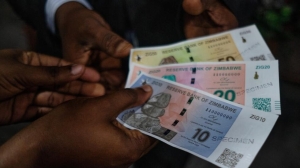
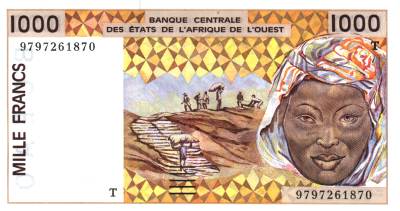
On the eve of Christmas last year, the Côte d’Ivoire President, Alassane Ouattara, and the French president Emmanuel Macron announced the “end” of the FCFA and the introduction of a new currency, the ECO, to replace the treacherous FCFA currency. Many have applauded the announcement, but to me, it looks more like a coup perpetrated by France on African countries to colonize even the countries it never colonized, … simply by using currency.
The FCFA is a colonial tax imposed by France on its former colonies which amounts to at least 500 billion Euros every year in the coffers of France without having to raise a finger, as African countries which are part of this FCFA zone deposit 50-60 % (at one point it was 85 %) of their foreign reserves into France central bank.
A few things were already fishy with the Ouattara-Macron announcement:
2. Also, France says the new currency’s value will be pegged to the Euro, similar to the way the FCFA‘s value was pegged to the French Franc, and now to the Euro. The ECO will remain fixed to the Euro, though the required deposits from these nations into French coffers are now eliminated (how true is this?) and France will no longer hold a seat on the UEMOA-linked West African central bank; it will instead send its puppets like Ouattara.
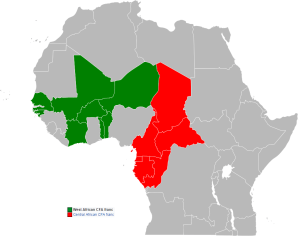
FCFA Map
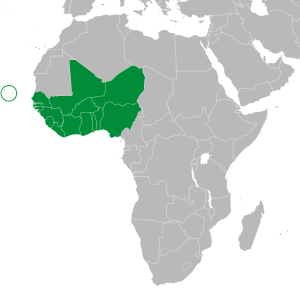
Why do I call this a coup? The ECO is the currency that the Economic Community of West African States (ECOWAS), 15 members of the West African union, had been working on for years, to be rolled on the entire territory of their union to facilitate exchanges between countries. Thus the name ECO stems from ECOWAS. The 15 member states of the ECOWAS are Benin, Burkina Faso, Cape Verde, Ivory Coast, The Gambia, Ghana, Guinea, Guinea-Bissau, Liberia, Mali, Niger, Nigeria, Senegal, Sierra Leone, and Togo. Out of these 15 countries, 6 are not part of France’s pré-carré, and thus do not use the FCFA: Nigeria, Ghana, Gambia, Cape Verde, Liberia, and Sierra Leone. As you can see, Africa’s second biggest economy, Nigeria with its Naira is part of the ECOWAS, as well as Ghana with its Ghanaian cedi. This is also the reason why only the West African Franc zone countries will move to the ECO while the Central African Franc zone will not: because France is simply stealing the ECOWAS idea! Given the protests in recent years asking for France to step away from the FCFA and to leave African countries alone, France had no real choice but to act as if they had taken into considerations the requests. Now, France is trying to stage a coup on stable economies such as Nigeria and Ghana which have been fighting so hard to re-create President Kwame Nkrumah‘s dream of a common currency in the region and in Africa as a whole.
ECOWAS Flag
In essence, France is simply hijacking the idea of the ECO. More importantly and this is cause for serious action, France is trying to colonize some of Africa’s biggest economies simply by using the currency! This is extremely deceitful, and we pray that Nigeria, Ghana, Gambia, Cape Verde, Liberia, and Sierra Leone, will not fall for this. France is simply trying to harvest where it never sowed (as always), with the help of its puppet, Ouattara!
As a last note, it is about time that we, Africans, those who are still in the FCFA zone, those from whom France collects 500 billions Euros every year, it is high time to awaken, and to break the chains of slavery. Thomas Sankara said in his 1984 speech at the UN, “the slave who is not capable of assuming his rebellion does not deserve that we feel sorry for him. This slave will respond only to his misfortune if he is deluding himself about the suspect condescension of a master who claims to free him. Only struggle liberates …!” AFRICA MUST UNITE and FREE ITSELF!!!

















 African Heritage