Another Coup Attempt Against the President of Burkina Faso, Ibrahim Traoré

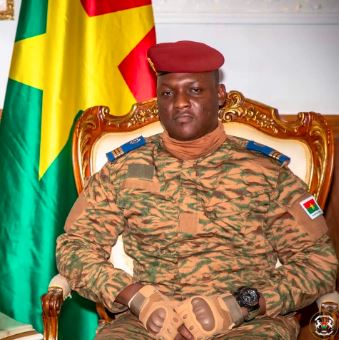
Capitaine President Ibrahim Traore (Source: sig.gov.bf)

In the wee hours of 2026, while our eyes were focused on Venezuela and the consequences of the American actions in the country, another event, just as earth-shattering was taking place on the African continent. There was another coup attempt on President Ibrahim Traoré in Burkina Faso which did not succeed. The government of Burkina Faso has announced that it has thwarted yet another plot aimed at killing the country’s leader, Captain Ibrahim Traoré, and disable a drone base. Burkinabes have taken to the streets in support of Traoré.

On January 6, Burkina Faso’s Minister of Security, Mahamadou Sana, disclosed that the planned coup, which was expected to be carried out late on January 3, was neutralized “thanks to the professionalism of the intelligence services.” The operation were to “[begin] with the neutralization of Comrade Captain Ibrahim Traoré, Head of State and President of Faso, either at point-blank range or through an operation to mine his residence,” … “there were to be efforts to put the drone base out of service, and a ground military intervention by external forces.” “Our intelligence services intercepted this operation in the final hours. They had planned to assassinate the head of state and then strike other key institutions, including civilian personalities,” Sana stated.

Flag of Burkina Faso

From what we have learned, the operation was financially supported from neighboring Côte d’Ivoire. The sophisticated plan had been hatched by Lt Col Paul Henri Sandaogo Damiba, the military officer and former transition president ousted by Traoré in September 2022, the security minister said in a late-night broadcast.
Capitaine Thomas Sankara

The western media say that Ibrahim Traoré and his government are lying, or fabricating this story to gain popularity; they talk of “alleged coup”, using verbs like “claim”, or like BBC wrote, “Plot to kill Burkina Faso leader foiled, says junta [why are they still calling it a junta after 4 years? When Damiba was there, they never called it such].” This would not be the first time that the government of Côte d’Ivoire would have hands in the destabilization of Burkina Faso. It was through the Côte d’Ivoire channel and government, with help from Liberia, that our brother Thomas Sankara was taken out by France. Now, it would seem to be coming from Damiba, via Côte d’Ivoire, Togo, for the interests of France; as we know Damiba is the front-man for the foreign forces who want to destabilize the country. The goal being to decapitate Burkina Faso, and therefore the AES alliance which includes Niger and Mali.

For more, check out: Newsclick, BBC, AfricaNews, and countless others.

Mali – Burkina Faso – Guinea Agree to form a Tri-Country Axis

Map of Mali with its capital Bamako

It is no secret that 14 African countries today are still under the French colonial tax (The 11 Components of the French Colonial Tax in Africa), and that every year, France takes home upwards of 500 billion dollars (Africa is funding Europe!) from its currency imposed upon those countries. After all, France has no gold mines on its soil but yet is the 4th world producer of gold, gold coming from Mali, while Mali is among the world’s poorest countries on the planet. It is also no secret that Mali has been trying to free itself from this colonial tax (The French Colonial Tax at the Heart of Mali-France Tensions), and has been working tirelessly to revoke at least 8 of the 11 rules. With the unrest in Burkina Faso brought by the Jihadists from the north who were well protected by the French army brought in to protect Burkinabe interests, but who instead have created further unrest in the area, it is no surprise that Burkina Faso has joined forces with Mali, and now Guinea, to create a strategic axis which will focus on military and trade agreements between the 3 countries. Although we do not particularly trust the Guinean leader, we applaud the union between the two brothers Mali and Burkina Faso, faced with sanctions from the puppet organization that is ECOWAS. We also applaud this ‘federation’ which will give Mali and Burkina Faso access to the sea via Guinea, thus opening up these land-locked territories to further trade. Enjoy excerpts below from the People’s Dispatch; check out also the write-up on AfricaNews.

Like Thomas Sankara said, “La patrie ou la mort, nous vaincrons!

====

Burkina Faso
Burkina Faso

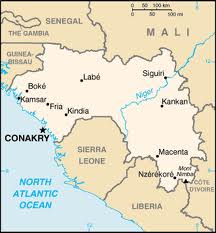
The three West African countries, all of whom have recently undergone military takeovers amid rising public anger against France, have agreed to a Bamako-Conakry -Ouagadougou axis, with enhanced cooperation on matters ranging from trade to the fight against insecurity.

As France is getting ready to withdraw its troops from Burkina Faso by the end of the month, signs of a possible realignment in the region are emerging with a tripartite meeting between the foreign ministers of Burkina Faso, Mali, and Guinea—Olivia Ragnaghnewendé, Morissanda Kouyate, and Abdoulaye Diop—held in Burkina Faso’s capital Ouagadougou on February 8 and 9.

The leaders discussed a range of issues, “in particular the success of the transition processes leading to a return to a peaceful and secure constitutional order,” and, importantly, the “revitalization of the Bamako-Conakry-Ouagadougou axis” to make it a “strategic and priority area” on matters including trade and economic exchanges, mining, transport, roads and railway links, and the “fight against insecurity.”

Guinea-Conakry
Guinea-Conakry

The communique issued following last week’s tripartite meeting condemned the “mechanical imposition of sanctions which often fail to take into account the deep and complex causes of political change,” adding that these measures “affected populations already battered by insecurity and political instability,” “undermine sub-regional and African solidarity,” and “deprive ECOWAS and the AU of the contribution of the three countries needed to meet their major challenges.”

While calling for “technical, financial, concrete, and consistent support” for security efforts and the return to a normal constitutional order, the three countries have agreed to “pool their efforts and undertake joint initiatives for the lifting of the suspension measures and other restrictions.”