
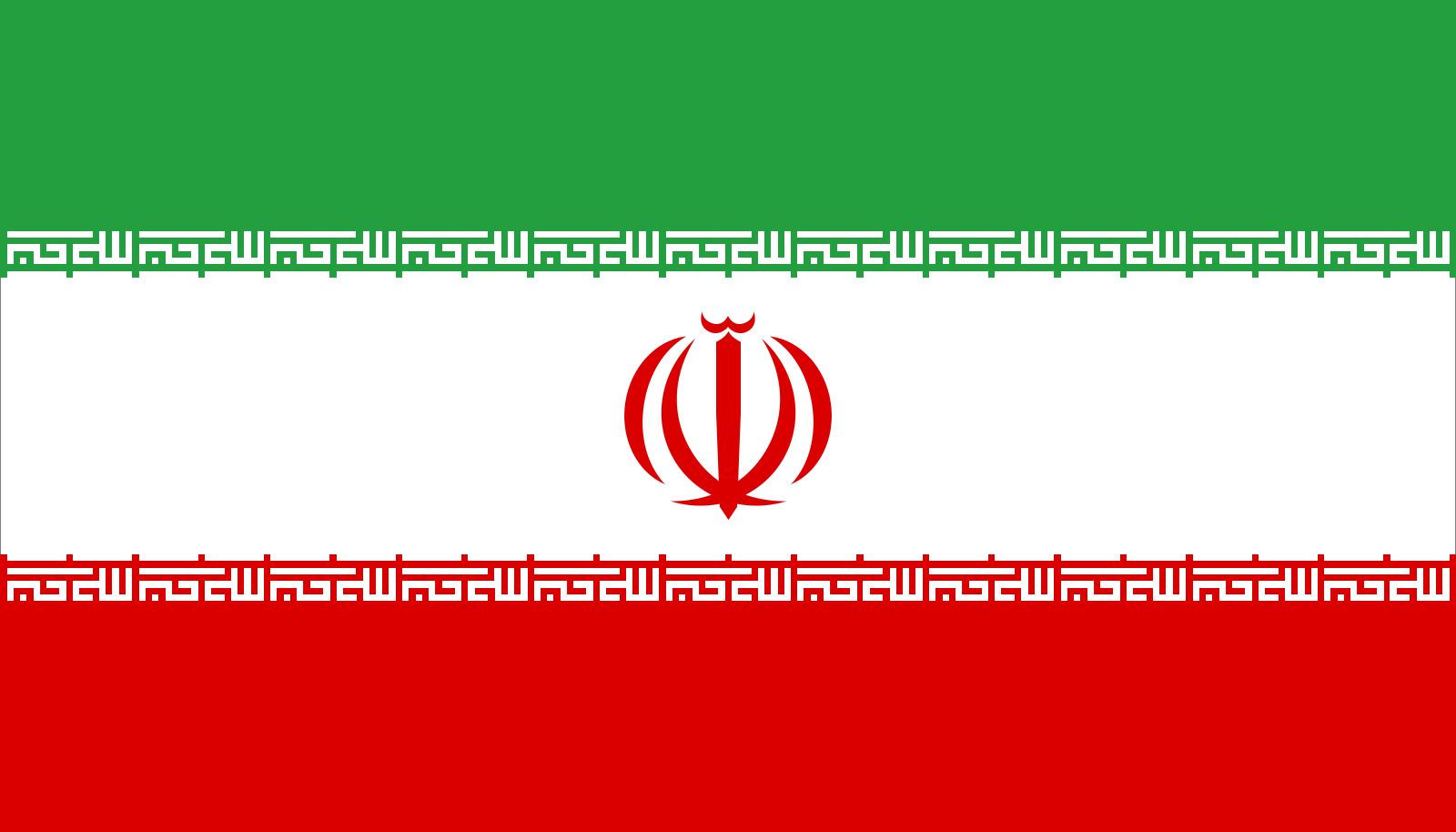
We are only entering the third month of 2026, and so far this year has not been for the faint of heart. On February 28, 2026, the Iranian Supreme Leader Ayatollah Ali Khamenei was killed by joint strikes from Israel and the United States on Iran. President Donald Trump announced the death hours earlier, saying it gave Iranians their “greatest chance” to “take back” their country. The Iranian State media reported that the 86-year-old was killed in an airstrike targeting his compound in downtown Tehran. US President Donald Trump has stated that the strikes on Iran could last for about a month, saying “It’s always been a four-week process… as strong as it is, it’s a big country, it’ll take four weeks – or less”. He also commented on the deaths of US service personnel, calling them “great people” and noting that such incidents are expected and could happen again.
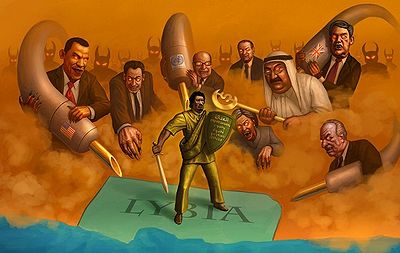
It has been almost 25 years since American General Wesley Clark, following 9/11 attacks, told us that the United States were planning to attack 7 countries in 5 years: Irak, Syria, Lebanon, Libya, Somalia, Sudan, and Iran. As you can see from the list, Iran is the only country still standing in its entirety. We now know, in retrospective, that all these attacks had nothing to do with terrorism, but everything to do with banking and economics. Are the strikes on Iran a hit on the BRICS? What are the implications for the world? Brothers and sisters, we are in the era of the Far West, anybody could be next! I just wonder why the regimes that serve the West and oppress their people are never attacked? Suddenly, in those countries, human rights change meaning. As said before, most countries should get out of the UN, as it is an organization that does not serve the world but only the few.
Below are excerpts from the Wire
=====
The B in BRICS, Brazil, on February 28 itself, condemned US-Israel attacks on Iranian targets and expressed grave concern over the military action. “The attacks occurred amid a negotiation process between the parties, which is the only viable path to peace, a position traditionally defended by Brazil in the region,” the Brazil government said in a statement.
… Russia – the R – said on the same day, “the US & Israel have embarked on a perilous course, carried out airstrikes on the territory of Iran It’s a deliberate, premeditated, & unprovoked act of armed aggression against a sovereign & independent UN member state.” It said, it was “particularly reprehensible that these strikes are once again being conducted under the cover of the renewed negotiation process.”
C – China, became the one member-state, in a second statement, to specifically condemn the murder of the Supreme leader of Iran, Ayotollah Khamenei. It called it “a grave violation of Iran’s sovereignty and security. It tramples on the purposes and principles of the UN Charter and basic norms in international relations. China firmly opposes and strongly condemns it. We urge for an immediate stop to the military operations, no further escalation of the tense situation and joint effort to maintain peace and stability in the Middle East and the world at large.”
S – South Africa said, in a statement issued by the presidency of South Africa, that the “developments pose a serious threat to regional and international peace and security, with far-reaching humanitarian, diplomatic and economic consequences.”
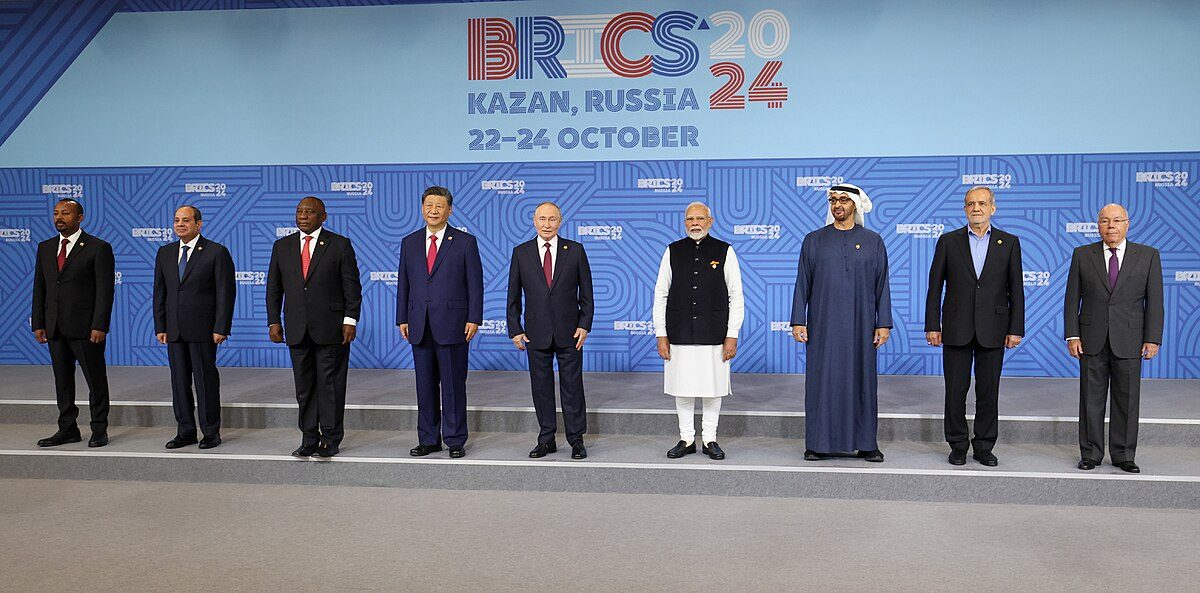
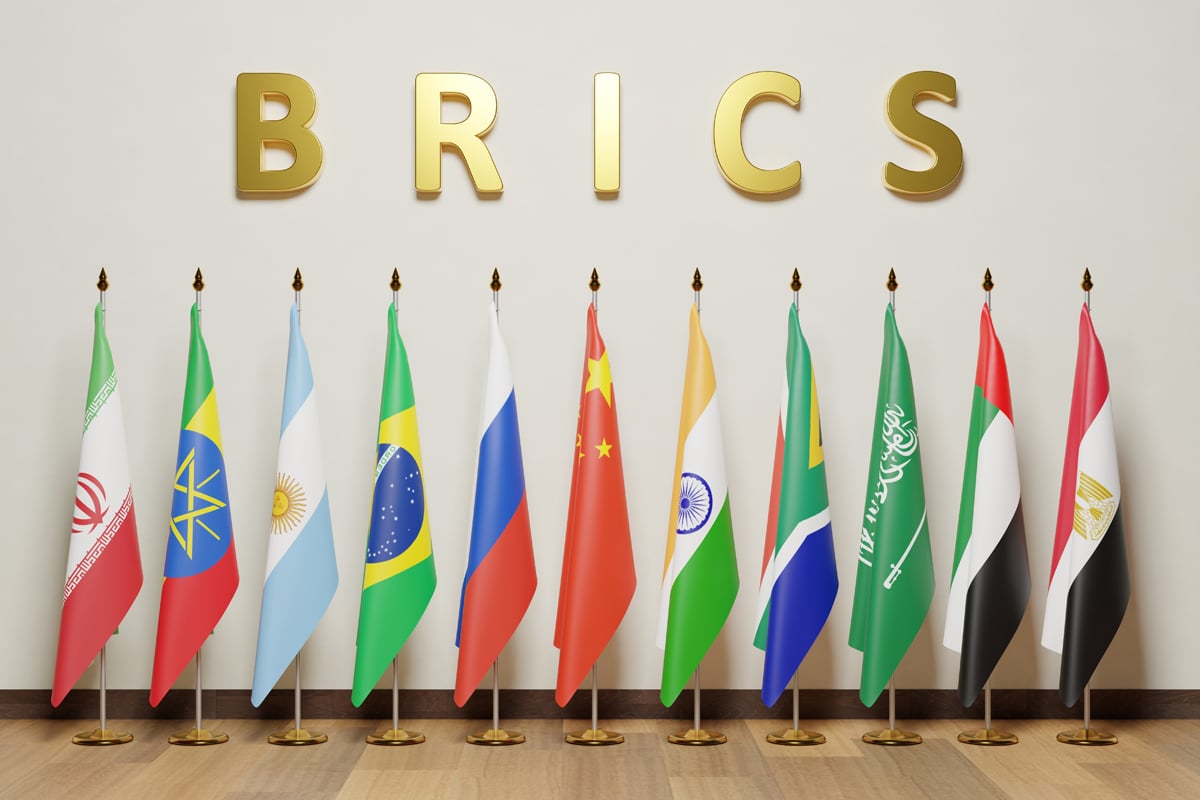
… The BRICS is a group formed by 11 countries: Brasil, Russia, India, China, South Africa, Saudi Arabia, Egypt, United Arab Emirates, Ethiopia, Indonesia, and Iran. Iran was among six new members admitted in 2024-25.
The current BRICS chair is India, … On March 1, India condemned Iran’s missile strikes on the United Arab Emirates. Then, Prime Minister Narendra Modi spoke with Israeli Prime Minister Benjamin Netanyahu, urging an early cessation of hostilities. New Delhi is yet to comment on the killing of Iran’s Supreme Leader Ayatollah Ali Khamenei in US-Israeli strikes. Modi has notably not spoken to Iran’s leadership. Modi also happened to have visited Israel just before the strikes, which had been planned “months in advance.”


 African Heritage