Why the Name: Pointe-Noire?

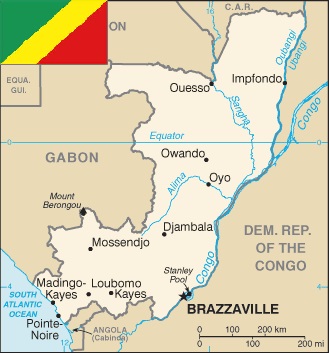
Map and Flag of the Republic of Congo

Have you ever wondered why the second city of the  Republic of the Congo‘s name is Pointe-Noire? After all, why would a city in Congo be named Black point? Is there a volcanic mountain in the city, whose tip is black? Or does the city extend through the bay while making it so hard to distinguish that sailors of the past could have called it Black point, because maybe they could not see it, and just crashed into its coasts? Or is it the French translation to a local word? All those questions are quite valid ones.

It turns out that the city of Pointe-Noire got its name from the Portuguese navigators who saw a block of black rocks on the headland in 1484. They named the place Ponta Negra (as it first appeared on maps), which became Punta Negra in Spanish, which later became Pointe Noire in French. It became a maritime point of reference for the Portuguese sailors, and later in 1883 it became a small fishing village, after the French signed a treaty with the local Loangos people. Pointe-Noire is nicknamed Ponton or Pontoon by its inhabitants, or Ndji-Ndji or Njinji, in reference to the ancient village of fishermen on which the city is built. It is located between the small bay of Pointe-Noire Bay and the Atlantic Ocean

Wharf of Pointe-Noire in 1924 (Wikipedia)

Over the years, the city of Pointe-Noire overtook the place of Loango located about 15 km away, which used to be the capital of the great Loango empire (story for another day). First in 1910, the French Equatorial Africa (Afrique équatoriale française, AEF) was created, and French companies started exploiting the Middle Congo (modern-day Congo Brazzaville) in that region, then there was a need for the creation of a railroad that could link Brazzaville inland to the Atlantic ocean. In 1923, Pointe-Noire was chosen to be the

Railway Station of Pointe-Noire in 1947 (Wikipedia)

terminus of the Congo-Ocean Railway, instead of Libreville. The city was also chosen to be the AEF seaport as opposed to Loango (this marked the forever decline of Loango). In 1950, Pointe-Noire had 20,000 inhabitants, and became the capital of the Middle Congo, while Brazzaville was the capital city of the AEF. It was the most modern city in Congo by 1960. Oil discoveries and the implantation of Elf Aquitaine (now Total Energies) in the 1980 have created an economic boom for the city, and influx of populations especially after the civil war of 1997 between Pascal Lissouba and Denis Sassou Nguesso. It is good to note that the oil of Congo belongs to France, and this was the reason of the 1997 war between Lissouba and Sassou Nguesso, because Lissouba wanted fair compensation for Congolese oil, and sought an American company to exploit oil (The 11 Components of the French Colonial Tax in Africa).

Today, Pointe-Noire is a very modern city whose main industries are still oil, the seaport, railway, and fishing; it also has a large potash industry as well. Pointe-Noire is the economic lung of the country. A while back, we visited Pointe-Noire, and were amazed by the difference between Pointe-Noire and Brazzaville; it is better built, and organized. It also has a large expatriate community. In the past it was left untouched by the civil unrest that shook the entire country. The city has two distinct sides, with the European quarter and the African quarter (La Cité) offering wholly different feels – Pointe-Noire is a great example of urban dimorphism if there ever was one. As you visit Pointe-Noire, and walk on its sandy beaches, enjoy the city, and if you have time, try to look for that Black Point after which it was named.

Why the name: Brazzaville?

Map and Flag of the Republic of Congo

I always wondered where the name Brazzaville came from.  At first glance, it would appear to mean “the city of Brazza (la ville de Brazza).”  Is this a good guess? and if so, who was Brazza for his name to be given to the capital of an African country.  Fortunately or unfortunately, during European colonization, many African cities, and cities throughout the world, were renamed after the first European explorer passing by or after some European ruler.  Examples are countless: Leopoldville (modern-day Kinshasa), Port Louis (capital of Mauritius, named after Louis XV), Northern and Southern Rhodesia (Zambia and Zimbabwe resp. – named after Cecil Rhodes), etc. Other cities have seen their names ‘europeanized’ such as Canton (Guangzhou, in China), Bombay (Mumbai, in India), and many others.

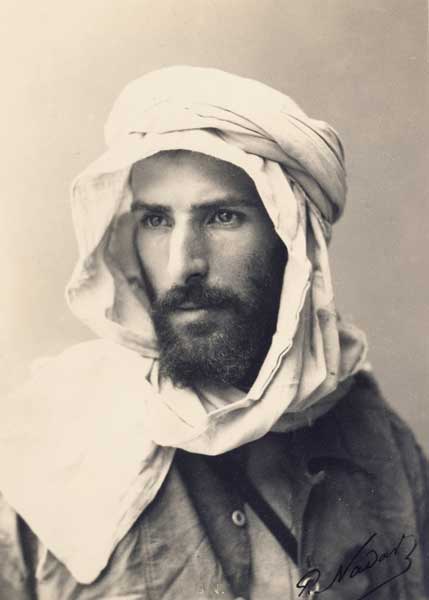
Savorgnan de Brazza (by Paul Nadar)
Pierre Savorgnan de Brazza (by Paul Nadar)

Brazzaville is the capital and largest city of the Republic of Congo.  It is located on the shores of the Congo River.  It is the only capital in the world facing another one, Kinshasa, the capital of the Democratic Republic of Congo: Brazzaville and Kinshasa are separated only by the Congo river.  The Pool region and surroundings of Brazzaville had been an African crossroad for centuries.  In the Lari language, the regions of Mfoa and Mpila were known under the name Mavula, or “the place to get rich.”  Laris people still refer to Brazzaville that way; however the name Mavula is anachronic since in 1880, the region’s inhabitants were Bateke.  The site of the future capital was known as Nkuna, and was a Batéké village.  Brazzaville was founded on 10 September 1880 by an Italo-French explorer,  Pierre Savorgnan de Brazza, after whom the city was named, Brazza-ville or the city of Brazza.  The local leader, Makoko of the Téké, signed a treaty of protection with de Brazza which subjugated his lands to the French Empire (he was probably fooled by the French, as was common practice with the colonizers).  The city was built four years later in order to become a competitor with Léopoldville (now Kinshasa) which was built by the Belgians on the other side of the river.  The site was occupied from October 1880 until May 1882 by a small squad of troops led by Senegalese Sergeant Malamine Camara, who prevented the land from falling into Belgian hands.

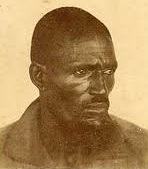
Malamine Camara
Malamine Camara

It was actually Malamine Camara who created links with the local populations, and made them sign with the French.  Malamine was very loyal, and when Savorgnan left for France for a few years, Malamine stayed behind, and convinced the local populations through his good manners to side with the French.  It is so sad that today, history mostly remembers Savorgnan de Brazza, and that even that capital is named after him, when it was the Black Senegalese soldier who fought for the French, led the troops, and convinced the locals.

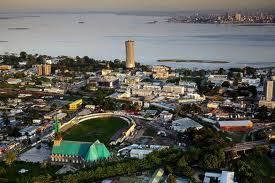
Aerial View of Brazzaville

The French officially established control over the area by the Berlin Conference of 1884.  The city became the capital first of the French Congo, and then of French Equatorial Africa, a federation of states which encompassed Gabon, the Central African Republic and Chad.  In 1924, the Congo-Océan railway was brought into service which linked Brazzaville with the port of Pointe-Noire.  During World War II Brazzaville, and the rest of French Equatorial Africa, remained beyond the control of Vichy France.  In 1944, Brazzaville hosted a meeting of the Free French forces and representatives of France’s African colonies.  The resulting Brazzaville Declaration was intended to redefine the relationship between France and its African colonies after the war.

Today, Brazzaville is a bustling city of more that 1.5 million inhabitants.  Affectionately called Brazza, it is the heart of the Republic of Congo.   To learn more about Savorgnan de Brazza himself, check out Brazza.culture.fr.  Enjoy, Brazza!